⚡ Energy2050Trends: The World Isn’t Transitioning. It’s Re-Architecting Itself.
(By Dr. Anju Sharma | MrsSustainability | KtalystInsights)
The world isn’t entering an energy transition.It’s stepping into an energy redesign that will rewrite competitiveness, geopolitics, & even the meaning of “power.
For the first time in history,
electricity, climate, minerals, cooling, and AI are colliding into a single force field, & the result isn’t evolution.
It’s acceleration.
These aren’t just “trends.
These are early warnings from a future arriving ahead of schedule.
Here is what the new world is quietly preparing for 👇
Trend1️⃣ Electrification becomes the new economic bloodstream
Electricity = 21% of final energy.
But already = 40% of global GDP contribution.
By 2050, electrons not molecules will define national competitiveness.
Nations won’t compete on oil.
They will compete on grid intelligence.
Trend2️⃣ Cooling & AI will shape global demand curves
Cooling adds +330 GW.
Data centres attract USD 580B.
A data centre is now a power plant in disguise. For the first time ever, comfort & computation run on the same fuse.
Trend3️⃣ The GlobalSouth becomes energy’s centre of gravity
80% of new global demand comes from India, ASEAN, Africa, LATAM, Middle East.
Growth follows sunlight, not smokestacks.
TheSunbelt becomes the new SiliconValley.
Trend 4️⃣ FossilFuels enter a managed twilight
Not a dramatic collapse.
A steady, predictable, structural decline.
Oil markets already expect +4 million barrels/day oversupply by the 2030s.
Fossils aren’t ending.They are delegating.
Trend 5️⃣ Adaptation becomes the trillion-dollar economy no one is prepared for
Heat, cooling, membranes, resilient materials. Peak demand up 40%. Adaptation is no longer “environmental.”It is economic survival.
Trend 6️⃣ Digital grids evolve into the national nervous system
Generation capex = USD 1T
Grid capex = USD 400B
We are structurally underwired.
The next revolution won’t be built.
It will be programmed.
Trend 7️⃣ Minerals rewrite global power equations
Lithium = crude.
Copper = oxygen.
Rare earths = leverage.
The next geopolitical tension won’t be over oilfields…It will be over copper belts.
Trend 8️⃣ Finance becomes the real climate divide
Same solar panel.
Same sun.
2.5× higher cost in Africa vs Europe only due to financing risk.
Technology isn’t the barrier.
Capital is.
Trend 9️⃣ CleanEnergy becomes mainstream macroeconomics
Data centres: USD 580B
Oil supply: USD 540B
The inversion is complete.
Energy transition is now economic gravity not ESG branding.
Trend 🔟 India isn’t following the energy future. It is test-running it.
Top driver of oil demand.
One of the fastest-growing clean-energy markets.
A digital governance force.
India doesn’t adapt the future
India prototypes it. And the signal is clear:
The next energy world won’t be discovered.It will be designed.
Originally published on LinkedIn on 2025-11-17 17:06:40: https://www.linkedin.com/feed/update/urn%3Ali%3AgroupPost%3A2474261-7396232320430649344
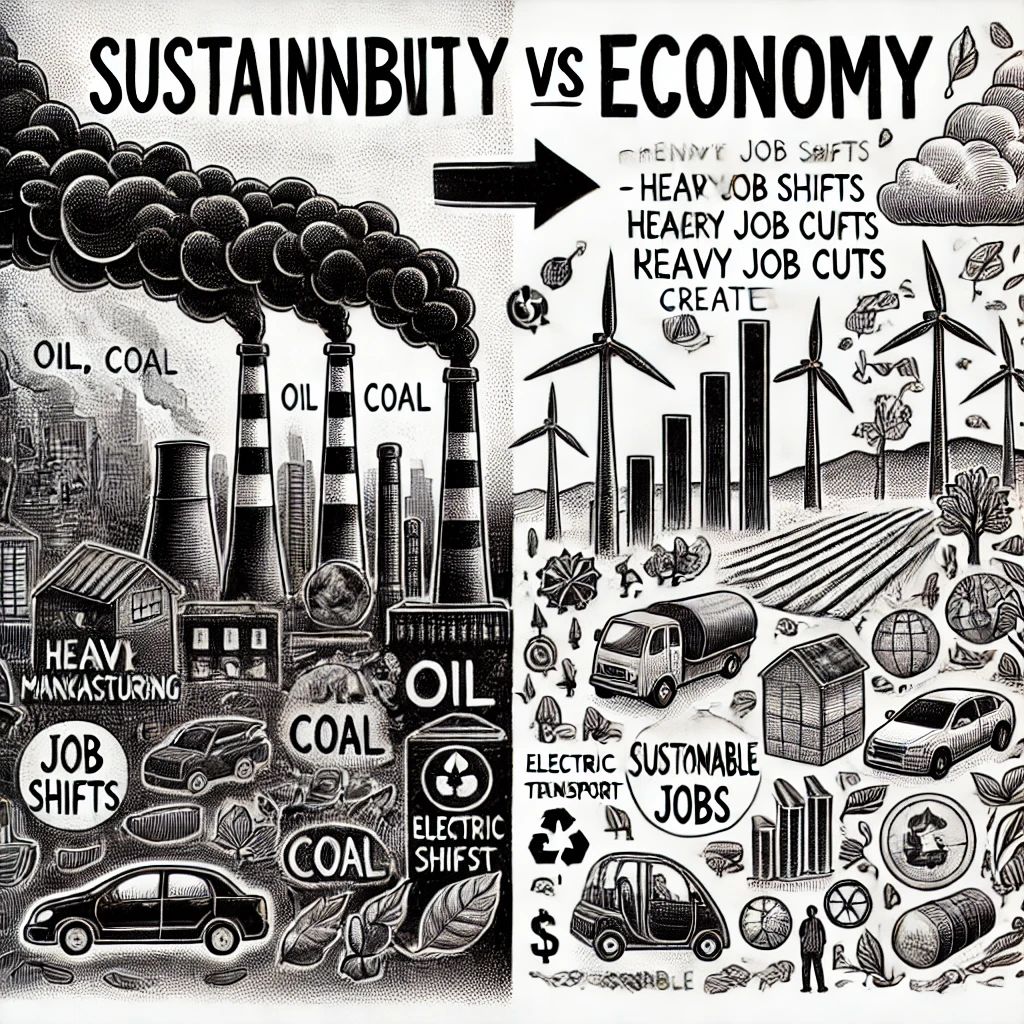
🚨 “TheGreenParadox: If the Top100 Polluters Go Green, Do Economies Go Red?” 🌍💸🔥
71% of global emissions come from just Just100 companies—but what happens if they actually go green?
📊 TheHardNumbers: Who’s Driving Emissions?
🔹 100Companies = 71% of Global Emissions (CDP Carbon Majors Report, 2025)
🔹 TotalMarketValue = $15.4 Trillion (Forbes, 2025)
🔹 Sectors Dominating Emissions:
✔️ Oil & Gas (ExxonMobil, Shell, Aramco, BP, Reliance) – 52% of global industrial CO₂.
✔️ Coal Giants (ChinaEnergy, Peabody, Glencore) – 14% of all emissions, powering entire nations.
✔️ Steel & Cement (ArcelorMittal, Holcim, TataSteel, JSW) – 8% of emissions, critical to infrastructure.
✔️ Shipping & Aviation (Maersk, Boeing, Delta, Emirates) – 5% of emissions, enabling global trade.
🚨 RealityCheck: Transitioning these industries overnight would shake economies to the core.
💰 TheEconomicCrashPotential
🔻 JobLosses in FossilFuel Sectors – 34M jobs globally depend on oil, coal, and heavy industries. (ILO, 2025)
🔻 GDPImpact on EmergingMarkets – India, China, and Indonesia rely on fossilfuels for 20-35% of GDP. (World Bank, 2025)
🔻 SupplyChain Disruptions – 42% of global logistics, steel, and chemicals are tied to high-emission industries. (McKinsey, 2025)
🔻 EnergyTransition Costs – Full decarbonization needs #$275T investment by 2050—but who’s paying? (IEA, 2025)
📌 TheDilemma: Accelerating sustainability risks a financialcrisis, while delaying it fuels climate disaster.
🔄 IsThereAMiddlePath?
🏆 IndustriesFindingBalance:
✅ SaudiAramco’s CarbonCapture Push – #$50B invested, but still expanding fossilfuel extraction.
✅ Tesla & BYD’s EVRevolution – EVs now 18% of global carsales, but lithiummining is a sustainability disaster.
✅ GreenSteel Investments (Hybrit, H2GreenSteel) – Promising tech, but adoption is too slow.
🚨 TheProblem: Green initiatives often don’t move fast enough—or they create new environmental costs.
🏆 KeyTakeaway: The TradeOff No One Wants to Talk About
📌 GoingGreen could be an economic revolution if planned strategically.
📌 ItShouldBe a shift that protects jobs, not eliminates them overnight.
📌 ItWouldBe an economicdisaster if industries collapse before sustainable alternatives scale.
👉 CanTheWorldAffordToDecarbonize without crashing economies? Drop your insights below! 👇
Originally published on LinkedIn on 2025-02-20 03:57:07: https://www.linkedin.com/feed/update/urn%3Ali%3AgroupPost%3A82951-7298188896939479040

