KtalystInsight | Power Shift: The Inequality of the Energy Transition
The climate crisis isn’t just about emissions—it’s about equity. Who leads the energy transition, and who gets left behind?
Earth will divorce humanity if this imbalance continues. Custody of rivers, forests, and skies won’t be negotiable — and the compensation will be billed in the heat of Earth’s fever: floods, famines, and lost futures.” Dr. Anju Sharma
Trend Data & Forward Momentum
1. In 2024, total global energy investment exceeded US $3 trillion, with $2 trillion in clean energy—double fossil fuels (IEA). By 2030, this must rise above $4 trillion annually to stay on a Net Zero path.
2. Renewable capacity expanded by a record 585 GW in 2024 (IRENA). By 2030, renewables could triple vs. 2020 levels, supplying ~50% of global electricity.
3. Only 15% of clean energy finance reached developing nations (ex-China), despite them being most climate-vulnerable (UNCTAD, IEA).
4. Africa’s clean energy investment hit $40B in 2024, but annual needs are $200–250B by 2030. Capital costs remain 2–3× higher than OECD markets (IEA).
5. Global fossil fuel subsidies peaked at $7T in 2022 (IMF). Without reform, they could still exceed $4T annually by 2030, undermining progress.
The Challenges
1. Financing Disparity – Higher cost of capital makes clean projects unviable in Africa & South Asia.
2. Policy Asymmetry – The EU’s Fit for 55 and the U.S. IRA contrast sharply with weaker policy frameworks in many emerging markets.
3. Technology Gaps – Hydrogen, storage, and digital grid technologies remain concentrated in developed economies.
4. Investment Inequity – Two-thirds of the world’s population receives only 15% of climate-related investment.
5. Carbon Colonialism – Border carbon tariffs and trade barriers risk penalizing the Global South rather than enabling its transition.
The Way Forward
1. Redirect Subsidies – Shifting even 10% of fossil subsidies would close renewable finance gaps in developing nations.
2. Just Transition Funds – Invest in reskilling, local supply chains, and green job creation.
3. Technology Partnerships – Democratize hydrogen, storage, and carbon capture through global cooperation.
4. APRA Scaling – Lift Africa’s renewables from 56 GW (2022) to 300 GW by 2030 (COP28 target).
5. Global Clean Power Alliance – Mobilize G20 efforts to triple renewables and double efficiency by 2030.
KtalystInsight
The transition is inevitable. But unless equity is hardwired, the Global South will inherit climate risks without compensation.
Originally published on LinkedIn on 2025-09-05 02:08:52: https://www.linkedin.com/feed/update/urn%3Ali%3AgroupPost%3A2474261-7369552065573875713
GreenFinance 2025: Progress, Imbalances & Policy_Impact
🌍 Key Milestones
YR2009: $100B pledged annually by developed nations to support climate action.
YR2015: Paris Agreement extends this target through 2025, with higher goals expected.
YR2024: World Bank hits a record $42.6B in climate finance (+10% YoY).
💶 Investment Progress
EIB: €170B funded (17% of €1T 2030 target).
Bank_of_America: $560B deployed (37% of $1.5T goal).
CEFC (Australia): $345M allocated (34.5% of $1B fund).
⚖️ Policy & Legal Shifts Driving Imbalance
Policy_Volatility: U.S. Federal Reserve exits NGFS in 2025, undermining momentum in the $130T global ESG market.
Global_Climate_Commitments: Delays in updating post-2025 targets create uncertainty, slowing private investments.
Legal_Accountability: Weak enforcement of climate disclosure regulations leads to greenwashing—80% of corporate claims lack robust impact validation.
📉 Regional Disparity
Developing nations receive 3-5% of global funds, despite being the hardest hit by climate change.
Africa, for example, needs $2.8T by 2030 but struggles with low capital inflow due to high perceived risks.
🚀 Path Forward
Blended Finance: Mobilize private capital by de-risking investments.
Stronger Governance: Mandate stricter accountability for green funds.
Equitable Policies: Prioritize fund flow to vulnerable regions with clear legal safeguards.
Sustainability ClimateFinance PolicyShift

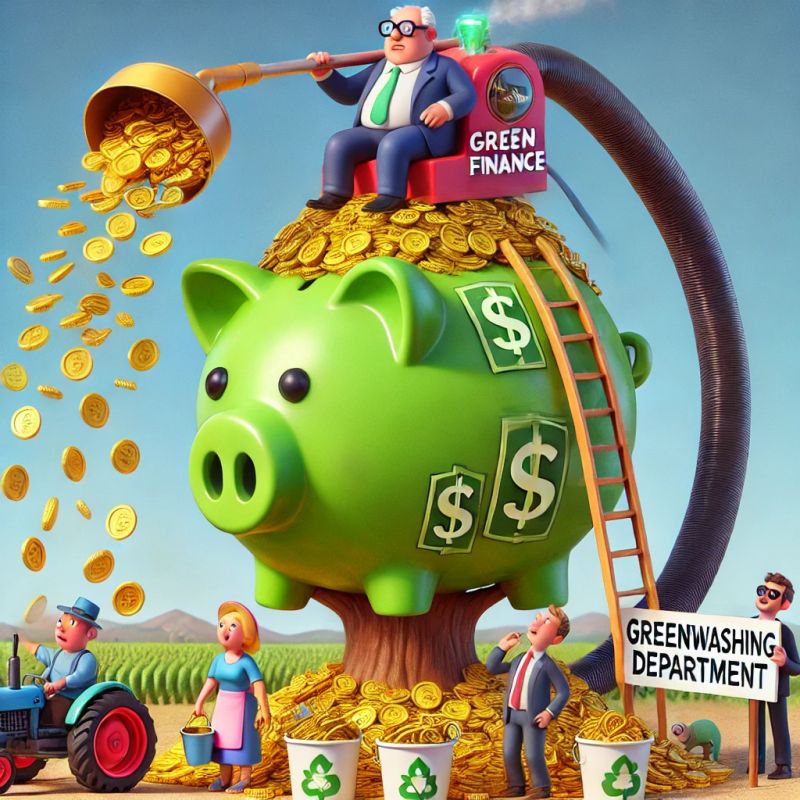
Originally published on LinkedIn on 2025-01-26 06:02:25: https://www.linkedin.com/feed/update/urn%3Ali%3AgroupPost%3A2368335-7289160734050062336
What_Happened_in_Busan: A Turning Point for Global Plastic Pollution
🚨 The INC5 negotiations in Busan, South Korea, brought together over 190 countries to discuss the first-ever legally binding treaty on plastic pollution. Here’s what stood out:
🌍 Key Outcomes
Lifecycle Approach: Agreement to address plastic pollution across its 400 million tonnes/year lifecycle, from production to disposal.
Urgent Action: Only 9% of 7 billion tonnes of plastic waste ever produced has been recycled.
Focus on Upstream Solutions: Talks on banning single-use plastics and hazardous chemicals, which make up 50% of marine litter globally.
Equity in Action: Developing nations emphasized support, with 79% of plastic waste ending up in landfills or the environment—disproportionately impacting them.
Participation: A collaborative forum with NGOs, policymakers, and industries driving diverse solutions.
🚧 Challenges
Upstream vs. Downstream Divide: Conflicting priorities as only 20% of countries supported upstream prevention efforts.
Global North_South Divide: Developed nations export 10 million tonnes/year of plastic waste, burdening the developing world.
Funding Gaps: Insufficient pledges to meet the estimated $10 billion/year required for effective waste management.
Implementation Clarity: No unified plan for monitoring the 29 million tonnes of plastic entering oceans annually.
📊 Regional Snapshots
1️⃣ India:
Generates 9.3 million tonnes/year, the highest globally.
60% recycled, mostly informally. Single-use plastics still account for 43% of waste.
2️⃣ China:
Produces 2.8 million tonnes/year.
2017 import ban on plastic waste reshaped global waste management.
3️⃣ SouthKorea:
Claims 73% recycling, but true recycling is only 27%.
Rising plastic waste due to packaging demand.
4️⃣ UnitedStates:
4.5% recycling rate, far below the global average (15%).
Shifted stance to support plastic production reduction globally.
5️⃣ EuropeanUnion:
Aims for all packaging to be recyclable or reusable by 2030 under the European Plastics Strategy.
Leads in recycling rates, contributing significantly to global efforts
🌟 The Path Forward
The world must bridge divides and adopt a holistic lifecycle approach to achieve a plastic-free future. INC5 is the beginning, not the end.
Source / shared link: https://www.unep.org/inc-plastic-pollution/session-5
Originally published on LinkedIn on 2025-01-07 03:25:12: https://www.linkedin.com/feed/update/urn%3Ali%3AgroupPost%3A3880479-7282235800119881729
ESG Handhold for India: Unlocking Sustainable Growth
Environmental, Social, and Governance (ESG) principles are essential for India to balance economic growth with sustainability. While India shows immense potential, challenges like regulatory gaps, greenwashing, and limited awareness must be addressed to unlock private ESG investments and drive long-term resilience.
Why ESG Matters for India
🌍 Global Capital: India raised $15.5 billion via green bonds in 2023, part of $163 billion global ESG inflows.
📈 Competitiveness: ESG-compliant companies reported 20% higher revenue growth.
⛑️ Risk Mitigation: Climate-related disasters cost $90 billion annually.
💼 Finance Loss: Regulatory ambiguity risks driving away private ESG finance.
Key Challenges
🛑 Limited Awareness: SMEs contributing 30% of GDP remain uninformed.
📜 Regulatory Gaps: Weak enforcement hampers credibility.
🛡️ Greenwashing: False ESG claims erode trust.
💰 High Costs: Transitioning to ESG is expensive for smaller firms.
🌟 Renew Power: Saved 1.5 million tons CO₂, attracted $1 billion investments.
🌟 Tata Group: Tata Steel targets carbon neutrality; Tata Chemicals saves 7 million liters water annually.
🌟 HUL: Cut 22,000 tons of plastic waste, invested $250 million in community health.
🌟 Infosys: Carbon neutral since 2020, saving 120,000 tons CO₂ annually.
🌟 Mahindra Group: Issued $500 million green bond, planted 12 million trees.
🌟 Adani Green Energy: Secured $3 billion, operates 8 GW solar capacity.
🌟 JSW Steel: $10 billion investment to cut emissions by 42% by 2030.
🌟 Wipro: 100% renewable energy use, $70 million invested in social programs.
🌟 Godrej Group: Saves 3 billion liters water annually, pledged $1 billion for biodiversity.
🌟 ITC: Water-positive for 21 years, $100 million in renewable energy.
ESG Challenges and Scams
🚨 Adani Group: Alleged greenwashing in renewable claims.
🚨 Vedanta: Fined $13 million for environmental damage.
🚨 IL&FS: $12.8 billion fraud exposed governance lapses.
🚨 Sterlite Copper: Shutdown due to severe pollution.
🚨 Cement Cartelization: Price manipulation under ESG pretenses.
India’s ESG ₹Roadmap
🌱 Raise ESG awareness among SMEs.
🌱 Simplify compliance and reporting frameworks.
🌱 Incentivize green investments through tax benefits.
🌱 Strengthen regulations to curb greenwashing.
🌱 Leverage technology for efficient ESG data management.
The Way Forward
As Prime Minister Narendra Modi said:
Let us pledge to collectively work towards conserving precious environmental resources. Let us live in harmony with nature and keep our beloved Earth clean and green.
India must address regulatory gaps and greenwashing to attract private ESG finance and drive sustainable growth.
Originally published on LinkedIn on 2024-12-17 10:58:17: https://www.linkedin.com/feed/update/urn%3Ali%3AgroupPost%3A3880479-7274739678610628609

