What_You_Havenot_Heard_About_the_New_Income_Tax_Bill 2025 💼💰
While headlines have focused on new tax slabs and simplified tax laws, there are hidden provisions in the Income Tax Bill 2025 that could quietly reshape how individuals and businesses manage their taxes. Here’s what hasn’t made the news yet—but should be on your radar.
🔎 What’s New & What You Haven’t Heard Yet
📌 NRIs Now Have a Tax Wake-Up Call → If you earn over #₹15 lakh ($18,000) in India, you’re now classified as a tax resident. This means taxation on salary, property income, capital gains, and dividends from Indian sources. But foreign earnings? They remain outside India’s tax net for now.
📌 The Unspoken Impact on Gig Workers & Freelancers → With the rise of digital taxation and AI-driven audits, freelancers, content creators, and independent consultants who previously operated in a tax grey area may now be pulled into the formal tax system.
📌 Your Digital Footprint is Being Watched → The bill lays the foundation for AI-driven tax compliance tracking. Expect automated scrutiny of large transactions, crypto earnings, and foreign remittances linked to India.
📌 No Clear Carbon Tax Yet—But Watch This Space → Sustainability is a global priority, but this bill doesn’t yet introduce green tax incentives or penalties for high-emission businesses. However, future amendments may align India’s tax policies with ESG (Environmental, Social, and Governance) goals.
📌 Real Estate May No Longer Be a Safe Tax Haven for NRIs → With stricter capital gains taxation, NRIs who buy and sell Indian property may face higher tax liabilities, especially if they don’t reinvest in eligible tax-saving assets.
📌 More Tax Scrutiny for High-Income Earners → If you fall in the #₹20 lakh+ ($24,000+) bracket, tax authorities may now flag large transactions and offshore holdings, ensuring better compliance without manual intervention.
📉 What Should You Do Next?
✅ NRIs: Review your income sources from India and DTAA agreements in your country to avoid double taxation.
✅ Freelancers & Gig Workers: Ensure your earnings are properly declared to avoid potential penalties.
✅ Investors: Keep an eye on potential capital gains tax reforms affecting stocks, crypto, and real estate.
✅ Businesses: Start preparing for digital compliance requirements that could change audit processes.
💡 “The real impact of tax reform isn’t in what’s obvious—it’s in what changes behind the scenes.
💬 What are your thoughts? Have we missed an important tax change that will impact professionals and businesses? Let’s discuss!

Originally published on LinkedIn on 2025-02-13 11:43:42: https://www.linkedin.com/feed/update/urn%3Ali%3Ashare%3A7295769602515431426
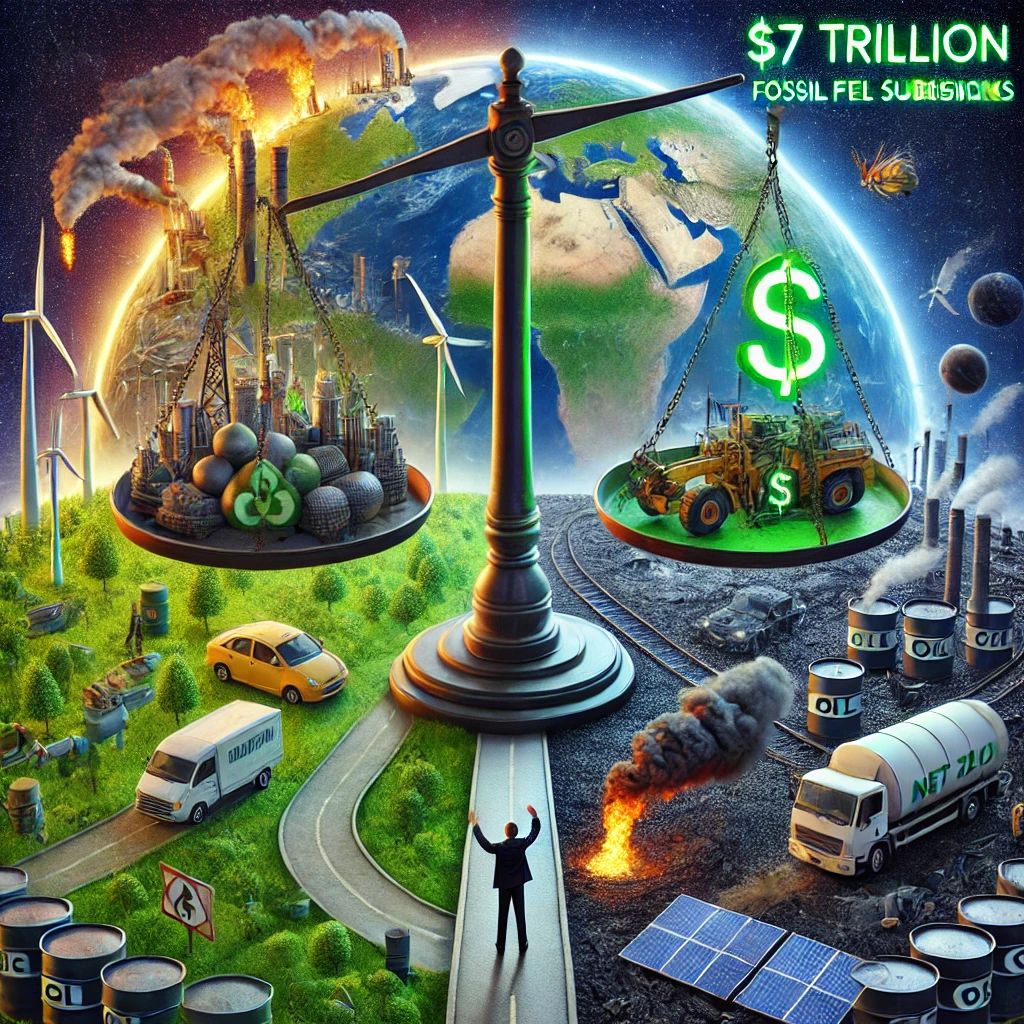
🚨 “The USD_7 Trillion Green Paradox: Saving the Planet or Fueling the Crisis?” 🌍♻️💰
📊 1. The Green Investment Paradox: More Money, More Emissions
✅ #$1.7 trillion invested in clean energy in 2023 (IEA, 2024)
❌ #$7 trillion in fossil fuel subsidies were paid out in 2023 (IMF, 2024)
✅ 120+ countries pledged net-zero targets
❌ Only 20% have actual policies & execution plans (Net Zero Tracker, 2024)
❌ CO₂ emissions hit a record high of 37.5 billion tons in 2023 (Global Carbon Budget, 2024)
🚨 Reality Check: For every $1 spent on green energy, $4 still funds fossil fuels.
🇩🇰 Denmark: 75% renewables, carbon-neutral by 2045 (EPI, 2024)
🇸🇪 Sweden: 98% recycling rate, world leader in circular economy (WEF, 2024)
🇳🇴 Norway: 80% of new car sales are EVs, hydro-powered energy (IEA, 2024)
🇪🇺 EU: #€1 trillion Green Deal investment, strict carbon pricing (EU Commission, 2024)
🚨 Reality Check: Even the greenest nations rely on imported fossil fuels & high energy consumption.
🟡 3. The Green Economy Paradox: Investing While Polluting
🇨🇳 China: World’s largest renewable energy investor, but 55% of power still comes from coal.
🇮🇳 India: Fastest-growing solar market, but remains the third-largest CO₂ emitter. (MNRE, 2024)
🇺🇸 USA: #$369B Inflation Reduction Act to fund green tech, but oil production reached a record 13.1M barrels/day in 2023. (DOE, 2024)
🚨 Reality Check: Countries are investing in renewables but not cutting fossil fuel use fast enough.
🔴 4. The Worst Green Offenders: Promises Without Action
❌ 🇦🇺 Australia: The world’s second-largest coal exporter, despite ‘green economy’ branding. (Climate Council, 2024)
❌ 🇷🇺 Russia: No net-zero plan, fossil fuel revenue = 40% of its economy. (UNEP, 2024)
❌ 🇸🇦 Saudi Arabia: Announced $260B for renewables but still earns 90% of its GDP from oil. (IEA, 2024)
🚨 Reality Check: Without emission cuts, green projects don’t fix the problem.
📉 5. The Harsh Truth: Emissions Are Still Rising
❌ 2023 was the hottest year ever recorded, with global temperatures 1.48°C above pre-industrial levels. (NASA, 2024)
❌ Carbon capture tech only offsets 0.1% of annual global emissions. (IPCC, 2024)
❌ At current transition rates, the world will miss its 1.5°C climate target by 2040. (UNEP, 2024)
🚨 Reality Check: We must cut global emissions 43% by 2030 to stay on track—but we’re nowhere close.
🏆 KeyTakeaway
The Green Economy paradox is real—we invest in sustainability while financing fossil fuels even more. Until green investments outpace fossil fuel spending, and emissions actually drop, we’re not in a real transition.
Originally published on LinkedIn on 2025-02-03 04:11:43: https://www.linkedin.com/feed/update/urn%3Ali%3AgroupPost%3A82951-7292031979921797120

