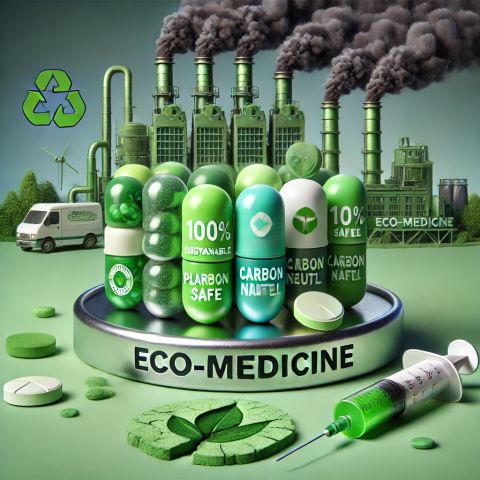
GreenwashedPills: When Pharma Prescribes Sustainability, But Swallows None of It
Green_lab_certified.
Eco_packaged.
Sustainably sourced APIs.
The claims sound clean—but the industry’s environmental footprint is anything but.
Welcome to GreenwashingInPharma, where glossy ESG reports hide toxic truths.
💊 The Industry Diagnosis:
🌍 Pharma emits 13% more CO₂ than the automotive sector (McMaster University, 2023)
🌊 Over 3,000 pharmaceutical compounds found polluting rivers globally (UNEP, 2022)
🧴 Billions of plastic blister packs are non-recyclable—despite “eco-packaging” claims
🔬 Waste incineration from expired drugs releases hazardous dioxins and furans
📉 Real Cases, Real Fines:
1. Teva Pharmaceuticals – Fined #$2.25M (USA, 2011) for violating Clean Air & Water Acts
2. Pfizer Inc. – Fined #$975K (USA, 2008) for hazardous air emissions at its Groton plant
3. Polypeptide Labs – Fined #$57K (USA, 2022) for improper waste and emission controls
4. Curia Global (AMRI) – Fined #$175K (USA, 2024) for unpermitted air emissions; also paid #$250K in community penalties
5. Merck & Co. – Fined #$1.5M (USA, 2011) for violations across air, water, and hazardous waste regulations
🚨 GreenwashingSymptoms:
🧾 CSR reports filled with offsets, not reductions
🌱 “Green APIs” with zero traceability in supply chain
⚕️ Hospitals praised for solar roofs—while sourcing drugs from polluting plants
📦 Biodegradable slogans on non-biodegradable packaging
🧠 Why This Matters:
⚠️ Greenwashing erodes public trust in an industry built on health
⛔ Improper waste disposal fuels antibiotic resistance
🌡️ Most pharma firms don’t disclose full environmental footprints
📊 70% of consumers feel misled by eco-claims in healthcare purchases
FinalThoughts:
In medicine, we demand efficacy backed by trials.
Shouldn’t we demand the same for sustainability claims?
If greenwashing becomes the prescription—
Trust is the patient we lose.
GreenwashingInPharma
CleanCuresNotCleanClaims
EcoEthicsInMedicine
ESGTransparency
PlanetOverPR
PharmaFootprint

Originally published on LinkedIn on 2025-03-25 16:59:09: https://www.linkedin.com/feed/update/urn%3Ali%3Ashare%3A7310344501275897856
TheSustainabilityReckoning: Data, Dollars & DueDiligence
📊💡 Sustainability is no longer a choice—it’s a business imperative backed by hard data. In 2025, companies face a stark reality: greenwashing lawsuits, evolving regulations, and shifting investor priorities are reshaping the LicenseToOperate. The cost of inaction? Fines, lostmarketaccess, and reputationaldamage.
Here’s what the numbers reveal:
3_Billion_USD_Lawsuit: Apple’s “CarbonNeutral” Claims Under Fire
Apple faces a classactionlawsuit challenging its carbonneutralityclaims, highlighting the #$20Billion+ global fines for greenwashing in 2024 alone. The lesson? Transparency and tangibleaction matter more than marketing.
🔹 EUSlashesSustainabilityReporting by 80%—But Not for BigPlayers
The EU’s CorporateSustainabilityReportingDirective (CSRD) has been relaxed, reducing compliance for smaller firms. However, largecorporations must still navigate stringentESGrequirements, ensuring verifiablesustainability efforts.
🔹 #$2Trillion in ClimateInvestments Defies ESGBacklash
Despite politicalheadwinds, globalclimateinvestments hit #$2trillion in 2024, with renewables and infrastructure leading. Resilientcompanies are attracting capital, proving that climatepositivebusinessmodels aren’t just ethical—they’re profitable.
🔹 WellsFargoDropsNetZeroTargets—A Sign of ESGRealignment?
One of the largestUSbanks has walked back its financedemissionsgoals, citing technological and policygaps. This shift signals a movefromoverambitious targets to pragmaticESGstrategies that align with businessrealities.
🔹 BCorpBoom: 2,400+ Certified Companies in the UK Alone
With consumerdemand for ethicalbusinesspractices soaring, over 2,400UKcompanies, including DanoneUK and GoodEnergy, have achieved BCorpstatus, proving that sustainability isn’t just compliance—it’s a competitiveadvantage.
🔹 #$1BillionCircularEconomyFund Eyes WasteToWealthGrowth
With globalwastecosts projected to exceed #$400billion by 2035, PlanetArk and BostonGlobal are launching a #$1billionfund to support circulareconomyinnovations. The future belongs to businesses that turn wasteintovalue.
📉🔍 TheVerdict?
✅ Sustainability isn’t a cost—it’s an investment in resilience.
✅ Regulatoryshifts are redefining corporateaccountability.
✅ Greenwashinglawsuits are a wake-up call—datadriventransparency is key.
IsYourBusinessFutureProofed for this SustainabilityReckoning? Let’s discuss how compliance, strategy, and innovation can secure your LicenseToOperate in this evolving landscape. Drop your thoughts below! 👇

Originally published on LinkedIn on 2025-03-01 07:39:37: https://www.linkedin.com/feed/update/urn%3Ali%3AgroupPost%3A2474261-7301506382598430720
🚨 BigBrands, BIGGERFines: The Recycling Greenwashing Scandal Exposed! ♻💰
We’ve been told recycling is the answer to plastic waste. But what if the system itself is built on fraud and deception? BigBrands are now facing BIGFINES for misleading consumers about recyclability. Here’s how the deception unfolded over the years:
📅 TIMELINE OF GREENWASHING IN RECYCLING
🔹 YR1990s – The Recycling Illusion Begins
📌 Plastic industry documents reveal that producers knew recycling wouldn’t work on a large scale—but they marketed it as the solution to keep plastic production high. (Source)
🔹 YR2000s – Growth of the ‘Recyclable’ Label
📌 Brands like CocaCola, Nestlé, and Unilever start aggressively using recyclable labels, despite knowing that most plastic isn’t actually recycled due to contamination and lack of facilities. (Source)
🔹 YR2018 – China Bans Plastic Waste Imports
📌 China’s NationalSword policy ends global reliance on cheap recycling, exposing the broken system. The US and EU struggle to process their own plastic waste.
🔹 YR2022 – Keurig Faces Greenwashing Lawsuit
📌 KeurigDrPepper pays #$3M in Canada and $1.5M in the US for falsely claiming its K-Cups were recyclable, despite most recycling centers rejecting them. (Source)
🔹 YR2023 – EU Cracks Down on Greenwashing
📌 The EU introduces legislation requiring brands to prove their sustainability claims or face heavy fines.
🔹 YR2024 – ExxonMobil Sued for Recycling Lies
📌 California sues ExxonMobil, accusing them of knowingly misleading the public about plastic recycling.
🔹 YR2025 & Beyond – The Future of Greenwashing Accountability?
📌 Global brands will face stricter regulations and fines in the billions for misleading sustainability claims. Will it be enough to stop greenwashing?
🚨 THE REALITY CHECK: Only 5% of Plastic is Actually Recycled
📌 Despite all the marketing, 95% of plastic waste still ends up in landfills, oceans, or incinerators. We’re not recycling our way out of this crisis. (Source)
💡 The Takeaway: It’s time for big brands to face bigger consequences for deceptive sustainability claims. Recycling is NOT the solution—reducing plastic production is.
📢 What’s Next? Should governments ban false recycling claims? Should companies pay for end-to-end plastic responsibility? Let’s talk below! 👇
Originally published on LinkedIn on 2025-02-26 16:11:56: https://www.linkedin.com/feed/update/urn%3Ali%3AgroupPost%3A82951-7300548149285117954
💰 “Green Fines or Green Profits? Are Environmental Penalties Just Revenue Generators?” 🌍⚖️
Fining a corporation for destroying the planet without enforcing change is like giving a speeding ticket to a getaway car—profitable, but pointless.
Governments claim to enforce environmental protection, but are penalties truly about holding polluters accountable—or just another way to boost state revenues without real impact? Let’s look at the numbers.
📊 Who Pays the Most?
✅ 1. Big Oil & Fossil Fuel Giants 🛢️
✔️ BP, ExxonMobil, Shell – Fined $35B+ globally in the last decade. (Reuters, 2024)
✔️ India: Reliance & ONGC collectively paid ₹8,000 crore ($960M) in pollution fines. (CPCB, 2024)
🚨 Reality Check: Despite massive fines, fossil fuel subsidies still exceed $7 trillion globally. (IMF, 2024)
✅ 2. Mining & Deforestation 🌲🏗️
✔️ Brazil’s Amazon Deforestation Fines – Over $2.3B in penalties, yet deforestation rates hit record highs in 2024. (Greenpeace, 2024)
✔️ Vedanta & Adani Mining (India) – Paid ₹12,500 crore ($1.5B) in fines but continue large-scale mining. (MoEFCC, 2024)
🚨 Reality Check: Fines are often a fraction of profits. Most mining firms budget for environmental penalties instead of stopping damage.
✅ 3. Chemical & Industrial Waste 🏭
✔️ Dow Chemicals, BASF, Bayer – $8B+ in global penalties for toxic leaks. (EU Commission, 2024)
✔️ India’s Ganga Pollution Cases – Over ₹1,500 crore ($180M) in fines, but pollution still rising. (NGT, 2024)
🚨 Reality Check: Only 30% of fines are actually collected, and cleanup rarely happens. (UNEP, 2024)
⚠️ Who Gets Away?
❌ Agribusiness & Pesticides – Massive groundwater depletion, but minimal regulation.
❌ Fast Fashion & E-Waste – Textile & electronics giants rarely fined for pollution.
❌ Shipping Industry – 1,000+ oil spills yearly, but most fines are under $1M. (IMO, 2024)
📌 Reality Check: Governments focus on fining profitable industries while ignoring sectors with long-term damage.
🏆 KeyTakeaway: Are Green Fines Just A Cost of Doing Business?
✔️ Fines need to be reinvested in cleanup & prevention—not just govt revenue.
✔️ Penalties should scale with profits—polluters shouldn’t budget for damage.
✔️ Transparency matters—where do these billions in environmental fines actually go?
👉 Should penalties be about revenue or real accountability? Let’s discuss! 👇
Originally published on LinkedIn on 2025-02-17 13:35:21: https://www.linkedin.com/feed/update/urn%3Ali%3AgroupPost%3A4385073-7297247251947556864

