FauxSustainability: The Billion-Dollar Green Mirage
🚨 The Rise of Faux Sustainability
Fake eco-friendly claims are flooding the market, costing consumers and the planet.
$1.4 Trillion in ESG investments are at risk due to greenwashing. (Morningstar, 2025)
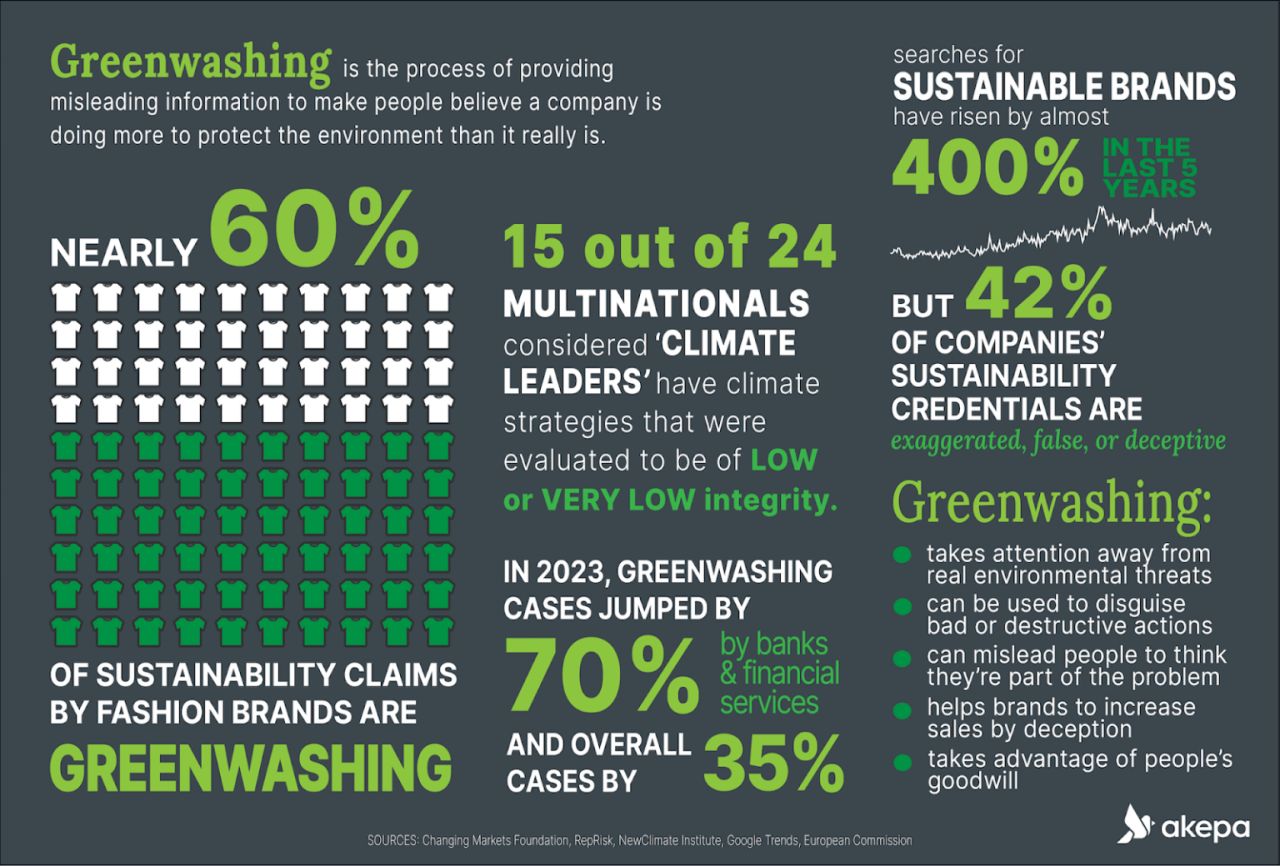
60% of “eco” products in 2025 had misleading claims. (EU Commission Study)
$50B+ in fines imposed globally for deceptive sustainability marketing. (2025)
Only 9% of plastic ever produced has been recycled, despite brands pushing “recyclable” products. (UNEP, 2025)
🔍 5 Common Faux Sustainability Scams (With Real Data)
1️⃣ Eco-Jargon Trap 🚫
🔹 Buzzwords like “green,” “eco-safe,” or “natural”—without proof.
❌ Example: H&M’s “Conscious Collection
Reality: Only 1% of the materials met sustainability standards.
Fine: €500K (2024, Netherlands).
2️⃣ Fake Green Certifications 🎭
🔹 Self-made labels that look official but lack third-party verification.
❌ Example: Keurig’s “recyclable” coffee pods
Reality: Only 3% of recycling centers could process them.
Fine: $3M (Canada, 2024).
3️⃣ Half_Truths & Hidden Pollutants 🏭
🔹 Companies highlight one green initiative but hide major environmental harm.
❌ Example: McDonald’s “plastic-free” paper straws
Reality: Straws weren’t recyclable, and company produced 4B plastic wrappers/year.
Public backlash led to policy reversal (2025).
❌ Example: Amazon’s “Climate Pledge Friendly
Reality: Many certified products had no actual emissions reduction.
Fine: Under investigation for misleading claims (2025).
4️⃣ “Future Green” Promises ⏳
🔹 Distant net-zero goals without current action.
❌ Example: Shell’s Net-Zero 2050 Pledge
Reality: Expanded new oil drilling projects in 2025 while marketing “low-carbon” fuels.
Fine: $5B in climate lawsuits (EU & US, 2025).
❌ Example: Coca-Cola’s “100% recycled plastic” bottles
Reality: Only 12% of bottles were actually from recycled materials.
Fine: EU Greenwashing Watchdog under review (2025).
5️⃣ Recyclable & Vegan Myths ♻️
🔹 Products marketed as “sustainable” but are harmful in disguise.
❌ Example: Fast Fashion’s “Vegan Leather
Reality: 90% made from PVC plastic, a major environmental pollutant.
❌ Example: Nestlé’s “Biodegradable” Coffee Pods
Reality: Took over 400 years to decompose in landfills.
✅ How to Spot & Avoid Faux Sustainability
✔ Look for verified third-party labels (FSC, Fair Trade, GOTS, Energy Star).
✔ Demand impact reports with real numbers (not vague marketing claims).
✔ Check recyclability claims with local waste management rules.
✔ Avoid “net-zero” goals without short-term milestones.
🌍 Why This Matters
68% of consumers prefer sustainable brands, but fake claims destroy trust.
Greenwashing delays climate action while real eco-friendly businesses struggle.
Regulators are pushing for stricter laws—but consumer awareness is key.
💬 Seen a Faux Sustainability scam? Drop it below! 🚨♻️

Originally published on LinkedIn on 2025-03-15 05:27:05: https://www.linkedin.com/feed/update/urn%3Ali%3AgroupPost%3A2474261-7306546458546040832
Solar Frauds: The Dark Side of the Renewable Revolution
As the world accelerates its transition to clean energy, solar power has emerged as a beacon of hope. But with rapid growth comes challenges—fraudulent practices that undermine progress, trust, and investments. Here’s a snapshot of how solar fraud has impacted India and the world:
📊 Key Stats: India and Global Solar Frauds
1. Misuse of Subsidies
India:
₹150 crore ($18M) lost in Gujarat’s Solar Pump Scam (2022).
₹350 crore ($42M) in fraudulent subsidy claims uncovered in audits.
Global:
Spain: €2.6B ($2.9B) lost in subsidy fraud (2012).
China: $350M reclaimed in false claims (2019).
2. Fake Solar Projects and Ponzi Schemes
India:
₹200 crore ($24M) swindled in Tamil Nadu’s Ponzi scheme (2021).
₹100 crore ($12M) lost in fake panel scams in North India (2023).
Global:
Germany: €10M ($11M) defrauded in a Ponzi scheme (2020).
Europe: $50M stolen via fake investment platforms (2023).
3. Bribery and Corporate Misconduct
India:
$265M bribery allegations linked to Adani Group contracts (2024).
₹500 crore ($60M) lost in rigged state tenders (2020–23).
Global:
Brazil: $200M in inflated solar project costs due to bribery (2021).
US.: SunEdison bankruptcy revealed $16B in mismanagement (2016).
4. Financing and Loan Scams
India:
₹50 crore ($6M) lost in Maharashtra’s fake solar loans (2023).
₹50 lakh ($60K) defrauded in Rajasthan rooftop lease scams (2022).
Global:
Kenya: Substandard solar kits caused national losses (2021).
Nigeria: Predatory solar loans trapped thousands in debt (2020).
5. Cyber_Enabled Frauds
India:
₹10 crore ($1.2M) stolen via fake subsidy portals (2024).
₹100 crore ($12M) in e-commerce scams selling non-existent products (2023).
Global:
Canada: $5M lost to phishing targeting solar shipments (2020).
Europe: $50M siphoned via investment frauds (2023).
6. Greenwashing and Carbon Credit Scams
India:
₹100 crore ($12M) tied to fake carbon credits from non-existent solar farms (2021).
Global:
Australia: $10M in fake carbon credit sales (2021).
EU: Massive fraud led to stricter carbon trading rules (2022).
🚨 Lessons for the Industry
1. Transparency is Non-Negotiable: Stricter audits and real-time monitoring are essential for subsidy programs and tenders.
2. Educate and Empower: Public awareness campaigns can protect investors and consumers.
3. Global Collaboration: Cross-border efforts are needed to tackle international solar fraud.
💡 Why It Matters
Solar power is critical to meeting global sustainability goals, but fraud undermines its potential. It’s time for governments, businesses, and innovators to come together to build a fraud-free solar ecosystem.

Originally published on LinkedIn on 2024-12-14 05:42:39: https://www.linkedin.com/feed/update/urn%3Ali%3AgroupPost%3A2368335-7273573083842510848

