Hello2026.Demand_stability_no_longer_guarantees_profit_stability. Dr. Anju Sharma
KtalystInsights™ | KtalystKlues™ | MrsSustainability™
Same demand?.
Same products?
Different profits: because decisions changed.
Where strategy starts failing?
ProfitVolatility didn’t emerge overnight. It was designed upstream by political & industrial leadership decisions that refunneled country-level cost math.
FinanceLens:
Leadership decisions → Country cost structure → Sector margins
1) EU CarbonCost exposure
✓ CBAM initiated proxy: €80–100/tCO₂
✓ Landed-cost uplift: +2–5%
✓ EBITDA dispersion (same sector): 300–500 bps
Sectors
✓ Steel / Aluminium / Cement: survival = top-quartile efficiency
✓ Chemicals: selective pass-through, margin split
✓ Automotive: supplier repricing + Scope-3 pressure
2) US Earnings timing exposure
✓ IRA incentives swing IRRs 10–30%
✓ Domestic-content rules add 5–15% cost
✓ Forecast volatility tied to policy cycles
Sectors
✓ EV / Batteries: winners decided by incentive timing
✓ Renewables: policy-window economics
✓ Manufacturing: reshoring lifts capex, not always margins
3) China Pricing pressure exposure
✓ Export undercutting: 5–20%
✓ Capacity defended via pricing, not margins
✓ Volumes stable, margins externalised
Sectors
✓ EVs: global margin reset underway
✓ Steel: export-led compression
✓ Chemicals: oversupply → global dilution
Notice how none of these risks originate from demand.
4) NamasteIndia Alignment exposure
✓ Safeguard duties selective by sector
✓ Export controls swing margins ±10–25%
✓ Incentives tied to localisation & scale
Sectors
✓ Steel / Electronics: margin insulation
✓ Chemicals: winners where import substitution aligns
✓ Agri / Energy: episodic volatility
5) MiddleEast Transition timing exposure
✓ Fossil fuels still deliver >70% cash flows
✓ Transition CAPEX front-loaded
✓ Paybacks extended 5–8 years
Sectors
✓ Oil & Gas: cash-rich, valuation-sensitive
✓ Hydrogen / SAF / Ammonia: capex-heavy, margin lag
✓ Petrochemicals: feedstock edge vs demand risk
6) ASEAN Stability premium
✓ Manufacturing growth: high single-digit CAGR
✓ Lower tariff churn vs US/EU
✓ EBITDA volatility materially lower
Sectors
✓ Electronics / Components: China+1 beneficiaries
✓ Consumer goods: margin stability
✓ Light manufacturing: predictable cost curves
What this changes in YR2026
✓ Profit volatility is geographic + sectoral, not cyclical
✓ Cost risk is increasingly externalised at borders
✓ Business sustainability = margin durability, not intent
✓ Strategy fails where country–sector math is ignored
KtalystInsights™:
✓Markets didn’t suddenly become uncertain.They became conditional country by country.
✓The P&L is no longer reacting to markets.
It is reacting to choices made upstream — political and industrial.
Hello2026 KtalystKlues LeadershipDecisions
DataComa
Originally published on LinkedIn on 2026-01-04 08:15:05: https://www.linkedin.com/feed/update/urn%3Ali%3Ashare%3A7413493157688168448
📈 EVExpansion Trends– Powered by Export Partnerships
🚗 70% of China’s vehicle exports in 2024 were electric vehicles
→ Making China the world’s No. 1 EV exporter
(Source: IEA, 2025)
💰 $25 billion+ invested by Chinese EV makers in foreign markets (2022–2025)
→ Includes JVs, tech licensing & plants in 30+ countries
(Source: BloombergNEF)
🇪🇺 Europe’s EV Sales:
→ Over 20% of all new EVs sold in Europe (2024) were China-linked brands (BYD, MG, Leapmotor)
(Source: ACEA, 2025)
🔋 Battery Dominance:
→ Chinese firms (CATL, BYD, CALB) supply 60–65% of global EV batteries
→ CATL alone holds ~36% global market share
(Source: SNE Research)
🇮🇳 NamasteIndia Watch:
→ Over 40% of India’s EV components are imported from China, despite FDI limits
→ Indian firms like Sona Comstar, Uno Minda, JSW are in tech/partnerships
(Source: ICEA, Invest India)
🚢 Leapmotor × Stellantis JV:
→ Aims to export 500,000+ EVs annually by 2027 to EU, India, Africa
💬 “China’s EV tech is not just in the driver’s seat—it’s at the steering wheel of global transformation.
Dr. Anju Sharma | MrsSustainability
Founder, Ktalyst Keystone
Originally published on LinkedIn on 2025-07-25 10:31:49: https://www.linkedin.com/feed/update/urn%3Ali%3Ashare%3A7354458347787419669
🌍 NamasteIndia’s Emerging 2025TrendsGreenTechOutlook 🇮🇳
From coastal corridors to global climate leadership, India is positioning itself as a hub for green hydrogen, ammonia, and clean energy exports.
📌 Key Trend: GreenHydrogen is not just a domestic ambition—it’s India’s new global growth story.
🔹 Top India-HQ Players Leading the Shift:
1. AMGreen – Launches the Kakinada green ammonia project (0.5–1 MTPA), with plans to supply 20% of Europe’s green ammonia by YR2030.
2. Reliance – GigaScale hydrogen from Jamnagar.
3. AdaniGreen – Scaling from 13.48 GW to 45 GW of renewables by 2030, driving integrated hydrogen-ammonia systems.
4. BPCL & LarsenToubro – Building electrolyzers, mobility hubs, and infrastructure from Kochi to Mundra.
5. NTPCGreen – Powering public-sector scale, with targets of 100,000 tonnes/year of green hydrogen.
6. Startups – Log 9 Materials and Green Trek are pioneering graphene fuel cells and sustainable steel.
📈 Emerging 2025Trends:
✅ Export-first ammonia & hydrogen corridors to Europe, Japan, and Singapore
✅ Indigenous electrolyzer manufacturing reducing costs by 30%
✅ Sector-wide decarbonization across fertilizers, aviation, and shipping
✅ Startup and public-private collaboration shaping India’s green edge
🔎 What’s Driving It:
📊 India’s green hydrogen market projected at $8B by YR2030!
🏛️ NationalGreenHydrogen Mission ($2.4B) + PLI schemes + global MOUs
🌞 Lowest solar costs globally (~$0.03/kWh), making green fuels viable
💬 India’s GenZ workforce, global investors, and policy leaders are aligning with one goal: Sustainable growth, exported at scale.
📢 What should India prioritize next—electrolyzer R&D, green steel, or global alliances?
Originally published on LinkedIn on 2025-05-28 11:39:24: https://www.linkedin.com/feed/update/urn%3Ali%3Ashare%3A7333456858675867648
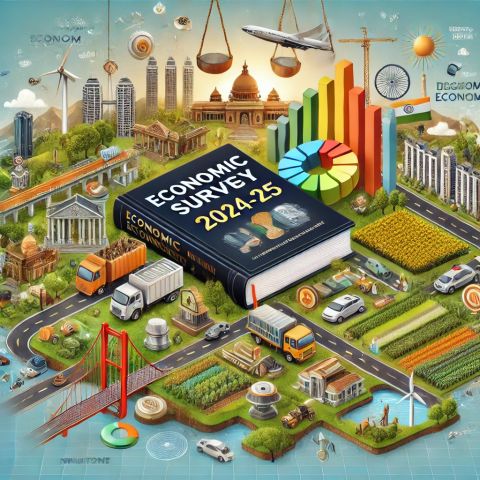
📊 India_Economic_Survey_2024-25: Growth, Resilience & Future Focus 🇮🇳📈
India’s economy is defying global uncertainties, powered by investment, reforms, and innovation. Here’s a concise breakdown of the key takeaways.
🌏 Economic Strength & Fiscal Health
✅ Growth remains strong, driven by domestic investment.
✅ Inflation moderate, but food prices remain volatile.
✅ Capital spending up, ensuring long-term stability.
🏆 Key Shift: India prioritizes investment over short-term spending.
💰 Banking & Financial Sector
✅ Low NPAs & strong credit growth signal a healthy banking sector.
✅ Global interest rate risks monitored to ensure market stability.
🏆 Key Shift: A robust financial system supports economic momentum.
🌐 Trade & External Sector
✅ FDI remains a focus, with business reforms easing entry.
✅ Export challenges persist, due to global trade tensions.
✅ Reducing import dependency on China to boost self-reliance.
🏆 Key Shift: Reshaping trade policies to adapt to global disruptions.
🏗️ Infrastructure & Industry
✅ Post-election boost to infrastructure—transport, digital, energy.
✅ MSMEs get policy push, enhancing industrial output.
🏆 Key Shift: Building for the future with targeted investments.
🌱 Climate & Sustainability
✅ Energy transition & green investments expanding.
✅ Air pollution & emissions remain critical issues.
🏆 Key Shift: Sustainability is now a policy priority, not an afterthought.
🚀 Employment, AI & Future of Work
✅ Upskilling & gig economy shaping future jobs.
✅ AI disruption expected, but workforce adaptation in progress.
🏆 Key Shift: Balancing tech advancement with job security.
📈 Vision 2047: India’s Long-Term Economic Strategy
✅ Deregulation & ease of doing business accelerating growth.
✅ Viksit Bharat 2047 aims to make India a developed economy.
🏆 Key Shift: From short-term fixes to long-term economic transformation.
🏆 KeyTakeaway
India’s Economic Survey 2024-25 highlights resilience, investment-driven growth, and policy innovation. The focus is on long-term stability, sustainability, and self-reliance.
👉 Is India ready for its next economic leap?
EconomicSurvey IndiaGrowth Infrastructure GreenEconomy DigitalIndia ViksitBharat2047
Originally published on LinkedIn on 2025-01-31 19:21:29: https://www.linkedin.com/feed/update/urn%3Ali%3Ashare%3A7291173766041059329
🌟 India’s Chemical Industry: The Catalyst for Global Leadership (2025–2030) 🌟
The #$4 trillion global chemical industry is evolving rapidly, with trends like green chemistry, digital transformation, and supply chain diversification shaping its future. By 2030, the market is set to grow to #$5.5 trillion, and India has a golden opportunity to lead the charge. 🚀
Why India’s Chemical Industry is a Game-Changer
✅ Economic Engine: Contributes 7% to GDP; projected to hit 9% by 2030.
✅ Export Potential: Current exports at #$30 billion, with a target of #$60 billion.
✅ Job Creation: Can generate 2 million new jobs in specialty and green chemicals.
✅ Sustainability Leadership: Opportunity to capture 10%-15% of the #$150 billion green chemical market.
Global Trends: Challenges & Opportunities
🌍 China’s Dominance:
Controls 35% of the global chemical market.
Investing #$300 billion in green hydrogen and renewable feedstocks.
Pivoting to high-value specialty chemicals.
💡 Opportunity for India:
Reduce 33% import dependency (primarily on China).
Leverage PLI schemes for specialty and bio-based chemicals.
Build world-class chemical hubs and integrated logistics infrastructure.
📊 Global Sustainability Push:
Bio-based materials growing at a CAGR of 12%.
Over 50% of global chemical firms adopting digital supply chains by 2030.
India’s Roadmap for 2030
🔹 Market Expansion: Grow the domestic market to #$400 billion at an 8% CAGR.
🔹 R&D Investments: Increase spending to 1% of industry revenue (vs. current 0.3%-0.5%).
🔹 Skill Development: Train 500,000 professionals in green and digital technologies.
🔹 Sustainability Incentives: Develop bio-refineries and scale carbon-neutral production
The Numbers That Matter
💬 The Takeaway: India’s chemical industry is more than just a sector—it’s the foundation for sustainable growth, global competitiveness, and economic resilience. With the right policies, investments, and innovation, India can lead the global stage by 2030. 🌱
Let’s build a greener, stronger, and more self-reliant future. 💼💡
ChemicalIndustry IndiaGrowth Sustainability MakeInIndia 2030Vision
Source / shared link: https://m.economictimes.com/industry/indl-goods/svs/chem-/-fertilisers/budget-2025-chemical-industry-seeks-tweaking-in-customs-duties-to-boost-manufacturing/articleshow/117429274.cms
Originally published on LinkedIn on 2025-01-22 11:41:38: https://www.linkedin.com/feed/update/urn%3Ali%3AgroupPost%3A3880479-7287796548950745088
NamasteGreenIndia’s Ethanol Revolution: Achieving 20% Blending with a Sustainable Edge
India is on the brink of achieving a 20% ethanol blending target, a transformative step towards energy independence, environmental sustainability, and agricultural empowerment. Here’s how this revolution is shaping up:
📈 The Progress So Far
🟢 2014: Ethanol blending in petrol was just 1.53%.
🟢 2024: Achieved 15%, with 4.62 million metric tonnes (MMT) of ethanol produced.
🟢 2025 Target: Projected to produce 10.2 MMT annually to meet blending and industrial needs.
🌍 Economic & Environmental Wins
💰 USD 4 Billion Saved: Annual savings on crude oil imports.
🌎 10 MMT CO₂ Reduced: Emissions cut significantly with 20% ethanol blending.
👷 500,000 Jobs Created: Boosting rural employment through distilleries and supply chains.
🚢 USD 300 Million Export Potential: Surplus ethanol positioned for international markets.
🚗 Automotive Industry’s Ethanol Push
🔧 Flex-Fuel Vehicles: Tata Motors, Mahindra, Maruti Suzuki, and Hyundai to launch 100% bio-ethanol vehicles within six months.
🛢️ Fossil Fuel Demand Cut: Flex-fuel vehicles to reduce reliance on fossil fuels by 5.5 MMT annually.
🏭 Toyota’s Commitment: Investing ₹20,000 crore (USD 2.4 billion) in ethanol-compatible vehicle production.
🌾 Agricultural Boost
🌱 8-9 MMT of Sugar: Diverted annually for ethanol production, stabilizing prices and supporting farmers.
🌾 1.5 MMT of Surplus Grains: Utilized for ethanol, ensuring sustainable revenue for agriculture.
⚡ Challenges & Opportunities
📊 Feedstock Demand: India needs an additional 2 MMT of sugarcane and 1.5 MMT of surplus grains for sustainable production.
🏗️ Infrastructure Gaps: Only 30% of fuel pumps are ready for E20 blending.
🌍 Global Leadership: Scaling production and refining distribution could position India as a leader in ethanol exports.
💡 Why This Matters
India’s ethanol revolution is more than a blending target—it’s about energy self-reliance, cutting carbon footprints, and empowering rural economies. This initiative showcases India as a global benchmark for sustainable energy transitions.
💬 Let’s discuss how India’sEthanolJourney is driving SustainableEnergy, AutomotiveInnovation, and RuralEmpowerment! 🚀
Originally published on LinkedIn on 2025-01-16 09:51:29: https://www.linkedin.com/feed/update/urn%3Ali%3AgroupPost%3A12538632-7285594503120347137
NamasteGreenIndia’s DDGS Export Boom: USD 717 Million Market, But 2025 Holds the Key
The Surge: A 314% Export Boom
India is making waves in the global Distillers Dried Grains with Solubles (DDGS) market, a key ethanol byproduct used as animal feed. Here’s the story behind the numbers:
📦 1,212 shipments of DDGS in the last 12 months (314% growth).
🌏 Major buyers:
🇻🇳 Vietnam: 51% share.
🇳🇵 Nepal: 21% share.
🇺🇸 United States: 7% share.
💰 Market Value:
2023: USD 420.67 million.
2032 (Projected): USD 717.81 million (CAGR: 6.17%).
The Challenge: Falling Prices
Despite the export surge, the industry is battling a steep price drop:
🏷️ Domestic DDGS prices: #₹14–15/kg (~USD 0.17–0.18).
🌍 Global competition and oversupply are hitting margins hard.
1. Expanded Production Capabilities:
With ethanol blending targets set to increase to 20% by 2025, India’s DDGS production will reach record levels.
2. Market Diversification:
New export agreements with Africa, Southeast Asia, and Latin America are expected to reduce over-reliance on existing markets like Vietnam and Nepal.
3. Government Interventions:
Policies promoting minimum price guarantees and export incentives are likely to stabilize DDGS prices.
Focus on value-added DDGS products, such as enriched feed, to attract premium markets.
4. Sustainability Push:
Growing demand for sustainable feed solutions globally aligns perfectly with DDGS as a cost-effective, eco-friendly option.
Indian DDGS could gain significant traction in European markets following stricter feed sustainability regulations.
5. Technological Advancements:
Adoption of advanced processing techniques will improve DDGS quality and reduce production costs, ensuring competitiveness in global markets.
India is turning its ethanol growth into a global export advantage, but to sustain the momentum in 2025 and beyond:
🛠️ Strengthen Domestic Support: Build strategic reserves to manage price fluctuations.
🌍 Capture New Markets: Target countries with rising feed demand like Brazil, Indonesia, and Nigeria.
🚀 Lead the Sustainability Charge: Establish India as a key supplier of sustainable animal feed.
Why It Matters
India’s ethanol-driven DDGS market is poised for exponential growth in 2025. By embracing innovation, diversification, and sustainability, India can become a global powerhouse in the animal feed sector while ensuring long-term industry stability.
💬 Let’s connect to explore how IndiaExports and EthanolEconomy are setting the stage for a transformative 2025. 🚀
Originally published on LinkedIn on 2025-01-15 19:30:29: https://www.linkedin.com/feed/update/urn%3Ali%3Ashare%3A7285377825862283264
NamasteBloomingIndia Kerala Blooms: ₹72,760 Cr approximately $8.6 billion USD for Green Hydrogen and Ammonia!
1. Investment Proposals and Green Hydrogen Policy:
ReNew & three other major companies establish green hydrogen and green ammonia facilities
Export Focus: Export green ammonia to contribute to India’s export-led growth strategy
State Policy:** Kerala’s draft green hydrogen policy approved, awaiting Council of Ministers’ approval
National Goal: India aims for 5 MTPA green hydrogen production capacity by 2030 under the National Green Hydrogen Mission .
Green hydrogen, being emission-free, is crucial for decarbonizing sectors heavily reliant on hydrogen.
Originally published on LinkedIn on 2024-07-16 12:16:12: https://www.linkedin.com/feed/update/urn%3Ali%3AgroupPost%3A13891237-7218951554748321792
NamasteBloomingIndia Kerala Blooms: ₹72,760 Cr approximately $8.6 billion USD for Green Hydrogen and Ammonia!
1. Investment Proposals and Green Hydrogen Policy:
ReNew & three other major companies establish green hydrogen and green ammonia facilities
Export Focus: Export green ammonia to contribute to India’s export-led growth strategy
State Policy:** Kerala’s draft green hydrogen policy approved, awaiting Council of Ministers’ approval
National Goal: India aims for 5 MTPA green hydrogen production capacity by 2030 under the National Green Hydrogen Mission .
Green hydrogen, being emission-free, is crucial for decarbonizing sectors heavily reliant on hydrogen.
Originally published on LinkedIn on 2024-07-16 12:16:03: https://www.linkedin.com/feed/update/urn%3Ali%3Ashare%3A7218951515430875136

