Mission Admission: Where Dreams Come with Deadlines
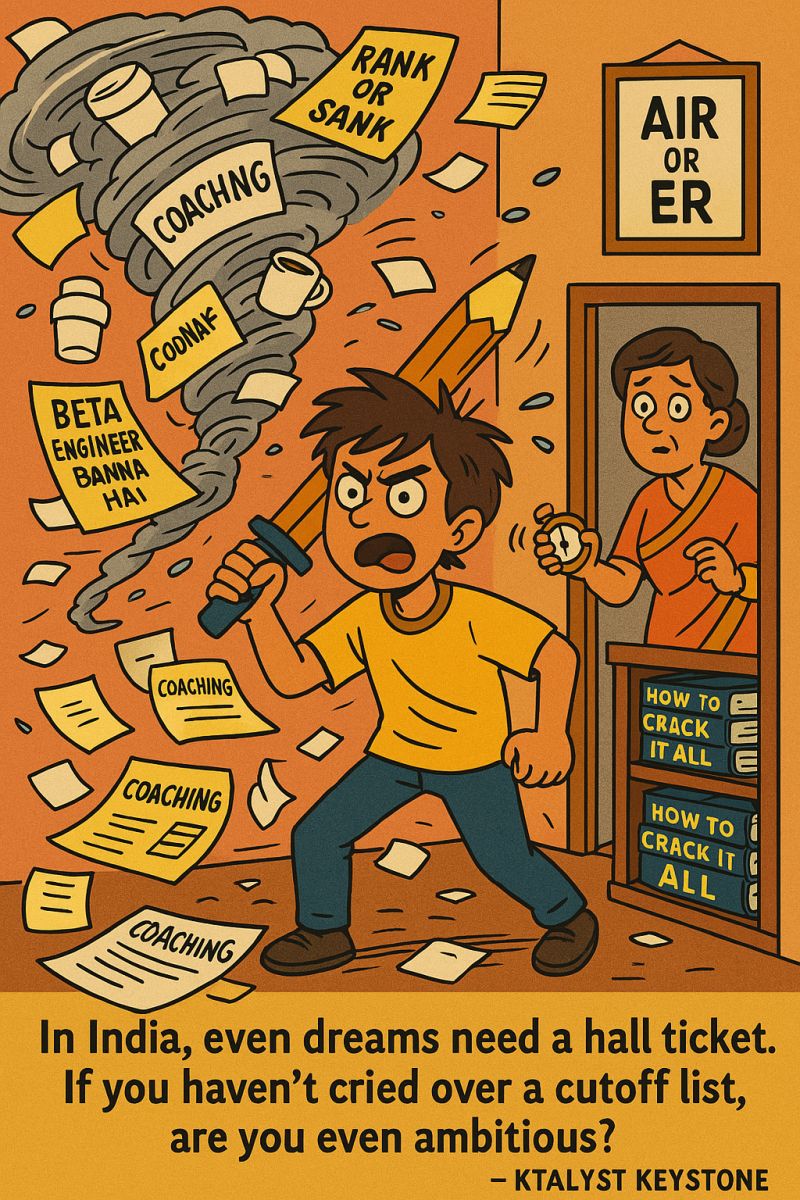
In India, even dreams need a hall ticket. If you haven’t cried over a cutoff list, are you even ambitious?
KtalystKeystone
Welcome to India, where toddlers get timetables, teenagers get tuitions, and twenty-somethings get trauma from test results.
Here, ambition is measured in marks, and potential comes with a printout.
Here’s a backstage pass to our academic circus:
🎯 Goal-Setting = Rank-Getting: What do you want to be when you grow up? “AIR under 100, Uncle.
📚 Syllabus is Sacred: No one remembers birthdays, but yes, the exact NEET chapter weightage? Of course.
💸 Coaching Fees = Dowry in Advance: Pay now, marry success later.
⏰ Alarms > Affirmations: Because in India, 5 AM doesn’t mean mindfulness—it means math revision.
🌀 Every Rejection = Redirection? Nah. It’s just Round 2 of the same exam.
In the land where failures are retaken, not forgiven, and percentiles decide your personality, we don’t just study—we strategize survival.
So buckle up. This isn’t just school.
It’s Mission Admission, and the entrance exam is only the beginning.
MissionAdmission | KtalystKeystone | CutOffCulture | RankedAndRoasted | IndiaGraduatesHard | BetaEngineerBannaHai

Originally published on LinkedIn on 2025-04-13 12:28:07: https://www.linkedin.com/feed/update/urn%3Ali%3AgroupPost%3A4023031-7317161666452819968
📚 KnowledgeSeries: The Hidden_Cost_of_Digital_Pollution – Is the Internet Killing the Planet? 🌍💻
While we focus on EVs, renewables, & plastic waste, digital pollution remains an invisible climate threat. From emails to AI, the internet’s carbon footprint is bigger than expected.
📊 Digital Pollution: The Data Behind the Screens
🟢 Data Centers = 2% of Global Electricity Use → That’s more than Germany’s entire energy consumption. (Source)
🟢 One Email = 4g CO₂ → With attachments, it’s 50g CO₂. 306B emails/day = 15M tons of CO₂ annually.
🟢 Video Streaming = 1% of Global CO₂ → One hour of Netflix in HD = 36g CO₂ → Watching at lower resolution cuts emissions by 40%.
🟢 Google Searches Emit 500 Tons CO₂/Day → Each search = 0.2g CO₂. 8.5B searches daily = annual emissions of 1.3M cars.
🟢 AI & Cloud Computing Are Carbon Guzzlers → Training one AI model emits 125,000 lbs CO₂, equal to five cars’ lifetime emissions.
🛑 How to Reduce Digital Pollution?
🟢 Delete Unnecessary Emails → Reducing 100 unneeded emails = saving 30kg CO₂ annually.
🟢 Declutter Cloud Storage → 1GB of deleted cloud data = 7kg CO₂ saved per year.
🟢 Use Green Hosting → Only 30% of websites are on carbon-neutral servers.
🟢 Limit AI Queries → Reducing unnecessary AI prompts & computations cuts energy waste.
🔥 The Takeaway: Is Digital the New Plastic?
🟢 If the internet were a country, it would be the 6th largest polluter in the world.
🟢 Digital sustainability is the next frontier—will businesses take action?
🟢 Every click, search, and email has a carbon cost—time to rethink digital habits.
📢 How can we build a cleaner, low-carbon internet? Let’s discuss! 👇

Originally published on LinkedIn on 2025-03-03 14:43:53: https://www.linkedin.com/feed/update/urn%3Ali%3AgroupPost%3A82951-7302337927789879296
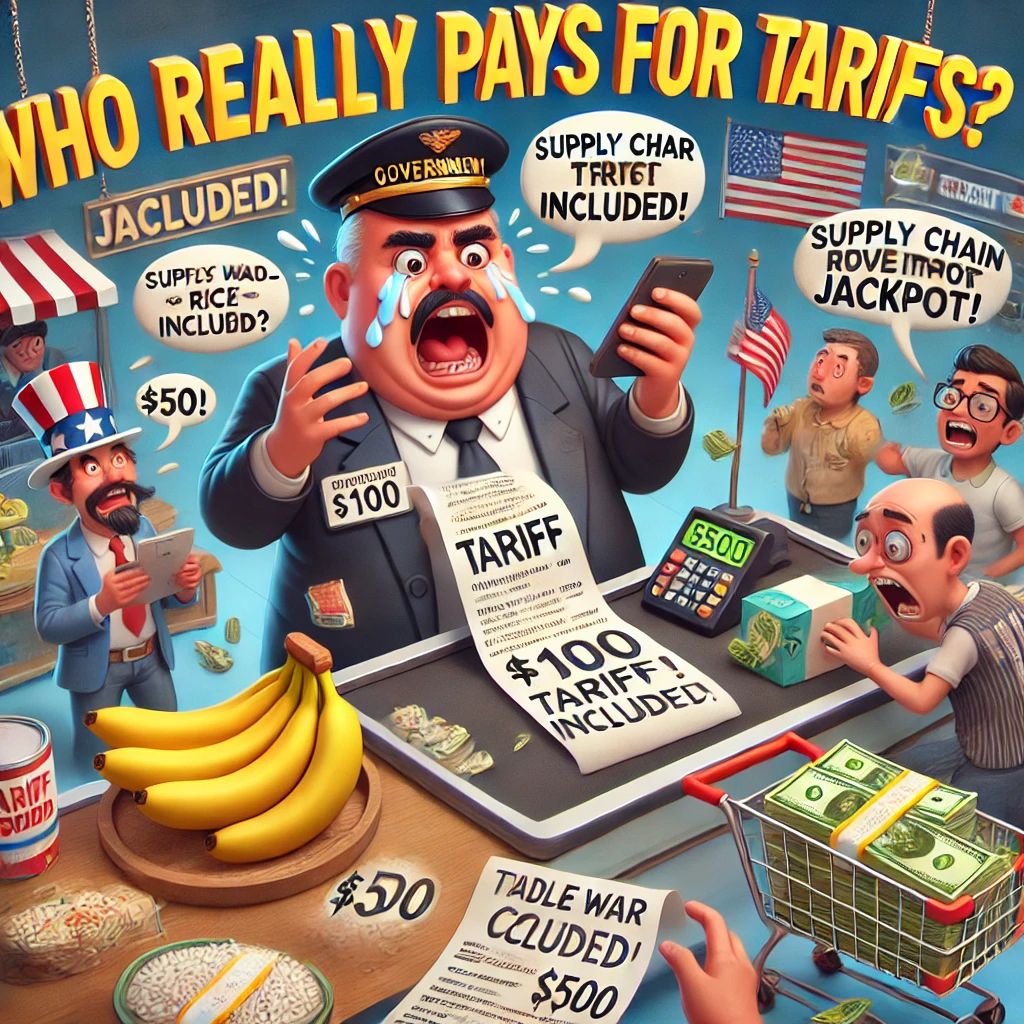
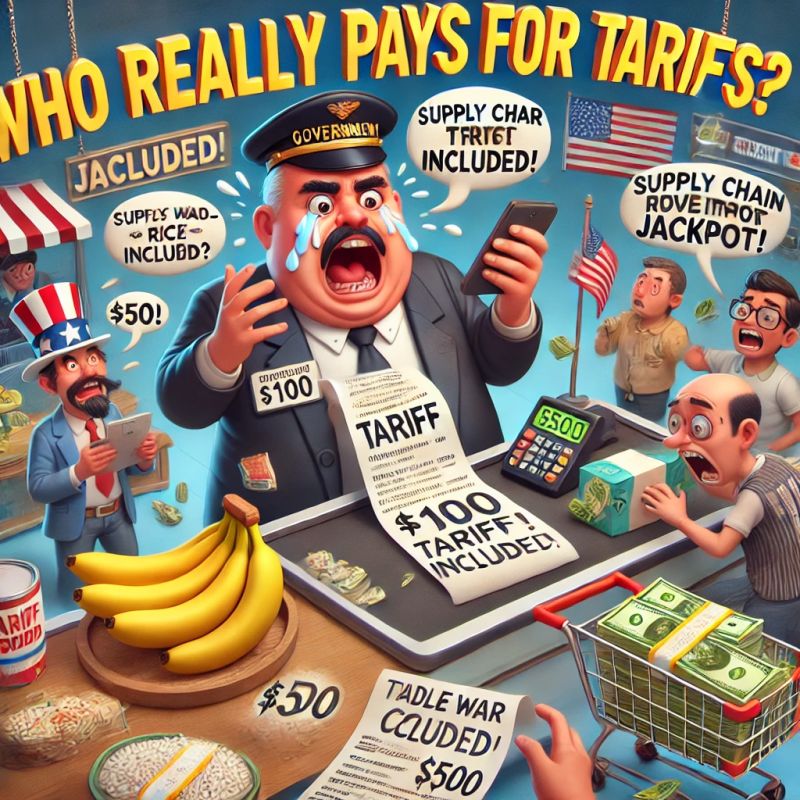
💰🌎 Tariff Wars: Who Really Pays the Price?
As governments escalate trade wars, businesses adjust supply chains, and consumers brace for price hikes, are tariffs truly protecting economies, or just shifting the cost?
🚨 Who Pays for Tariffs?
📉 Consumers Bear the Burden – 60% of tariff costs are passed on to consumers through higher prices. (IMF, 2024)
📉 Businesses Face Higher Costs – US companies paid $105B in tariffs since 2018, impacting supply chains. (USTR, 2024)
📉 Job Loss Risks – Tariffs on auto parts could cost 700K US jobs as production shifts. (Peterson Institute, 2024)
📉 Inflation Pressure – Every 10% tariff hike increases inflation by 0.5% globally. (World Bank, 2024)
📌 Reality Check: Tariffs aren’t just taxes on imports—they’re taxes on people.
🏆 Who Benefits?
✅ Governments Cash In – Tariffs generated $80B for the US Treasury in 2023. (USTR, 2024)
✅ Local Manufacturers Get Protection – Steel & aluminum industries saw a 20% production boost. (Reuters, 2024)
✅ Nearshoring Countries Profit – Mexico & Vietnam gained $65B in trade diversions from China. (IMF, 2024)
📌 Reality Check: While some industries win, the average consumer still loses.
🔮 What’s Next?
💡 Regional Trade Over Globalization – Supply chains are shifting closer to home to avoid tariff risks.
💡 Digital & AI Trade Solutions – Automated trade processing could reduce costs by 15%. (McKinsey, 2024)
💡 Green Tariffs Rising – Carbon-based tariffs will add new costs to imports, reshaping global trade. (EU CBAM, 2024)
📌 Reality Check: The cost of tariffs may outweigh the benefits if trade wars escalate.
🏆 KeyTakeaway
Tariffs could be a tool for protecting industries, should be used strategically, but would be an economic strain if prices keep rising.
👉 Who really pays for the trade war—governments, businesses, or you?
TradeWar Tariffs GlobalEconomy SupplyChainCrisis Inflation
Originally published on LinkedIn on 2025-02-05 16:37:39: https://www.linkedin.com/feed/update/urn%3Ali%3AgroupPost%3A2474261-7292944474018611204
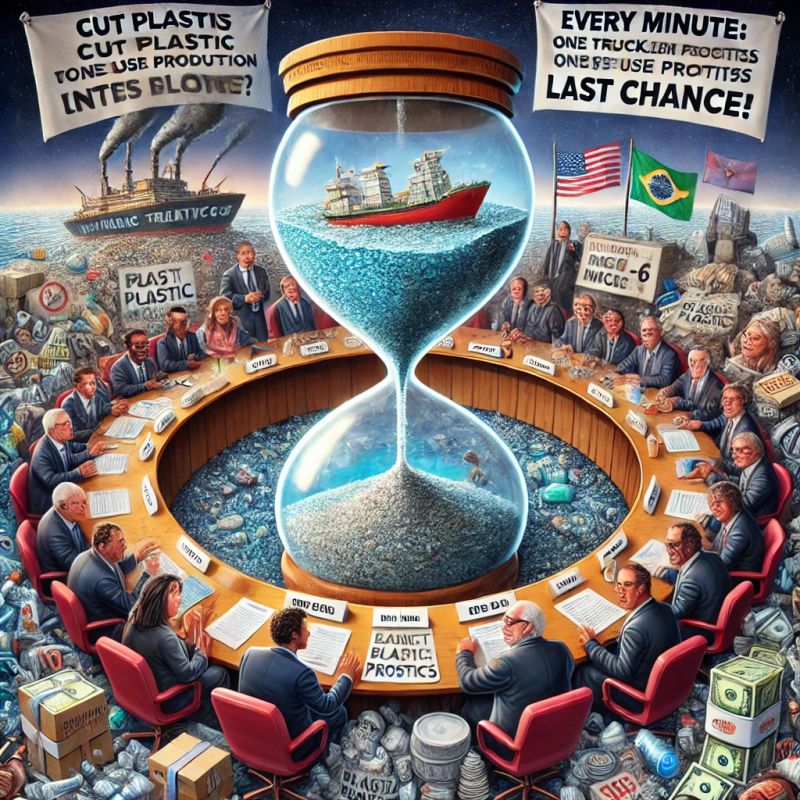
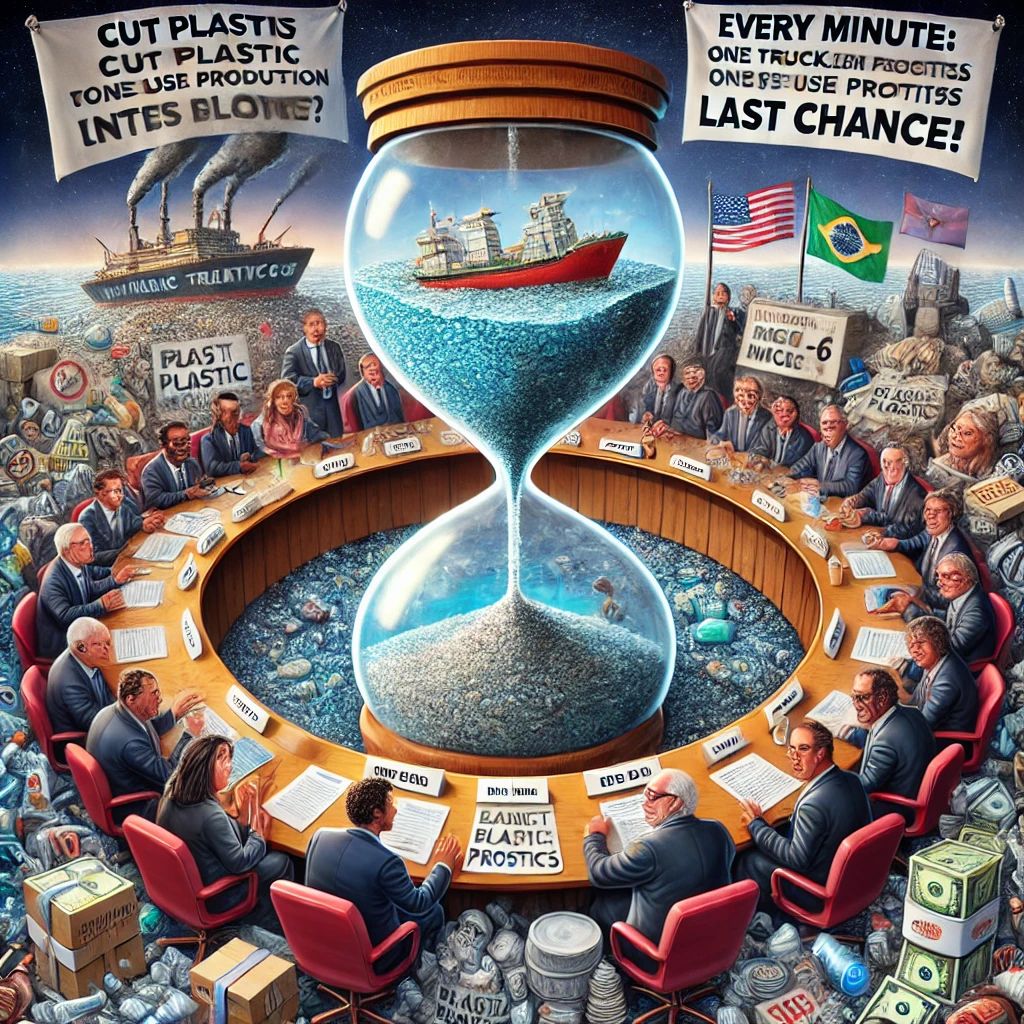
🚨 “Plastic Treaty Deadlock: Is INC-5 Fighting Pollution or Protecting Profits?” ♻️🌍💰
The Intergovernmental Negotiating Committee (INC-5) just wrapped up in Busan, South Korea, aiming to finalize a legally binding treaty on plastic pollution. Instead, the world got another delay. Why? A battle between cutting plastic production and protecting corporate interests.
🔴 1. The Big Divide: Who Wants Action vs. Who Wants Delay?
✅ 85 countries, including the EU and small island nations, pushed for binding plastic production cuts. (Source: UNEP, 2024)
❌ Saudi Arabia, Iran, and Russia led opposition, arguing waste management—not production—is the issue. (Source: The Guardian, 2024)
✅ Plastic waste is projected to triple by 2060 without drastic cuts. (OECD, 2024)
❌ Fossil fuel lobbyists outnumbered environmental groups 3:1 at INC-5, weakening proposals. (Source: WSJ, 2024)
🚨 Reality Check: Plastic production is expected to double by 2040, worsening the crisis. (Source: OECD, 2024)
🟡 2. The Stalemate: Key Proposals vs. Pushback
✅ Caps on virgin plastic production – would target the 450M tons of plastic produced annually. (Source: UNEP, 2024)
✅ Phase-out of toxic chemicals – over 16,000 chemicals are used in plastic, many unregulated. (IPEN, 2024)
✅ Stronger Extended Producer Responsibility (EPR) – shifts waste costs from consumers to corporations.
❌ Plastic production is still expected to grow by 80% by 2050 under current policies. (IEA, 2024)
❌ Half of all plastic ever made has been produced since 2000. (National Geographic, 2024)
🚨 Reality Check: Without cuts, plastic pollution will double in the ocean by 2040. (Source: Pew Charitable Trusts, 2024)
⚠️ 3. The Hard Truth: INC-5 is Running Out of Time
❌ Every minute, the equivalent of a garbage truck of plastic enters the ocean. (WWF, 2024)
❌ Only 9% of all plastic ever made has been recycled. (UNEP, 2024)
❌ Microplastics have been found in 80% of human blood samples tested. (Science Advances, 2024)
🚨 Reality Check: If INC-6 doesn’t enforce production cuts in 2025, this treaty risks becoming another empty climate agreement.
🏆 KeyTakeaway
The INC-5 negotiations ended in deadlock, as plastic-producing nations prioritize profits over pollution cuts. Without stronger global action in INC-6, this treaty could turn into just another greenwashed agreement.
👉 Will the world get a real plastic treaty—or just more delays?
PlasticCrisis NetZero Greenwashing ClimateAction INC5
Originally published on LinkedIn on 2025-02-03 08:51:04: https://www.linkedin.com/feed/update/urn%3Ali%3AgroupPost%3A9270968-7292102277627105281

