PlasticWaste Lost Its Passport?
Dr. Anju Sharma MrsSustainability
21 May 2026, EU plastic-waste exports move under stricter prior notification & consent controls.
From 21_November_2026, EU plastic-waste exports to non_OECD countries will be banned.
This is where plastic waste shifts from being a tradeable burden to an accountable material flow.
The data spine is uncomfortable:
The EU exported 32 million tonnes of waste in 2022.
Türkiye alone received 12.4 million tonnes, nearly 39% of EU waste exports.
In 2023, the EU generated 35.3 kg plastic packaging waste per person, but recycled only 14.8 kg per person.
Extra-EU recyclable-material exports rose to 8.5 million tonnes in 2023, up 34% from 2022.
Top extra-EU recyclable plastic destinations included Türkiye 22%, Malaysia 21%, and Indonesia 19%.
The message is simple:
Europe has a plastic-waste management gap.
Earlier, part of that gap travelled.
Now, it must be sorted, washed, recycled, traced, audited, priced, and accounted for closer to home.
For EU exporters, this means more pressure on domestic recycling capacity, waste traceability, digital shipment systems, and circular infrastructure.
For non-OECD importers, it means reduced access to EU plastic scrap. Countries across South Asia, Southeast Asia, Africa, Latin America, and parts of the Middle East will feel the shift.
For OECD destinations such as Türkiye, the UK, Japan, South Korea, and Mexico, the concern is diversion. Regulators will watch whether waste is genuinely recovered or merely rerouted.
For India, the signal is strategic.
India is non-OECD. The ban applies from 21 November 2026.
The India equation is clear:
Less EU scrap
→ stronger domestic collection
→ better sorting & washing
→ recycling scale-up
→ pyrolysis oil opportunity
→ EPR-linked traceability
→ circular feedstock security
This should not be read as an import loss.
It should be read as an infrastructure trigger.
The old model was:
Collect → Export → Forget
The new model must be:
Collect → Trace → Sort → Recycle → Reuse → Account
The next circular-economy advantage will not belong to the country that imports the cheapest scrap.
It will belong to the country that can organise the dirtiest material stream into the cleanest business system.
Circularity begins when waste stops travelling and responsibility starts staying home.” Dr. Anju Sharma
Originally published on LinkedIn on 2026-06-04 07:14:45: https://www.linkedin.com/feed/update/urn%3Ali%3Ashare%3A7468198543825219584
🌍 NamasteIndia Now the Biggest Plastic Polluter? No IntergovernmentalNegotiatingCommittee (INC-5.2)
India has overtaken all nations as the world’s top plastic polluter—a surge tied to mismanaged waste and limited recycling infrastructure, with major impacts on public health .
🇮🇳 IndiaPlasticPolicy 2025 – Key Milestones
Jan 2025
✅ EPR 2.0 launched – Mandatory digital compliance via CPCB portal
Mar 2025
♻️ Recycled content targets kick in (30% rigid, 20% flexibles)
Apr 2025
🚫 SUP ban expanded – Sachets, EPS trays, cling wraps added
Jun 2025
💱 PlasticCreditMarket (pilot) starts – tradable recycler credits
Aug2025
🏗️ Next meeting of the IntergovernmentalNegotiatingCommittee (INC-5.2) for the Global Plastics Treaty will be held at:
📍 Palais des Nations, Geneva, Switzerland
🗓️ August 5–14, 2025
This will be the second part of INC-5, aiming to finalize the draft legally binding agreement on plastic pollution after inconclusive talks in Busan during INC-5.1.
🏢 BrandAccountability: Coca‑Cola, PepsiCo, Nestlé
A study highlighted by Procurement Magazine (June 25) found that Coca‑Cola, PepsiCo, Nestlé and other giants now account for a combined 24% of branded plastic pollution .
Earlier data from Oceana (Mar 2025) warn Coca‑Cola alone could send 602 million kg of plastic into oceans annually by 2030 .
🌡️ Business & Climate Risks
A risk assessment (reported June 23) warns that plastic pollution, paired with rising heat and mold, is becoming a serious liability for insurers and corporations .
⚖️ PolicyShifts & Industry Responsibility
Indian government has updated the policies for plastic and packaging
🌐 Global Mobilization
On World Environment Day (June 5), UNEP called for urgent global action, urging governments, businesses and citizens to BeatPlasticPollution ahead of the upcoming Global Plastics Treaty .
The World Economic Forum emphasized the scale of the crisis—19 million tonnes of plastic leak annually—and showcased eight breakthrough solutions tied to the 2025 theme .
💶 Funding Solutions
A coalition of development banks—including those from France, Germany, Spain, Italy and EBRD—pledged €3 billion by 2030 via the Clean Oceans Initiative to curb marine plastic through waste and packaging innovation .
🔍 Key Takeaways
Geography: India has emerged as the world’s top plastic-polluting nation.
Corporate Impact: Major global brands are responsible for nearly a quarter of branded plastic waste.
Systemic Risks: Plastic pollution is now financially and legally risky for insurers and businesses.
Policy Drive: Nations like Nigeria are adopting new regulations; more funding and treaties are gaining momentum.
Originally published on LinkedIn on 2025-06-25 11:14:28: https://www.linkedin.com/feed/update/urn%3Ali%3Ashare%3A7343597444439420931
♻️ PlasticRecycling: TheSilentBillionDollarRevolution
isn’t just saving waste — it’s reshaping economies.
Discover the real market movers with KtalystInsights.
#♻️ “Recycling isn’t just renewal; it’s reinvention. Every plastic reimagined is a future reclaimed.” — KtalystKeystone
GlobalLandscape
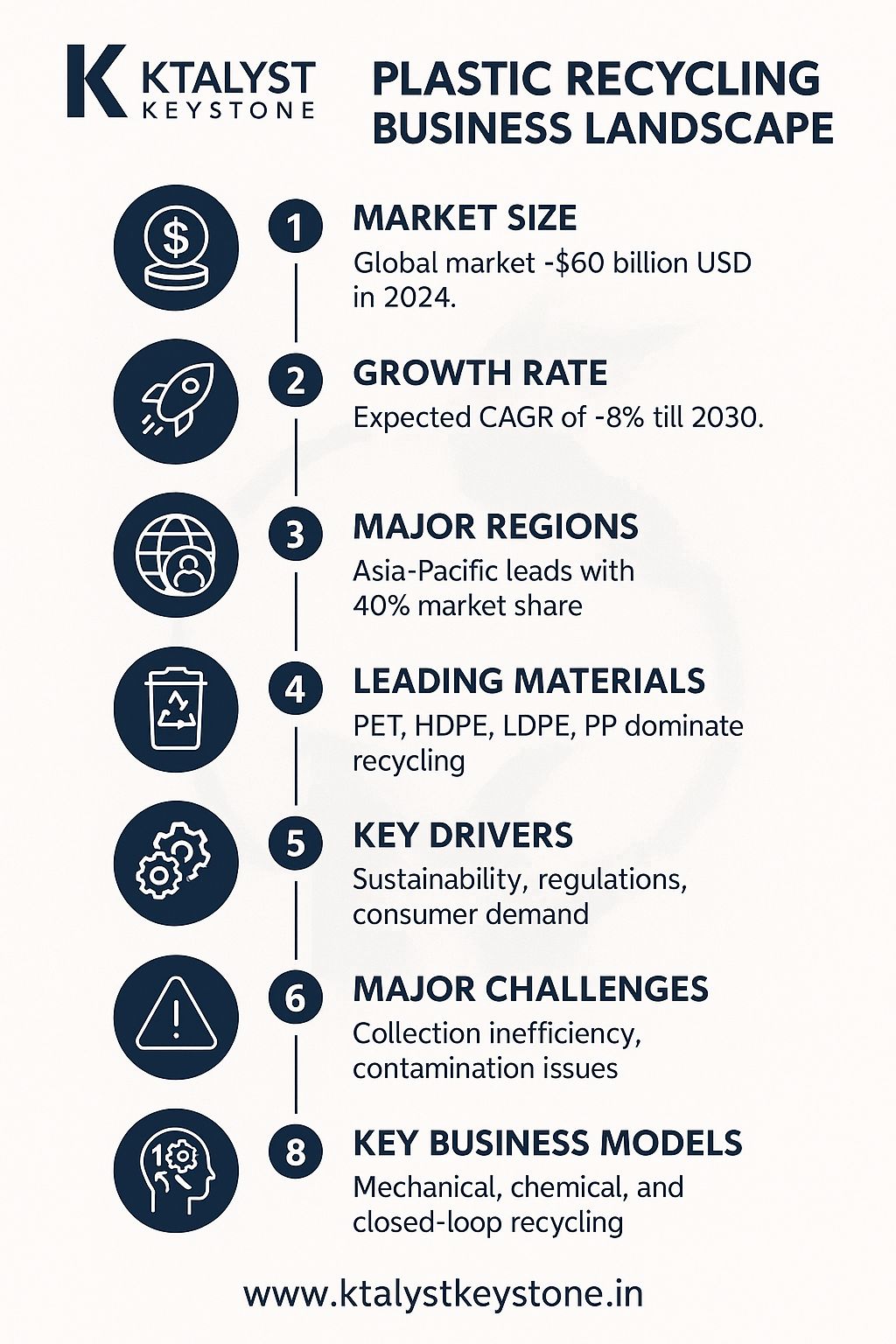
🌎 MarketSize (2024): ~$60 billion USD
📈 ExpectedCAGR (2024–2030): ~8%
🗺️ TopRegions:
AsiaPacific (~40% share)
Europe (~25%)
NorthAmerica (~20%)
KtalystInsight:
Asia’s dominance is fueled by aggressive policyshifts (China’s Green Fence, India’s EPR regulations) — local recycling startups and global joint ventures are booming.
KtalystRecyclingRating
⭐ AsiaPacific: 8.5/10 — Rapid growth, moderate tech.
⭐ Europe: 9.2/10 — High regulation, tech leadership.
⭐ NorthAmerica: 8.0/10 — Innovation-led recycling but slower mass adoption.
⭐ LATAM & Africa: 5.5/10 — Emerging opportunity zones with infra gaps.
KtalystInsight:
Europe sets the goldstandard with circulareconomy laws, while Asia leads in volume but needs advanced tech and traceability upgrades.
5KeyApplications
🛍️ Packaging – Bottles, containers, films (PET, HDPE).
👕 Textiles – Recycled polyester for apparel and furnishings.
🚗 Automotive – Lightweight components from recycled PP and composites.
🏗️ Construction – Pipes, panels, roofing from recycled plastics.
🎮 ConsumerGoods – Toys, gadgets, daily-use products.
KtalystInsight:
Packaging & Textiles together consume over 60% of all recycled plastics — brands chasing ESG targets are pivoting toward 100% recycled content.
FuturePotential
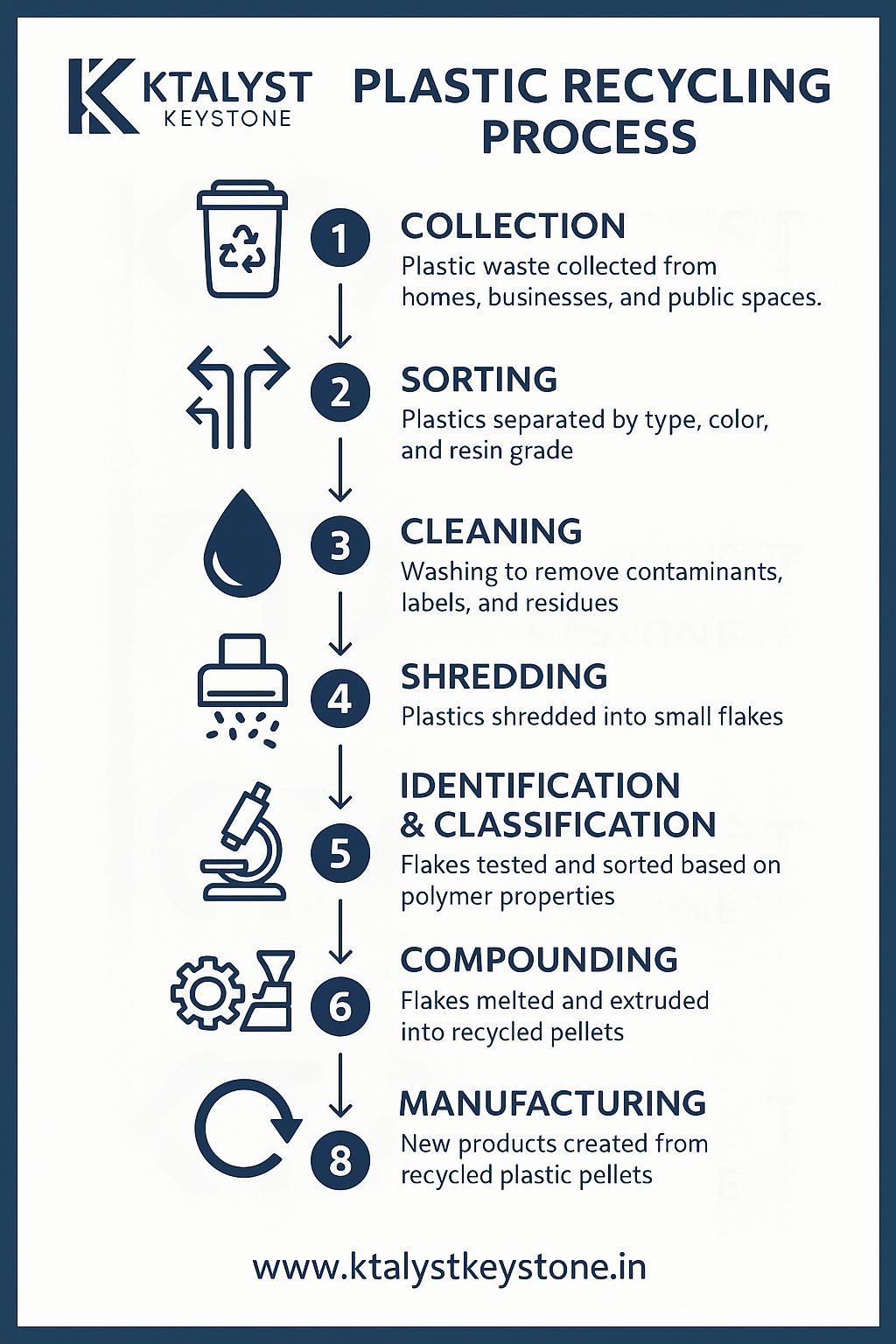
⚙️ AdvancedRecyclingTech (ChemicalRecycling): Unlocking hard-to-recycle plastics.
🤖 AIandRobotics: Smart sorting tech increasing plant yields by 25–30%.
🌿 BioplasticsHybridization: Next-gen materials mixing recycled polymers with bio-based resins.
KtalystInsight:
MechanicalRecycling dominates today, but ChemicalRecycling will be the investmentmagnet for the next decade, especially in Asia and the US, driven by stricter EPR mandates.
FinalThought
The PlasticRecycling economy is no longer a side act.
It’s the next trilliondollaropportunity, the ESGcredibility anchor, and a critical climatestrategy.
At KtalystKeystone, we believe recycling is no longer optional; it’s industrialevolution.
Originally published on LinkedIn on 2025-04-27 11:21:36: https://www.linkedin.com/feed/update/urn%3Ali%3AugcPost%3A7322218357754081280
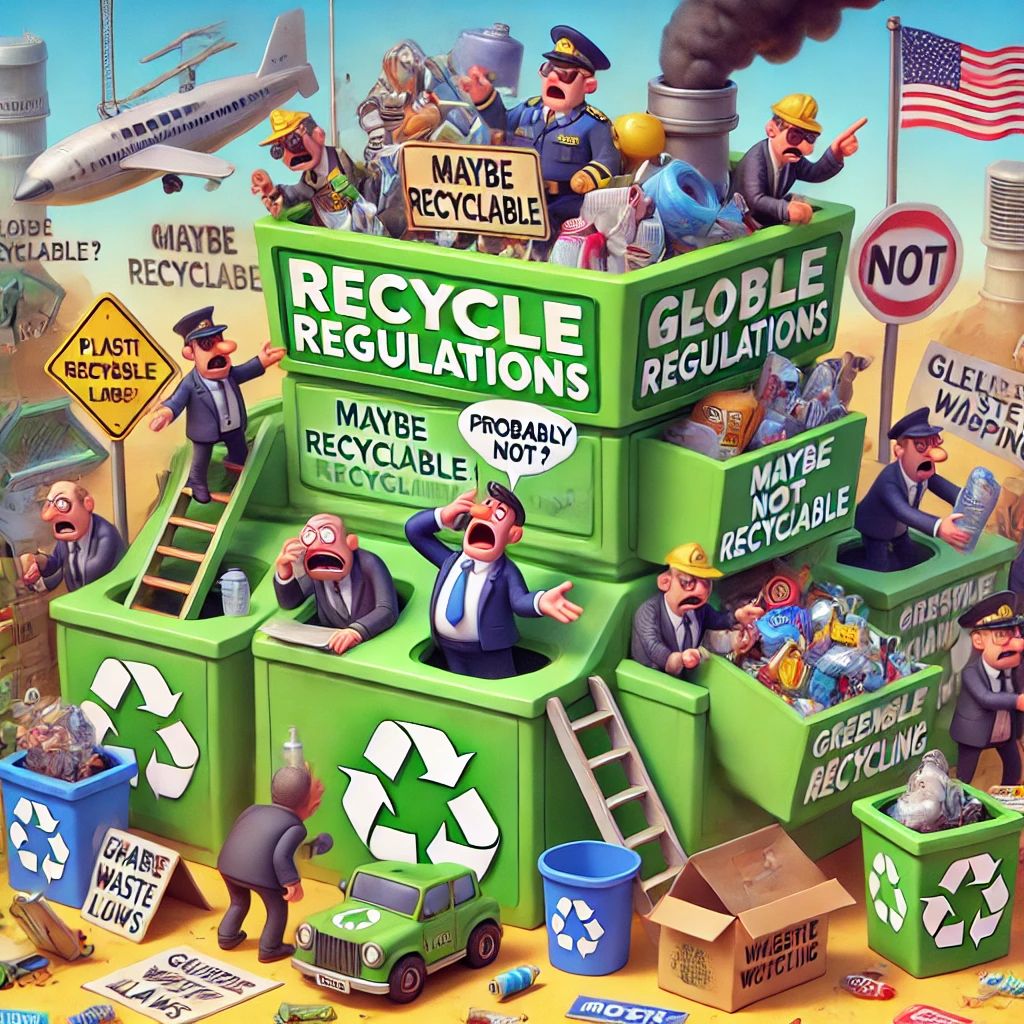
Recycle_Regulations: The New Gold Standard or a Global Mess?” ♻️🌍📜
Recycling isn’t just about throwing plastic into the right bin—it’s becoming a highly regulated industry with economic, environmental, and political implications. But are these recycle_regulations actually working, or are they just creating bureaucratic_chaos? Let’s break it down data-first.
📜 1. The Global Recycling Rulebook is Expanding
✅ Over 190 countries signed the Basel Convention, restricting plastic waste exports. (Source: UN, 2023)
✅ EU’s Circular Economy Package mandates 65% recycling targets by 2035. (Source: EU Commission, 2024)
✅ US States Are Taking the Lead: California’s SB 54 law requires 30% of plastic to be recyclable by 2028. (Source: CalRecycle, 2024)
🚨 The Problem? Many rules lack enforcement, and illegal waste dumping is still a #$10 billion global industry. (Source: Interpol, 2023)
⚖️ 2. Who’s Paying? The Battle Over EPR (Extended Producer Responsibility)
✅ Canada, EU & Japan require companies to fund recycling programs through EPR laws.
✅ India’s EPR Rules now hold businesses responsible for plastic recovery quotas. (Source: CPCB, 2024)
🚨 The Problem? Many companies shift costs to consumers, raising product prices.
🏆 Winner: Governments with strict accountability like Germany & South Korea.
❌ Loser: Developing nations drowning in imported plastic waste.
🛑 3. Greenwashing vs. Real Impact
✅ France bans ‘Recyclable’ labels unless companies prove 100% recyclability. (Source: French Gov, 2024)
✅ EU’s new Digital Product Passport tracks materials from production to disposal. (Source: EU Commission, 2024)
🚨 The Problem? 60% of ‘recyclable’ plastic isn’t actually recycled due to lack of infrastructure. (Source: Greenpeace, 2023)
🏆 Winner: Countries mandating transparency & product lifecycle tracking.
❌ Loser: Brands using misleading recycling claims.
🏗️ 4. The Future of Recycling Laws
📈 AI & Robotics to improve sorting efficiency & reduce contamination.
♻️ Chemical Recycling is gaining traction but faces cost & emissions concerns.
🚀 Global Agreements like the UN Plastics Treaty (2025) could reshape waste management worldwide.
🏆 Final Verdict: Recycling regulations are evolving, but enforcement is the real battle.
🏆 KeyTakeaway
Recycling isn’t just about being green—it’s about accountability. The future will belong to nations & businesses that get it right while others struggle with waste crises & regulatory chaos.
👉 Is your country leading or lagging in the recycling revolution?
RecycleRegulations CircularEconomy GreenLaws Sustainability PlasticCrisis NetZero
Originally published on LinkedIn on 2025-01-30 18:34:51: https://www.linkedin.com/feed/update/urn%3Ali%3AgroupPost%3A100646-7290799643045646336

