Why_BigOil_MayBeBuying it’s OwnFuneralFlowers 🥀
Dr. Anju Sharma |MrsSustainability
The headlines are breathless.
∆Missiles fly.
∆Brent crosses $100.
∆Tankers suddenly discover the Cape of Good Hope scenic route.
The obvious conclusion?
Hydrocarbons are back.
KtalystInsights is more ironic.
This is less a comeback tour and more a liquid-gold exit interview.
1️⃣ The Kinetic Tax
War doesn’t destroy wealth.
It simply collects it at the pump.
Every conflict premium behaves like an involuntary tax on energy importers.
Consumers pay more.
Exporters collect windfalls.
But the moment a fuel becomes a National Security Liability, the game changes.
It stops being cheap energy.
It becomes a problem nations rush to solve.
2️⃣ The Substitution Law
Energy history shows a clear pattern.
Oil shocks rarely lead to more oil.
They lead to substitution.
1973 oil crisis
→ France launches the Messmer nuclear program
2022 Ukraine war
→ Europe accelerates REPowerEU
Today’s tensions
→ hydrogen corridors, grid expansion and battery supply chains
Energy shocks compress 20 years of transition into five.
3️⃣ The Three-Speed Energy Race
✓Player Strategy
US Double dips: produces oil, sells defense, attracts safe-haven capital.
Europe Turns climate ambition into energy security. Breaking up with gas, dating the sun.
Asia Substitutes at scale. Solar, batteries and EVs as energy independence.
Different playbooks.
Same direction.
Less exposure to volatile hydrocarbons.
4️⃣ The PetrodollarParadox
Here’s the ultimate irony.
The biggest investors in the post-oil world may be oil exporters themselves.
Sovereign wealth funds are deploying hydrocarbon windfalls into:
hydrogen corridors
solar mega-projects
EV ecosystems
grid infrastructure
They are not “going green.
They are hedging against their own obsolescence.
Using today’s oil rents to buy tomorrow’s solar seats.
KtalystKlue
The most expensive oil in history
is not the oil priced at $150.
It’s the oil that makes your customers so angry they invent a way to never need you again.
So if you want to understand the energy war…
Don’t track the oil price.
Track the CapEx of the countries receiving those oil checks.
When petro-states start buying solar farms and hydrogen hubs…
the obituary has already been written.
Dr. Anju Sharma
MrsSustainability KtalystInsights KtalystKlues
EnergySecurity StrategicWealth
DataComa GreenLove$ 5Ps 5Es
Originally published on LinkedIn on 2026-03-15 05:23:19: https://www.linkedin.com/feed/update/urn%3Ali%3Ashare%3A7438817082286202880
The “Business” of Ferrets in WarringOilMarkets
Dr. Anju Sharma MrsSustainability
KtalystInsights KtalystKlues
In stable times oil markets behave like engineers.
In war they behave like a business of ferrets!!!
When geopolitics shakes the ground,
energy traders start tunneling for survival.
Pipelines, tankers, futures contracts, and freight routes suddenly become nervous tunnels of global commerce.
Every missile launch…
Every tanker diversion…
Every sanction headline…
sends markets burrowing deeper into uncertainty.
Consider March2026.
Traffic through the Strait of Hormuz the artery carrying nearly 20–25% of global oil tradefell sharply amid regional tensions.
Within days, markets began repricing risk.
✓ What markets reacted to
✓ Brent crude surged over 25%, crossing $110–114 per barrel
✓ OPEC+ supply cuts of ~3.66 million barrels per day
✓ Tanker insurance premiums surged
✓ Shipping routes lengthened as vessels avoided conflict zones
✓ A $4–10 per barrel “war premium” quietly entered the futures curve
Before a single oil well ran dry, the price of fear was already embedded in the system.
✗ What actually did NOT happen
✗ No global oil fields ran dry
✗ No structural collapse in global production
✗ No physical shortage of crude at the wellhead
✗ No global refinery shutdown
Yet markets moved violently.
Why?
Oil markets are not just physical. They are also financial and geopolitical systems.
Energy trading houses such as Glencore, Vitol, and Trafigura operate inside this volatility arbitraging futures, freight, insurance, and cargo flows.
Ironically, low volatility crushed trading profits in 2025.
But war changes the physics of markets.
Ships reroute.
Insurance surges.
Futures spike.
And before a single barrel disappears…
the tunnels of global energy markets are already shaking.
MarketLaw
✓ War Premium = Geopolitical Risk × Market Fear
KtalystKlues
The next energy transition won’t just change fuels. It will redefine competitive advantage.
✓ Energy is shifting from cost line → strategic moat
✓ The new premium is not cheap power it’s predictable greenpower
✓ Sustainability is moving from reputation to revenue
✓ Carbon is becoming a hidden tariff in global trade
✓ Future factories will follow cleanelectrons
✓ The next unicorns will sell energy certainty
✓ Energy strategy is moving from utility desk to boardroom
✓ In the new economy decarbonization will move as fast as digitalization
Dr. Anju Sharma
MrsSustainability
KtalystInsights
KtalystKlues
DataComa GreenLove$
5Ps 5Es
Originally published on LinkedIn on 2026-03-12 04:27:07: https://www.linkedin.com/feed/update/urn%3Ali%3AgroupPost%3A1910576-7437715776595386369
The “Business” of Ferrets in WarringOilMarkets
Dr. Anju Sharma MrsSustainability
KtalystInsights KtalystKlues
In stable times oil markets behave like engineers.
In war they behave like a business of ferrets!!!
When geopolitics shakes the ground,
energy traders start tunneling for survival.
Pipelines, tankers, futures contracts, and freight routes suddenly become nervous tunnels of global commerce.
Every missile launch…
Every tanker diversion…
Every sanction headline…
sends markets burrowing deeper into uncertainty.
Consider March2026.
Traffic through the Strait of Hormuz the artery carrying nearly 20–25% of global oil tradefell sharply amid regional tensions.
Within days, markets began repricing risk.
✓ What markets reacted to
✓ Brent crude surged over 25%, crossing $110–114 per barrel
✓ OPEC+ supply cuts of ~3.66 million barrels per day
✓ Tanker insurance premiums surged
✓ Shipping routes lengthened as vessels avoided conflict zones
✓ A $4–10 per barrel “war premium” quietly entered the futures curve
Before a single oil well ran dry, the price of fear was already embedded in the system.
✗ What actually did NOT happen
✗ No global oil fields ran dry
✗ No structural collapse in global production
✗ No physical shortage of crude at the wellhead
✗ No global refinery shutdown
Yet markets moved violently.
Why?
Because oil markets are not just physical.
They are also financial and geopolitical systems.
Energy trading houses such as Glencore, Vitol, and Trafigura operate inside this volatility arbitraging futures, freight, insurance, and cargo flows.
Ironically, low volatility crushed trading profits in 2025.
But war changes the physics of markets.
Ships reroute.
Insurance surges.
Futures spike.
And before a single barrel disappears…
the tunnels of global energy markets are already shaking.
MarketLaw
✓ War Premium = Geopolitical Risk × Market Fear
KtalystKlues
The next energy transition won’t just change fuels. It will redefine competitive advantage.
✓ Energy is shifting from cost line → strategic moat
✓ The new premium is not cheap power it’s predictable greenpower
✓ Sustainability is moving from reputation to revenue
✓ Carbon is becoming a hidden tariff in global trade
✓ Future factories will follow cleanelectrons
✓ The next unicorns will sell energy certainty
✓ Energy strategy is moving from utility desk to boardroom
✓ In the new economy decarbonization will move as fast as digitalization
Dr. Anju Sharma
MrsSustainability
KtalystInsights
KtalystKlues
DataComa GreenLove$
5Ps 5Es
Originally published on LinkedIn on 2026-03-12 04:27:01: https://www.linkedin.com/feed/update/urn%3Ali%3AgroupPost%3A1850284-7437715753367367680
🌍 GeopoliticalFlashFloodIndex (GFFI)3Decade 11Events
Dr. Anju Sharma | MrsSustainability | KtalystInsights
Geopolitical crises no longer move slowly. They behave like flash floods, transmitting through the global economy in a predictable sequence:
Conflict → Energy → Markets → Capital → SupplyChains
🌐 11Largest GeopoliticalShocks (1999–2024)
Ranked by Geopolitical Flash Flood Index (GFFI)
1️⃣ Russia–Ukraine War (2022) | GFFI 2.4
European gas crisis • Oil & LNG spikes • Grain disruption → inflation
2️⃣ COVID Global Shutdown (2020) | GFFI 2.3
Production freeze • Financial crash • Logistics paralysis
3️⃣ 9/11 Terror Attacks (2001) | GFFI 2.0
Market shutdown • Aviation collapse • Security restructuring
4️⃣ Iraq War (2003) | GFFI 1.8
Oil volatility • Middle East instability • Supply chain repricing
5️⃣ Saudi Aramco Abqaiq Attack (2019) | GFFI 1.7
5% global oil supply disrupted overnight
6️⃣ Crimea Annexation (2014) | GFFI 1.6
Sanctions on Russia • Energy market uncertainty
7️⃣ U.S.–China Trade War (2018) | GFFI 1.5
$350B tariffs • Supply chain migration
8️⃣ Red Sea Shipping Crisis (2024) | GFFI 1.5
Suez disruption • Insurance surge • Africa rerouting
9️⃣ Arab Spring Oil Disruptions (2011) | GFFI 1.4
Libyan oil collapse • Brent spike
🔟 Kosovo War (1999) | GFFI 1.3
NATO intervention • European instability
1️⃣1️⃣ Israel–Hamas War (2023) | GFFI 1.3
Middle East risk premium • Energy shipping risks.
📊 What 3DecadeData Reveals
1️⃣ Energy transmits the shock first
~30% global seaborne oil via Hormuz
~12% global trade via Suez
~20% LNG through Middle East routes
Energy shocks rapidly become inflation shocks.
2️⃣ Markets before governments
Markets reprice geopolitical risk within hours. Policy responses follow weeks later.
Financial volatility becomes the first alarm system.
3️⃣ SupplyChains move slowest
Structural adjustments take years, not months:
Europe’s gas diversification after 2022
China+1 manufacturing shift
Red Sea reroutes adding 10–15 days
Resilience competes with efficiency.
Geopolitical crises rarely destroy companies, execution dysfunction does. Resilient organizations practice five strategic habits:
✔ Signal Intelligence – treat energy, freight, insurance spikes as early signals
✔ Scenario Discipline – rehearse geopolitical shocks in advance
✔ Coordinated Execution – align finance, procurement, logistics
✔ Networked Supply Chains – multi-route sourcing and logistics
✔ Margin Strategy – protect pricing power and portfolio resilience
The difference between crisis and opportunity is reaction speed.
GFFI Geopolitical Flash Flood Index
GFFI = 0.30E + 0.25M + 0.20C + 0.20S + 0.05P
E = Energy Shock
M = Market Repricing
C = Capital Rotation
S = Supply Chain Impact
P = Policy Lag
Higher score, faster systemic disruption. ( for Customized versions ping us)
Originally published on LinkedIn on 2026-03-04 06:29:35: https://www.linkedin.com/feed/update/urn%3Ali%3Ashare%3A7434847493542039552
NamasteIndia Energy Buffet: Gas_for_Stability, Renewables_for_Velocity.
Dr. Anju Sharma | MrsSustainability
WhatHappensInGoa won’t stay in Goa…..what’s cooking & what’s getting plated? Think of Goa as India’s “Blue_Green” pilot plate because this could shape the national palate of energy till YR2050.
TLDR: Price + Policy + Scale are the real “influencers” here.
1) Gas = the “stability dish” (not a temporary snack) 🔥
✅ Gas is being pushed as the grid’s grown-up friend when renewables fluctuate.
✅ The “works-for-India” LNG zone being discussed: $6–$7/MMBtu
❌ If prices stay high, adoption slows (CGD/transport/power hate expensive vibes).
KtalystInsights: Goal = stabilise the grid without subsidy addiction.
KtalystKlues: By YR2050, the winners won’t “choose” gas or renewables they’ll design the hybrid system that makes both investable under volatility.
2) India’s Transition Priorities (in order, no filter) 🇮🇳
✅ Availability (first)
✅ Affordability (second)
✅ Sustainability (third)
KtalystInsights: Goal = keep growth reliable while decarbonising at India-speed.
KtalystKlues: By YR2050, the global transition won’t be led by the loudest climate slogans— it’ll be led by the economies that can scale clean energy without breaking household budgets.
3) Policy got a makeover: “less paperwork, more progress
✅ SingleLease = fewer approvals, less licensing maze
✅ LongStability signals = “we won’t change rules mid-game” energy
KtalystInsights: Goal = convert policy into a capital magnet, not a capital scare.
KtalystKlues: By YR2050, policy stability becomes a competitive advantage—like credit rating, but for energy.
4) Receipts matter: Infra+outcomes
✅ Gas pipelines: ~66% expansion to 25,923 km
✅ Ethanol blending: forex saving claim of ₹1.59 lakh crore (~$17.3B)
KtalystInsights: Goal = build the plumbing that lets transition scale.
KtalystKlues: By YR2050, energy leadership won’t be measured by targets—it’ll be measured by infrastructure throughput and import risk reduction.
5) Goa wasn’t just a venue it’s a Prototype 🌊🌿
✅ 100percent renewable by 2050 vision
✅ Blue + Green economy framing (coastal energy = big future arc)
KtalystInsights: Goal = prove the “blue-green” model before scaling it nationally.
KtalystKlues: By YR2050, coastlines become “energy coastlines”—offshore power, clean fuels, ports, shipping corridors… the new industrial geography.
The BIG signal behind the buffet 💰
✅ India flagged a $500B energy investment opportunity.
KtalystInsights: Goal = make India a preferred destination for long-cycle energy capital.
KtalystKlues: By YR2050, India’s edge won’t be cheap demand—it’ll be rule-setting demand (pricing, standards, contracts, and scale).
The energy transition isn’t a moral debate. It’s a price signal + policy signal + execution signal. IEW 2026 just turned up the volume on all three.” Dr. Anju Sharma
IndiaEnergyWeek EnergyTransition PolicyRisk DataComa
Source / shared link: https://ddnews.gov.in/en/india-energy-week-2026-opens-with-call-for-investment-partnerships-and-decisive-action-in-global-energy-transition/?utm_source=perplexity
Originally published on LinkedIn on 2026-01-29 05:05:30: https://www.linkedin.com/feed/update/urn%3Ali%3AgroupPost%3A150544-7422505143813726208
YourVote: Which Pillar of New Energy Will Stand Tallest in the Next Decade?
The Ktalyst Sustainability Index (KSI) shows that the global energy transition is not one single journey — it is being built on five distinct pillars, each reflecting a different sustainability philosophy:
Circularity – “Waste is not an end, but a beginning.
Nature-as-Energy – “Nature is infrastructure.
Scale-at-Speed – “Sustainability at scale can shift the global balance.
Market & Governance – “What gets disclosed gets improved.
Community & Access – “Energy equity is climate equity.
The question is not just which nations score higher — but which philosophy will shape the future of sustainable energy. Will circularity define resilience, nature set the foundation, scale shift global balance, markets drive accountability, or communities ensure equity?
The future of sustainability will not be written by promises, but by the pillars of energy we choose to stand on.
Dr. Anju Sharma | Mrs. Sustainability
Originally published on LinkedIn on 2025-09-01 03:46:28: https://www.linkedin.com/feed/update/urn%3Ali%3AgroupPost%3A2474261-7368127074596806656
🌱 GreenIsTheNewLean
KtalystInsights | SmartSustainability | NetZeroBusiness | GreenMargins
> “It’s not just the Earth we’re saving. It’s the balance sheet.
Sustainability has left the CSR desk — and entered the C-suite.
Here’s the data AND proof that going green is the leanest business strategy today.
📊 5Data-Backed Reasons + Case Studies Why Green = Growth
1️⃣ 💡 Energy Efficiency = 30% OPEX Savings
💬 Case Study: Infosys (India)
Reduced per capita energy consumption by 55% since 2008
Achieved carbon neutrality in 2020 — saving #₹500 crore (~$60M) in energy and offset costs
👉 [Source: Infosys ESG Report]
2️⃣ 📦 Packaging Optimization = 20% Cost Reduction
💬 Case Study: Unilever India
Switched to lightweight, recyclable sachets & cartons
Saved #₹300 crore (~$36M) over 3 years by reducing material and logistics costs
👉 [Source: Unilever Sustainability Dashboard]
3️⃣ 👩💼 Talent Preference = 67% GenZ Alignment
💬 Case Study: Schneider Electric
Ranked consistently in Top10 Sustainable Employers
Improved retention by 15% among early-career hires
Launched global Green Employee Training Program
👉 [Source: Forbes, Schneider CSR Report]
4️⃣ 📈 ESG-Driven Outperformance = +12.4% ROI Boost
💬 Case Study: Tata Group (TCS & Tata Steel)
Tata Steel’s decarbonization roadmap boosted investor confidence
TCS integrated AI for energy efficiency — saving #$25M/year
Tata Group’s ESG stocks have outperformed Nifty by 10% in the last 3 years
👉 [Source: BSE, Moneycontrol]
5️⃣ ♻️ Circular Economy = New Revenue Streams
💬 Case Study: Dalmia Cement
Recycled industrial waste as alternative fuel
Reduced thermal energy cost by 15–20%
Declared goal to become carbon-negative by 2040
👉 [Source: CII, Dalmia Reports]
🔍 KtalystTakeaway:
✅ Reduce energy and packaging costs
✅ Attract and retain top talent
✅ Increase investor trust and returns
✅ Open new circular revenue pathways
✅ Meet Net Zero goals — with margin uplift
> 💡 “Sustainability is not a sacrifice. It’s a strategic upgrade.
💬 Are you still treating green as a cost center?
Let’s decode your GreenMargins together.
Originally published on LinkedIn on 2025-07-03 17:53:26: https://www.linkedin.com/feed/update/urn%3Ali%3AgroupPost%3A82951-7346596949829062656
KtalystInsight | What Changed in Sustainability?
Q2_2025 Edition | DisruptionReloaded
♻️ Circular Economy Goes Big
Recycling is out. Reinvention is in.
$1.2T projected global market size by 2025—driven by polymer upcycling, closed-loop systems & fabric-to-fiber reinvention in fashion.
⚡ Energy Transition Accelerates
Renewables hit 65% of global electricity in Q2.
Solar: 44% | Wind: 29%
On-site generation and virtual power purchase agreements (VPPAs) are the new norm.
🚛 Supply Chains Go Green(er)
83% of companies are investing in greener logistics.
Think electric fleets, rail-first shipping, and carbon-labeled containers. Sustainability now travels with your goods.
🧪 Carbon Capture Breakthroughs
195 Mt of CO₂ targeted for capture in 2025.
From DAC units in Texas to algae-based urban pilots—carbon removal is no longer experimental.
🤖 Greenwashing Meets Its AI Match
AI is now double-edged: verifying ESG claims or generating false ones.
Expect platforms, not pledges, to prove sustainability.
🔮 Q3 Watchlist
New climate laws in EU, US & India
Green steel and SAF gaining investor love
ESG scoring standards under global review
Na ion battery
KtalystKeystone decodes what’s next, so your sustainability game isn’t reactive—it’s resilient.
GreenShift | ESGStrategy | KtalystKeystone | Circularity | CarbonTech | Q2Trends | SustainabilityLeadership
Originally published on LinkedIn on 2025-05-08 17:52:13: https://www.linkedin.com/feed/update/urn%3Ali%3Ashare%3A7326302925322899457
Sunburn or SunBoom?
U.S. Slaps 3,521% Tariffs on Solar Imports — The SolarSector Feels the Heat (and Opportunity)
When the sun shines too bright on unfair play, tariffs bring the shade.” — KtalystInsight
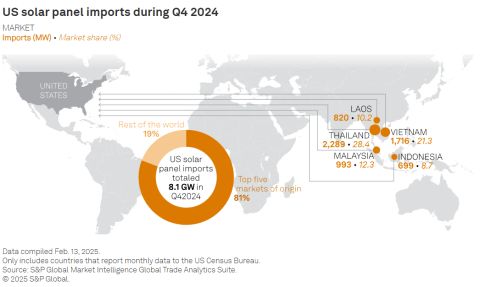
The UnitedStates has swung a solar sledgehammer — imposing tariffs as high as 3,521% on solar panel imports from Cambodia, Vietnam, Thailand, and Malaysia.
This stems from a Department of Commerce finding that Chinese companies were rerouting solar products through Southeast Asia to dodge existing duties.
Winners Emerging:
FirstSolar, Qcells, and other U.S. manufacturers celebrating a MadeInAmerica solar boom.
SolarBank CEO Dr. Richard Lu shared a sharp pivot — expanding domestic community solar and energy storage solutions, especially to feed the AI-driven data center boom.
SolarBank’s new 2.9 MW Gainesville, New York project is already under development.
Losers Worried:
Renewable project developers predict a 20–30% rise in project costs.
Supply chains could see 6–12 months delays, impacting Biden’s climate goals.
Global Echoes: Solar Under Trade Siege
EuropeanUnion’s CBAM (Carbon Border Adjustment Mechanism):
Though solar isn’t covered yet, solar supply chains are preparing for impact.
CBAM rollout from 2026 may push solar module prices up by ~10% if embedded carbon costs get added.
Manufacturers are already shifting wafer and polysilicon production to cleaner-energy countries like Canada and Brazil to avoid CBAM penalties.
India’s Solar Firewall:
Imposed 40% Basic Customs Duty on solar modules from April 2022 to promote Atmanirbhar Bharat.
Indian players like Adani Solar and Tata Power Solar are scaling local module capacity aggressively.
Canada’s Quiet Defense:
Continuing antidumping duties on Chinese modules, aiming to build a resilient domestic clean energy base.
Money Moves: Follow the Smart Investors
Brookfield Renewable Partners and BlackRock are pivoting funds into localized solar manufacturing and battery storage ecosystems.
NextEra Energy eyes major gains by scaling U.S.-based clean energy supply chains.
Ktalyst Perspective:
This tariff wave, plus the CBAM ripple effect, isn’t protectionism — it’s market redesign by climate necessity.
The winners will be solar companies that decarbonize supply chains, invest in local resilience, and pivot toward clean manufacturing clusters in NorthAmerica and India.

Originally published on LinkedIn on 2025-04-26 18:06:28: https://www.linkedin.com/feed/update/urn%3Ali%3AgroupPost%3A2153908-7321957853764677632
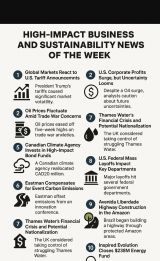
Decoding_an_Eventfull_Week: 10GlobalShifts That_Will_Shape_Your_Boardroom_YR2025
From tariffs to tarmac, profits to policies—here’s how decision-makers should read the signals before they shake the strategy.
10_Global_Moves | 10_Business_Ripples | 10_Smart_Perspectives
Curated by: KTALYST KEYSTONE
US_Tariffs on India – Trade Flashpoint
China absorbs with subsidies.
Vietnam escapes via FTAs.
India should attract FDI: “Tariffed there? Manufactured here.
Oil_Price_Volatility – Energy Chessboard
India secures discounts, but remains exposed.
U.S. shale pumps faster, EU scrambles.
Time to pivot to biofuels & hydrogen early.
US_Corporate_Profits – High but Hollow
204B profits, but 15% layoffs.
Big Tech trims fat, not revenue.
Efficient Excellence is the new productivity playbook.
BASF’s Green Push – Playing Catch-Up
Croda leads with 61% green revenue.
Evonik innovates, BASF delays.
Mindset shift needed: sustainability as profit driver.
Canadian_Climate_Fund_Shift – Municipal Muscle
CAD 20M goes green locally.
Outperforms federal climate spend.
Cities will lead, not capitals.
Eastman_Offsets_Emissions – Scope 3 Moves In
Unseen emissions, now seen.
Eastman acts, others talk.
Scope 3 = License to Operate soon.
Thames_Water_Crisis – Leaky Logic
#£15B in debt, bailout looming.
Japan, Singapore guard infra smartly.
Water isn’t just utility, it’s national security.
US_Federal_Layoffs – Silent Collapse
35,000 cut, while EU hires for AI & climate.
India upskills, U.S. downsizes.
Public policy needs people, not contractors.
AmazonHighway – Brazil’s COP Contradiction
Protected zones bulldozed.
Kenya, India build green infra, Brazil risks COP30 face.
Tarmac over trees = Trust deficit.
10. Inspired_Evolution_Fund – Africa Powers Up
#$238M clean energy fund.
1.7x bigger than Acumen 2023.
Africa can leap, if policies match capital.
Quote_of_the_Week:
Every ripple in global policy or boardroom signals a tide shift in power, purpose, and preparedness. Those who read early, move early.
KTALYSTKEYSTONE
Originally published on LinkedIn on 2025-04-03 12:18:18: https://www.linkedin.com/feed/update/urn%3Ali%3Ashare%3A7313535315867054080

