The Watt Economy: Where Power, Not Paper, Rules?
In the Watt economy, waste isn’t watts lost — it’s watts the point.
(Pun Intended)
In 2025, the most valuable currency isn’t green paper, it’s green power. Dollars still grease markets, but watts now govern nations. Central banks can print liquidity; only electrons can fuel prosperity.
This shift is everywhere.
1. Finance Follows Watts, Not Wall Street
When the Fed cut rates by 25 bps, Wall Street cheered with a US$1.2 trillion rally. But the milestone was elsewhere: US$1.8 trillion in clean energy, overtaking fossil fuels for the first time. Liquidity can create markets; watts create futures.
2. Asia: From Workshop to Powerhouse
China: 220 GW solar built in a single year, larger than the rest of the planet combined.
India: 18 GW added, sprinting toward 500 GW by 2030.
ASEAN : A US$40 bn project pipeline making Southeast Asia the new energy frontier.
Once, Asia stitched textiles and assembled chips. Now, it manufactures tomorrow’s power.
3. Middle East: Betting Against Itself
Oil is still lifeblood, but Gulf petrodollars are hedging their own extinction.
Saudi Arabia: US$8.4 bn hydrogen gamble at NEOM.
Dubai : 5 GW solar park.
Sovereign funds 15% of assets now in clean tech?
Paradox? No. It’s planetary-scale portfolio hedging.
4. NamasteIndia: Laboratory of Growth vs Green
6.9% GDP forecast colliding with tariff wars.
Gujarat’s first greenhydrogen blending project.
EV sales 35% YoY rise.
SATAT Biogas plants multiplying.
US$120 bn approvals in EVs, AI, semiconductors in a state
5. Waste: The Watt Economy’s Blind Spot
Power generation is only half the story; power waste is the other half.
Transmission losses?
Data centers & AI: projected to consume 10% of global electricity by 2030, yet most waste their cooling energy.
E-waste & batteries: 62 million tonnes of electronic waste globally, with <20% recycled.
Circular fixes: Waste-to-energy plants in Europe now fuel 50M homes; India’s municipal waste-to-energy push (150+ projects) is nascent but growing.
Watts not used wisely are watts lost — and in this economy, waste is the new oil spill.
6. Fragility: The Price of Power
Supply chains stretched thin: polysilicon, lithium, rare earths.
Trade wars re-map grids with tariffs & carbon borders.
Climate shocks wipe hydro capacity in a single flood.
Watts bring resilience, but they also test it.
KtalystInsight
Renewables already supply 32% of global electricity. EV sales hit 17 million units this year. Carbon credit markets are racing toward US$1 trillion. Whoever controls watts will control wealth, sovereignty, and survival.
But whoever controls waste will control efficiency, margins, and trust.
Dr. Anju Sharma
KtalystInsights | MrsSustainability | NamasteIndia | WattEconomy | EnergyTransition | GreenGrowth | NetZero
Originally published on LinkedIn on 2025-09-18 11:09:18: https://www.linkedin.com/feed/update/urn%3Ali%3AgroupPost%3A82951-7374399113762631681
KtalystInsight | What Changed in Sustainability?
Q2_2025 Edition | DisruptionReloaded
♻️ Circular Economy Goes Big
Recycling is out. Reinvention is in.
$1.2T projected global market size by 2025—driven by polymer upcycling, closed-loop systems & fabric-to-fiber reinvention in fashion.
⚡ Energy Transition Accelerates
Renewables hit 65% of global electricity in Q2.
Solar: 44% | Wind: 29%
On-site generation and virtual power purchase agreements (VPPAs) are the new norm.
🚛 Supply Chains Go Green(er)
83% of companies are investing in greener logistics.
Think electric fleets, rail-first shipping, and carbon-labeled containers. Sustainability now travels with your goods.
🧪 Carbon Capture Breakthroughs
195 Mt of CO₂ targeted for capture in 2025.
From DAC units in Texas to algae-based urban pilots—carbon removal is no longer experimental.
🤖 Greenwashing Meets Its AI Match
AI is now double-edged: verifying ESG claims or generating false ones.
Expect platforms, not pledges, to prove sustainability.
🔮 Q3 Watchlist
New climate laws in EU, US & India
Green steel and SAF gaining investor love
ESG scoring standards under global review
Na ion battery
KtalystKeystone decodes what’s next, so your sustainability game isn’t reactive—it’s resilient.
GreenShift | ESGStrategy | KtalystKeystone | Circularity | CarbonTech | Q2Trends | SustainabilityLeadership
Originally published on LinkedIn on 2025-05-08 17:52:13: https://www.linkedin.com/feed/update/urn%3Ali%3Ashare%3A7326302925322899457
KnowledgeSeries: The Regenerative Economy: The Next Evolution of Business 🌍
Sustainability is no longer enough—it only slows down environmental and social damage. The RegenerativeEconomy aims to heal ecosystems, rebuild communities, and create net-positive businesses.
📊 Why Regeneration > Sustainability?
🔹 91% of the world’s resources are still extracted and wasted in a linear economy (Circularity Gap Report 2023).
🔹 Regenerative agriculture can sequester up to 2.5 tons of CO₂ per acre annually, reversing climate change impacts (Rodale Institute).
🔹 Companies investing in regenerative practices see ROI increases of 20-30% due to resource efficiency and long-term resilience (Harvard Business Review).
🏗️ Key Pillars of the Regenerative Economy
🛑 Regenerative Resources: Beyond Sustainability
📉 60% of global biodiversity loss is linked to unsustainable resource extraction (WWF).
🌱 Regenerative models restore ecosystems, ensuring that natural resources replenish faster than they are used.
💡 Example: Microsoft is investing in carbon-negative operations, removing more CO₂ than it emits.
🔄 Regenerative Design & Circularity
📉 Only 8.6% of the global economy is truly circular—the rest still follows a linear “take-make-waste” model (Circularity Gap Report).
🏢 Regenerative design creates products, infrastructure, and materials that actively benefit the environment.
💡 Example: Cradle-to-Cradle Design where materials are continuously reused without waste.
🌾 Regenerative Agriculture & Food Systems
📉 Industrial agriculture is responsible for 25% of global greenhouse gas emissions (FAO).
🌍 Regenerative farming increases soil carbon capture by 40%, boosting biodiversity and reversing soil degradation.
💡 Example: Nestlé & Danone are investing in regenerative supply chains to future-proof food security.
💰 Regenerative Finance & Investment
📉 $3.7 trillion in global assets are now in impact investing, funding regenerative models (GIIN Report 2023).
💡 Investors are shifting from ESG compliance to funding businesses that restore rather than just sustain.
💡 Example: Regenerative finance models fund carbon capture, biodiversity credits, and nature-based solutions.
👥 Regenerative Communities & Equity
📉 Over 3 billion people rely on degraded ecosystems for their livelihoods (UNEP).
🔄 Regenerative economies empower local communities, respect Indigenous knowledge, and ensure fair wealth distribution.
💡 Example: Community-led climate resilience projects in the Amazon Rainforest and rural India.
⚡ FinalThought
The RegenerativeEconomy is not just a sustainability trend—it’s the future of business. Companies that regenerate ecosystems, create climate-positive models, and restore resources will lead the next wave of economic success.
💬 What’s your take? Is regeneration the future of business? ⬇️

Originally published on LinkedIn on 2025-03-09 04:30:09: https://www.linkedin.com/feed/update/urn%3Ali%3Ashare%3A7304357801869377536
🚀 “The 3Es of ₹Ethanol: Environment, Economy & Efficiency – Is India Getting It Right?” 🌱💰⚡
Fueling sustainability or fueling a crisis?
India’s EthanolBlending mission is racing toward 20% ethanol-petrol blending (E20) by 2025-26, aiming to slash ₹53,894 crore ($6.5B) in crude oil imports annually while cutting CO₂ emissions by 2.3 million tonnes—equivalent to taking 4.2 lakh cars off the road. (MoPNG, 2024) But does ethanol truly deliver on Environment, Economy, and Efficiency?
🌍 1. Environment: Green or Resource-Heavy?
✔️ CO₂ Reduction: Ethanol blending cut 2.3M tonnes of CO₂ in 2023, but its full lifecycle emissions remain debated. (MoPNG, 2024)
✔️ Water Crisis: Producing 1L of ethanol from sugarcane requires 2,860L of water, straining groundwater. (NITI Aayog, 2024)
✔️ Crop Dependency: 92% of India’s ethanol comes from sugarcane, a crop linked to declining soil fertility. (IEA, 2024)
✔️ Air Quality Gains: E20 reduces particulate matter by 30-50%, improving urban air pollution. (ICCT, 2024)
📌 RealityCheck: Can ethanol be truly sustainable when it risks food & water security?
💰 2. Economy: Cost Savings vs. Inflation?
✔️ Fuel Independence: Ethanol saved India $6.5B in oil imports in 2023. (MoPNG, 2024)
✔️ Investment Boom: The sector is attracting ₹41,000 crore ($4.9B) in new investments by 2025. (NITI Aayog, 2024)
✔️ Job Creation: Ethanol production has generated 4 lakh jobs in rural India. (MoPNG, 2024)
✔️ Food Price Spike: 40L tonnes of sugarcane & 25L tonnes of grain were diverted to ethanol in 2023, contributing to food inflation. (FAO, 2024)
📌 RealityCheck: Are we trading food security for fuel independence?
⚡ 3. Efficiency: Can Ethanol Compete with Petrol?
✔️ Mileage Drop: E20 reduces fuel efficiency by 6-10%, requiring more frequent refueling. (SIAM, 2024)
✔️ Vehicle Readiness: Only 20% of India’s petrol vehicles are E20-ready. (MoRTH, 2024)
✔️ Slow Adoption: Just 6% of fuel stations nationwide are E20-compliant. (BPCL, 2024)
✔️ Flex-Fuel Future: Maruti, Toyota & Honda have launched E85-compatible vehicles, but mass adoption is slow. (AutoCar India, 2024)
📌 RealityCheck: Can ethanol match petrol’s efficiency without major tech breakthroughs?
🇺🇸 US Interest in India’s Ethanol Push
🔹 Corn Exports: The US exported $1.2B worth of ethanol-friendly corn to India in 2023. (USDA, 2024)
🔹 Big Oil & Biofuels: ExxonMobil & Chevron have invested $800M in India’s ethanol supply chain. (Bloomberg, 2024)
🔹 Strategic Partnerships: US firms are eyeing India’s ₹41,000 crore ($4.9B) ethanol market for global expansion. (Reuters, 2024)
Originally published on LinkedIn on 2025-02-21 17:04:12: https://www.linkedin.com/feed/update/urn%3Ali%3AgroupPost%3A82951-7298749364091428865
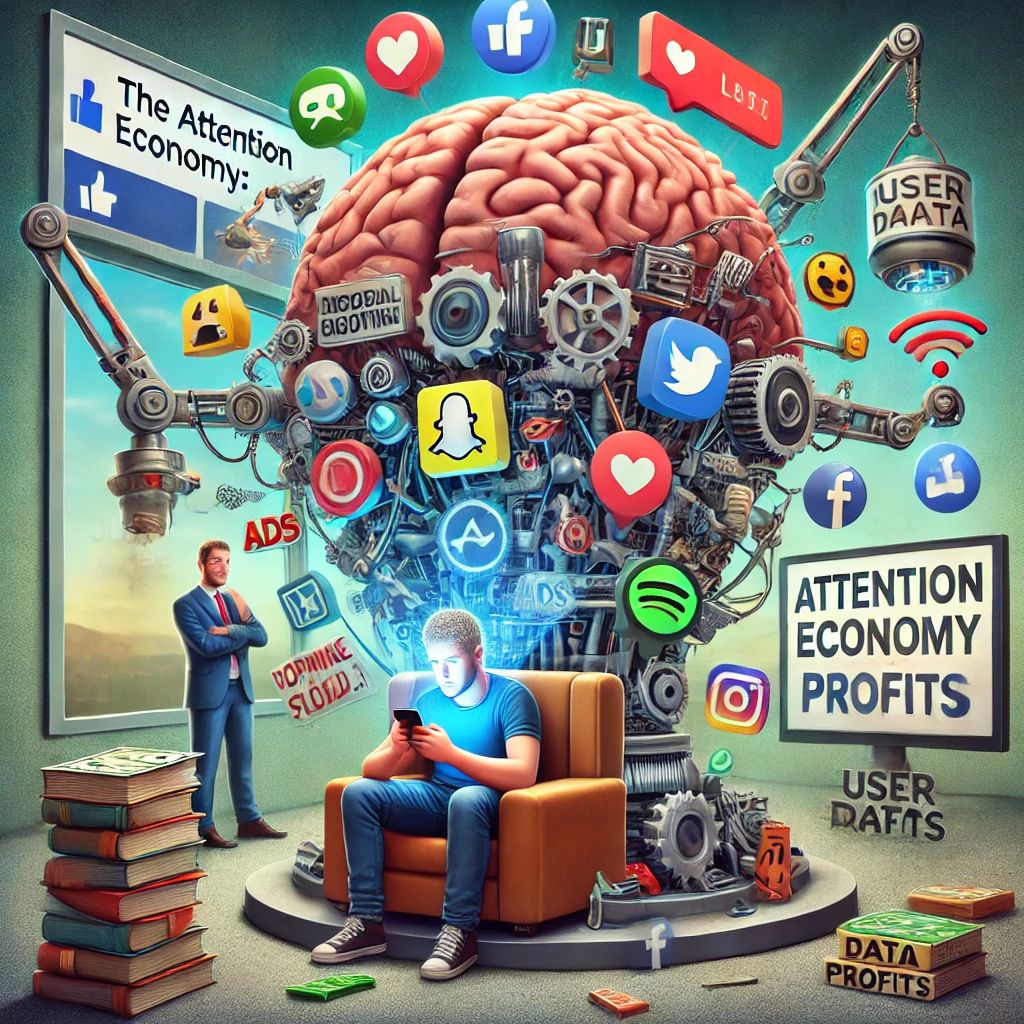
🚀 “The Attention Economy: Are We Paying or Being Played?” 🧠📱💰
In a world where notifications never stop and algorithms know us better than we do, attention has become the most valuable commodity. But are we truly in control, or just products in the digital marketplace?
📊 The Business of Attention
✅ The average person spends 7 hours a day on screens. (Statista, 2024)
✅ Digital ad spending hit $700B globally in 2023. (eMarketer, 2024)
✅ Social media engagement is worth $1.5T to tech giants. (Forbes, 2024)
❌ But attention spans have dropped from 12 seconds (2000) to 8 seconds (2024). (Microsoft Study)
🚨 Reality Check: Are we consuming content, or is content consuming us?
🔴 How the Attention Economy Manipulates Us
🧠 Dopamine Loops: Infinite scrolling & notifications keep us addicted.
📱 Algorithm Traps: AI-driven feeds push extreme content to maximize engagement.
💰 Monetized Distraction: Platforms profit from every second of our attention.
🚨 Reality Check: If it’s free, you’re the product.
🔎 Who’s Winning in the Attention Economy?
🔹 🇺🇸 TikTok & Instagram: Hooking Gen Z with ultra-short content.
🔹 🇺🇸 YouTube & Netflix: Using AI to predict and control viewing habits.
🔹 🇨🇳 Tencent & Bytedance: Monetizing micro-engagement with gamification.
🔹 🇮🇳 Jio & ShareChat: Expanding India’s digital consumption at record speed.
🚨 Reality Check: Are we really choosing what we watch, or is it choosing us?
🏆 KeyTakeaway
The Attention Economy could be a tool for learning and connection, should be designed for well-being, but would be a dystopian trap if we let tech control our focus.
👉 Are you in charge of your attention, or is someone else profiting from it?
AttentionEconomy DigitalAddiction BigTech AI SocialMedia
Originally published on LinkedIn on 2025-02-04 12:25:19: https://www.linkedin.com/feed/update/urn%3Ali%3AgroupPost%3A9270968-7292518584398893056
Green Optics & Red_Carpets Bold_Promises_in_the_Spotlight_Real_Progress_in_the_Shadows – Davos 2024 vs. 2025
Facts_vrs_?????
🌍 At Davos 2024, global leaders made bold commitments for a sustainable future. But as we step into Davos_2025, the spotlight reveals a stark gap between ambition and execution. Here’s where things stand:
Davos_2024 Promises: Progress So Far
$1 Trillion Climate Investment: 🎯 Goal by 2030 | ✅ 35% achieved ($350B allocated); major delays for developing nations.
1 Billion Trees Initiative: 🎯 Goal by 2030 | 🌱 12% planted (120M trees); biodiversity concerns remain.
Net-Zero Supply Chains: 🎯 Goal by 2040 | 🔗 15% of corporations with plans; supply chain emissions rose 5% in 2024.
Biodiversity Carbon Credits: 🎯 Goal by 2030 | 🦜 <5% adoption; unclear pricing stalling progress.
Methane Reduction Pledge: 🎯 Goal by 2030 | 🔥 3% progress (1% drop in 2024); energy sector lagging.
To lookout for NextYear Davos2025: New Commitments
💡 $500B AI for Sustainability: By 2035, AI-driven solutions to cut emissions and optimize resources.
🌍 $200B Green Hydrogen Fund: By 2040, decarbonize energy-intensive industries.
🔋 Circular Economy Roadmap: By 2030, reduce waste in manufacturing by 50%.
🌳 Nature_Based Solutions Fund: By 2035, restore 10M hectares of degraded ecosystems.
📦 Global Logistics Decarbonization: By 2030, 20% emissions cut via low-carbon fuels and EV fleets.
The Challenge
While 2024’s ambitions saw limited progress (5-35% achieved), 2025 introduces even bigger goals. The question remains: will these promises deliver real impact, or stay hidden under the lens of GreenOptics?
💬 What are your thoughts on the gap between promises and progress? Is it time for action over optics? Let’s discuss!

Originally published on LinkedIn on 2025-01-25 10:21:02: https://www.linkedin.com/feed/update/urn%3Ali%3AgroupPost%3A3880479-7288863431854579712
NamasteGreenIndia
Gruner Renewable Energy has secured a whopping USD 60 million in funding to bolster its presence in the green energy sector.
Funding Amount ll: Gruner Renewable Energy received USD 60 million.
Expansion Plans: The company intends to establish new Compressed BioGas (CBG) plants across India.
Diverse Ventures: Gruner will strategically utilize the funds to venture into exciting new business verticals, including sustainable aviation fuel (SAF) and green hydrogen.
Founder’s Vision: Utkarsh Gupta, Founder & CEO of Gruner Renewable Energy, emphasized that this investment from like-minded partners is crucial for driving the transformation toward a circular economy and sustainable development.
Originally published on LinkedIn on 2024-07-29 15:50:01: https://www.linkedin.com/feed/update/urn%3Ali%3AgroupPost%3A131340-7223716408138829824
NamasteGreenIndia
Gruner Renewable Energy has secured a whopping USD 60 million in funding to bolster its presence in the green energy sector.
Funding Amount ll: Gruner Renewable Energy received USD 60 million.
Expansion Plans: The company intends to establish new Compressed BioGas (CBG) plants across India.
Diverse Ventures: Gruner will strategically utilize the funds to venture into exciting new business verticals, including sustainable aviation fuel (SAF) and green hydrogen.
Founder’s Vision: Utkarsh Gupta, Founder & CEO of Gruner Renewable Energy, emphasized that this investment from like-minded partners is crucial for driving the transformation toward a circular economy and sustainable development.
Originally published on LinkedIn on 2024-07-29 15:49:54: https://www.linkedin.com/feed/update/urn%3Ali%3Ashare%3A7223716376769695744
NamasteIndia Ambitions ….
Century to fulfill Dreams?: Revolt of 1857 Independence 1947, TwentyFive USD Trillion Economy Dream by 2047!”Reaching To Riches: India’s $25 Trillion Dream Over another Century?
India has set an ambitious goal to become a $25 to $35 trillion economy by 2047, marking its 100th year of independence. However, achieving sustained growth over the next 24 years requires consistently:
1. GDP Growth Arithmetic: India’s GDP in 2022-23 stands at $3.3 trillion, with a growth rate of 10.9%. This growth trajectory is sufficient to reach $25 trillion by 2046-47. However, currency depreciation against the USD must be factored in.
2. Depreciation Factor: Assuming a 2% annual depreciation of the rupee, the current growth rate aligns with a $25 trillion GDP. At 4.2% depreciation, the required growth rate is 13.2%.
3. Structural Challenges : The economy’s structure needs transformation. Agriculture, despite contributing only 18% to GDP, employs 45% of the workforce. Manufacturing and services sectors also require technological advancements.
4. Productivity Boost: Total Factor Productivity TFP contributed significantly to post-COVID growth. Public sector investment and productivity improvements played a crucial role.
India’s journey toward a $25 trillion economy involves challenges, but We Have Done It Before… strategic planning and innovation can pave the way for success.
Originally published on LinkedIn on 2024-07-12 12:40:30: https://www.linkedin.com/feed/update/urn%3Ali%3Ashare%3A7217508120044969987

