SALTS_of_TIME: Abundance turns Strategy, Scarcity Loses Its Power
Dr. Anju Sharma MrsSustainability
Industry has a habit of confusing scarcity with sophistication.
For three decades, the energy transition was built around the supply-chain geography of the exotic: cobalt from the DRC, lithium from the Atacama, nickel from Indonesia.
We engineered sophisticated energy systems around materials that were chemically compelling, but geographically concentrated and geopolitically fragile.
Capital quietly accepted a dangerous assumption: that the future of power storage belonged to rare inputs and mineral privilege.
That assumption is fracturing.
Not because lithium has lost its chemistry, but because system-level economics are changing the optimisation function.
Why Sodium.
Abundant. Ubiquitous. Industrially ordinary.
And suddenly strategic.
THE ECONOMICS ARE MOVING
The asymmetry begins at the raw-material layer.
Battery-grade lithium carbonate has traded around $12,000–35,000+/tonne, while sodium carbonate sits closer to $200–400/tonne.
That 60–100× feedstock differential does not translate directly into cell economics, but it creates a fundamentally different cost floor.
Sodium-ion cells are moving toward $50–60/kWh territory, while next-generation platforms are reaching around 175 Wh/kg.
Scale could push the economics lower still.
Sodium brings another structural advantage: aluminium can replace expensive copper on the anode current collector, simplifying both cost and material exposure.
CAPITAL Bites
China is pursuing scale.
CATL is industrialising sodium across mobility and storage, while BYD/FinDreams & Huaihai are developing a 30 GWh sodium-ion manufacturing base in Xuzhou.
US is pursuing economics.
Peak Energy, alongside GM and grid-storage customers, is targeting stationary power, utilities and data centres—markets where weight matters less than duration, cost and resilience.
EU is pursuing sovereignty.
Tiamat, Altris, Stellantis, Clarios and InoBat are building pathways around European IP, materials and manufacturing capability.
Three regions. Three responses.
STRATEGIC SHIFT
This is not sodium versus lithium. It is chemistry segmentation replacing chemistry supremacy.
Lithium remains where energy density commands a premium.
Sodium moves toward grid storage, short-range mobility, renewable buffering, industrial backup & other applications where economics overwhelm engineering elegance.
That matters because industrial substitution rarely happens by destroying the incumbent.
It happens by making the incumbent unnecessary in enough applications.
History shows that enduring industrial advantage is rarely built on peak performance alone.
It is built on marginal-cost supremacy, manufacturability & supply-chain resilience.
Sometimes disruption comes from discovering a new element.
Sometimes the element was sitting on the table all along.
KtalystInsights KtalystKlues™ EnergyTransition SodiumIonBattery
Originally published on LinkedIn on 2026-08-09 11:06:11: https://www.linkedin.com/feed/update/urn%3Ali%3Ashare%3A7492174383986409472
NewEnergyWorld: Reindexing the EV Value Chain
Dr. Anju Sharma MrsSustainability
The global EV race has moved backstage.
Not in showrooms.
Not in launches.
Not in glossy campaigns.
The race is now in minerals, battery chemistry, software, grids, recycling & trade-policy war rooms.
The question is no longer:
Who can sell more EVs?
It is:
Who can make EV economics work when subsidies shrink, capital gets expensive, supply chains turn political, & war-blues hit freight, fuel, & finance?
For a decade, EVs were sold as a climate-compliance story.
Profit equation now is:
EV Profitability = Battery Control × Software Margin × Scale Discipline ÷ Subsidy Dependence
EVs are no longer just an automotive transition. They are industrial power, resource control, energy security, & margin defence.
KtalystDiagnosticLens: The EV world is splitting into 5 battles:
Scale & Cost Supremacy
China has converted EV manufacturing into scale, integration, battery control, & brutal cost efficiency.
Cost Advantage = Scale × Vertical Integration × Process Discipline
Premium Engineering Survival
Legacy premium OEMs own brand, design, safety, & engineering trust. Yet hardware without software depth risks becoming beautiful hesitation.
Premium Survival = Brand Trust + Software Depth + Battery Intelligence − Execution Delay
MarketSpecificReset
Europe wants compact EVs. India needs two-wheelers, three-wheelers, fleets, & urban mobility. Emerging markets will compress the EV curve, not copy it.
Market Fit = Right Product × Right Price × Right Charging Reality
BatterySovereignty
Cells, minerals, processing, recycling, & offtake contracts are now industrial-security assets.
Battery Sovereignty = Chemistry + Processing + Cells + Recycling + Policy Insulation
PolicyTriggers & WarBluesAcceleration
EVs are being pushed by subsidy redesign, tariff walls, critical mineral rules, carbon regulations, oil volatility, shipping disruption, & geopolitical anxiety.
Governments are not merely “supporting” EVs. They are engineering EV ecosystems.
EV Acceleration = Climate Policy + Energy Security + Trade Protection + War-Risk Premium
The Economics stack reindexed:
✓ Battery pack = commodity balance sheet
✓ Charging network = grid-data infrastructure
✓ Gigafactory = sovereign industrial policy
✓ Upstream offtake = geopolitical insurance
✓ Recycling loop = future mineral bank
✓ Software layer = long-term margin vault
The winners will not merely electrify faster.
They will integrate deeper.
The EV race is no longer country versus country alone.
It is:
Chemistry × Cost × Code × Capital × Control
with two invisible accelerators:
Policy Trigger + War-Blues Pressure
Final equation:
Future EV Advantage = Controlled Value Chain + Policy Alignment − Fragmented Dependency
MrsSustainability KtalystInsights™ KtalystKlues™ KtalystKeystone KtalystBatteryStack™ KtalystBatteryNomics Ktalyst5Ts Ktalyst5Ps5Es NewEnergyWorld EVValueChain
Originally published on LinkedIn on 2026-05-20 05:50:41: https://www.linkedin.com/feed/update/urn%3Ali%3AugcPost%3A7462741568228245504
💡 KtalystInsights – GreenHydrogenExports?
Projects till date 250announced
Operation less than 10percent or revenue-generating.
India is promising but small-scale.
Australia & UK have paused projects due to infra issues.
MiddleEast is building—but for exports, not domestic decarbonisation.
China is overproducing electrolyzers, not hydrogen.
GreenHydrogen: Big Bets, Blunt Realities & Billions at Stake
🔍 “When decarbonisation dreams meet deployment delays.” — KtalystInsights
📊 H1_2025 Global Snapshot – What’s Hot, What’s Not
🌍 Region 💡 Progress 💸 Investment (USD) ❌ Reality Check with Timeline
🇮🇳 India GST proposed: 18% ➡️ 5% on green H₂ Policy incentive ⏳ Draft policy under review – rollout expected Q3 2025
🇮🇳 India Adani’s 5 MW off-grid plant live (Gujarat) ~$6.5M ⏳ Commissioned, but commercial offtake undefined till mid-2026
🇮🇳 India Greenzo wins ₹320 Cr (~$38.5M) EPC order Private project with Oswal ⏳ Project groundwork begins late 2025; output expected mid-2027
🇮🇳 India Toyota + Ohmium microgrid pilot Strategic collaboration ⏳ Pilot in Q2 2025, scalability assessment due early 2026
🇦🇺 Australia Fortescue’s Gladstone H₂ plant paused $650M on hold ⏳ Paused indefinitely; next review Q4 2025
🇦🇺 Australia NSW Hydrogen Hubs get AUD 100M (~$67M) federal grant Policy grant ⏳ Infra permits delayed; construction pushed to 2026
🇪🇺 EU €1B Hydrogen Bank funds 15 projects ~$1.08B ⏳ First rollouts begin late 2025, full ramp by 2027
🇨🇳 China Electrolyzer orders 2025 > 2024 total >$500M ⏳ Plants built; idle capacity reported in Q1 2025
🇺🇸 USA Trump’s 45V subsidy shortened ~$40B investment risk ⏳ Credits expire sooner (by 2027); FIDs slowing Q2 2025
🇬🇧 UK SSE & Equinor pause Keadby H₂ project $100M project paused ⏳ Review delayed till 2026, pending cost benefit clarity
🇮🇹 Italy Edison-Italgas blend 20% green H₂ in Sardinia <$5M pilot ⏳ Testing ends Q3 2025; national scale-up unclear
🇨🇦 Canada HyVera launches mobile Indigenous green H₂ <$2M seed ⏳ Deployed in BC, Alberta rollout planned Q1 2026
🇸🇦 SaudiArabia NEOM’s 4 GW green H₂ under construction $8.4B total CAPEX ⏳ Phase-1 exports via ammonia from late 2026 onward
🇦🇪 UAE ADNOC signs green ammonia deals with Japan, Germany ~$3B MoUs signed ⏳ Exports planned 2027; domestic use still in infancy
📉 Green H₂ Economics – The Hard Math (2025)
💰 Green H₂ cost: $3–$6/kg vs Grey H₂: ~$1/kg
⚙️ Electrolyzer CAPEX: $1.2–1.5M per MW
🎯 Global parity goal: $1.5/kg by 2030 → Needs $300B+ investment
⏳ Timeline truth: The real hydrogen economy won’t arrive before late 2026–2028. Until then, it’s pilot mode + policy prep.
💬 Your take:
Is green hydrogen a sunrise sector—or a sunrise stuck in traffic?
GreenHydrogen KtalystInsights Hydrogen2025 EnergyTransition India2030 MiddleEastEnergy PolicyToProfit CleanTechWatch GlobalHydrogenWatch NamasteIndia
Originally published on LinkedIn on 2025-06-27 04:57:49: https://www.linkedin.com/feed/update/urn%3Ali%3Ashare%3A7344227431928553474
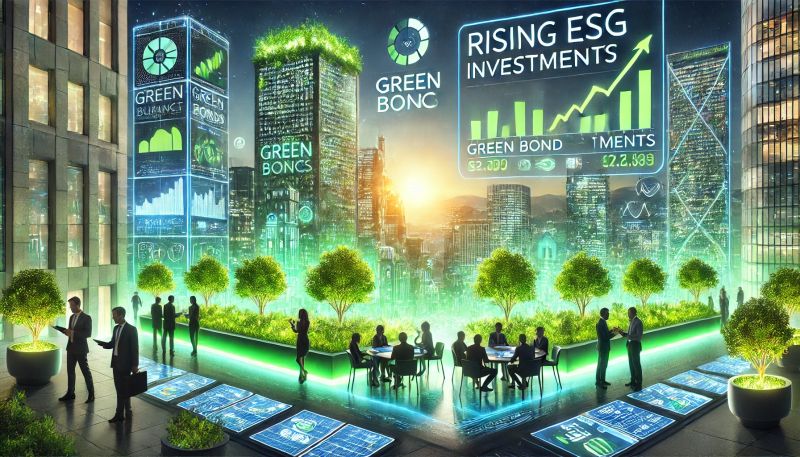
KnowledgeSeries: GreenFinance – The $80 Trillion Opportunity Reshaping Global Capital Markets
🌍 Sustainability = Economics.
💰 GreenFinance is now mainstream, with ESG assets surpassing $50T in 2023, projected to hit $80T by 2030.
🚀 CapitalShiftAlert: Banks, VCs, and InstitutionalInvestors are prioritizing low-carbon businesses. Those who ignore GreenFinance risk obsolescence.
📊 WhyGreenFinance is Taking Over?
✔️ ESGOutperforms: Since 2015, ESG-aligned companies have outperformed markets by 30% (HarvardBusinessReview).
✔️ InvestorShift: ESGFunds saw #$650B inflows in 2023, while traditional funds saw outflows (Morningstar).
✔️ RegulationsTighten: EU & SEC climate disclosure rules mandate carbon reporting, forcing companies to prove sustainability.
✔️ GreenBondsSurge: #$1.5T issued in 2023, funding renewables, transport, and smartcities.
✔️ RiskAndProfitability: Banks raise borrowing costs for polluters, offering low rates to green firms.
🏦 Who’sLeading the GreenFinanceMovement?
✔️ Banks & AssetManagers: BlackRock, GoldmanSachs, JPMorgan—trillions in climate portfolios.
✔️ VentureCapital & PrivateEquity: ClimateTech funding up 210% in 3 years—battery storage, carbon capture.
✔️ SovereignGreenFunds: Norway, Singapore, UAE shifting billions from oil to renewables.
✔️ CorporateGiants: Apple, Microsoft, Tesla issue multi-billion-dollar GreenBonds.
✔️ CarbonMarketsExploding: VoluntaryCarbonMarket set to grow 15X by 2030.
💡 HowBusinessesCanLeverage GreenFinance?
✔️ IssueGreenBonds → Secure low-cost funding for sustainability projects.
✔️ AlignWithESGCriteria → Attract institutional investors & capital.
✔️ TradeCarbonCredits → Monetize emission reductions.
✔️ LeverageImpactInvesting → Tap into VCs, sovereign funds & ESG-focused investors.
✔️ AdoptSmartFinanceTools → Use AI & blockchain for transparent sustainability tracking.
🔍 ComingUpNext: “The Rise of ClimateUnicorns – Where VCs Are Betting in 2025
💬 IsYourBusinessReady for the ClimateEconomy? Let’s discuss!
Originally published on LinkedIn on 2025-03-09 17:24:23: https://www.linkedin.com/feed/update/urn%3Ali%3AgroupPost%3A9500072-7304552646428823552

