🚜🌾 PolicyGovernance & ClimateResilience: Can India Protect Its Farmers from an Uncertain Future? 🌦️🔥💰
A farmer’s success depends on the sky, but survival now depends on policy.
India’s agriculture sector, contributing 18% of GDP & employing 43% of the workforce, is facing climate volatility & policy gaps that threaten both farm incomes & national food security.
🌡️ Climate Impact: Why Farmers Are at Risk?
✔️ Heatwaves & Crop Failures: India saw 273 heatwave days in 2023, reducing wheat yields by 15% in major agricultural belts. (IMD, 2024)
✔️ Monsoon Irregularities: 12 states recorded deficient rainfall in 2023, leading to 20% lower kharif crop production. (MoAFW, 2024)
✔️ Debt Crisis & Migration: Farm loan defaults may rise by 30% by 2030, forcing 7M+ rural workers to migrate annually. (RBI, 2024; World Bank, 2024)
✔️ Insurance Gaps: Only 34% of farmers are insured under PMFBY, leaving millions exposed to climate-related crop losses. (NITI Aayog, 2024)
📌 RealityCheck: Can policy reforms keep pace with climate shocks?
💰 Economic Fallout: Food Prices, Farmer Distress & Rural Unrest
✔️ Food Inflation: Wheat prices surged 24% & onion prices by 60% in 2023 due to supply chain disruptions. (MoAFW, 2024)
✔️ Declining Farm Incomes: The average farmer earns ₹10,218 ($123) per month, while input costs keep rising. (NSO, 2024)
✔️ Rural Finance Gaps: India’s agri-credit disbursement was ₹18 lakh crore ($216B) in 2023, but small farmers struggle to access formal finance. (RBI, 2024)
✔️ Climate-Induced Farmer Suicides: Over 10,800 farmer suicides were reported in 2023, linked to crop failures & mounting debt. (NCRB, 2024)
📌 RealityCheck: Without stronger governance, rural distress will fuel inflation, unemployment & food shortages.
📜 Governance Gaps: Where Policy Needs Urgent Reform
🔹 Ineffective Crop Insurance: Expanding PMFBY coverage to 70% can protect farmers from weather shocks. (NABARD, 2024)
🔹 Delayed Compensation & Relief Funds: Farmers wait 6-12 months for compensation payouts, leading to financial ruin. (CAG Report, 2024)
🔹 Lack of Climate-Adaptive Infrastructure: Only 45% of farms have irrigation coverage, making them overdependent on erratic monsoons. (MoWR, 2024)
🔹 No Long-Term Climate Resilience Strategy: India lacks a national roadmap for climate-proofing agriculture, unlike the EU & US. (WEF, 2024)
📌 RealityCheck: Strong governance must replace temporary relief measures to secure India’s food future.
🏆 KeyTakeaway: India’s Food Security Hinges on Policy & Climate Action
📌 ClimateResilientFarming could be India’s best bet for sustainable agriculture.
📌 PolicyReforms should be designed for long-term farmer protection, not just crisis management.
📌 StrongGovernance would be the game-changer in bridging the gap between food security & farmer welfare.
Originally published on LinkedIn on 2025-02-24 06:32:13: https://www.linkedin.com/feed/update/urn%3Ali%3AgroupPost%3A81198-7299677483526688768
🚨 CaseStudyAnalysis: “Volkswagen’s $1.4 Billion Tax Clash in India – A Wake-Up Call for MNCs & Policymakers?” 🚗💸
A stable tax system builds investor trust, but unpredictability drives them away.
Volkswagen, one of the world’s largest automakers, is battling a massive $1.4 billion tax dispute with Indian authorities over misclassification of imported car parts. This case is not just about one company—it reflects systemic tax challenges that impact FDI, business confidence, and India’s economic reputation.
🔍 WhatWentWrong?
📌 RegulatoryAmbiguity: India’s tax system lacks clear, consistent classifications. Volkswagen’s import methods were accepted for years before being reclassified.
📌 RetrospectiveTaxation: India has a history of sudden tax demands on MNCs (Vodafone – $2B, CairnEnergy – $1.2B), eroding investor trust. (Source: Reuters, 2025)
📌 LengthyLitigation: Tax disputes in India take an average of 7-10 years to resolve, delaying investments. (Source: EconomicTimes, 2025)
📌 PolicyShiftsWithoutClarity: Frequent rule changes without transition time force companies into costly legal battles.
🚀 HowIndiaCanImprove?
✅ PredictabilityInTaxation: Stable, transparent tax structures can boost FDI inflows beyond $80B/year. (DPIIT, 2025)
✅ Fast-TrackDisputeResolution: A dedicated tax tribunal for MNCs could cut dispute timelines by 60%. (NITIAayog, 2025)
✅ CustomsClarity: Pre-rulings on tax classifications will reduce compliance risks for 1,000+ global firms operating in India.
✅ InvestorConfidenceReforms: Proactive government engagement with MNCs could prevent capital flight (like SEAsia gaining $25B from exiting investors). (IMF, 2025)
✅ EaseOfDoingBusiness: India improved from Rank142 (2014) to Rank63 (2024) but still struggles with tax complexity. (WorldBank, 2025)
⚖️ TheBiggerPicture
Volkswagen’s case isn’t just about one company—it’s a test for India’s tax and regulatory future. Striking the right balance between RevenueMaximization and InvestorTrust is crucial for long-term economic stability.
💬 What’s your take? Are tax disputes a cost of doing business in India, or can better policies fix this? Let’s discuss! 👇
Originally published on LinkedIn on 2025-02-20 11:41:29: https://www.linkedin.com/feed/update/urn%3Ali%3AgroupPost%3A95089-7298305762500501504
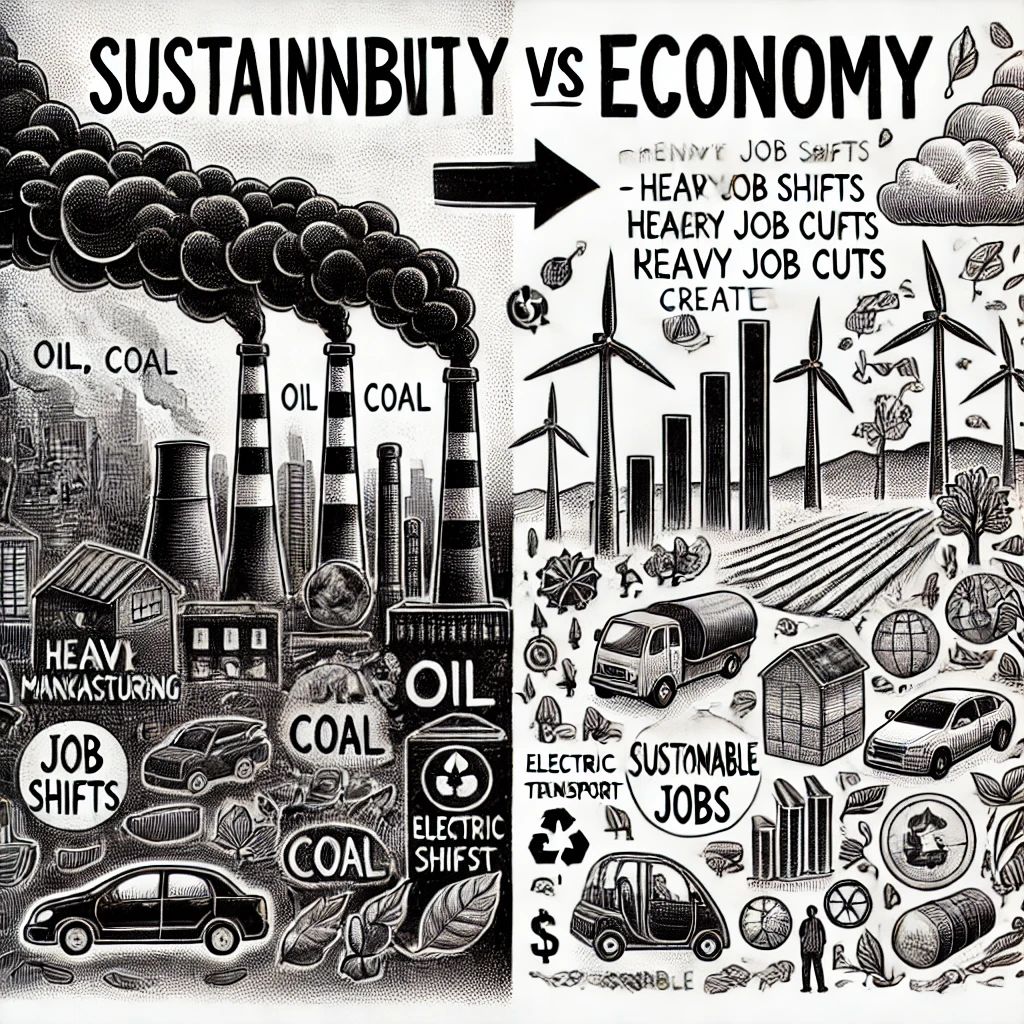
🚨 “TheGreenParadox: If the Top100 Polluters Go Green, Do Economies Go Red?” 🌍💸🔥
71% of global emissions come from just Just100 companies—but what happens if they actually go green?
📊 TheHardNumbers: Who’s Driving Emissions?
🔹 100Companies = 71% of Global Emissions (CDP Carbon Majors Report, 2025)
🔹 TotalMarketValue = $15.4 Trillion (Forbes, 2025)
🔹 Sectors Dominating Emissions:
✔️ Oil & Gas (ExxonMobil, Shell, Aramco, BP, Reliance) – 52% of global industrial CO₂.
✔️ Coal Giants (ChinaEnergy, Peabody, Glencore) – 14% of all emissions, powering entire nations.
✔️ Steel & Cement (ArcelorMittal, Holcim, TataSteel, JSW) – 8% of emissions, critical to infrastructure.
✔️ Shipping & Aviation (Maersk, Boeing, Delta, Emirates) – 5% of emissions, enabling global trade.
🚨 RealityCheck: Transitioning these industries overnight would shake economies to the core.
💰 TheEconomicCrashPotential
🔻 JobLosses in FossilFuel Sectors – 34M jobs globally depend on oil, coal, and heavy industries. (ILO, 2025)
🔻 GDPImpact on EmergingMarkets – India, China, and Indonesia rely on fossilfuels for 20-35% of GDP. (World Bank, 2025)
🔻 SupplyChain Disruptions – 42% of global logistics, steel, and chemicals are tied to high-emission industries. (McKinsey, 2025)
🔻 EnergyTransition Costs – Full decarbonization needs #$275T investment by 2050—but who’s paying? (IEA, 2025)
📌 TheDilemma: Accelerating sustainability risks a financialcrisis, while delaying it fuels climate disaster.
🔄 IsThereAMiddlePath?
🏆 IndustriesFindingBalance:
✅ SaudiAramco’s CarbonCapture Push – #$50B invested, but still expanding fossilfuel extraction.
✅ Tesla & BYD’s EVRevolution – EVs now 18% of global carsales, but lithiummining is a sustainability disaster.
✅ GreenSteel Investments (Hybrit, H2GreenSteel) – Promising tech, but adoption is too slow.
🚨 TheProblem: Green initiatives often don’t move fast enough—or they create new environmental costs.
🏆 KeyTakeaway: The TradeOff No One Wants to Talk About
📌 GoingGreen could be an economic revolution if planned strategically.
📌 ItShouldBe a shift that protects jobs, not eliminates them overnight.
📌 ItWouldBe an economicdisaster if industries collapse before sustainable alternatives scale.
👉 CanTheWorldAffordToDecarbonize without crashing economies? Drop your insights below! 👇
Originally published on LinkedIn on 2025-02-20 03:57:07: https://www.linkedin.com/feed/update/urn%3Ali%3AgroupPost%3A82951-7298188896939479040
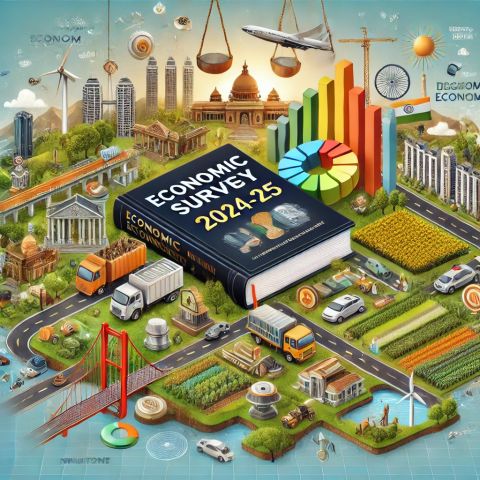
📊 India_Economic_Survey_2024-25: Growth, Resilience & Future Focus 🇮🇳📈
India’s economy is defying global uncertainties, powered by investment, reforms, and innovation. Here’s a concise breakdown of the key takeaways.
🌏 Economic Strength & Fiscal Health
✅ Growth remains strong, driven by domestic investment.
✅ Inflation moderate, but food prices remain volatile.
✅ Capital spending up, ensuring long-term stability.
🏆 Key Shift: India prioritizes investment over short-term spending.
💰 Banking & Financial Sector
✅ Low NPAs & strong credit growth signal a healthy banking sector.
✅ Global interest rate risks monitored to ensure market stability.
🏆 Key Shift: A robust financial system supports economic momentum.
🌐 Trade & External Sector
✅ FDI remains a focus, with business reforms easing entry.
✅ Export challenges persist, due to global trade tensions.
✅ Reducing import dependency on China to boost self-reliance.
🏆 Key Shift: Reshaping trade policies to adapt to global disruptions.
🏗️ Infrastructure & Industry
✅ Post-election boost to infrastructure—transport, digital, energy.
✅ MSMEs get policy push, enhancing industrial output.
🏆 Key Shift: Building for the future with targeted investments.
🌱 Climate & Sustainability
✅ Energy transition & green investments expanding.
✅ Air pollution & emissions remain critical issues.
🏆 Key Shift: Sustainability is now a policy priority, not an afterthought.
🚀 Employment, AI & Future of Work
✅ Upskilling & gig economy shaping future jobs.
✅ AI disruption expected, but workforce adaptation in progress.
🏆 Key Shift: Balancing tech advancement with job security.
📈 Vision 2047: India’s Long-Term Economic Strategy
✅ Deregulation & ease of doing business accelerating growth.
✅ Viksit Bharat 2047 aims to make India a developed economy.
🏆 Key Shift: From short-term fixes to long-term economic transformation.
🏆 KeyTakeaway
India’s Economic Survey 2024-25 highlights resilience, investment-driven growth, and policy innovation. The focus is on long-term stability, sustainability, and self-reliance.
👉 Is India ready for its next economic leap?
EconomicSurvey IndiaGrowth Infrastructure GreenEconomy DigitalIndia ViksitBharat2047
Originally published on LinkedIn on 2025-01-31 19:21:29: https://www.linkedin.com/feed/update/urn%3Ali%3Ashare%3A7291173766041059329
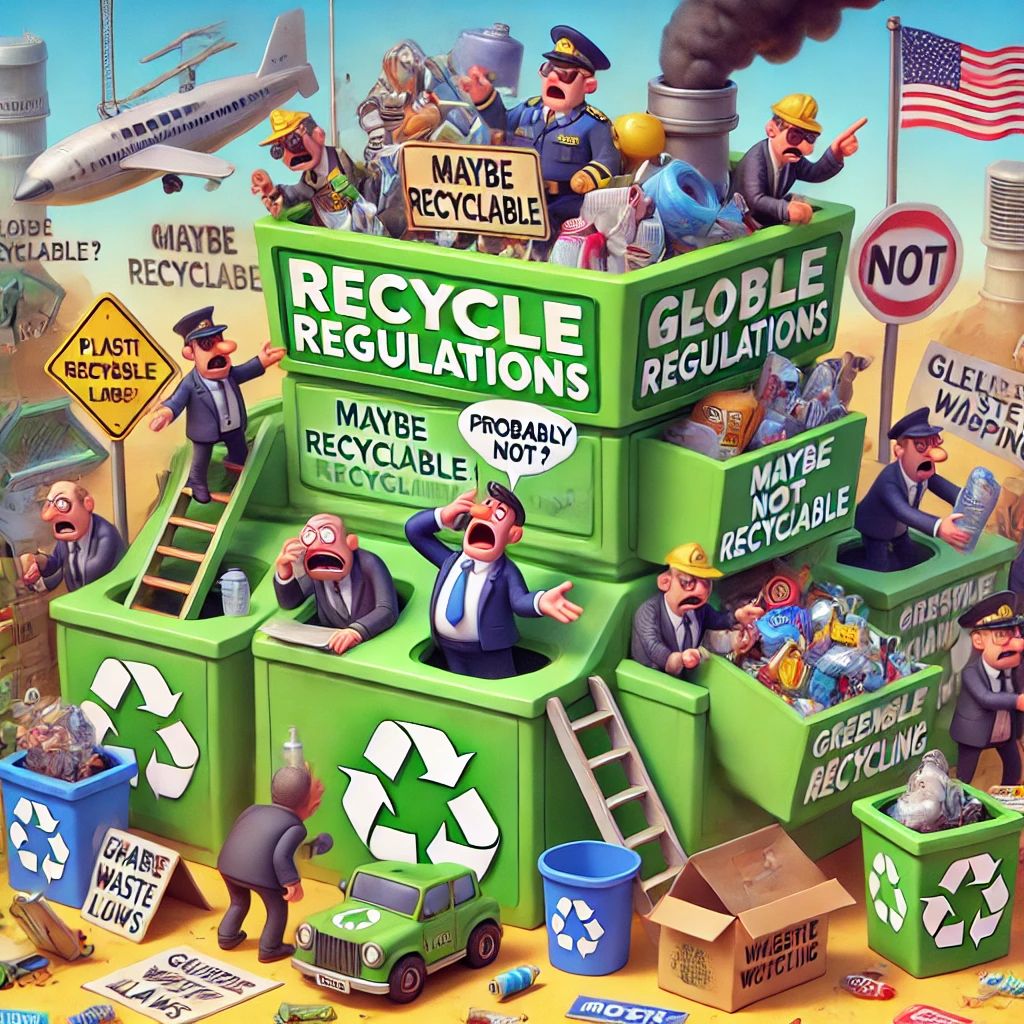
Recycle_Regulations: The New Gold Standard or a Global Mess?” ♻️🌍📜
Recycling isn’t just about throwing plastic into the right bin—it’s becoming a highly regulated industry with economic, environmental, and political implications. But are these recycle_regulations actually working, or are they just creating bureaucratic_chaos? Let’s break it down data-first.
📜 1. The Global Recycling Rulebook is Expanding
✅ Over 190 countries signed the Basel Convention, restricting plastic waste exports. (Source: UN, 2023)
✅ EU’s Circular Economy Package mandates 65% recycling targets by 2035. (Source: EU Commission, 2024)
✅ US States Are Taking the Lead: California’s SB 54 law requires 30% of plastic to be recyclable by 2028. (Source: CalRecycle, 2024)
🚨 The Problem? Many rules lack enforcement, and illegal waste dumping is still a #$10 billion global industry. (Source: Interpol, 2023)
⚖️ 2. Who’s Paying? The Battle Over EPR (Extended Producer Responsibility)
✅ Canada, EU & Japan require companies to fund recycling programs through EPR laws.
✅ India’s EPR Rules now hold businesses responsible for plastic recovery quotas. (Source: CPCB, 2024)
🚨 The Problem? Many companies shift costs to consumers, raising product prices.
🏆 Winner: Governments with strict accountability like Germany & South Korea.
❌ Loser: Developing nations drowning in imported plastic waste.
🛑 3. Greenwashing vs. Real Impact
✅ France bans ‘Recyclable’ labels unless companies prove 100% recyclability. (Source: French Gov, 2024)
✅ EU’s new Digital Product Passport tracks materials from production to disposal. (Source: EU Commission, 2024)
🚨 The Problem? 60% of ‘recyclable’ plastic isn’t actually recycled due to lack of infrastructure. (Source: Greenpeace, 2023)
🏆 Winner: Countries mandating transparency & product lifecycle tracking.
❌ Loser: Brands using misleading recycling claims.
🏗️ 4. The Future of Recycling Laws
📈 AI & Robotics to improve sorting efficiency & reduce contamination.
♻️ Chemical Recycling is gaining traction but faces cost & emissions concerns.
🚀 Global Agreements like the UN Plastics Treaty (2025) could reshape waste management worldwide.
🏆 Final Verdict: Recycling regulations are evolving, but enforcement is the real battle.
🏆 KeyTakeaway
Recycling isn’t just about being green—it’s about accountability. The future will belong to nations & businesses that get it right while others struggle with waste crises & regulatory chaos.
👉 Is your country leading or lagging in the recycling revolution?
RecycleRegulations CircularEconomy GreenLaws Sustainability PlasticCrisis NetZero
Originally published on LinkedIn on 2025-01-30 18:34:51: https://www.linkedin.com/feed/update/urn%3Ali%3AgroupPost%3A100646-7290799643045646336
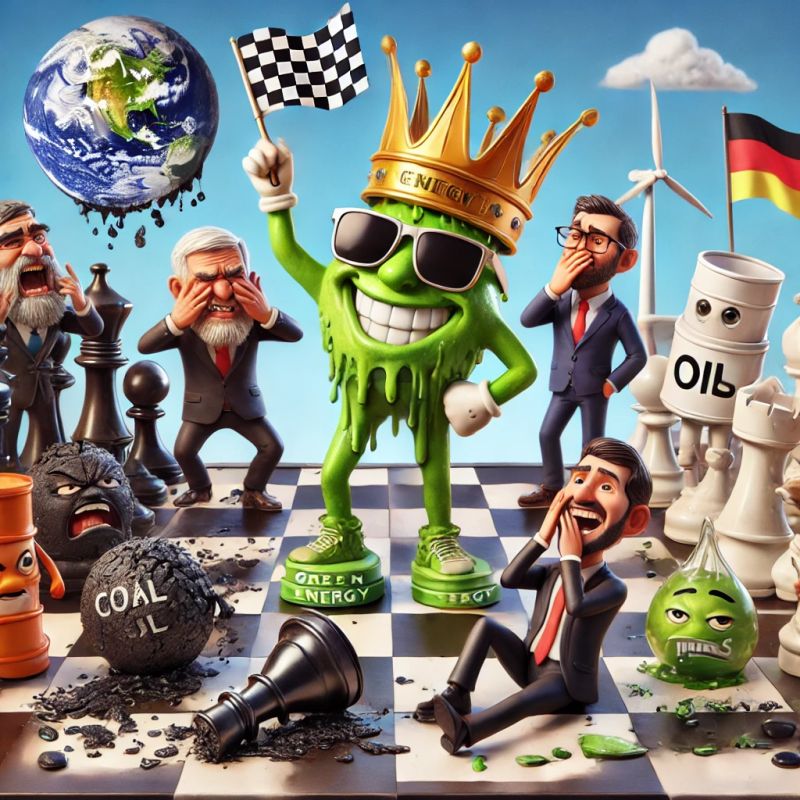
Is Green the New_Global_Superpower? How Climate Policies Are Reshaping the World” 🌍♻️🏛️
Climate policies are no longer just about saving the planet—they’re reshaping global politics, economies, and power dynamics. Welcome to the era of Green Political Global, where sustainability is the new currency of influence.
🌱 1. Is Climate the New_Geopolitical_Weapon?
✅ Carbon Tariffs & Trade Rules: The EU’s Carbon Border Adjustment Mechanism (CBAM) is forcing nations to cut emissions or pay the price.
✅ Green Trade Wars: Countries are using climate policies to favor domestic industries, from EV subsidies to clean energy export bans.
🚨 Who’s Winning? The US, EU, and China lead the green tech race, while developing nations struggle with compliance costs.
💰 2. Is Green Finance Replacing Oil Money?
✅ #$1.5 Trillion in ESG Investments: Global funds are shifting capital toward sustainable projects. (Source: BloombergNEF, 2024)
✅ Debt-for-Nature Swaps: Countries like Ecuador and Belize are cutting debt by committing to climate conservation.
🚨 Who’s Losing? Fossil-fuel-dependent nations risk economic isolation if they don’t transition fast enough.
⚡ 3. Who Controls the Future Energy Chessboard?
✅ China dominates solar & battery production, controlling 80% of global supply chains. (Source: IEA, 2024)
✅ US and EU investing billions in green hydrogen & rare earth mining to reduce dependence on China.
🚨 Who’s at Risk? Countries reliant on coal & oil exports face declining demand, reshaping global alliances.
🚀 4. Is Climate Politics the New Kingmaker?
✅ Green Politics is Winning Elections: Climate-focused leaders are gaining ground in Europe, the US, and Latin America.
✅ Corporate Influence Growing: Tech giants and carbon credit billionaires are shaping global climate policies.
🚨 Who’s Losing? Traditional fossil industries face increasing policy restrictions and legal battles.
🏆 KeyTakeaway
Climate policy is no longer just science—it’s global strategy. Nations that control green tech, finance, and trade rules will dominate the next economic era.
👉 Is your country leading the Green Power Shift, or falling behind?
ClimatePower Geopolitics GreenEconomy NetZero Sustainability FutureOfEnergy
Originally published on LinkedIn on 2025-01-30 11:06:32: https://www.linkedin.com/feed/update/urn%3Ali%3AgroupPost%3A2635374-7290686820978233345
🌟 India’s Chemical Industry: The Catalyst for Global Leadership (2025–2030) 🌟
The #$4 trillion global chemical industry is evolving rapidly, with trends like green chemistry, digital transformation, and supply chain diversification shaping its future. By 2030, the market is set to grow to #$5.5 trillion, and India has a golden opportunity to lead the charge. 🚀
Why India’s Chemical Industry is a Game-Changer
✅ Economic Engine: Contributes 7% to GDP; projected to hit 9% by 2030.
✅ Export Potential: Current exports at #$30 billion, with a target of #$60 billion.
✅ Job Creation: Can generate 2 million new jobs in specialty and green chemicals.
✅ Sustainability Leadership: Opportunity to capture 10%-15% of the #$150 billion green chemical market.
Global Trends: Challenges & Opportunities
🌍 China’s Dominance:
Controls 35% of the global chemical market.
Investing #$300 billion in green hydrogen and renewable feedstocks.
Pivoting to high-value specialty chemicals.
💡 Opportunity for India:
Reduce 33% import dependency (primarily on China).
Leverage PLI schemes for specialty and bio-based chemicals.
Build world-class chemical hubs and integrated logistics infrastructure.
📊 Global Sustainability Push:
Bio-based materials growing at a CAGR of 12%.
Over 50% of global chemical firms adopting digital supply chains by 2030.
India’s Roadmap for 2030
🔹 Market Expansion: Grow the domestic market to #$400 billion at an 8% CAGR.
🔹 R&D Investments: Increase spending to 1% of industry revenue (vs. current 0.3%-0.5%).
🔹 Skill Development: Train 500,000 professionals in green and digital technologies.
🔹 Sustainability Incentives: Develop bio-refineries and scale carbon-neutral production
The Numbers That Matter
💬 The Takeaway: India’s chemical industry is more than just a sector—it’s the foundation for sustainable growth, global competitiveness, and economic resilience. With the right policies, investments, and innovation, India can lead the global stage by 2030. 🌱
Let’s build a greener, stronger, and more self-reliant future. 💼💡
ChemicalIndustry IndiaGrowth Sustainability MakeInIndia 2030Vision
Source / shared link: https://m.economictimes.com/industry/indl-goods/svs/chem-/-fertilisers/budget-2025-chemical-industry-seeks-tweaking-in-customs-duties-to-boost-manufacturing/articleshow/117429274.cms
Originally published on LinkedIn on 2025-01-22 11:41:38: https://www.linkedin.com/feed/update/urn%3Ali%3AgroupPost%3A3880479-7287796548950745088
🚀 NamasteIndiaBudget YR2025: India’s Green Energy Push, Tax Reforms & Economic Resilience 🚀
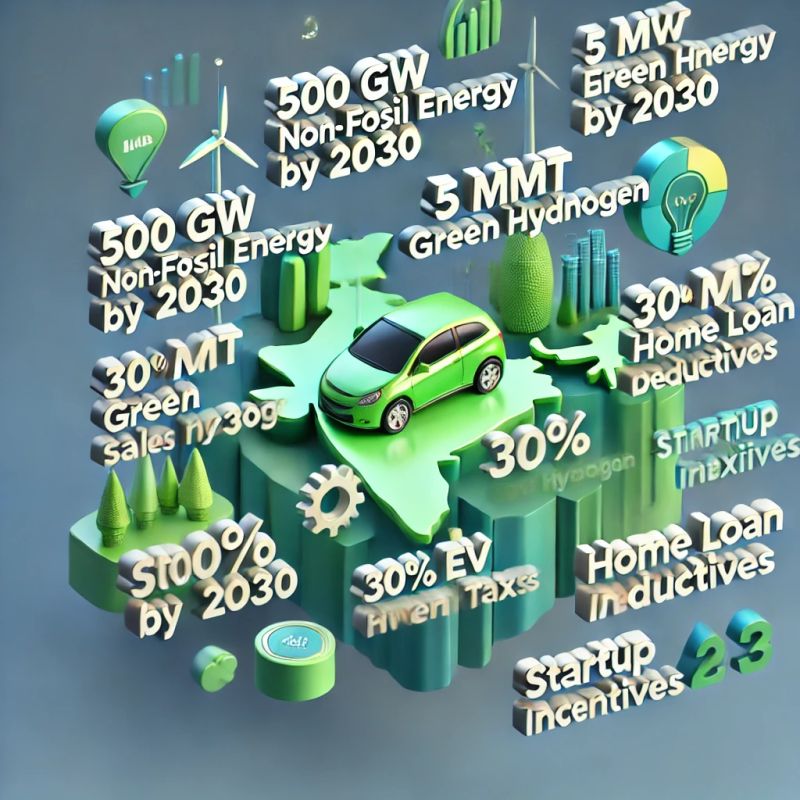
🌟 Super Important: India Targets 500 GW Non-Fossil Capacity by 2030 🌟
🌍 GreenEnergy Highlights
India’s Budget 2025 champions sustainability and green growth. Key priorities include:
🔆 RenewableEnergy:
Target: 500GW Non-Fossil Capacity by 2030.
Major focus on solar, wind, and hydropower.
💚 GreenHydrogen:
Goal: 5MMT Annual Production by 2030.
Incentives for electrolyser manufacturing and green ammonia.
🔋 BatteryStorage & EVs:
Gigafactories for advanced batteries.
Driving 30Percent EV Sales by 2030, with FAME subsidies and charging infrastructure.
🌿 CarbonMarkets & GreenBonds:
Carbon credit trading systems and increased Sovereign Green Bonds to fund renewable energy projects.
📈 EconomicGrowth & FiscalGoals
Balancing fiscal discipline with growth:
📊 GDPGrowth: Nominal growth forecast at 10.5Percent (FY25).
📉 FiscalDeficit: Targeted at 4.7Percent of GDP in FY25, under 4.5Percent by FY26.
🏦 Disinvestment: Reduced to ₹300 billion (from ₹500 billion).
💰 TaxReforms & Relief
SimplifiedTaxation: Capital gains tax rationalization and streamlined tax structures.
IndividualTaxRelief:
Higher home loan interest deduction limit to ₹5 lakh (from ₹2 lakh).
Expanded standard deduction and updated tax slabs to boost disposable income.
CorporateTaxation: Incentives for R&D in clean energy and emerging tech.
StartupSupport: Tax breaks for green startups, space tech, and AI initiatives.
HealthcareRelief: Exemptions on life-saving drugs and reduced GST on medical equipment.
🚀 SectoralSpotlight
Fostering innovation and inclusivity:
🩺 Healthcare: Tax exemptions on critical medicines and medical imports.
🏘️ RealEstate: Incentives for affordable housing and infrastructure status.
🛰️ SpaceTech & AI: Tax cuts and investments in 5G & 6G Infrastructure.
🌾 Agriculture: Subsidies for SolarPowered Irrigation and biofuel production.
🏆 KeyTakeaway
Budget 2025 boldly addresses Sustainability, EconomicGrowth, and TaxRelief, setting India on a path to innovation, fiscal resilience, and green energy leadership.
✨ How do you see these tax reforms shaping India’s future? Let’s connect and discuss! ✨

Originally published on LinkedIn on 2025-01-21 14:17:06: https://www.linkedin.com/feed/update/urn%3Ali%3AgroupPost%3A10334500-7287473288216240128
Davos2025: Collaboration for the Intelligent Age
Dates: January 20–24, 2025
Location: Davos_Klosters_Switzerland
Participants: 3,000 leaders from 130+ countries, including 60 heads of state and 2,000 global businesses
KeyStatistics
🌍 6/10 top global risks are climate-related (WEF Risks Report 2025).
📉 Projected 2.4% global GDP growth in 2025.
💡 $500 billion AI_spending forecast by 2027.
💵 $100 billion annually needed for climate adaptation.
KeyTopicsForDiscussion
🌐 Geopolitical Stability
🌎 Restoring global trust amidst fragmentation
🤝 Conflict and cooperation in a polarized world
🌍 Climate Change and Sustainability
💰 Financing climate adaptation
🐾 Mitigating biodiversity loss and ecosystem collapse
🤖 Technological Transformation
⚖️ Governance of AI and emerging technologies
🧭 Ethical frameworks for automation and innovation
📈 Economic Resilience
🌱 Unlocking $1.3 trillion in green investments
📊 Balancing short-term recovery with long-term growth
👩💼 Future_of_Work
🛠️ Upskilling 40% of the workforce by 2030
🤔 Managing job displacement and creation through automation
ProminentAttendees
🇺🇸 Donald Trump (via video link)
🇪🇺 Ursula von der Leyen
🇨🇳 Ding Xuexiang
🇺🇦 Volodymyr Zelenskyy
🌍 António Guterres
🌏 Kristalina Georgieva
Davos2025 is the platform where global leaders unite to address critical challenges in climate resilience, technological governance, and economic stability, fostering collaboration for the intelligent age.
Originally published on LinkedIn on 2025-01-18 15:33:26: https://www.linkedin.com/feed/update/urn%3Ali%3AgroupPost%3A2474261-7286405331780333568
NamasteGreenIndia’s Ethanol Revolution: Achieving 20% Blending with a Sustainable Edge
India is on the brink of achieving a 20% ethanol blending target, a transformative step towards energy independence, environmental sustainability, and agricultural empowerment. Here’s how this revolution is shaping up:
📈 The Progress So Far
🟢 2014: Ethanol blending in petrol was just 1.53%.
🟢 2024: Achieved 15%, with 4.62 million metric tonnes (MMT) of ethanol produced.
🟢 2025 Target: Projected to produce 10.2 MMT annually to meet blending and industrial needs.
🌍 Economic & Environmental Wins
💰 USD 4 Billion Saved: Annual savings on crude oil imports.
🌎 10 MMT CO₂ Reduced: Emissions cut significantly with 20% ethanol blending.
👷 500,000 Jobs Created: Boosting rural employment through distilleries and supply chains.
🚢 USD 300 Million Export Potential: Surplus ethanol positioned for international markets.
🚗 Automotive Industry’s Ethanol Push
🔧 Flex-Fuel Vehicles: Tata Motors, Mahindra, Maruti Suzuki, and Hyundai to launch 100% bio-ethanol vehicles within six months.
🛢️ Fossil Fuel Demand Cut: Flex-fuel vehicles to reduce reliance on fossil fuels by 5.5 MMT annually.
🏭 Toyota’s Commitment: Investing ₹20,000 crore (USD 2.4 billion) in ethanol-compatible vehicle production.
🌾 Agricultural Boost
🌱 8-9 MMT of Sugar: Diverted annually for ethanol production, stabilizing prices and supporting farmers.
🌾 1.5 MMT of Surplus Grains: Utilized for ethanol, ensuring sustainable revenue for agriculture.
⚡ Challenges & Opportunities
📊 Feedstock Demand: India needs an additional 2 MMT of sugarcane and 1.5 MMT of surplus grains for sustainable production.
🏗️ Infrastructure Gaps: Only 30% of fuel pumps are ready for E20 blending.
🌍 Global Leadership: Scaling production and refining distribution could position India as a leader in ethanol exports.
💡 Why This Matters
India’s ethanol revolution is more than a blending target—it’s about energy self-reliance, cutting carbon footprints, and empowering rural economies. This initiative showcases India as a global benchmark for sustainable energy transitions.
💬 Let’s discuss how India’sEthanolJourney is driving SustainableEnergy, AutomotiveInnovation, and RuralEmpowerment! 🚀
Originally published on LinkedIn on 2025-01-16 09:51:29: https://www.linkedin.com/feed/update/urn%3Ali%3AgroupPost%3A12538632-7285594503120347137

