KtalystGreyToGreen:GreenMethanol
Dr. Anju Sharma MrsSustainability
One Molecule. Four Price Curves. A New Chemical Economy.
Methanol isn’t going green overnight.
It’s being repriced in layers.
The industry is not switching fuels.
It’s splitting margins.
Inflection point:
EU ETS now prices maritime carbon, FuelEU Maritime starts enforcing fuel intensity, Scope 3 moves from slideware to contractsand suddenly the same CH₃OH carries different cash flows.
The 4_Curve Market That’s Emerging:
1) Grey Methanol — Volume Engine
✓ Coal / gas-based, deeply integrated into chemicals (formaldehyde, acetic acid, MTO)
✓ Lowest cost, highest carbon exposure
Impact: Remains the backbone, but margins compress as carbon becomes a cost line.
2) Blue Methanol — The Bridge
✓ Natural gas + CCS/CCU retrofits
✓ Faster to scale using existing assets
Impact: Buys time. Converts legacy plants into lower-intensity supply while green scales.
3) Bio-Methanol — Early Green Volume
✓ Biomass, waste, biogas routes
✓ Enters quickly into blending, shipping, compliance markets
Impact: Delivers near-term tonnes.
Constraint: Feedstock logistics, traceability, land-use scrutiny.
4) E-Methanol — Premium Proof
✓ Green H₂ + captured CO₂
✓ Highest credibility for EU-grade compliance and Scope 3
Impact: Sets the top price curve.
Constraint: Hydrogen cost, power intensity, certification.
Why This Matters
1. Pricing is shifting from tonne → carbon-adjusted tonne
✓ Same molecule, different lifecycle emissions
✓ Premium flows to certified, auditable tonnes
Result: Margin divergence across the same product.
2. Demand is becoming contract-led, not spot-led
✓ Shipping fleets are ordered before fuel is abundant
✓ Long-term offtakes are locking supply
Result: Bankability > announcements
3. Ports are becoming profit pools
✓ Bunkering, storage, blending, certification
Result: Value migrates from plant gate to corridor control
4. Carbon is moving from report → revenue
✓ Compliance (EU ETS, FuelEU), Scope 3, product carbon footprints
Result: Molecules become claim carriers with pricing power
5. Certification is the new capacity
✓ LCA, MRV, chain-of-custody decide market access
Result: A “green” tonne without proof = discounted tonne
The New ValueEquation
Methanol Value = Molecule + Carbon Intensity + Certification + Offtake + Port Access + Policy
KtalystBusinessMonitor
✓ Segment your portfolio across Grey / Blue / Bio / E don’t bet on one curve
✓ Lock offtake early, demand is outrunning certified supply
✓ Invest in proof systems , LCA, MRV, chain-of-custody
✓ Build corridor positions ports, storage, bunkering
✓ Design for Scope 3 — sell molecules that reduce your customer’s emissions
KtalystBottomLine
✓ Grey owns the volume.
✓ Green marks the premium.
✓ Transition carbon-adjusted tonne
Originally published on LinkedIn on 2026-04-27 13:18:35: https://www.linkedin.com/feed/update/urn%3Ali%3Ashare%3A7454519366592643073
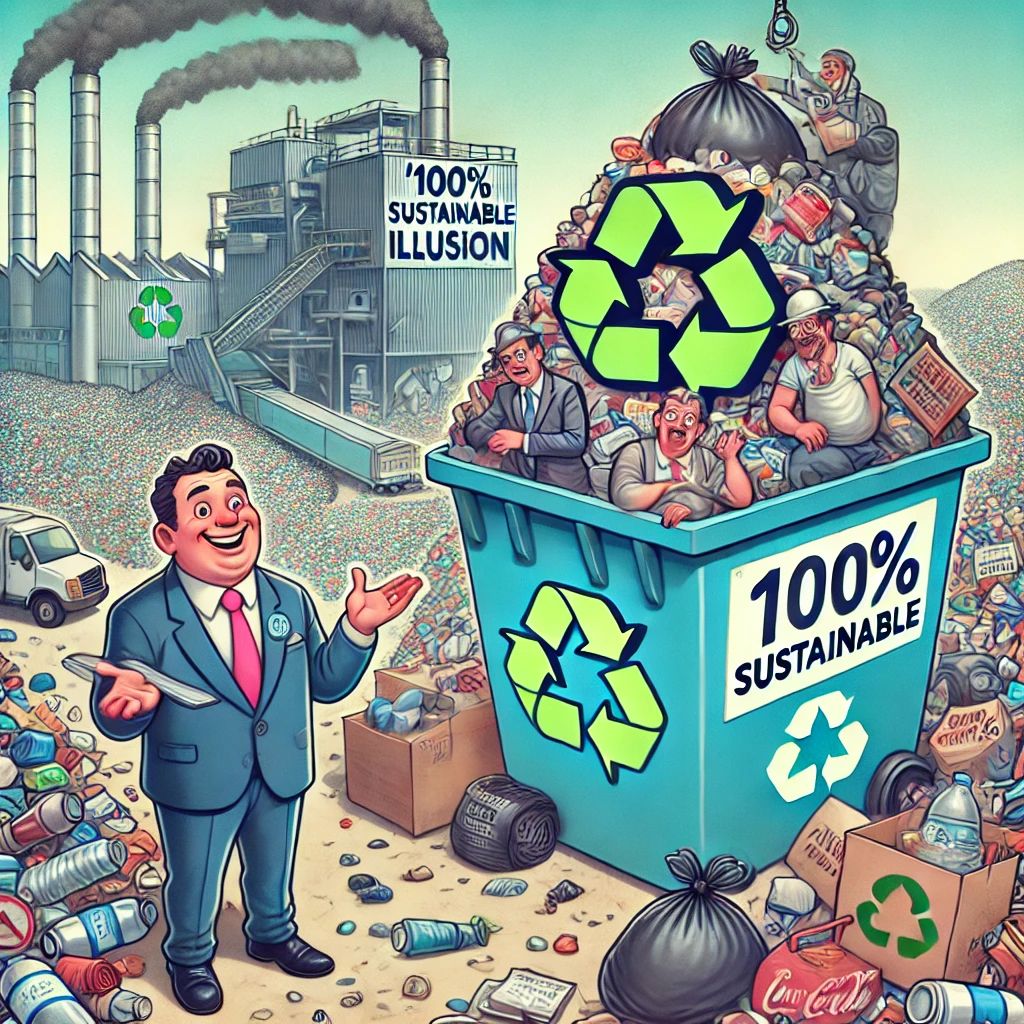
♻️ “The Waste Illusion: Is Sustainability Solving or Just Shifting_the_Problem?” 🌍🚮
Recycling alone won’t save the planet if we keep producing waste at record speed.
From plastic bans to circular economies, sustainability efforts often focus on waste reduction and recycling. But the truth? We’re generating_more_waste_than_ever_before.
🚨 Global waste production will hit 3.4 billion metric tons by 2050—a 70% increase from today. (WorldBank, 2025)
🚨 Only 9% of all plastic waste ever produced has been recycled. (UNEP, 2025)
🚨 Fashion waste alone contributes 92 million tons of landfill every year. (EllenMacArthurFoundation, 2025)
📌 RealityCheck: If sustainability isn’t fixing the waste cycle, are we just postponing the crisis?
🔄 The Waste Cycle: Are We Really Closing the Loop?
✅ Reduce – Brands promote low-waste lifestyles, yet global consumerism is at an all-time high.
✅ Reuse – Circular economies grow, but single-use culture dominates in food, fashion, and tech.
✅ Recycle – Waste sorting improves, but less than 20% of e-waste and plastics are ever recycled. (WEF, 2025)
🚨 RealityCheck: If new waste keeps outpacing recycling, how sustainable is our solution?
⚠️ Biggest Sustainability Loopholes in Waste Management
🔹 Plastic Offsets: Many brands buy plastic credits instead of reducing actual waste. (WWF, 2025)
🔹 Fast Fashion Recycling Myths: Less than 1% of clothing is truly recycled into new garments. (Greenpeace, 2025)
🔹 Food Waste Greenwashing: 30% of all food produced is still wasted despite “sustainable” sourcing. (FAO, 2025)
🔹 E-Waste Lies: Brands promote “recyclable electronics,” but 53.6M tons of e-waste were trashed last year. (UN, 2025)
📌 RealityCheck: A circular economy isn’t working if companies keep producing waste faster than we can recycle.
🏆 KeyTakeaway
♻️ Sustainability should be about eliminating waste at its source, not just recycling it later.
🚨 Greenwashing could be misleading us into thinking waste is under control.
🔄 A real circular economy would be about reducing overproduction, not just increasing recycling efforts.
👉 Are we solving waste or just shifting it around? Drop your thoughts below! 👇
Originally published on LinkedIn on 2025-02-19 05:44:35: https://www.linkedin.com/feed/update/urn%3Ali%3AgroupPost%3A9088131-7297853557188227072
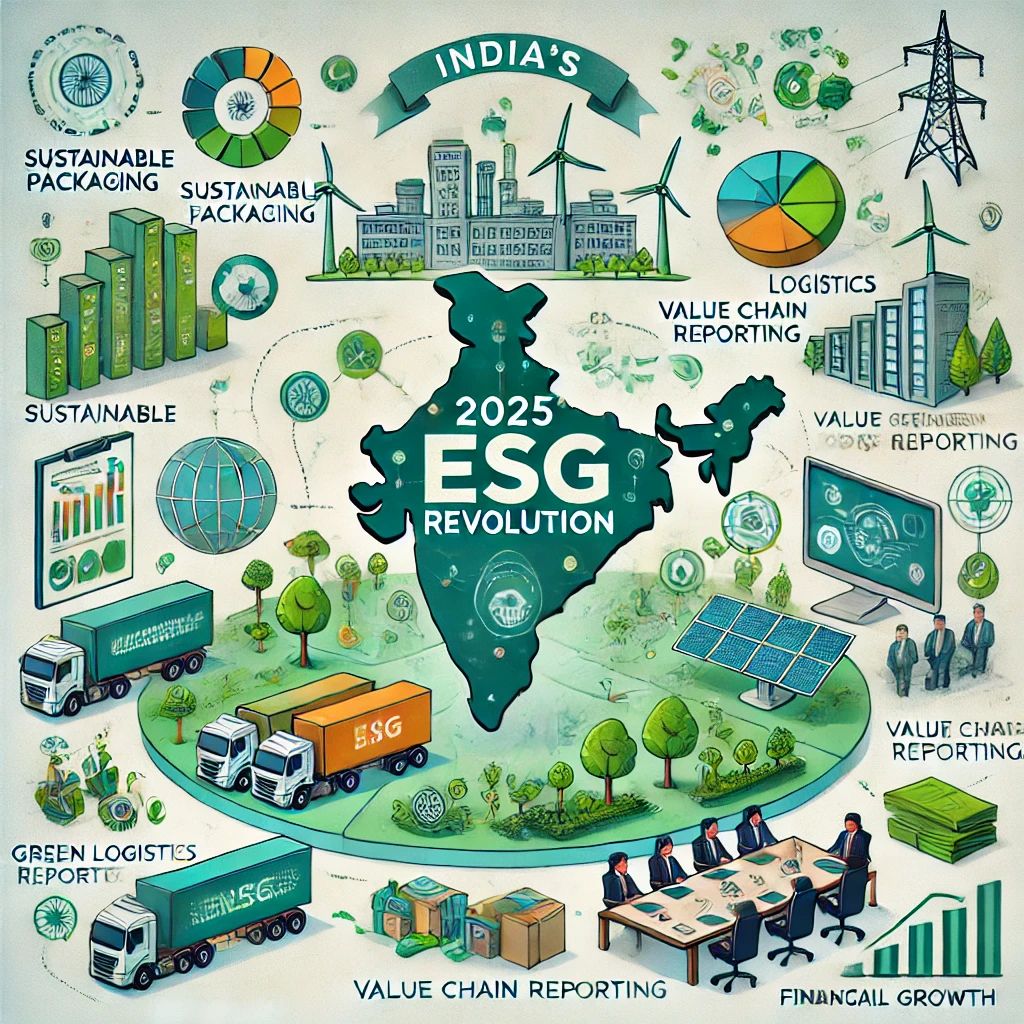
🌟 NamasteGreenIndia YR2025: India’s ESG Era Expands – Incorporating Packaging, Logistics, and More 🚀
The year YR2025 marks a transformative step in India’s corporate sustainability, with Environmental, Social, and Governance (ESG) regulations now including packaging, logistics, and operational efficiency. These changes align with global sustainability goals and drive innovation across industries.
📌 What’s New in 2025?
🌐 Value Chain Reporting:
Top 250 companies must disclose ESG metrics under SEBI’s “comply or explain” framework.
By 2026, expands to 500 companies, with mandatory assurance.
📜 BRSR Core Metrics:
Focus on 9 ESG KPIs like carbon emissions, water usage, and workforce diversity.
80% of top 500 companies are aligning operations with these standards.
📦 Sustainable Packaging:
New regulations target 50% reduction in single-use plastics by 2030.
Companies aim for 100% reusable packaging, with $3 billion invested in R&D.
🚚 Green Logistics:
Incentives for electric and hydrogen-powered fleets aim to cut emissions by 30% by 2030.
✅ Independent Verification:
ESG disclosures, including packaging and logistics, must undergo third-party assurance.
By 2025, 65% of listed entities will have verified ESG data.
📊 ESG Growth Impact
📦 Packaging Overhaul:
40% of FMCG and e-commerce companies have adopted eco-friendly packaging solutions.
🚛 Logistics Transformation:
Emissions reduced by 20% (2023–2025); green logistics market to hit $12 billion by 2030.
📈 Corporate Participation:
ESG disclosures grew 40%, with 70% of Nifty 50 companies including logistics and packaging metrics.
🌟 Why YR2025 is a Game_Changer
1️⃣ Global Leadership:
India leads in integrating packaging and logistics into ESG frameworks, aligning with global practices.
2️⃣ Investor Appeal:
Companies adopting eco-friendly practices attract funds managing $50 trillion+ in ESG assets.
3️⃣ Business Resilience:
Over 60% of companies report improved efficiency and reduced costs through ESG initiatives.
4️⃣ 🚨 Non_Compliance Risks:
Fines, loss of market share, and reputational damage await companies ignoring these standards.
📌 The Road Ahead
India’s 2025 ESG initiatives integrate packaging, logistics, and operational efficiency into corporate goals. These steps set Indian businesses on a path to lead the global sustainability revolution.
💬 How is your organization adapting to this challenge? Let’s discuss below! 👇

Originally published on LinkedIn on 2025-01-11 10:02:10: https://www.linkedin.com/feed/update/urn%3Ali%3AgroupPost%3A3880479-7283785251959529472
NamasteIndia High on Hydrogen Oriana Power to build electrolyser giga factory for green hydrogen, e-fuels
New Gigafactory: Oriana Power is set to build a gigawatt-scale factory for manufacturing alkaline electrolysers and Balance of Plant (BOP) modules.
Partnership: The project is in collaboration with Splitwaters, a US-based provider of cutting-edge electrolysis technology.
Phased Rollout: The factory will be developed in two phases, with the first phase expected to have a 500 MW annual capacity and become operational by 2026.
Green Hydrogen Focus: This facility aims to support the production of green hydrogen and e-fuels, including green ammonia and e-methanol.
Cost Efficiency: The collaboration aims to reduce capital costs by up to 30% compared to competing methods.
Source / shared link: https://m.economictimes.com/industry/renewables/oriana-power-announces-electrolyzer-giga-factory-for-green-hydrogen-and-e-fuels/articleshow/112309629.cms
Originally published on LinkedIn on 2024-08-07 11:38:51: https://www.linkedin.com/feed/update/urn%3Ali%3Ashare%3A7226914687446130691
AM Green’s Ambitious Ventures:
1. Investment in 2G Biofuels:
AM Green aims to invest USD 1 billion in secondgeneration (2G) biofuels.
Set up two bio-ethanol plants that will produce biofuels from nonfood biomass, such as plant materials and animal waste .
2. AssamBioRefinery Stake Acquisition:
AM Green intends to acquire a Fifty% stake in Assam Bio Refinery Pvt. Ltd.
The current stakeholders include FortumOyj and ChempolisOy from Finland.
Assam Bio Refinery will use bamboo to produce bioethanol, organic compounds, and green energy.
3. ChempolisOy Acquisition:
AM Green also plans to acquire the Finland-based biotechnology firm Chempolis Oy.
Chempolis is the licensor of the 2G biofuel technology for the world’s first plant producing cellulosic ethanol and bio-based chemicals from bamboo.
4. GreenEnergy Transition:**
AM Green aims to be a significant player in green hydrogen, green ammonia, biofuels, e-methanol, sustainable aviation fuels, and downstream high-value chemicals.
By acquiring stakes in Assam Bio Refinery and Chempolis Oy, AM Green is poised to lead the charge in sustainable energy solutions.
AM Green plans big investment to set up two bio-ethanol plants
Originally published on LinkedIn on 2024-07-24 14:06:45: https://www.linkedin.com/feed/update/urn%3Ali%3AgroupPost%3A3880479-7221878477824618498
AM Green’s Ambitious Ventures:
1. Investment in 2G Biofuels:
AM Green aims to invest USD 1 billion in secondgeneration (2G) biofuels.
Set up two bio-ethanol plants that will produce biofuels from nonfood biomass, such as plant materials and animal waste .
2. AssamBioRefinery Stake Acquisition:
AM Green intends to acquire a Fifty% stake in Assam Bio Refinery Pvt. Ltd.
The current stakeholders include FortumOyj and ChempolisOy from Finland.
Assam Bio Refinery will use bamboo to produce bioethanol, organic compounds, and green energy.
3. ChempolisOy Acquisition:
AM Green also plans to acquire the Finland-based biotechnology firm Chempolis Oy.
Chempolis is the licensor of the 2G biofuel technology for the world’s first plant producing cellulosic ethanol and bio-based chemicals from bamboo.
4. GreenEnergy Transition:**
AM Green aims to be a significant player in green hydrogen, green ammonia, biofuels, e-methanol, sustainable aviation fuels, and downstream high-value chemicals.
By acquiring stakes in Assam Bio Refinery and Chempolis Oy, AM Green is poised to lead the charge in sustainable energy solutions.
AM Green plans big investment to set up two bio-ethanol plants https://lnkd.in/d3m9xmgh
Originally published on LinkedIn on 2024-07-24 14:06:38: https://www.linkedin.com/feed/update/urn%3Ali%3Ashare%3A7221878448380608512

