Sunburn or SunBoom?
U.S. Slaps 3,521% Tariffs on Solar Imports — The SolarSector Feels the Heat (and Opportunity)
When the sun shines too bright on unfair play, tariffs bring the shade.” — KtalystInsight
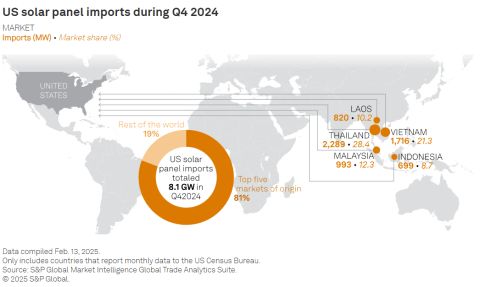
The UnitedStates has swung a solar sledgehammer — imposing tariffs as high as 3,521% on solar panel imports from Cambodia, Vietnam, Thailand, and Malaysia.
This stems from a Department of Commerce finding that Chinese companies were rerouting solar products through Southeast Asia to dodge existing duties.
Winners Emerging:
FirstSolar, Qcells, and other U.S. manufacturers celebrating a MadeInAmerica solar boom.
SolarBank CEO Dr. Richard Lu shared a sharp pivot — expanding domestic community solar and energy storage solutions, especially to feed the AI-driven data center boom.
SolarBank’s new 2.9 MW Gainesville, New York project is already under development.
Losers Worried:
Renewable project developers predict a 20–30% rise in project costs.
Supply chains could see 6–12 months delays, impacting Biden’s climate goals.
Global Echoes: Solar Under Trade Siege
EuropeanUnion’s CBAM (Carbon Border Adjustment Mechanism):
Though solar isn’t covered yet, solar supply chains are preparing for impact.
CBAM rollout from 2026 may push solar module prices up by ~10% if embedded carbon costs get added.
Manufacturers are already shifting wafer and polysilicon production to cleaner-energy countries like Canada and Brazil to avoid CBAM penalties.
India’s Solar Firewall:
Imposed 40% Basic Customs Duty on solar modules from April 2022 to promote Atmanirbhar Bharat.
Indian players like Adani Solar and Tata Power Solar are scaling local module capacity aggressively.
Canada’s Quiet Defense:
Continuing antidumping duties on Chinese modules, aiming to build a resilient domestic clean energy base.
Money Moves: Follow the Smart Investors
Brookfield Renewable Partners and BlackRock are pivoting funds into localized solar manufacturing and battery storage ecosystems.
NextEra Energy eyes major gains by scaling U.S.-based clean energy supply chains.
Ktalyst Perspective:
This tariff wave, plus the CBAM ripple effect, isn’t protectionism — it’s market redesign by climate necessity.
The winners will be solar companies that decarbonize supply chains, invest in local resilience, and pivot toward clean manufacturing clusters in NorthAmerica and India.

Originally published on LinkedIn on 2025-04-26 18:06:28: https://www.linkedin.com/feed/update/urn%3Ali%3AgroupPost%3A2153908-7321957853764677632
TARIFF SHOCKWAVES: INDIA AT THE CROSSROADS OF TRADE & STRATEGY
The 26% blow to Indian exports isn’t just a trade shock—it’s a wake-up call to diversify, digitize, and diplomatically reset our global strategy before the door to developed markets narrows further.
AnjuSharma, MD, KtalystKeystone
What Happened?
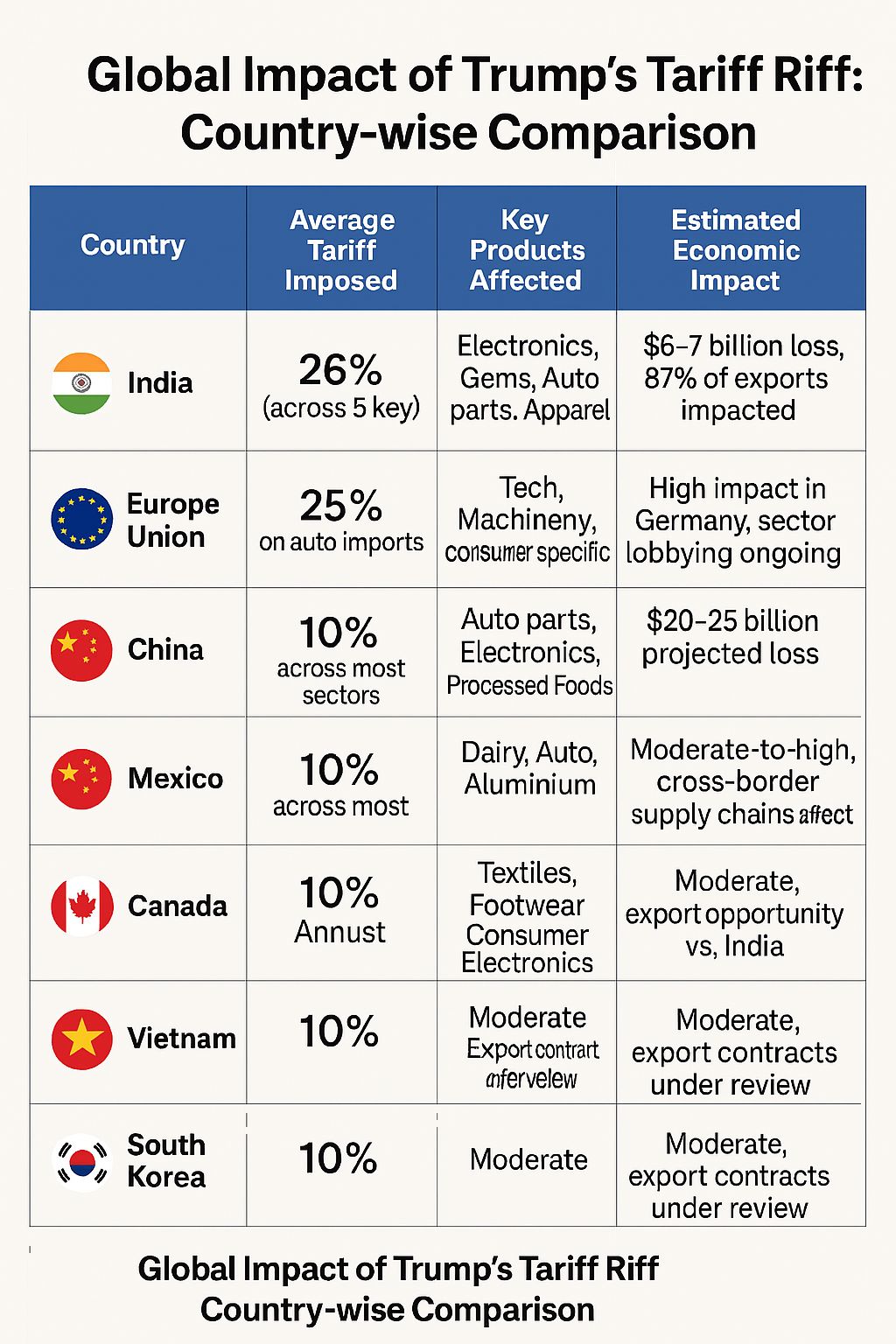
📌 10% universal tariff on all U.S. imports announced by President Trump
📌 India hit with 26% tariff on electronics, auto parts, gems, textiles & aluminium
📌 87% of India’s $66B U.S. exports impacted
📌 Estimated annual loss: $6–7 billion
Big 4 Speak Out
💬 PwC: “Tariff retaliation could balloon from $76B to $697B globally
💬 KPMG: “This isn’t trade policy—it’s political performance
💬 EY: “India must restructure global sourcing strategy immediately
💬 Deloitte: “Tariffs will inject stagflation into already strained supply chains
Financial Titans React
💸 Goldman Sachs:
Auto and textile exporters will bleed
Kroger, Valvoline may survive — India’s top B2B exporters will face margin heat
💹 Bloomberg Intelligence:
India risks losing emerging export edge to Vietnam & Mexico
📰 Wall Street Journal:
U.S. tariffs may trigger a regional pivot — India’s FTA urgency just jumped five notches
Market Pulse: Dalal Street Feels the Heat
📉 GIFT Nifty down 350+ pts
📉 Auto, IT, Jewellery, Aluminium stocks see heavy selling
📈 Shift towards domestic FMCG & retail as safe havens
What’s Next for India?
⚙️ Bilateral trade deal in pipeline by Fall 2025
🌍 Explore Middle East, Africa & ASEAN for export realignment
🛠️ Invest in supply chain localization + logistics infrastructure
📜 Fast-track FTA negotiations with EU, UK & Pacific allies
Final Takeaway
🚨 Tariffs aren’t just taxes—they’re tectonic shifts.
India must act with policy agility, strategic diversification, and bold diplomacy to stay ahead in a reshuffled global order.
Total Estimated Exposure
Indian Exports to U.S. Affected: ~$57–60 billion
Percentage of Total Indian Exports to U.S. Affected: ~87%
Estimated Annual Economic Loss: $6–7 billion
Trade Response & Outlook
Commerce Ministry View: “It’s a mixedbag, not a setback
Negotiation Status: Bilateral trade agreement targeted for Fall 2025
Market Impact:
GIFT Nifty: -350 pts (near 23,000)
Auto & IT stocks: Broad selling
Export-heavy stocks (like Titan, Motherson, Hindalco): Underperforming
Originally published on LinkedIn on 2025-04-03 04:42:34: https://www.linkedin.com/feed/update/urn%3Ali%3Ashare%3A7313420627510464512
🚨 India’s EVRegulations 2025: What’s New & What It Means for the Industry? ⚡🚗
With EV sales in India growing 49% YoY, new regulatory shifts are shaping the future of the sector. The latest policies focus on local manufacturing, safety standards, & market expansion while setting new rules for charging infrastructure & import incentives. Here’s what’s changing:
📊 Key EV Policy Updates & Their Impact
🔹 Investment Caps on Charging Infrastructure
📌 The Indian Government now limits EV manufacturers to count only 5% of their total investment in charging networks toward the #$500M minimum investment required for lower import tariffs.
📌 Why It Matters? This ensures priority to local EV production, reducing reliance on imports. (Source)
🔹 Tesla’s Entry & Market Implications
📌 Tesla is setting up showrooms in Mumbai & New Delhi and exploring local production. However, high import duties (up to 100%) could push Tesla’s pricing into the luxury segment, making affordability a challenge.
📌 EV Market Reality: The average car price in India is #$10,000-$15,000, while a Tesla Model 3 would cost over #$50,000 without local assembly. (Source)
🔹 Stricter Safety & Battery Standards
📌 BIS (Bureau of Indian Standards) introduces new EV safety rules, requiring all EVs to meet upgraded performance & fire safety benchmarks.
📌 Battery Regulation: EV battery makers must obtain AIS 156 certification from ARAI (Automotive Research Association of India) to ensure safety compliance.
📌 Why It Matters? India aims to reduce EV fire risks, ensuring consumer safety and boosting market confidence. (Source)
🔹 Union Budget 2024-25: EV Industry Boost
📌 Customs duty exemptions on 25 critical minerals used in EV battery production will lower manufacturing costs.
📌 PLI (Production-Linked Incentive) expansion aims to reduce import dependency & boost domestic production.
📌 FAME III (Faster Adoption & Manufacturing of Electric Vehicles) is expected to focus on charging infrastructure expansion. (Source)
⚡ The Takeaway: What’s Next for India’s EV Industry?
🚀 EV penetration in India is at 2% but projected to hit 30% by 2030.
🚀 Government policies favor local EV manufacturing over imports.
🚀 Safety & compliance measures will shape consumer trust & adoption.
📢 Will these new regulations accelerate India’s EV transition or slow global players like Tesla? Let’s discuss! 👇
Source / shared link: https://m.economictimes.com/industry/renewables/govt-set-to-notify-new-ev-policy-with-new-investment-rules-as-tesla-prepares-for-india-entry/articleshow/118415610.cms
Originally published on LinkedIn on 2025-02-27 06:19:45: https://www.linkedin.com/feed/update/urn%3Ali%3AgroupPost%3A82093-7300761508139974656
NamasteGreenIndia’s DDGS Export Boom: USD 717 Million Market, But 2025 Holds the Key
The Surge: A 314% Export Boom
India is making waves in the global Distillers Dried Grains with Solubles (DDGS) market, a key ethanol byproduct used as animal feed. Here’s the story behind the numbers:
📦 1,212 shipments of DDGS in the last 12 months (314% growth).
🌏 Major buyers:
🇻🇳 Vietnam: 51% share.
🇳🇵 Nepal: 21% share.
🇺🇸 United States: 7% share.
💰 Market Value:
2023: USD 420.67 million.
2032 (Projected): USD 717.81 million (CAGR: 6.17%).
The Challenge: Falling Prices
Despite the export surge, the industry is battling a steep price drop:
🏷️ Domestic DDGS prices: #₹14–15/kg (~USD 0.17–0.18).
🌍 Global competition and oversupply are hitting margins hard.
1. Expanded Production Capabilities:
With ethanol blending targets set to increase to 20% by 2025, India’s DDGS production will reach record levels.
2. Market Diversification:
New export agreements with Africa, Southeast Asia, and Latin America are expected to reduce over-reliance on existing markets like Vietnam and Nepal.
3. Government Interventions:
Policies promoting minimum price guarantees and export incentives are likely to stabilize DDGS prices.
Focus on value-added DDGS products, such as enriched feed, to attract premium markets.
4. Sustainability Push:
Growing demand for sustainable feed solutions globally aligns perfectly with DDGS as a cost-effective, eco-friendly option.
Indian DDGS could gain significant traction in European markets following stricter feed sustainability regulations.
5. Technological Advancements:
Adoption of advanced processing techniques will improve DDGS quality and reduce production costs, ensuring competitiveness in global markets.
India is turning its ethanol growth into a global export advantage, but to sustain the momentum in 2025 and beyond:
🛠️ Strengthen Domestic Support: Build strategic reserves to manage price fluctuations.
🌍 Capture New Markets: Target countries with rising feed demand like Brazil, Indonesia, and Nigeria.
🚀 Lead the Sustainability Charge: Establish India as a key supplier of sustainable animal feed.
Why It Matters
India’s ethanol-driven DDGS market is poised for exponential growth in 2025. By embracing innovation, diversification, and sustainability, India can become a global powerhouse in the animal feed sector while ensuring long-term industry stability.
💬 Let’s connect to explore how IndiaExports and EthanolEconomy are setting the stage for a transformative 2025. 🚀
Originally published on LinkedIn on 2025-01-15 19:30:29: https://www.linkedin.com/feed/update/urn%3Ali%3Ashare%3A7285377825862283264
NamasteIndia’s Intangible Investment Surge: Paving the Way to a $400 Billion Future by 2030.
Rapid Growth: India has recorded the fastest growth in intangible investments from 2011 to 2020, outpacing major economies like the US, France, Germany, and the UK.
Key Drivers: This growth is fueled by strengths in software and data, new financial products, and increased investment in domestic brands.
Global Position: In 2020, India ranked 14th in absolute levels of intangible investments among 26 advanced economies.
Economic Impact: The significant increase in intangible investments, reaching approximately $200 billion USD in 2020, underscores India’s expanding role in global innovation and intellectual property.
Projections till 2030
Double in Value: Intangible investments could potentially double, reaching around $400 billion USD.
Enhanced Innovation: Continued emphasis on R&D, software development, and brand building will drive further innovation.
Global Leadership: India is poised to strengthen its position as a global leader in intellectual property and innovation.
Source / shared link: https://m.economictimes.com/news/economy/indicators/india-outpaces-major-economies-in-growth-of-intangible-investments/articleshow/112421471.cms
Originally published on LinkedIn on 2024-08-11 02:46:29: https://www.linkedin.com/feed/update/urn%3Ali%3Ashare%3A7228230264081027072
NamasteIndia – Reasons for India’s High Anti-Dumping Cases**:
Market Size: India’s large consumer market attracts foreign suppliers, leading to increased trade volume and potential disputes.
Domestic Industry Protection**: India uses anti-dumping measures to safeguard local industries from unfair competition by imported goods.
Global Trade Dynamics: As a major player in international trade, India encounters more instances of dumping practices.
Sector-Specific Issues: Certain sectors, such as steel, chemicals, and textiles, face intense competition and are prone to anti-dumping actions.
Originally published on LinkedIn on 2024-07-27 13:34:14: https://www.linkedin.com/feed/update/urn%3Ali%3AgroupPost%3A60128-7222957457717792768
NamasteIndia – Reasons for India’s High Anti-Dumping Cases**:
Market Size: India’s large consumer market attracts foreign suppliers, leading to increased trade volume and potential disputes.
Domestic Industry Protection**: India uses anti-dumping measures to safeguard local industries from unfair competition by imported goods.
Global Trade Dynamics: As a major player in international trade, India encounters more instances of dumping practices.
Sector-Specific Issues: Certain sectors, such as steel, chemicals, and textiles, face intense competition and are prone to anti-dumping actions.
Originally published on LinkedIn on 2024-07-27 13:34:07: https://www.linkedin.com/feed/update/urn%3Ali%3Ashare%3A7222957429288783872

