📚 KnowledgeSeries: Sustainability Taxonomy – The Rulebook for Green Investments 🌱💰
As #$5T in ESG investments grows, defining what is truly sustainable is critical. Enter Sustainability Taxonomy—a classification system ensuring green capital flows into real climate solutions, not greenwashing.
📊 EU Taxonomy – Setting the Global Standard
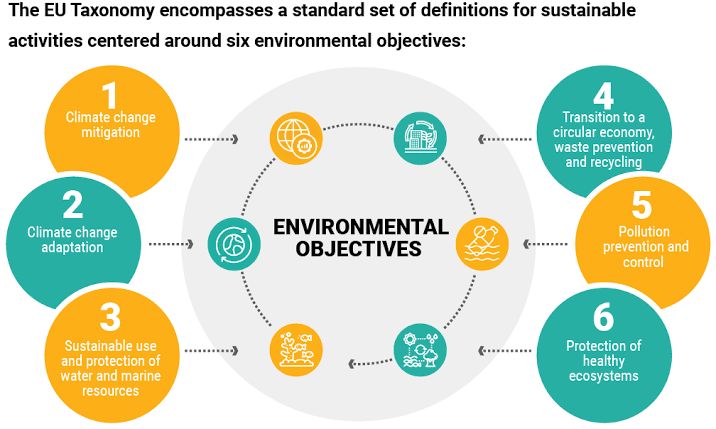
🟢 6 Environmental Objectives → Activities must significantly contribute to at least one while causing no harm to others:
Climate Change Mitigation
Climate Change Adaptation
Water & Marine Resource Protection
Circular Economy Transition
Pollution Prevention & Control
Biodiversity & Ecosystem Restoration
🟢 Impact → Covers 50K+ companies, shaping 80% of EU capital markets. (Source)
🟢 Challenges → Simplification Omnibus (2025 Proposal) could reduce company reporting, raising concerns about greenwashing risks. (Source)
🌍 Global Adoption: Who’s Following the EU Model?
🟢 Australia → Developing Sustainable Finance Taxonomy to attract #$200B+ in green capital. (Source)
🟢 China → Green Bond Principles aligned with EU Taxonomy in 2023, covering #$150B+ in issuances.
🟢 ASEAN → Launched ASEAN Taxonomy 2024, targeting climate finance growth in 10 nations.
🟢 US & UK → No official taxonomy, relying on SEC climate rules & UK Green Finance Strategy instead.
🔥 The Takeaway: Green Finance Needs Clear Rules
📌 #$5T+ ESG investments need clarity—taxonomy prevents greenwashing.
📌 EU model sets the benchmark, but simplification risks loosening standards.
📌 More countries adopting taxonomies → Will we see a global standard soon?
📢 Do we need a worldwide taxonomy for sustainability? Let’s discuss! 👇
Originally published on LinkedIn on 2025-03-04 03:47:30: https://www.linkedin.com/feed/update/urn%3Ali%3AgroupPost%3A2474261-7302535131989164034
CustomerInfluence is Driving CorporateSustainability—Are Businesses Ready? 🇮🇳🌍🛍️
What if every dollar (or rupee!) you spent was a vote for the future you wanted?
Consumers are no longer just buying products—they’re reshaping industries. In India, 85% of urban shoppers now prefer eco-friendly brands (Nielsen, 2024), pushing businesses to align with sustainability or risk losing relevance.
📢 WhichIndustries Are Most Affected by Customer Demand for Sustainability?
🚗 Automobile & Mobility
✔️ India’s EV market grew 48% YoY as consumers shift to greener transport (SIAM, 2024).
✔️ Tata Motors leads India’s EV sector with a 74% market share, while global automakers scramble to meet demand (Economic Times, 2024).
✔️ Uber & Ola face pressure to electrify fleets, with government mandates accelerating the shift.
🛍️ Retail & Fashion
✔️ Fast fashion faces a reckoning: 73% of Gen Z in India prefer sustainable brands (Deloitte, 2024).
✔️ H&M & Zara under fire for greenwashing, while local sustainable brands like FabIndia & B Label are thriving.
✔️ Shein & Flipkart Fashion have faced sustainability backlash, yet mass-market appeal keeps them afloat.
🥤 Food & Beverage
✔️ 70% of Indian consumers prefer eco-friendly packaging, pushing brands to reduce plastic use (Mint, 2024).
✔️ Nestlé & PepsiCo face bans on single-use plastics, while Amul & Mother Dairy work on sustainable dairy farming.
✔️ Plant-based meat & dairy alternatives are gaining ground, with a 32% YoY growth in demand (FICCI, 2024).
🏡 RealEstate & Construction
✔️ Green buildings account for 7% of new constructions in India, but demand for sustainable housing is rising (JLL India, 2024).
✔️ Godrej Properties & Mahindra Lifespaces are leading in green-certified real estate.
✔️ Builders failing on sustainability face regulatory & buyer scrutiny, pushing firms toward solar power & eco-friendly materials.
💄 Beauty & Personal Care
✔️ India’s natural beauty segment is growing 35% YoY, driven by demand for chemical-free, cruelty-free products (Statista, 2024).
✔️ Forest Essentials & Kama Ayurveda thrive, while L’Oréal & Unilever struggle with green claims scrutiny.
📊 KeyTakeaway: Consumers Hold the Power
📌 Customers could be the biggest force in driving corporate climate action.
📌 Brands should be transparent & proactive—greenwashing is no longer an option.
📌 The future would be shaped by companies prioritizing real impact over marketing.
👉 Do you factor sustainability into your purchasing decisions? Let’s discuss below! 👇

Originally published on LinkedIn on 2025-02-26 05:06:26: https://www.linkedin.com/feed/update/urn%3Ali%3AgroupPost%3A95089-7300380670919426049
🚗⚡ “Why Are Big_Carbon_Companies_Skipping_EVs_for_Hydrogen?” 🌍🔋💨
📊 With EV sales surpassing 14 million in 2024, why are oil & gas giants betting big on hydrogen instead?
✅ Hydrogen investments by major energy firms hit $320B globally. (McKinsey, 2024)
✅ Over 35 countries now have national hydrogen strategies, with policy incentives rising. (IEA, 2024)
❌ Yet, the transition away from fossil fuels is far from straightforward.
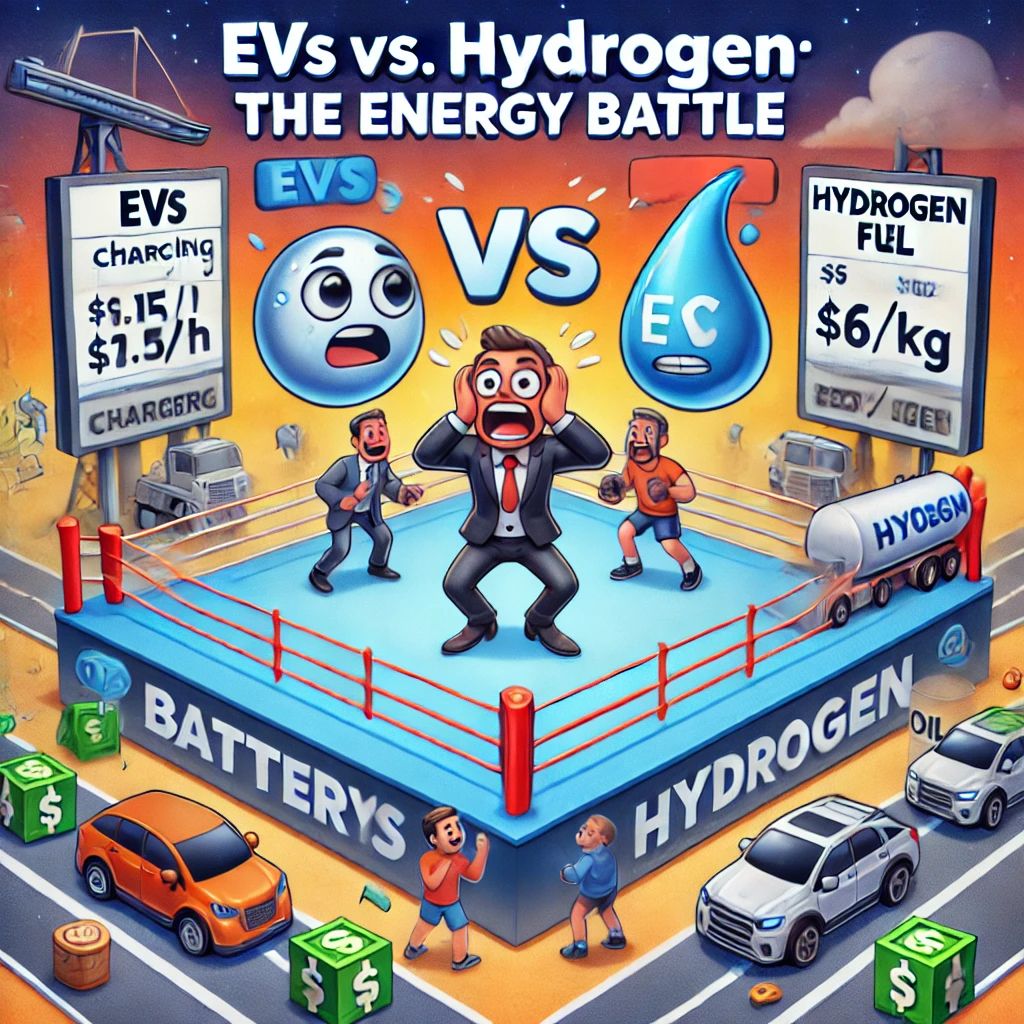
📌 Reality Check: The energy war isn’t EVs vs. fossil fuels—it’s EVs vs. hydrogen.
🔎 Why Are Carbon Giants Favoring Hydrogen Over EVs?
🚨 Hydrogen Leverages Their Existing Infrastructure
🔹 Oil & gas companies already handle gases—hydrogen fits their expertise.
🔹 Refineries & pipelines can be repurposed for hydrogen transport.
🚨 EV Battery Supply Chains Are a Challenge
🔹 70% of the world’s lithium refining is controlled by China. (Bloomberg, 2024)
🔹 Hydrogen avoids reliance on limited mineral resources.
🚨 Hydrogen Works Better for Heavy Transport & Industry
🔹 EV trucks take hours to charge—hydrogen refuels in minutes.
🔹 Steel, shipping & aviation can’t rely on batteries alone. (IEA, 2024)
🚨 Governments Are Pumping Money Into Hydrogen
🔹 EU plans $43B in hydrogen funding by 2030. (EU Hydrogen Strategy, 2024)
🔹 The US Inflation Reduction Act provides $3/kg hydrogen production incentives.
📌 Reality Check: Carbon giants aren’t anti-EV—they’re just betting on what keeps them in business.
⚖️ Is Hydrogen a Real Threat to EVs?
✅ Toyota, BMW, and Hyundai are developing hydrogen fuel cell vehicles.
✅ Over 120 hydrogen fueling stations opened in 2024, but EV chargers still outnumber them 20:1. (Global EV Outlook, 2024)
❌ Green hydrogen is still expensive – costing 4-6x more than fossil fuels today. (IEA, 2024)
📌 Reality Check: EVs dominate now, but hydrogen is creeping up in key sectors.
🏆 KeyTakeaway
💡 EVs could be the dominant player for personal transport, should be complemented by hydrogen for heavy industry, but would be challenged if hydrogen costs drop significantly.
👉 Do you think hydrogen will overtake EVs, or is it just a fossil fuel lifeline? Let’s discuss. 💬
Originally published on LinkedIn on 2025-02-10 04:57:02: https://www.linkedin.com/feed/update/urn%3Ali%3AgroupPost%3A60128-7294580099679490048

