KnowledgeSeries: The Future of CarbonCredits – A USD250B Market by 2050
The carboncredit market is no longer a side conversation—it’s becoming a mainstream financial instrument. With projections hitting #$250B by 2050, businesses and investors must pay attention.
Why? Because companies that integrate NetZero strategies today will gain a competitive edge, while those that don’t will face higher costs, regulatory risks, and shrinking investor confidence.
🌎 The Carbon Credit Boom: Why It’s a Business Imperative
✔️ The voluntary carbon market is set to grow 15X by 2030, reaching #$10B–$40B. (McKinsey)
✔️ Investments in carbon credits hit #$1.7B in 2023, up 50% YoY. (BloombergNEF)
✔️ 6,000+ global companies have set Science-Based Targets (SBTi), driving demand for verified carbon offsets.
✔️ Indonesia, Brazil, and Kenya are integrating carbon markets into their economies, generating revenue from forests, renewable energy, and carbon capture projects.
✔️ Article 6 of the ParisAgreement is enabling international carbon credit trading, boosting market credibility.
🚀 What does this mean for businesses?
✔️ A carbon credit strategy is no longer optional—it’s a business necessity.
✔️ Companies without a decarbonization plan will face higher compliance costs.
✔️ Investors are prioritizing NetZero leaders, making carbon credits a key ESG performance driver.
📊 Who’s Leading the Carbon Credit Race?
✔️ Big Tech & Carbon Capture:
Meta, Microsoft, and Google are securing multi-million-dollar deals in Direct Air Capture (DAC) to future-proof their carbon strategies.
✔️ Financial Institutions Going Green:
BlackRock, JP Morgan, and Goldman Sachs are launching climate-focused funds, treating carbon credits as an emerging asset class.
✔️ Corporate Adoption Soaring:
40%+ of Fortune500 companies are embedding carbon offsets into their business models.
✔️ Government-Led Action:
The EU, Singapore, and Japan are developing regulated carbon exchanges to ensure transparency & standardization.
🌱 What to Expect in 2025 & Beyond?
✔️ Stricter Regulations → Carbon credit verification will be tighter, reducing low-quality offsets & greenwashing risks.
✔️ Rising Prices → As demand outstrips supply, carbon credit prices could triple by 2030, making early adoption a smart financial move.
✔️ Emerging Markets in Play → Africa, Southeast Asia, and Latin America will dominate nature-based carbon solutions (reforestation, soil carbon, etc.).
✔️ Carbon as a Tradable Asset → Institutional investors are pushing for liquid carbon credit markets, making carbon a financialized commodity.
🔍 ComingUpNext: “The Business Case for Carbon Credits – Risks, Rewards & Strategy
Originally published on LinkedIn on 2025-03-08 07:02:05: https://www.linkedin.com/feed/update/urn%3Ali%3AgroupPost%3A82951-7304033651044839424
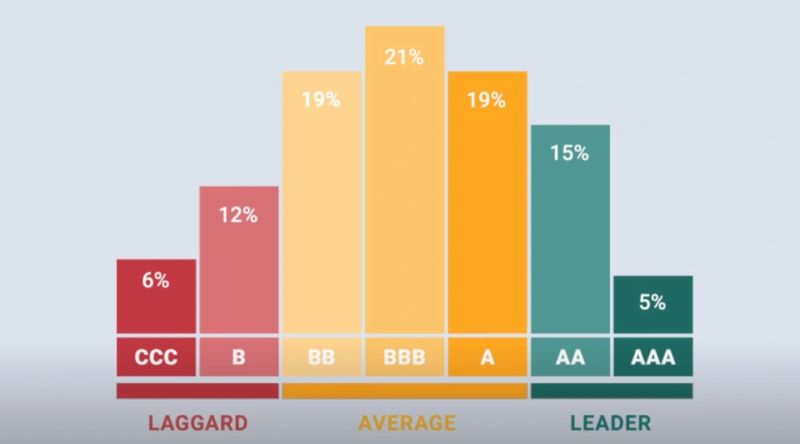
📚 KnowledgeSeries: Understanding MACI SustainabilityRatings
With ESG investing surpassing $40 trillion, sustainability metrics are no longer optional—they directly impact financial markets. But traditional ESG ratings often miss the biggest contributor to emissions: Scope 3 (supply chain & product lifecycle).
Enter MACI (Morningstar Absolute Carbon Impact)—a next-gen sustainability metric designed to measure real carbon impact, beyond corporate disclosures.
🔎 What is MACI?
📌 MACI (Morningstar Absolute Carbon Impact) is a carbon-focused rating that quantifies total emissions, unlike traditional ESG scores that rely on self-reported data.
✅ Scope 1 – Direct emissions from company operations
✅ Scope 2 – Indirect emissions from purchased energy
✅ Scope 3 – Supply chain & product lifecycle emissions (often 80-95% of total emissions)
📊 Only 5% of companies currently disclose full Scope 3 data, despite it making up 75% or more of their total carbon footprint. MACI ensures investors see the full picture.
🌍 Why is MACI a Game-Changer?
🟢 Exposes True Carbon Impact
📌 Over 90% of S&P 500 companies report ESG data, but less than 30% include Scope 3 emissions. MACI forces transparency by measuring actual environmental impact.
💰 Links Carbon Impact to Financial Risk
📌 Firms with high Scope 3 emissions face 10-15% valuation risks due to carbon pricing, regulation, and shifting consumer demand. Investors using MACI can identify & price these risks early.
📊 Goes Beyond Traditional ESG Ratings
📌 MSCI, Sustainalytics, & CDP rely on corporate sustainability claims—but MACI measures actual emissions data. This removes greenwashing from ESG scores.
🚀 Guides Net Zero Investments
📌 81% of global companies have Net Zero goals, but only 19% have credible transition plans. MACI identifies companies actually reducing emissions, ensuring investors back real sustainability leaders.
💡 How Financial Markets Depend on MACI
🏦 Sustainable Finance
📌 #$500 billion in Green Bonds & ESG Funds rely on sustainability scores. MACI ensures these funds actually reduce carbon impact.
📉 Investment Risk Assessment
📌 Climate risk is now considered a financial risk. Regulated markets (EU, US, UK, APAC) require stricter carbon disclosure. MACI helps investors assess exposure before risks impact stock prices.
📜 Regulatory Compliance
📌 The EU Taxonomy, SEC Climate Disclosures, & IFRS ESG Standards will require comprehensive Scope 3 reporting. MACI aligns with these frameworks, ensuring compliance-ready investments.
🔥 The Takeaway
As corporate greenwashing grows, investors need credible carbon metrics that go beyond PR campaigns. MACI is setting the new standard for data-driven sustainability investing.

Originally published on LinkedIn on 2025-02-27 01:47:03: https://www.linkedin.com/feed/update/urn%3Ali%3AgroupPost%3A9088131-7300692883345412096
NamasteIndia Is carbon capture an efficient way to tackle CO2?
Carbon capture and storage (CCS) is a promising technology for reducing CO2 emissions, but its efficiency and effectiveness can vary.
Efficiency: Most CCS technologies aim to capture at least 90% of CO2 emissions from industrial sources. However, achieving higher efficiency becomes increasingly expensive and energy-intensive.
Direct Air Capture (DAC): This method captures CO2 directly from the atmosphere. For example, the Mammoth plant in Iceland captures 36,000 tons of CO2 annually. However, DAC requires significant electricity, often sourced from renewable energy.
Economic and Engineering Challenges: Capturing the last few percentages of CO2 is more challenging and costly due to diminishing returns.
Applications: Captured CO2 can be stored underground or used in various industries, such as manufacturing fuels and building materials.
While CCS is a valuable tool in the fight against climate change, it is most effective when combined with other strategies like renewable energy and energy efficiency improvements.
Originally published on LinkedIn on 2024-08-07 20:32:49: https://www.linkedin.com/feed/update/urn%3Ali%3Ashare%3A7227049064356298752

