NamasteIndia 🇮🇳🤝🇪🇺 TariffThermostat.
Dr. Anju Sharma | MrsSustainability | KtalystInsights™
Think of this deal like a smart grid:
Not one big ON/OFF switch but calibrated settings (quotas, phase-downs, rules-of-origin) that decide who gets stable flow… and who trips the breaker.
TheNumbers
✅ >90% of EU goods exports: tariffs eliminated / reduced
✅ €4B/year duty savings (EU estimate)
✅ EU exports to India already support ~800,000 EU jobs
✅ EU expects exports to India to double (ambition stated)
Where the “tariff cliff” drops
⚙️ Machinery: up to 44% → ~0% (almost all)
🧪 Chemicals: up to 22% → ~0% (almost all)
💊 Pharma: 11% → ~0% (almost all)
🩺 Medical/optical: up to 27.5% → 0% (90% items)
Automotive
🚗 Cars: 110% → 10% (phased)
🎟️ Quota: 250,000 vehicles/year
Translation: this is not a floodgate — it’s a metered pipeline.
Agri-food: the “lifestyle tariff reset
🍷 Wine: 150% → 20–30%
🥃 Spirits: up to 150% → 40%
🍺 Beer: 110% → 50%
🥫 Processed foods: up to 50% → 0% (many lines)
Compliance architecture.
✅ Rules of Origin = “passport control for products
If value-add isn’t proven, preference is denied.
✅ Sustainability isn’t a brochure page: commitments on labour + environment + women’s empowerment are framed as binding + enforceable (via consultation mechanism).
✅ Digital + IP + Dispute settlement = the operating system that makes trade predictable.
Reality check (before the victory lap)
This is negotiated… not yet operational.
EU still lists 7 steps before entry into force: publish texts → legal scrub/translation → Council proposal/adoption → signature → Parliament consent → Council conclusion → then India ratification.
KtalystLens
If tariffs are the price, then proof is the new currency.
The winners won’t be the lowest-cost manufacturers.
They’ll be the firms with the cleanest documentation + traceability + audit stamina.
Originally published on LinkedIn on 2026-01-29 06:36:14: https://www.linkedin.com/feed/update/urn%3Ali%3AugcPost%3A7422527981144723456
KnowledgeKtalyst
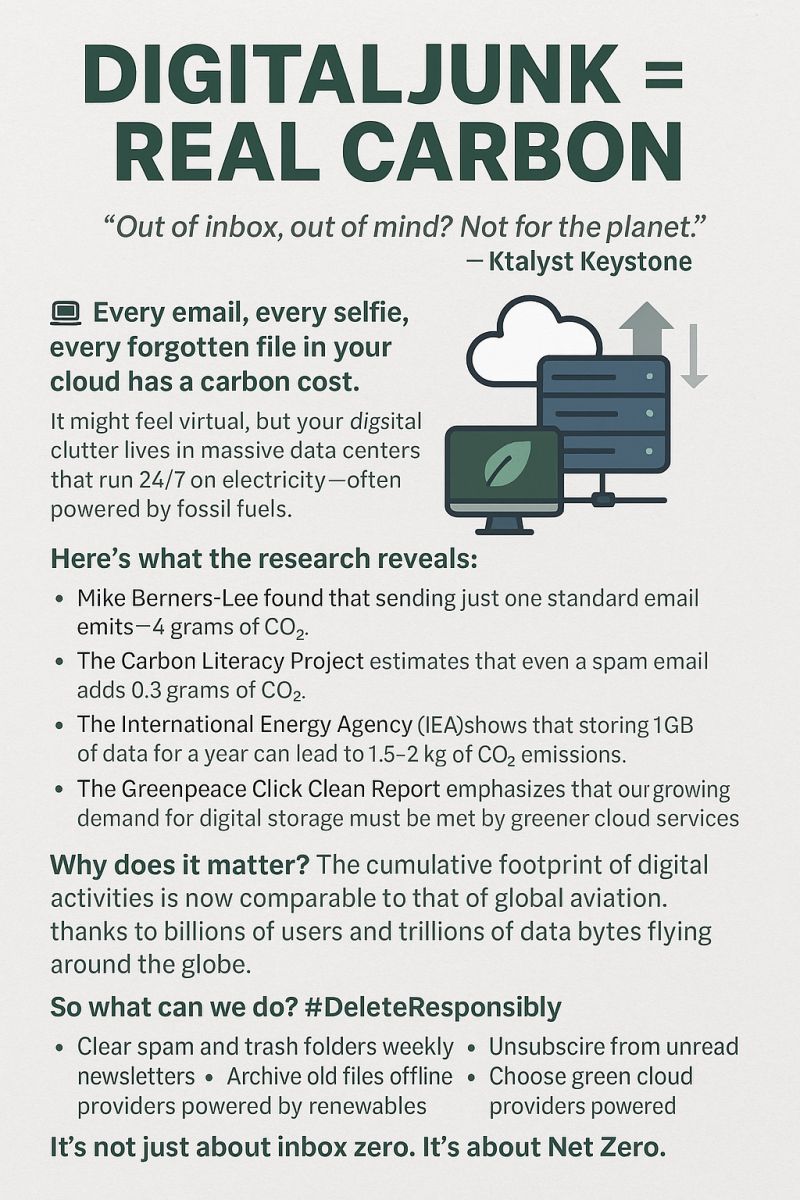
DigitalJunk = RealCarbon
Out of inbox, out of mind? Not for the planet.” — KtalystKeystone
🖥️ Every email, every selfie, every forgotten file in your cloud has a carbon cost.
It might feel virtual, but your digital clutter lives in massive dataCenters that run 24/7 on electricity—often powered by fossil fuels.
Here’s what the research reveals:
According to MikeBerners-Lee, author of “How Bad Are Bananas?”, sending just one standard email emits ~4 grams of CO₂, while a photo-heavy or attachment-filled email can go up to 50 grams.
The CarbonLiteracyProject estimates that even a single spam email—read or unread—adds 0.3 grams of CO₂ to the atmosphere.
Analysis from the International Energy Agency (IEA) shows that storing just 1GB of data for a year can lead to 1.5–2 kg of CO₂ emissions, depending on the data center’s energy mix.
The GreenpeaceClickClean Report also emphasizes that our growing demand for digital storage must be met by greener cloud services, or risk making the internet a major carbon culprit.
Why does it matter?
The cumulative footprint of digital activities is now comparable to that of global aviation, thanks to billions of users and trillions of data bytes flying around the globe.
So what can we do?
DeleteResponsibly
Clear spam and trash folders weekly
Unsubscribe from unread newsletters
Archive old files offline
Choose green cloud providers powered by renewables
It’s not just about inbox zero. It’s about NetZero.
Let’s clean up our digital lives—one file, one click, one byte at a time.
SustainabilityStartsWithYou | GreenTech | CarbonFootprint | DigitalDetox | KtalystKeystone
Originally published on LinkedIn on 2025-04-11 11:55:37: https://www.linkedin.com/feed/update/urn%3Ali%3Ashare%3A7316428711644348416
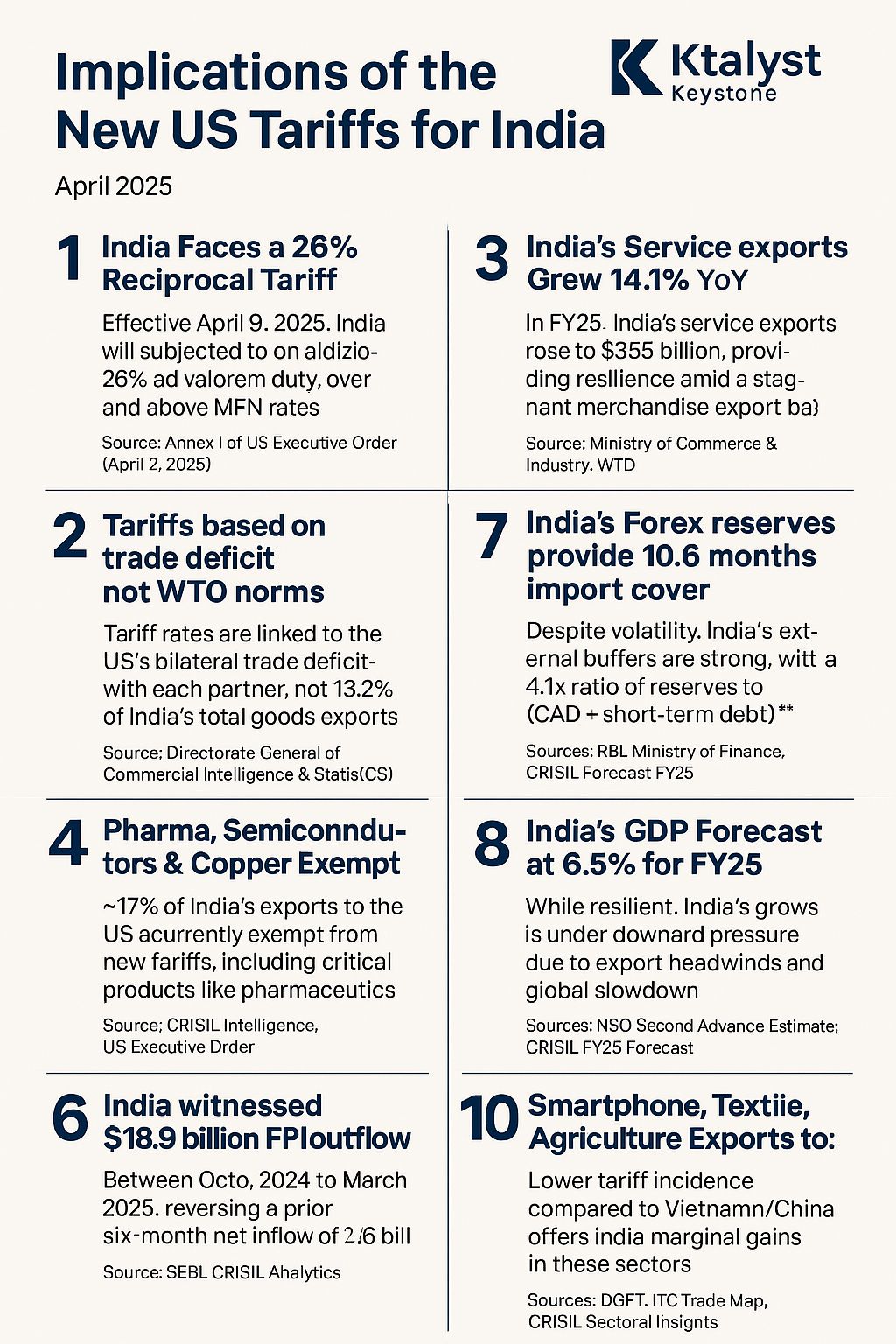
Protectionism is temporary. Strategy is forever.” – KtalystKeystone
Insights from the April 2025 CRISIL Report on US Tariffs & India:
The 26% tariff isn’t just a tax — it’s a test. A test of India Inc.’s resilience, agility, and strategic depth.
India’s export engines may sputter, but its services superpower and domestic strength are the new fuel.
StrategicViewpoint | What IndianBusinesses Must Do Now
🔍 RethinkExportDependency
High-risk sectors like GemsAndJewellery (with 37% exports to US) must unlock new geographies — EU, GCC, ASEAN.
📦 LeverageServicesBoom
With service exports clocking 14.1%YoY growth, the pivot to digital, consulting, and R&D is more than necessary — it’s non-negotiable.
⚙️ LocalizeValueChains
Auto and Electronics firms must evaluate USMCA partnerships and nearshoring to maintain tariff competitiveness.
📈 HedgeWisely
$18.9B of FPI outflows signal clear volatility. CFOs, it’s time to sharpen your forex strategy and revisit pricing models.
🛡️ UseIndiaPolicyCushion
The PLI schemes, ongoing capex push, and FTA progress (esp. with UK & EU) can soften the blow.
🌱 StayResilientStayStrategic
India’s #$355B service exports, 10.6 months import cover, and low CAD are not just stats — they’re shock absorbers.
KtalystKeystone | CatalysingStrategy in Disruptive Times
TradePolicy GlobalMarkets IndiaUS TariffWatch Exports Geopolitics MakeInIndia KtalystPerspective LinkedInPulse

Originally published on LinkedIn on 2025-04-08 17:38:16: https://www.linkedin.com/feed/update/urn%3Ali%3AgroupPost%3A2153908-7315427778760183808
NamasteIndia 🚀
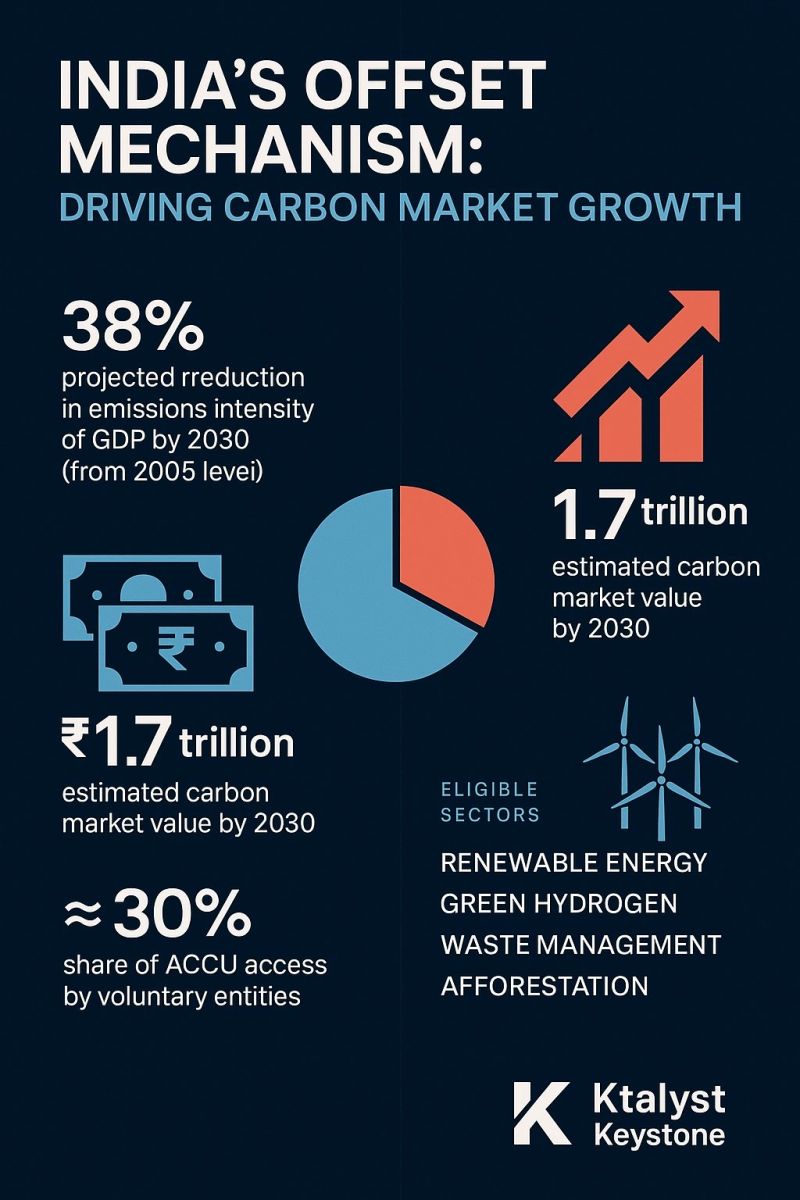
Framework_to_Future: India’s CCTS – A Data-Driven Power Play
YR2023–YR2025) 📊
India’s Carbon Credit Trading Scheme (CCTS) has rapidly transformed from a policy blueprint to a dynamic market. Here’s a concise, data-rich overview of its evolution:
YR2023: 🏗️ Foundation Laid
June2023: 📜 Government notifies CCTS, establishing a Compliance Mechanism.
* 🎯 Objective: Reduce GHG intensity in key sectors.
* 🏭 Sectors: Cement, Steel, Aluminium, Refineries, etc.
* ⚖️ Legal: Energy Conservation (Amendment) Act, 2022.
* 🏛️ Regulators: BEE, CERC.
YR2024: 📐 Architecture Built
* Dec2023: 🔄 Offset Mechanism integrated.
* 🌱 Key: Non-obligated entities can develop projects.
* 💳 CCCs: Tradable Carbon Credit Certificates.
* 🌍 Alignment: Paris Agreement’s Article 6.
* ✅ ACVAs: Validation & Verification agencies established.
* 🖥️ ICM: Indian Carbon Market registry conceptualized.
YR2025: 📈 Market Activated
* March2025: 8️⃣ Methodologies approved:
* ⚡ Renewable Energy
* 💧 Green Hydrogen
* 🏭 Industrial Efficiency
* 🗑️ Landfill Methane
* 🌳 Mangrove Afforestation
* 💰 Market Potential: USD 300 billion by 2030.
* 🌐 Global Projection: IETA: USD 1-1.5 trillion by 2050.
* 🤝 Transition: PAT scheme integration; full compliance by mid-2026.
Quote:
India’s carbon market is not just compliance—it’s climate economics in motion.” — Anju Sharma, MD, Ktalyst Keystone.
Future: 🔮 Innovation & Integration
* 💻 Digital Infrastructure: For Carbon Credits.
* 🤝 Global Links: International Carbon Market integration.
* 📊 Scope 3 & MRV: Standards inclusion.
* 💡 Private Sector: Tech & Nature-Based solutions.
Call_to_Action:
Let’s discuss how your organization can leverage India’s evolving carbon market. Connect with me!
Question:
How will CCTS reshape your industry? Share your insights!
Hashtags:
CarbonCredits IndiaCarbonMarket CCTS ClimateAction Sustainability EnergyTransition GreenEconomy EnvironmentalPolicy ParisAgreement ESG CleanEnergy Innovation DataDriven MarketInsights


Originally published on LinkedIn on 2025-04-07 17:18:44: https://www.linkedin.com/feed/update/urn%3Ali%3AugcPost%3A7315060472787955712
📚 KnowledgeSeries: The Hidden_Cost_of_Digital_Pollution – Is the Internet Killing the Planet? 🌍💻
While we focus on EVs, renewables, & plastic waste, digital pollution remains an invisible climate threat. From emails to AI, the internet’s carbon footprint is bigger than expected.
📊 Digital Pollution: The Data Behind the Screens
🟢 Data Centers = 2% of Global Electricity Use → That’s more than Germany’s entire energy consumption. (Source)
🟢 One Email = 4g CO₂ → With attachments, it’s 50g CO₂. 306B emails/day = 15M tons of CO₂ annually.
🟢 Video Streaming = 1% of Global CO₂ → One hour of Netflix in HD = 36g CO₂ → Watching at lower resolution cuts emissions by 40%.
🟢 Google Searches Emit 500 Tons CO₂/Day → Each search = 0.2g CO₂. 8.5B searches daily = annual emissions of 1.3M cars.
🟢 AI & Cloud Computing Are Carbon Guzzlers → Training one AI model emits 125,000 lbs CO₂, equal to five cars’ lifetime emissions.
🛑 How to Reduce Digital Pollution?
🟢 Delete Unnecessary Emails → Reducing 100 unneeded emails = saving 30kg CO₂ annually.
🟢 Declutter Cloud Storage → 1GB of deleted cloud data = 7kg CO₂ saved per year.
🟢 Use Green Hosting → Only 30% of websites are on carbon-neutral servers.
🟢 Limit AI Queries → Reducing unnecessary AI prompts & computations cuts energy waste.
🔥 The Takeaway: Is Digital the New Plastic?
🟢 If the internet were a country, it would be the 6th largest polluter in the world.
🟢 Digital sustainability is the next frontier—will businesses take action?
🟢 Every click, search, and email has a carbon cost—time to rethink digital habits.
📢 How can we build a cleaner, low-carbon internet? Let’s discuss! 👇

Originally published on LinkedIn on 2025-03-03 14:43:53: https://www.linkedin.com/feed/update/urn%3Ali%3AgroupPost%3A82951-7302337927789879296
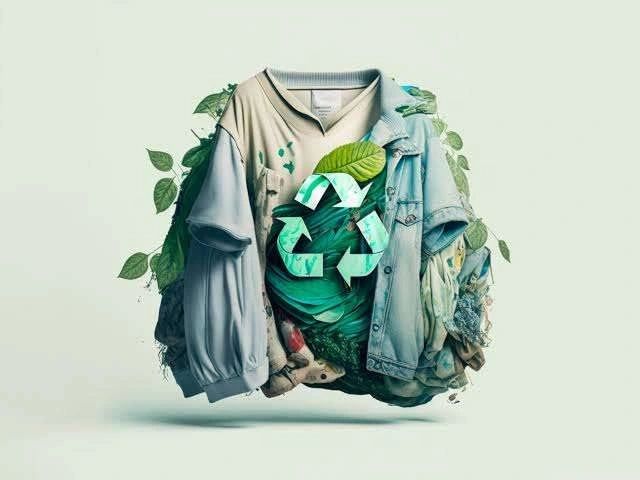
👗 FashionWeek & Sustainability: A New Era in Fashion 🌱
The global fashion industry is evolving towards sustainability, with key FashionWeeks adopting eco-conscious practices. Here’s a glimpse into the positive changes:
🌿 Banning_Exotic_Animal_Skins
📌 LondonFashionWeek took the lead by prohibiting exotic animal skins, promoting ethical fashion. Over 100+ designers have committed to eliminating exotic leather, setting a new industry standard.
👗 Rise_of_Circular_Fashion
📌 Milan & Paris Fashion Weeks showcase recycled fabrics, upcycled designs, and rental fashion. The global resale market is projected to surge by 127% by 2026, surpassing fast fashion.
⚡ Digital & AI_Driven_Shows
📌 NewYorkFashionWeek embraces virtual runways, 3D clothing design, and AI-powered styling, reducing textile waste by 30%.
💧 Reducing_Water & Carbon_Footprint
📌 Brands at ParisFashionWeek prioritize low-water textiles like hemp and organic cotton, slashing water usage by 90% compared to conventional cotton.
♻ Transparent & Ethical Supply Chains
📌 Copenhagen Fashion Week mandates brands to adhere to ESG standards, ensuring traceable materials and fair labor policies for sustainable sourcing.
💡 FashionWeek is reshaping the industry towards a sustainable future, focusing on more than just trends. Which initiative captivates you the most? Share your thoughts below! 👇
Originally published on LinkedIn on 2025-02-26 12:36:37: https://www.linkedin.com/feed/update/urn%3Ali%3AgroupPost%3A2474261-7300493961062703107
What_You_Havenot_Heard_About_the_New_Income_Tax_Bill 2025 💼💰
While headlines have focused on new tax slabs and simplified tax laws, there are hidden provisions in the Income Tax Bill 2025 that could quietly reshape how individuals and businesses manage their taxes. Here’s what hasn’t made the news yet—but should be on your radar.
🔎 What’s New & What You Haven’t Heard Yet
📌 NRIs Now Have a Tax Wake-Up Call → If you earn over #₹15 lakh ($18,000) in India, you’re now classified as a tax resident. This means taxation on salary, property income, capital gains, and dividends from Indian sources. But foreign earnings? They remain outside India’s tax net for now.
📌 The Unspoken Impact on Gig Workers & Freelancers → With the rise of digital taxation and AI-driven audits, freelancers, content creators, and independent consultants who previously operated in a tax grey area may now be pulled into the formal tax system.
📌 Your Digital Footprint is Being Watched → The bill lays the foundation for AI-driven tax compliance tracking. Expect automated scrutiny of large transactions, crypto earnings, and foreign remittances linked to India.
📌 No Clear Carbon Tax Yet—But Watch This Space → Sustainability is a global priority, but this bill doesn’t yet introduce green tax incentives or penalties for high-emission businesses. However, future amendments may align India’s tax policies with ESG (Environmental, Social, and Governance) goals.
📌 Real Estate May No Longer Be a Safe Tax Haven for NRIs → With stricter capital gains taxation, NRIs who buy and sell Indian property may face higher tax liabilities, especially if they don’t reinvest in eligible tax-saving assets.
📌 More Tax Scrutiny for High-Income Earners → If you fall in the #₹20 lakh+ ($24,000+) bracket, tax authorities may now flag large transactions and offshore holdings, ensuring better compliance without manual intervention.
📉 What Should You Do Next?
✅ NRIs: Review your income sources from India and DTAA agreements in your country to avoid double taxation.
✅ Freelancers & Gig Workers: Ensure your earnings are properly declared to avoid potential penalties.
✅ Investors: Keep an eye on potential capital gains tax reforms affecting stocks, crypto, and real estate.
✅ Businesses: Start preparing for digital compliance requirements that could change audit processes.
💡 “The real impact of tax reform isn’t in what’s obvious—it’s in what changes behind the scenes.
💬 What are your thoughts? Have we missed an important tax change that will impact professionals and businesses? Let’s discuss!

Originally published on LinkedIn on 2025-02-13 11:43:42: https://www.linkedin.com/feed/update/urn%3Ali%3Ashare%3A7295769602515431426
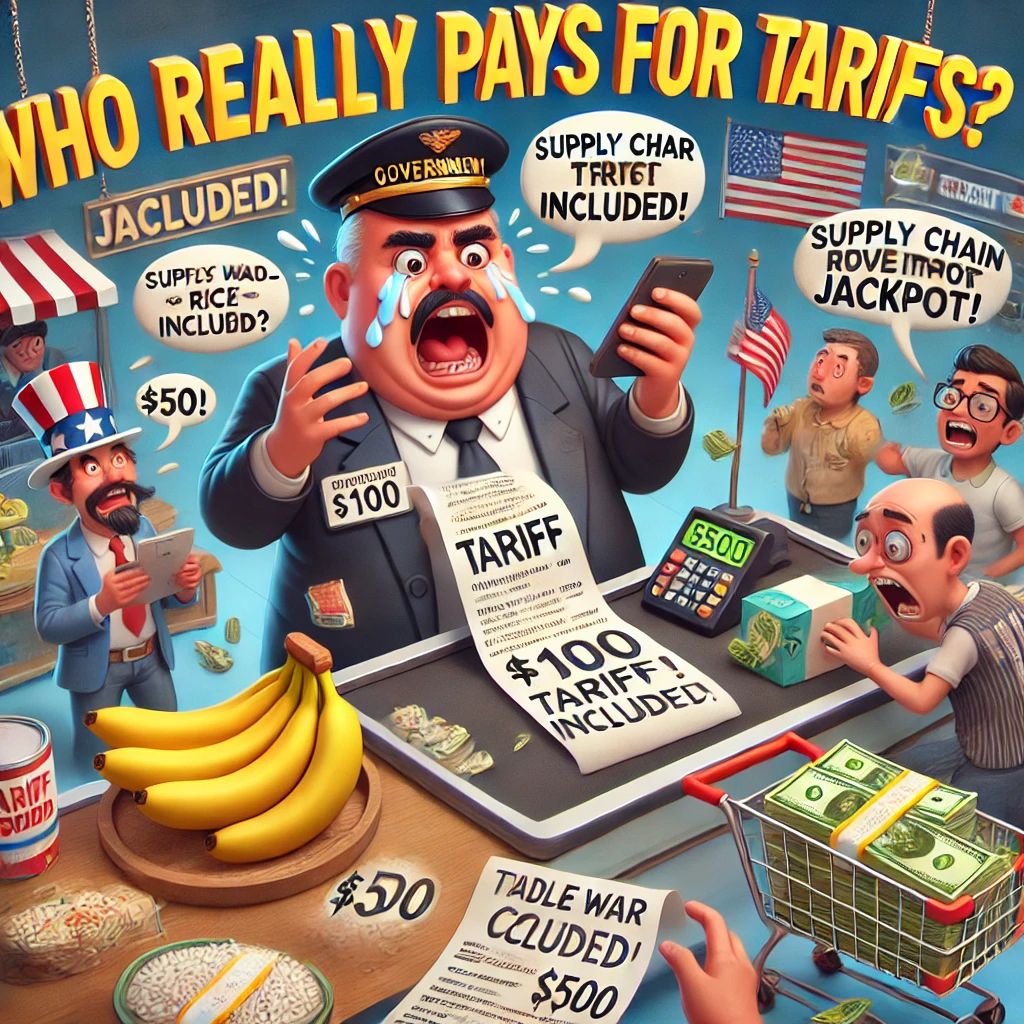
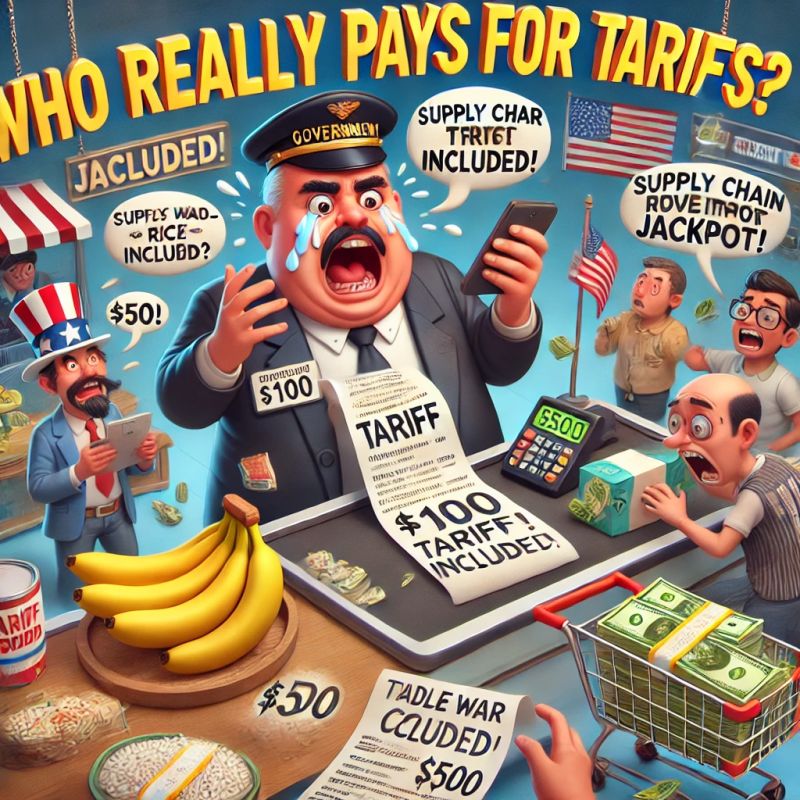
💰🌎 Tariff Wars: Who Really Pays the Price?
As governments escalate trade wars, businesses adjust supply chains, and consumers brace for price hikes, are tariffs truly protecting economies, or just shifting the cost?
🚨 Who Pays for Tariffs?
📉 Consumers Bear the Burden – 60% of tariff costs are passed on to consumers through higher prices. (IMF, 2024)
📉 Businesses Face Higher Costs – US companies paid $105B in tariffs since 2018, impacting supply chains. (USTR, 2024)
📉 Job Loss Risks – Tariffs on auto parts could cost 700K US jobs as production shifts. (Peterson Institute, 2024)
📉 Inflation Pressure – Every 10% tariff hike increases inflation by 0.5% globally. (World Bank, 2024)
📌 Reality Check: Tariffs aren’t just taxes on imports—they’re taxes on people.
🏆 Who Benefits?
✅ Governments Cash In – Tariffs generated $80B for the US Treasury in 2023. (USTR, 2024)
✅ Local Manufacturers Get Protection – Steel & aluminum industries saw a 20% production boost. (Reuters, 2024)
✅ Nearshoring Countries Profit – Mexico & Vietnam gained $65B in trade diversions from China. (IMF, 2024)
📌 Reality Check: While some industries win, the average consumer still loses.
🔮 What’s Next?
💡 Regional Trade Over Globalization – Supply chains are shifting closer to home to avoid tariff risks.
💡 Digital & AI Trade Solutions – Automated trade processing could reduce costs by 15%. (McKinsey, 2024)
💡 Green Tariffs Rising – Carbon-based tariffs will add new costs to imports, reshaping global trade. (EU CBAM, 2024)
📌 Reality Check: The cost of tariffs may outweigh the benefits if trade wars escalate.
🏆 KeyTakeaway
Tariffs could be a tool for protecting industries, should be used strategically, but would be an economic strain if prices keep rising.
👉 Who really pays for the trade war—governments, businesses, or you?
TradeWar Tariffs GlobalEconomy SupplyChainCrisis Inflation
Originally published on LinkedIn on 2025-02-05 16:37:39: https://www.linkedin.com/feed/update/urn%3Ali%3AgroupPost%3A2474261-7292944474018611204
🚀 “The Attention Economy: Are We Paying or Being Played?” 🧠📱💰
In a world where notifications never stop and algorithms know us better than we do, attention has become the most valuable commodity. But are we truly in control, or just products in the digital marketplace?
📊 The Business of Attention
✅ The average person spends 7 hours a day on screens. (Statista, 2024)
✅ Digital ad spending hit $700B globally in 2023. (eMarketer, 2024)
✅ Social media engagement is worth $1.5T to tech giants. (Forbes, 2024)
❌ But attention spans have dropped from 12 seconds (2000) to 8 seconds (2024). (Microsoft Study)
🚨 Reality Check: Are we consuming content, or is content consuming us?
🔴 How the Attention Economy Manipulates Us
🧠 Dopamine Loops: Infinite scrolling & notifications keep us addicted.
📱 Algorithm Traps: AI-driven feeds push extreme content to maximize engagement.
💰 Monetized Distraction: Platforms profit from every second of our attention.
🚨 Reality Check: If it’s free, you’re the product.
🔎 Who’s Winning in the Attention Economy?
🔹 🇺🇸 TikTok & Instagram: Hooking Gen Z with ultra-short content.
🔹 🇺🇸 YouTube & Netflix: Using AI to predict and control viewing habits.
🔹 🇨🇳 Tencent & Bytedance: Monetizing micro-engagement with gamification.
🔹 🇮🇳 Jio & ShareChat: Expanding India’s digital consumption at record speed.
🚨 Reality Check: Are we really choosing what we watch, or is it choosing us?
🏆 KeyTakeaway
The Attention Economy could be a tool for learning and connection, should be designed for well-being, but would be a dystopian trap if we let tech control our focus.
👉 Are you in charge of your attention, or is someone else profiting from it?
AttentionEconomy DigitalAddiction BigTech AI SocialMedia

Originally published on LinkedIn on 2025-02-04 12:25:19: https://www.linkedin.com/feed/update/urn%3Ali%3AgroupPost%3A9270968-7292518584398893056
🌟 India’s Chemical Industry: The Catalyst for Global Leadership (2025–2030) 🌟
The #$4 trillion global chemical industry is evolving rapidly, with trends like green chemistry, digital transformation, and supply chain diversification shaping its future. By 2030, the market is set to grow to #$5.5 trillion, and India has a golden opportunity to lead the charge. 🚀
Why India’s Chemical Industry is a Game-Changer
✅ Economic Engine: Contributes 7% to GDP; projected to hit 9% by 2030.
✅ Export Potential: Current exports at #$30 billion, with a target of #$60 billion.
✅ Job Creation: Can generate 2 million new jobs in specialty and green chemicals.
✅ Sustainability Leadership: Opportunity to capture 10%-15% of the #$150 billion green chemical market.
Global Trends: Challenges & Opportunities
🌍 China’s Dominance:
Controls 35% of the global chemical market.
Investing #$300 billion in green hydrogen and renewable feedstocks.
Pivoting to high-value specialty chemicals.
💡 Opportunity for India:
Reduce 33% import dependency (primarily on China).
Leverage PLI schemes for specialty and bio-based chemicals.
Build world-class chemical hubs and integrated logistics infrastructure.
📊 Global Sustainability Push:
Bio-based materials growing at a CAGR of 12%.
Over 50% of global chemical firms adopting digital supply chains by 2030.
India’s Roadmap for 2030
🔹 Market Expansion: Grow the domestic market to #$400 billion at an 8% CAGR.
🔹 R&D Investments: Increase spending to 1% of industry revenue (vs. current 0.3%-0.5%).
🔹 Skill Development: Train 500,000 professionals in green and digital technologies.
🔹 Sustainability Incentives: Develop bio-refineries and scale carbon-neutral production
The Numbers That Matter
💬 The Takeaway: India’s chemical industry is more than just a sector—it’s the foundation for sustainable growth, global competitiveness, and economic resilience. With the right policies, investments, and innovation, India can lead the global stage by 2030. 🌱
Let’s build a greener, stronger, and more self-reliant future. 💼💡
ChemicalIndustry IndiaGrowth Sustainability MakeInIndia 2030Vision
Source / shared link: https://m.economictimes.com/industry/indl-goods/svs/chem-/-fertilisers/budget-2025-chemical-industry-seeks-tweaking-in-customs-duties-to-boost-manufacturing/articleshow/117429274.cms
Originally published on LinkedIn on 2025-01-22 11:41:38: https://www.linkedin.com/feed/update/urn%3Ali%3AgroupPost%3A3880479-7287796548950745088

