BreakingNews: Earth_Has_Fever
Earth could file for divorce due to fever. The cause? Irreconcilable differences with 8 billion heat-raising roommates.
TheFever
1. Global temperatures are already +1.2 °C above pre-industrial levels
2. The last nine years were the hottest on record
3. Oceans have absorbed 90% of excess heat, intensifying cyclones and bleaching coral reefs
4. The Arctic is warming four times faster, with Greenland losing 270 billion tonnes of ice every year
5. Sea levels are rising by 3.7 mm annually, threatening coastal populations
6. Climate-linked disasters cost the global economy over $250 billion in 2023
TheCauses
1. Fossil fuels still provide 80% of global energy, emitting 35 Gt CO₂ annually
2. Methane, 80× stronger than CO₂ in the short term, accounts for ~30% of warming
3. Deforestation erases ~10 million hectares annually, weakening natural carbon sinks
4. Policy inertia and greenwashing delay real progress
TheCure: NewEnergy
1. Solar & Wind are the cheapest power sources in most markets, expected to supply >40% of electricity by 2030
2. Storage capacity is set to triple by 2030, with hydrogen and pumped hydro scaling fast
3. Green Fuels such as bio-CNG, green hydrogen, and SAF can decarbonize heavy industry and transport
4. Circular Energy solutions — biochar, bagasse-based fuels, waste-to-energy — align agriculture with clean grids
5. Policy frameworks like NamasteIndia’s Biogas Policy 2025, the EU’s Fit for 55, and the U.S. IRA are accelerating transition
TheChoice
This fever is not terminal, but the cure demands urgency. Every new megawatt of clean power, every tonne of green fuel, and every hectare of forest preserved is a dose of recovery.
There is no rebound planet. The reconciliation begins with energy — how we make it, use it, and share it.
Dr. Anju Sharma
Originally published on LinkedIn on 2025-09-05 01:53:32: https://www.linkedin.com/feed/update/urn%3Ali%3AgroupPost%3A82951-7369548205191098368
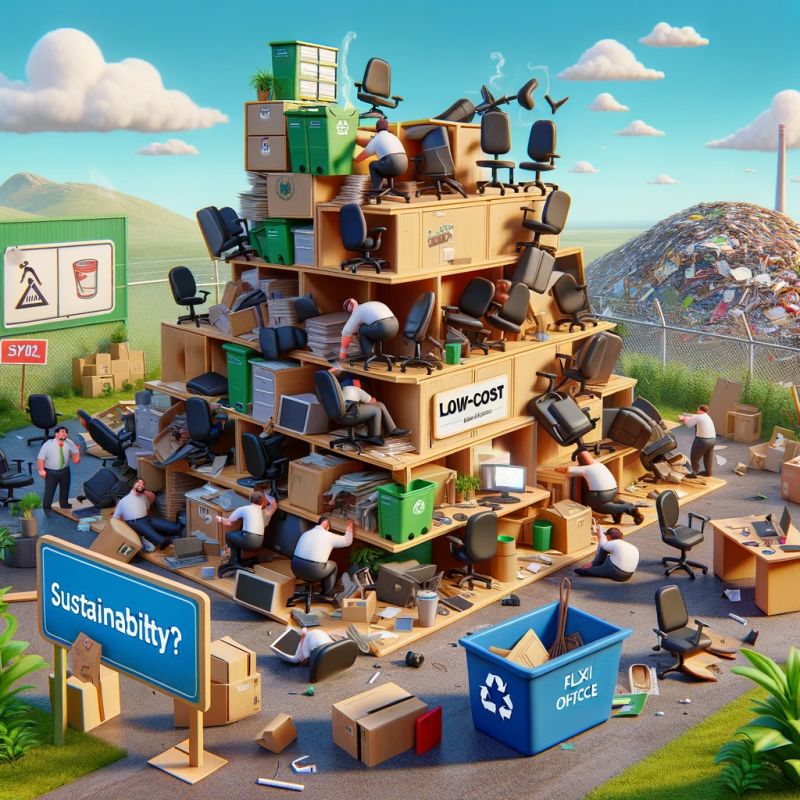
Knowledge Series: “Flexi Offices & Low_Cost Furniture – The Hidden Sustainability Crisis
You wouldn’t throw away your office every year—so why do we treat office furniture as disposable?
As FlexiOffices and coworking spaces boom, so does the demand for low-cost, fast furniture. While these setups are great for cost-cutting, they come with a massive environmental price tag—landfill waste, deforestation, and rising carbon emissions.
📊 The Hidden Environmental Cost of Flexi Office Trends
🔹 Furniture Waste Explosion
✔️ Over 12 million tons of furniture end up in landfills yearly in the US alone. (EPA, 2024)
✔️ 90% of discarded office furniture is non-recyclable due to toxic glues and laminates. (Circular Economy Report, 2024)
✔️ RealityCheck: The average lifespan of cheap office furniture? Just 5 years.
🔹 Deforestation & Resource Drain
✔️ The furniture industry drives 60% of illegal logging globally. (WWF, 2024)
✔️ One desk = One tree (50+ years to grow), yet most desks are discarded within 3-5 years. (FAO, 2024)
✔️ RealityCheck: The “cost-effective” furniture trend is accelerating deforestation and biodiversity loss.
🔹 Carbon Footprint & Toxic Chemicals
✔️ Many budget office setups rely on MDF and particleboard, releasing formaldehyde, a known carcinogen. (Environmental Health Report, 2024)
✔️ The furniture industry contributes 5% of global carbon emissions. (Carbon Trust, 2024)
✔️ RealityCheck: That “affordable” office setup could be an environmental nightmare.
🛠️ What Needs to Change?
✅ CircularEconomy Approach – Promote furniture leasing, second-hand markets, and repair initiatives.
✅ SustainableMaterials – Choose solid wood, bamboo, or recycled materials over disposable MDF.
✅ DesignForLongevity – Furniture should be modular, durable, and repairable—not landfill-bound.
🏆 KeyTakeaway
🌍 FlexiOffices could be both cost-efficient and sustainable with better material choices.
📉 They should be designed for reuse, not rapid disposal.
🚨 But they would be an environmental crisis if businesses prioritize cheap over green.
👉 Would you pay more for sustainable office furniture? Let’s discuss! 👇
Originally published on LinkedIn on 2025-02-21 14:47:52: https://www.linkedin.com/feed/update/urn%3Ali%3AgroupPost%3A2474261-7298715054588239872
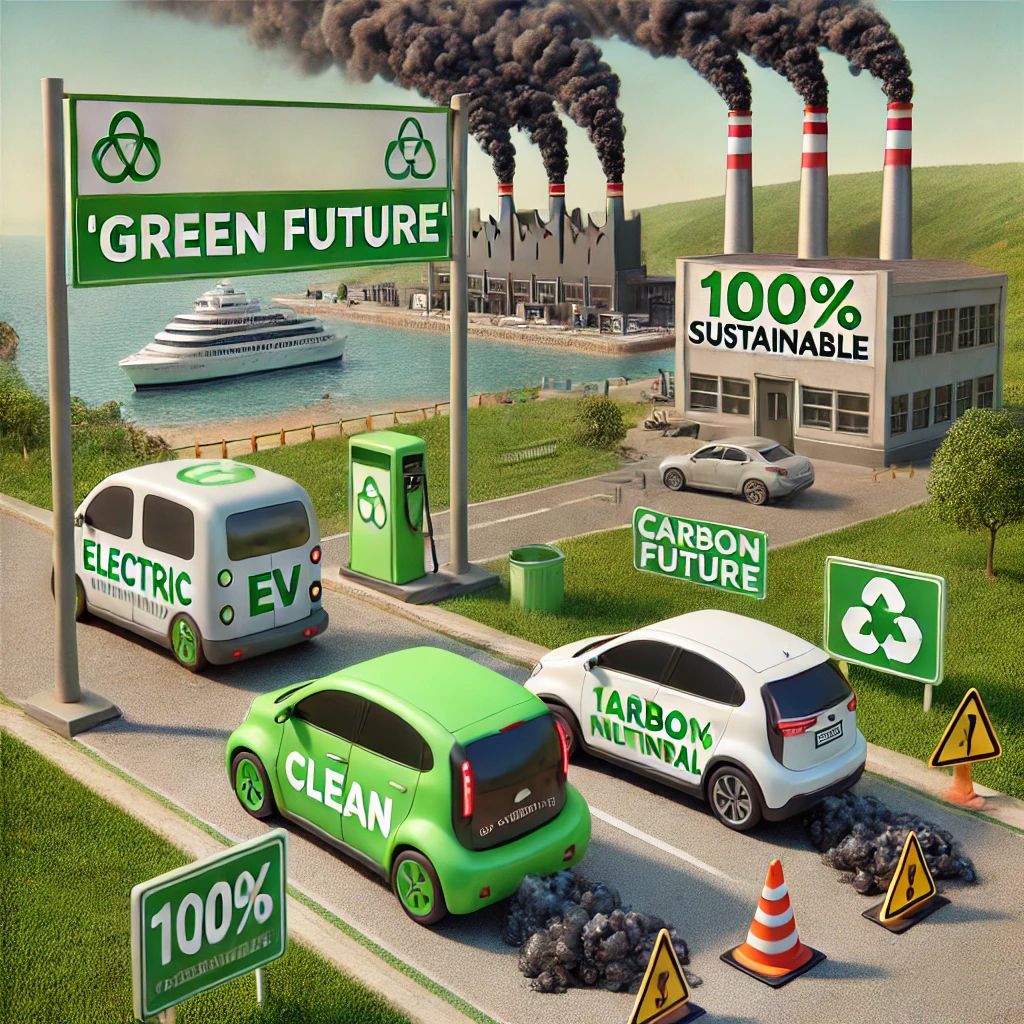
🚗⚡ YR2035’s Green_Auto_Mirage: Are EVs, Hydrogen Fuel Cells, and Synthetic Fuels Truly Sustainable or Just Greenwashing? 🌍💨
As we race toward 2035’s petrol-diesel ban, automakers push EVs, HFCVs, and SyntheticFuels as the future. But are these real solutions or clever marketing?
🔋 EVs: Cleaner or Just Elsewhere Emissions?
📌 Battery Production: An 80 kWh battery emits 2.4 – 16 metric tons of CO₂—equal to driving a gasoline car for 5-7 years. (MIT, 2024)
📌 Resource Impact: Each EV battery needs 63kg lithium, cobalt, & nickel, causing deforestation & water pollution. (GreenCars, 2024)
📌 Power Grid Dependence: An EV running on coal-based electricity emits more CO₂ per mile than hybrids. (EPA, 2024)
📌 Reality Check: EVs help only if powered by clean energy.
💧 Hydrogen: Clean Hype or Fossil Fuel Disguise?
📌 Production Problem: 96% of global hydrogen is made from natural gas & coal, emitting 830M metric tons of CO₂. (IEA, 2024)
📌 Efficiency Loss: HFCVs require 3x more renewable electricity than EVs. (US DOE, 2024)
📌 Reality Check: Unless made from renewables, hydrogen is just another fossil fuel.
⛽ Synthetic Fuels: Carbon-Neutral or Clever Greenwashing?
📌 Energy Guzzler: Producing 1L of synthetic fuel takes 6x more energy than refining petrol. (Fraunhofer, 2024)
📌 Still Polluting: Burns CO₂ and emits more NOx than conventional fuels. (MDPI, 2024)
📌 Reality Check: Synthetic fuels aren’t zero-emission—they just relocate pollution.
🚨 Greenwashing in the Auto Industry
🔻 BMW, Toyota, Honda exaggerated EV carbon savings by omitting battery emissions. (Greenpeace, 2024)
🔻 Porsche’s synthetic fuel plant claims zero emissions but runs on coal-powered electricity. (The Guardian, 2024)
🔻 India & U.S. promised 1M EV chargers by 2025, yet less than 20% installed. (BloombergNEF, 2024)
📌 Reality Check: Many automakers sell ‘green’ promises, but not real sustainability.
🏆 Key Takeaway: Hype or Hope?
🚘 EVs, HFCVs, & Synthetic Fuels could be clean if the supply chain is green.
♻️ They should be backed by strict sustainability policies.
⚠️ But they would be just another greenwashing scandal if industries don’t walk the talk.
👉 Are we truly heading toward sustainable mobility, or just another green illusion? 👇
Originally published on LinkedIn on 2025-02-18 11:22:14: https://www.linkedin.com/feed/update/urn%3Ali%3AgroupPost%3A82093-7297576141614190592
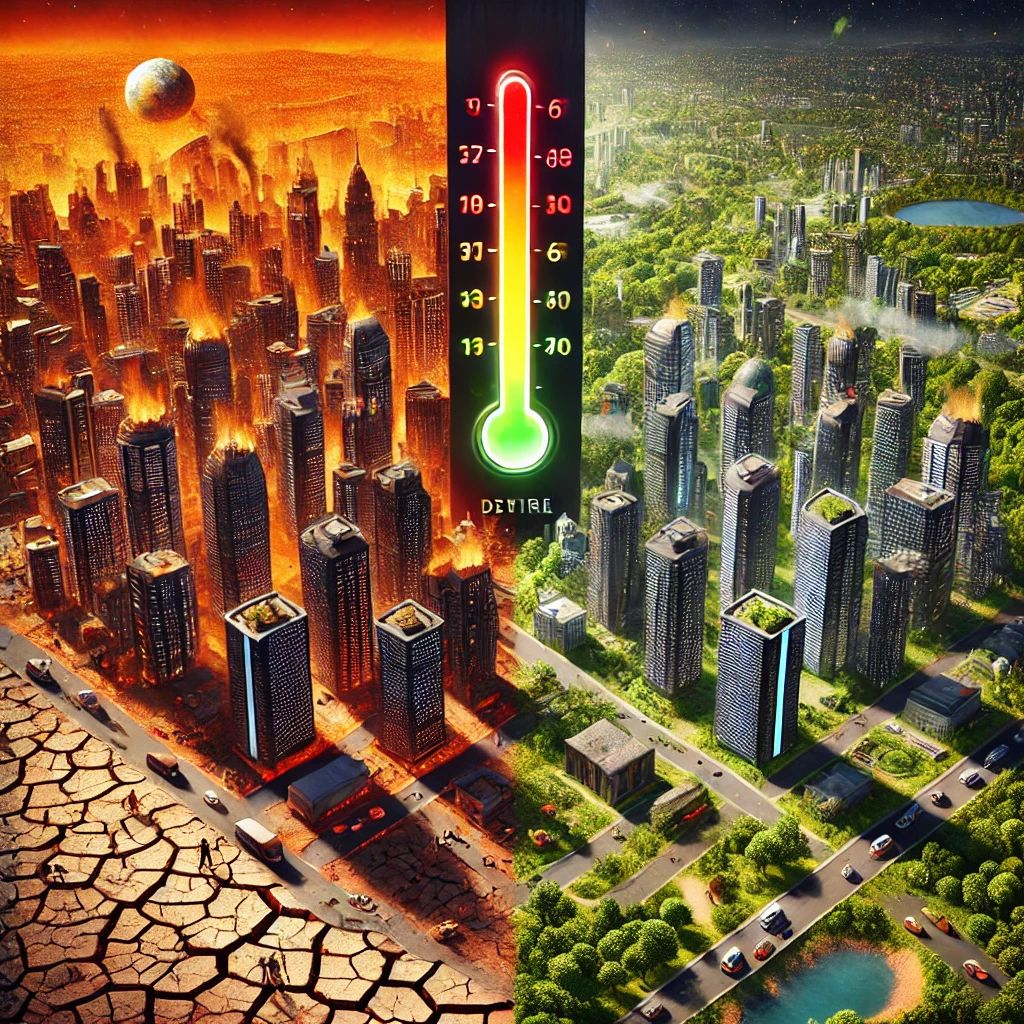
🔥 “India’s Urban_Heat_Trap: Cities Are Warming Faster Than Ever!” 🌆🌡️
🚨 Check_your_city_temperature_rise_in_last_decade_add_it_here! How much has your city warmed up? Let’s build a real-time heat map together.
India’s urban centers are heating up at record rates. Over the past decade, rapid urbanization, deforestation, and climate shifts have caused minimum temperatures to surge across major metros.
📊 How Fast Are Indian Cities Warming?
Delhi: 🌡️ 9.3°C (Feb 2015) → 12°C (Feb 2025), a 3°C rise.
Mumbai: 🌡️ 17.0°C → 20°C, warming despite its coastal buffer.
Ahmedabad: 🌡️ 12.4°C → 15°C, a 2.6°C increase.
Jaipur: 🌡️ 10.3°C → 13.5°C, driven by heat-absorbing concrete expansion.
Patna: 🌡️ 7.9°C → 11°C, highlighting landlocked heat retention.
Lucknow: 🌡️ 4.7°C → 9°C, a sharp 4.3°C surge!
Dehradun: 🌡️ 8.2°C → 10.7°C, warming despite being a hill station.
📌 RealityCheck: 🌍 Urban minimum temperatures are rising 2-4 times faster than rural areas! (IMD, 2025)
🚨 What’s Causing This Heat Surge?
Deforestation & Green Cover Loss – India lost 2.33M hectares of forest (2001-2023). (GlobalForestWatch, 2024)
Urban Heat Island Effect – Cities now absorb & retain 5-7°C more heat than nearby rural areas. (NASA, 2024)
Traffic & Industrialization – Vehicle & industrial emissions trapped heat in 80% of India’s urban regions. (CSE, 2025)
Unregulated Construction – 85% of new Indian buildings use non-reflective, heat-absorbing materials. (BEE, 2024)
🔥 Which Cities Are Most at Risk?
🚨 Delhi: Lost 20% of tree cover in a decade, worsening extreme heat.
🚨 Mumbai: Heat waves increased by 40% since 2010. (IMD, 2025)
🚨 Lucknow & Patna: Surging night-time temperatures, lack of cooling infrastructure.
🚨 Ahmedabad & Jaipur: Urban expansion & land degradation fueling temperature spikes.
🚨 Dehradun: Deforestation in Uttarakhand is pushing mountain cities into heat stress.
📌 RealityCheck: 🏙️ If this continues, Indian summers will be unbearable & winters will vanish.
🏆 What Can Be Done?
✅ Urban Greening – Increasing tree cover & water bodies can lower temperatures by up to 4°C.
✅ Heat-Resistant Infrastructure – Using reflective materials can reduce indoor heat by 20%.
✅ Cooling Corridors & Smart Cities – Integrating natural cooling spaces in city planning.
✅ Reduce Fossil Fuel Dependence – 60% of urban heat emissions come from vehicles & industries.
📌 RealityCheck: 🌡️ Ignoring this will make our cities unlivable.
🏆 KeyTakeaway
India could be a global leader in climate-adaptive urbanization,
should be prioritizing green infrastructure & heat-resilient city planning,
but would be locked in a dangerous heat spiral without urgent action.
👉 Is your city getting hotter? What solutions do you see? Drop your thoughts below! 👇

Originally published on LinkedIn on 2025-02-16 17:01:03: https://www.linkedin.com/feed/update/urn%3Ali%3Ashare%3A7296936630790033408
🌍 Agriculture & Deforestation: The_Silent_Climate_Bomb
💡 NetZero is impossible without fixing Food & Land Use.
🔥 AFOLU (Agriculture, Forestry & Land Use) fuels 18-20% of global emissions—outpacing global transport, steel, and cement.
🚨 Yet, it’s under_discussed. The world’s biggest climate culprit is on your plate.
🌲 Deforestation – 10% of Global CO₂ Emissions
🟢 Tropical forests store 7.6B metric tons of CO₂ annually.
🔴 Clearing them releases 1.5B metric tons/year—more than Japan’s total emissions.
⚠️ 80% of Amazon deforestation is for cattle grazing & soy farming.
🐄 Livestock Methane – 6% of Global Emissions
🐂 1.5B cows = 100M metric tons of methane annually—more than all planes, cars & ships combined.
🔥 Methane is 28x stronger than CO₂ and rising fast.
🚨 Beef production alone is responsible for 41% of all livestock-related emissions.
🌾 Fertilizers & Soil_Emissions – 2-4% of Global GHGs
💥 N₂O is 265x worse than CO₂. It lingers for over 100 years.
🌎 China & India = 30% of global N₂O emissions—driven by excessive synthetic fertilizers.
💧 Runoff pollutes rivers, destroys soil, and creates oceanic dead zones.
✅ Climate Solutions with Real Impact
🌱 Reforestation & Agroforestry → Could offset 10-15% of global CO₂ annually.
🐄 Seaweed Feed for Cows → Reduces methane by 30-80%.
🌾 Precision Farming & Organic Alternatives → Cuts fertilizer emissions by 50%.
🍽️ DietShift (10% Less_Meat Globally) → Slashes methane by 60M metric tons.
📢 The food system is broken. The solution isn’t just electric cars—it’s on your plate.
🚀 Policy, investment & consumer choices must change—NOW.

Originally published on LinkedIn on 2025-02-12 14:43:03: https://www.linkedin.com/feed/update/urn%3Ali%3Ashare%3A7295452348695388160
What’s worrying our Sustainability tarot reader?
Challenges ahead, especially with deforestation in Dehradun and stubble burning. Stay resilient and advocate for change!!!

Originally published on LinkedIn on 2024-08-09 21:26:58: https://www.linkedin.com/feed/update/urn%3Ali%3AgroupPost%3A2474261-7227787469499318272
Deforestation Destruction Dehradun: A Heartfelt Cry for my Beloved homeland**
Dehradun, once a haven of greenery and tranquility, now faces environmental challenges that tug at our hearts. Why this beautiful region is losing its natural balance and experiencing rising temperatures:
1. Deforestation: The relentless march of development—roads highways buildings, and infrastructure—has led to widespread deforestation. Ancient trees, once guardians of the land, have fallen. Their absence disrupts the delicate ecosystem, affecting wildlife, soil stability, and water retention.
2. Loss of Biodiversity: As forests shrink, so does biodiversity. Rare plants, animals, and insects lose their habitats. The symphony of bird songs grows quieter, and the vibrant tapestry of life fades.
3. Climate Change: Deforestation contributes to climate change. Trees absorb carbon dioxide, acting as nature’s lungs. Their loss means more greenhouse gases in the atmosphere, leading to higher temperatures.
4. Urban Heat Island Effect: Concrete and asphalt absorb heat during the day and release it at night. Dehradun’s urban areas experience the “heat island” effect, causing local temperature spikes.
5. Water Stress: Rivers and streams suffer. Deforestation disrupts the water cycle, affecting flow patterns. Dams alter river courses, impacting aquatic life and water availability.
6. Soil Erosion: Hillsides, once covered in protective forests, erode. Landslides scar the landscape, endangering communities and infrastructure.
7. Adaptation Challenges: Rising temperatures strain agriculture, health, and livelihoods. Dehradun must adapt to a changing climate.
My dear Doonites, let us heed the whispers of the wind and restore what we’ve lost. For in our love lies hope.*
Dehradun

Originally published on LinkedIn on 2024-08-05 16:48:17: https://www.linkedin.com/feed/update/urn%3Ali%3Ashare%3A7226267785218154496

