🌱 GreenIsTheNewLean
KtalystInsights | SmartSustainability | NetZeroBusiness | GreenMargins
> “It’s not just the Earth we’re saving. It’s the balance sheet.
Sustainability has left the CSR desk — and entered the C-suite.
Here’s the data AND proof that going green is the leanest business strategy today.
📊 5Data-Backed Reasons + Case Studies Why Green = Growth
1️⃣ 💡 Energy Efficiency = 30% OPEX Savings
💬 Case Study: Infosys (India)
Reduced per capita energy consumption by 55% since 2008
Achieved carbon neutrality in 2020 — saving #₹500 crore (~$60M) in energy and offset costs
👉 [Source: Infosys ESG Report]
2️⃣ 📦 Packaging Optimization = 20% Cost Reduction
💬 Case Study: Unilever India
Switched to lightweight, recyclable sachets & cartons
Saved #₹300 crore (~$36M) over 3 years by reducing material and logistics costs
👉 [Source: Unilever Sustainability Dashboard]
3️⃣ 👩💼 Talent Preference = 67% GenZ Alignment
💬 Case Study: Schneider Electric
Ranked consistently in Top10 Sustainable Employers
Improved retention by 15% among early-career hires
Launched global Green Employee Training Program
👉 [Source: Forbes, Schneider CSR Report]
4️⃣ 📈 ESG-Driven Outperformance = +12.4% ROI Boost
💬 Case Study: Tata Group (TCS & Tata Steel)
Tata Steel’s decarbonization roadmap boosted investor confidence
TCS integrated AI for energy efficiency — saving #$25M/year
Tata Group’s ESG stocks have outperformed Nifty by 10% in the last 3 years
👉 [Source: BSE, Moneycontrol]
5️⃣ ♻️ Circular Economy = New Revenue Streams
💬 Case Study: Dalmia Cement
Recycled industrial waste as alternative fuel
Reduced thermal energy cost by 15–20%
Declared goal to become carbon-negative by 2040
👉 [Source: CII, Dalmia Reports]
🔍 KtalystTakeaway:
✅ Reduce energy and packaging costs
✅ Attract and retain top talent
✅ Increase investor trust and returns
✅ Open new circular revenue pathways
✅ Meet Net Zero goals — with margin uplift
> 💡 “Sustainability is not a sacrifice. It’s a strategic upgrade.
💬 Are you still treating green as a cost center?
Let’s decode your GreenMargins together.
Originally published on LinkedIn on 2025-07-03 17:53:26: https://www.linkedin.com/feed/update/urn%3Ali%3AgroupPost%3A82951-7346596949829062656
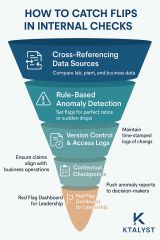
GreenwashedAndGutted | The Cost of ESG Without Checkpoints NoReadyToUse, each company NeedsToGet KtalystPatternFunnels Designed for their OwnSystems.
CutCopyPaste = Fail
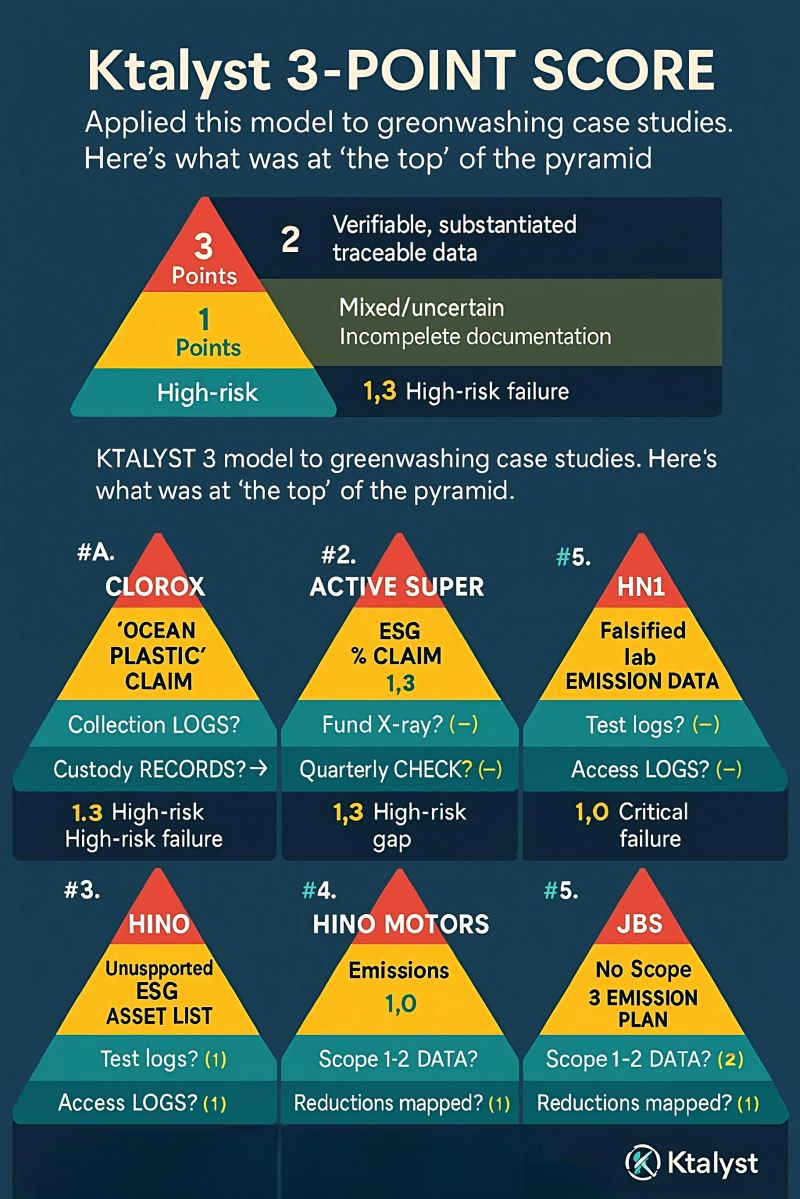
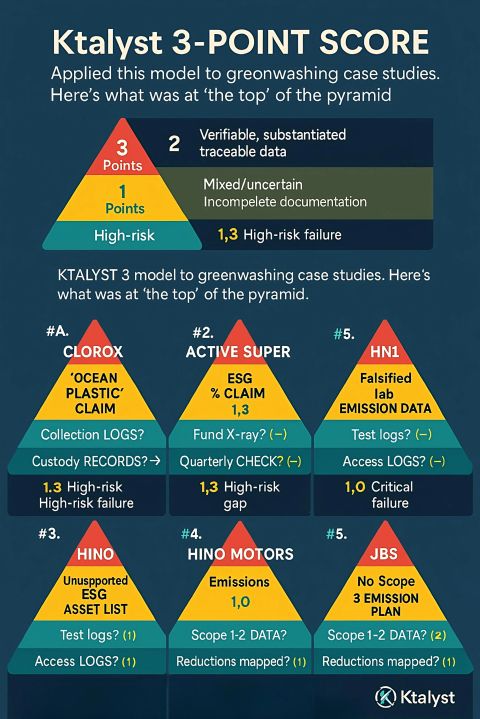
I studied 5global greenwashing disasters.
The pattern# was loud and clear:
✅ Intent was strong
❌ Systems were weak
They didn’t lie. They just didn’t verify.
Clorox Australia – “Ocean Plastic” That Never Saw the Sea
Claim: GLAD bags made from 50% ocean plastic
Truth: Plastic came from inland villages, nowhere near the coast
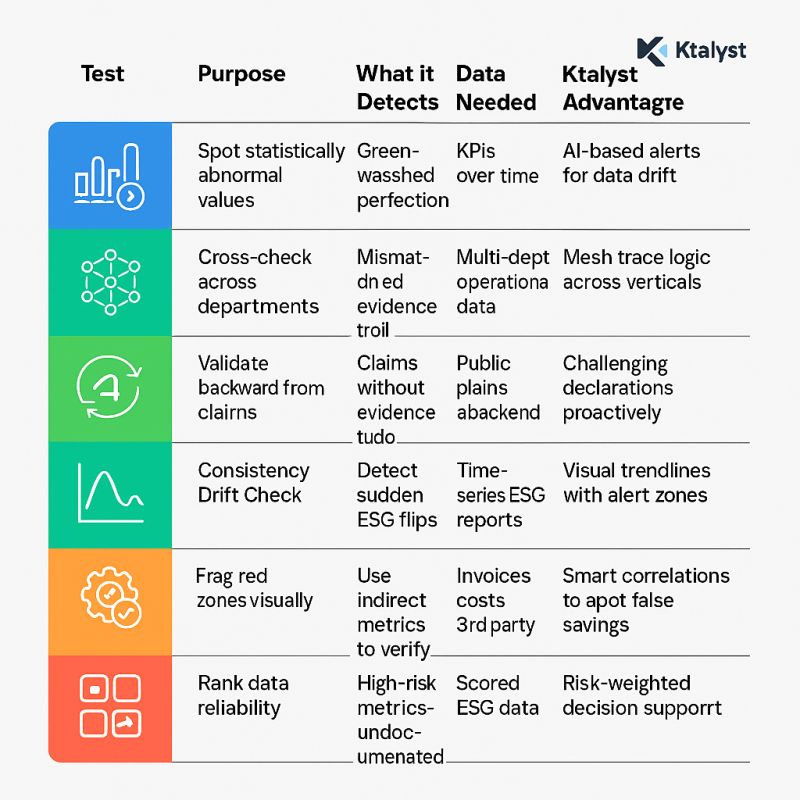
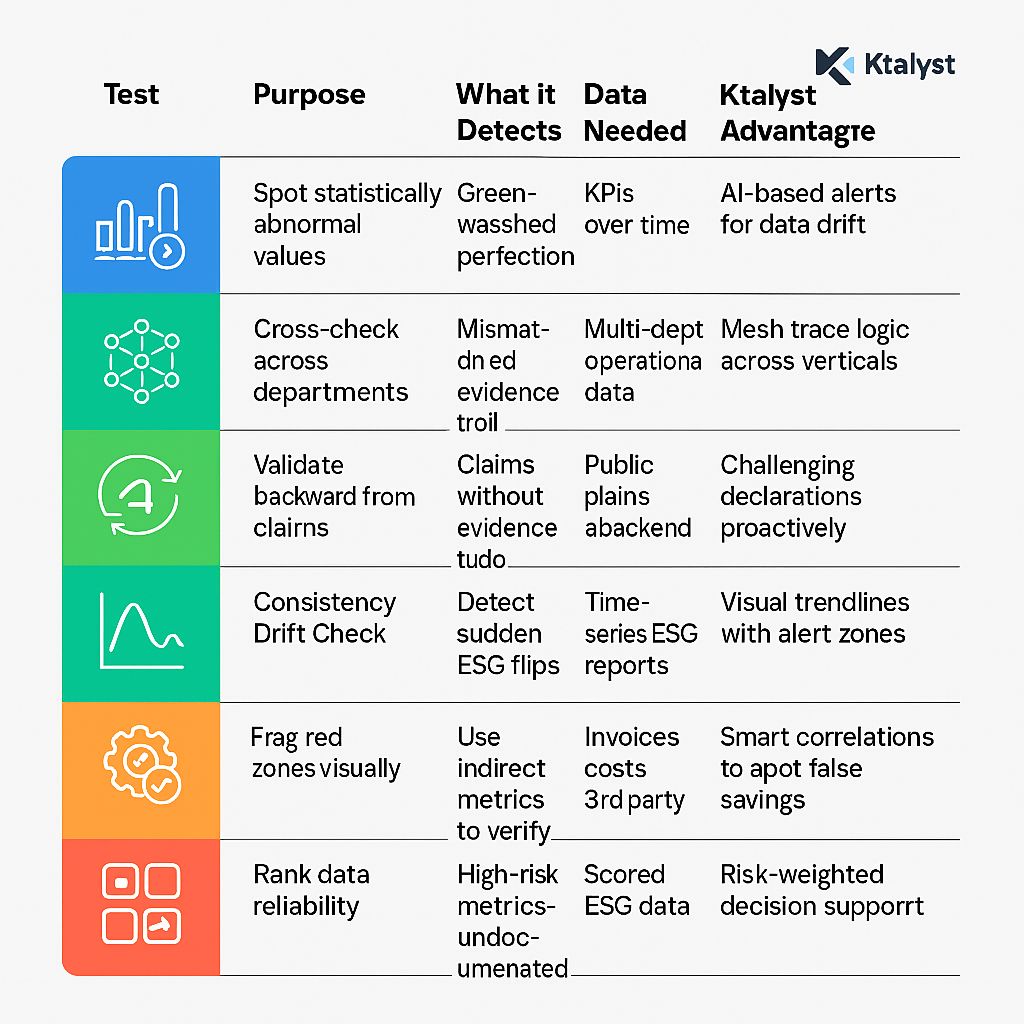
I 🧭 Geo-tagged collection logs to confirm coastal origin
🔗 Chain-of-custody tracking from pickup to processing
📦 Batch linkage system to connect source with product
Active Super – Ethical Fund, Ethical Gaps
Claim: No investments in coal, tobacco, or gambling
Truth: Audit revealed exposure to all three
🗺️ Live ESG mapping between fund positions and exclusion list
⏰ Quarterly auto-checkpoints for compliance assurance
🚨 Real-time breach alerts to flag policy violations
II DWS Group – 50% ESG. But Verified by Whom?
Claim: Half the portfolio was ESG-compliant
Truth: Many assets lacked certified ratings
📝 Third-party score integration with time-stamped logs
⛔ Expiry flags for outdated or unverifiable claims
🌡️ Portfolio heatmap to track low-certainty zones
III Hino Motors – When the Lab Fakes Clean Air
Claim: Vehicles passed emissions testing
Truth: Over 100,000 units involved in data manipulation
📊 Time-stamped lab audit trails
🔁 Cross-verification with actual plant output
🔐 Anomaly triggers and access control logs
IV JBS – Net Zero, But Where’s the Map?
Claim: Net Zero by 2040
Truth: No Scope 3 data, no implementation roadmap
🌍 Emission mapping tools across operations & vendors
🔗 Syncing declarations to backend data
📉 Red flag dashboards for leadership visibililty.
KtalystKeystone Takeaway:
They weren’t caught greenwashing.
They were caught assuming—without systems to validate their ESG story.
> “Sustainability isn’t a slogan. It’s a supply chain of truths.
Ktalyst Keystone
CleanClaimsOnly | PoweredByKtalyst


Originally published on LinkedIn on 2025-04-15 05:23:10: https://www.linkedin.com/feed/update/urn%3Ali%3AgroupPost%3A82951-7317779497859096578
TheCircularEconomyBoom
📊 Market Growth: $339B → $712B (2030)
🛍 Key Sectors: ♻️ Recycling | 📦 Packaging | ⚡ Waste-to-Energy | 👕 Textile Circularity
💰 Big Investors: BlackRock | Goldman Sachs | Breakthrough Energy
Circular Economy vs. Traditional Returns
📈 ROI (5-year average):
🟢 Circular Economy: 8-12% CAGR
🔴 Traditional Markets: 5-7% CAGR
⚡ Waste-to-Energy IRR: 10-15% (Beats traditional waste management)
🛍 Consumer Trend: 73% willing to pay more for sustainability
VC & PrivateEquity Betting Big
🌎 Global Funding: $75B+ in Circular Startups
💰 Top-Funded Startups:
🔋 Northvolt – Battery Recycling
♻️ Loop Industries – Plastic Circularity
📦 Zume – Biodegradable Packaging
🚀 Major Investors: Sequoia | KKR | TPG Rise
Policy Tailwinds Driving Investments
📜 Global Incentives:
🇪🇺 EU Green Deal: €1T Sustainability Fund
🇺🇸 IRA: $370B in Climate Incentives
🇨🇳 China 5-Year Plan: $460B Circular Infra
📊 Policy-Driven Sectors: ⚡ EV Battery Recycling | 🔄 Industrial Waste Upcycling | 🌍 Carbon Markets
Circular Business Models Winning Capital
📊 High-Growth Revenue Models:
🔄 Product-as-a-Service (PaaS): 15-20% YoY
♻️ Recommerce & Reverse Logistics: 12-18% YoY
🌱 Upcycling & Material Innovation: 10-15% YoY
📌 Investment Hotspots:
🔹 Asia-Pacific – Fastest-Growing 🌏
🔹 Europe – Corporate Circular Leaders 🇪🇺
🔹 North America – VC & PE Capital Hub 💰
Impact Metrics Investors Track
📊 Data-Driven KPIs:
♻️ Material Recovery Rate – % Waste Reused
💰 Resource Productivity – GDP/kg Material
🌍 CO₂ Reduction Impact – Carbon Saved/$
📈 RoSI – Return on Sustainability Investment
🚀 Tech Game-Changers: AI & Blockchain in Circular Supply Chains
Future of Circular Investing (2025-2030)
🔮 Market Outlook:
📊 $4.5T+ Circular Economy by 2030
📈 VC/PE Capital to 3x by 2028
🔥 Fastest-Growing Sectors:
🏗 Circular Construction 💰 $500B+
⚡ Green Hydrogen 💰 $600B+
🧠 AI-Driven Waste Mgmt 💰 $100B+
🌍 InvestForImpact – High returns meet sustainability. 💰♻️
💬 Which sector interests you most? Drop a comment!
CircularEconomy ImpactInvesting SustainableFinance ClimateInvestment
Originally published on LinkedIn on 2025-03-05 14:01:17: https://www.linkedin.com/feed/update/urn%3Ali%3Ashare%3A7303051986592014336
📚 KnowledgeSeries: The Hidden_Cost_of_Digital_Pollution – Is the Internet Killing the Planet? 🌍💻
While we focus on EVs, renewables, & plastic waste, digital pollution remains an invisible climate threat. From emails to AI, the internet’s carbon footprint is bigger than expected.
📊 Digital Pollution: The Data Behind the Screens
🟢 Data Centers = 2% of Global Electricity Use → That’s more than Germany’s entire energy consumption. (Source)
🟢 One Email = 4g CO₂ → With attachments, it’s 50g CO₂. 306B emails/day = 15M tons of CO₂ annually.
🟢 Video Streaming = 1% of Global CO₂ → One hour of Netflix in HD = 36g CO₂ → Watching at lower resolution cuts emissions by 40%.
🟢 Google Searches Emit 500 Tons CO₂/Day → Each search = 0.2g CO₂. 8.5B searches daily = annual emissions of 1.3M cars.
🟢 AI & Cloud Computing Are Carbon Guzzlers → Training one AI model emits 125,000 lbs CO₂, equal to five cars’ lifetime emissions.
🛑 How to Reduce Digital Pollution?
🟢 Delete Unnecessary Emails → Reducing 100 unneeded emails = saving 30kg CO₂ annually.
🟢 Declutter Cloud Storage → 1GB of deleted cloud data = 7kg CO₂ saved per year.
🟢 Use Green Hosting → Only 30% of websites are on carbon-neutral servers.
🟢 Limit AI Queries → Reducing unnecessary AI prompts & computations cuts energy waste.
🔥 The Takeaway: Is Digital the New Plastic?
🟢 If the internet were a country, it would be the 6th largest polluter in the world.
🟢 Digital sustainability is the next frontier—will businesses take action?
🟢 Every click, search, and email has a carbon cost—time to rethink digital habits.
📢 How can we build a cleaner, low-carbon internet? Let’s discuss! 👇

Originally published on LinkedIn on 2025-03-03 14:43:53: https://www.linkedin.com/feed/update/urn%3Ali%3AgroupPost%3A82951-7302337927789879296
TheSustainabilityReckoning: Data, Dollars & DueDiligence
📊💡 Sustainability is no longer a choice—it’s a business imperative backed by hard data. In 2025, companies face a stark reality: greenwashing lawsuits, evolving regulations, and shifting investor priorities are reshaping the LicenseToOperate. The cost of inaction? Fines, lostmarketaccess, and reputationaldamage.
Here’s what the numbers reveal:
3_Billion_USD_Lawsuit: Apple’s “CarbonNeutral” Claims Under Fire
Apple faces a classactionlawsuit challenging its carbonneutralityclaims, highlighting the #$20Billion+ global fines for greenwashing in 2024 alone. The lesson? Transparency and tangibleaction matter more than marketing.
🔹 EUSlashesSustainabilityReporting by 80%—But Not for BigPlayers
The EU’s CorporateSustainabilityReportingDirective (CSRD) has been relaxed, reducing compliance for smaller firms. However, largecorporations must still navigate stringentESGrequirements, ensuring verifiablesustainability efforts.
🔹 #$2Trillion in ClimateInvestments Defies ESGBacklash
Despite politicalheadwinds, globalclimateinvestments hit #$2trillion in 2024, with renewables and infrastructure leading. Resilientcompanies are attracting capital, proving that climatepositivebusinessmodels aren’t just ethical—they’re profitable.
🔹 WellsFargoDropsNetZeroTargets—A Sign of ESGRealignment?
One of the largestUSbanks has walked back its financedemissionsgoals, citing technological and policygaps. This shift signals a movefromoverambitious targets to pragmaticESGstrategies that align with businessrealities.
🔹 BCorpBoom: 2,400+ Certified Companies in the UK Alone
With consumerdemand for ethicalbusinesspractices soaring, over 2,400UKcompanies, including DanoneUK and GoodEnergy, have achieved BCorpstatus, proving that sustainability isn’t just compliance—it’s a competitiveadvantage.
🔹 #$1BillionCircularEconomyFund Eyes WasteToWealthGrowth
With globalwastecosts projected to exceed #$400billion by 2035, PlanetArk and BostonGlobal are launching a #$1billionfund to support circulareconomyinnovations. The future belongs to businesses that turn wasteintovalue.
📉🔍 TheVerdict?
✅ Sustainability isn’t a cost—it’s an investment in resilience.
✅ Regulatoryshifts are redefining corporateaccountability.
✅ Greenwashinglawsuits are a wake-up call—datadriventransparency is key.
IsYourBusinessFutureProofed for this SustainabilityReckoning? Let’s discuss how compliance, strategy, and innovation can secure your LicenseToOperate in this evolving landscape. Drop your thoughts below! 👇

Originally published on LinkedIn on 2025-03-01 07:39:37: https://www.linkedin.com/feed/update/urn%3Ali%3AgroupPost%3A2474261-7301506382598430720
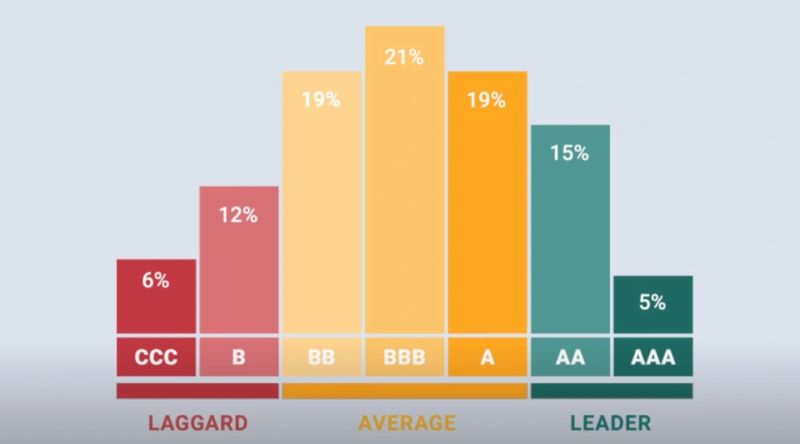
📚 KnowledgeSeries: Understanding MACI SustainabilityRatings
With ESG investing surpassing $40 trillion, sustainability metrics are no longer optional—they directly impact financial markets. But traditional ESG ratings often miss the biggest contributor to emissions: Scope 3 (supply chain & product lifecycle).
Enter MACI (Morningstar Absolute Carbon Impact)—a next-gen sustainability metric designed to measure real carbon impact, beyond corporate disclosures.
🔎 What is MACI?
📌 MACI (Morningstar Absolute Carbon Impact) is a carbon-focused rating that quantifies total emissions, unlike traditional ESG scores that rely on self-reported data.
✅ Scope 1 – Direct emissions from company operations
✅ Scope 2 – Indirect emissions from purchased energy
✅ Scope 3 – Supply chain & product lifecycle emissions (often 80-95% of total emissions)
📊 Only 5% of companies currently disclose full Scope 3 data, despite it making up 75% or more of their total carbon footprint. MACI ensures investors see the full picture.
🌍 Why is MACI a Game-Changer?
🟢 Exposes True Carbon Impact
📌 Over 90% of S&P 500 companies report ESG data, but less than 30% include Scope 3 emissions. MACI forces transparency by measuring actual environmental impact.
💰 Links Carbon Impact to Financial Risk
📌 Firms with high Scope 3 emissions face 10-15% valuation risks due to carbon pricing, regulation, and shifting consumer demand. Investors using MACI can identify & price these risks early.
📊 Goes Beyond Traditional ESG Ratings
📌 MSCI, Sustainalytics, & CDP rely on corporate sustainability claims—but MACI measures actual emissions data. This removes greenwashing from ESG scores.
🚀 Guides Net Zero Investments
📌 81% of global companies have Net Zero goals, but only 19% have credible transition plans. MACI identifies companies actually reducing emissions, ensuring investors back real sustainability leaders.
💡 How Financial Markets Depend on MACI
🏦 Sustainable Finance
📌 #$500 billion in Green Bonds & ESG Funds rely on sustainability scores. MACI ensures these funds actually reduce carbon impact.
📉 Investment Risk Assessment
📌 Climate risk is now considered a financial risk. Regulated markets (EU, US, UK, APAC) require stricter carbon disclosure. MACI helps investors assess exposure before risks impact stock prices.
📜 Regulatory Compliance
📌 The EU Taxonomy, SEC Climate Disclosures, & IFRS ESG Standards will require comprehensive Scope 3 reporting. MACI aligns with these frameworks, ensuring compliance-ready investments.
🔥 The Takeaway
As corporate greenwashing grows, investors need credible carbon metrics that go beyond PR campaigns. MACI is setting the new standard for data-driven sustainability investing.

Originally published on LinkedIn on 2025-02-27 01:47:03: https://www.linkedin.com/feed/update/urn%3Ali%3AgroupPost%3A9088131-7300692883345412096
🚀 “CorporateGovernance: Can India Match the US?” 🇮🇳⚖️🇺🇸
India’s corporate governance is evolving, but enforcement gaps remain. How does it compare to the US? Here’s a data-driven reality check.
✅ Where India & US Align
🔹 Mandatory ESG Disclosures
✔️ India: Top 1,000 listed firms follow BRSR. (SEBI, 2024)
✔️ US: SEC mandates climate disclosures. (SEC, 2024)
🔹 Board Diversity
✔️ India: 35% of Nifty500 firms have women directors. (NSE, 2024)
✔️ US: Women hold 32% of S&P500 board seats. (Harvard Law, 2024)
🔹 Whistleblower Protections
✔️ India: SEBI enforces audit committees & whistleblower policies. (SEBI, 2024)
✔️ US: SOX Act ensures strict penalties for corporate fraud. (SEC, 2025)
📌 RealityCheck: Laws exist, but enforcement is the game-changer.
⚖️ Where India Lags
🔻 Board Independence
✔️ US: 90% of S&P500 firms separate CEO & Chair roles. (Spencer Stuart, 2024)
✔️ India: Only 33% of Nifty500 firms do the same. (ICSI, 2025)
🔻 Investor Protection
✔️ US: SEC enforces shareholder voting rights. (SEC, 2025)
✔️ India: Promoter-led firms limit investor influence. (SEBI, 2025)
🔻 Legal Delays
✔️ US: Corporate cases resolve in 6-12 months. (Bloomberg, 2025)
✔️ India: Takes 5-7 years. (Economic Times, 2025)
🔻 ESG Penalties
✔️ US: $1.5B in greenwashing fines. (SEC, 2025)
✔️ India: ₹500 Cr ($60M) in fines. (SEBI, 2025)
📌 RealityCheck: India needs stricter oversight & faster dispute resolution.
🏆 KeyTakeaway
📌 India has strong policies but weak enforcement.
📌 US leads in investor rights & legal efficiency.
📌 India must act fast to boost global trust.
💬 Will India bridge the governance gap? Drop your thoughts! 👇


Originally published on LinkedIn on 2025-02-21 17:50:23: https://www.linkedin.com/feed/update/urn%3Ali%3AgroupPost%3A95089-7298760984062488577
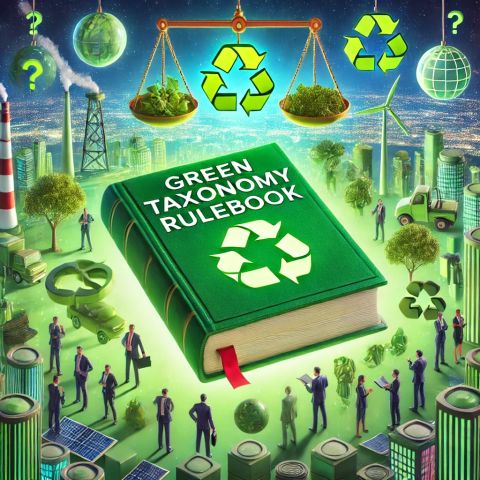
🌍 Green_Taxonomy: The Billion_Dollar_Climate_Rulebook” 📖💰♻️
Governments & investors are pumping trillions into ‘green projects’, but how do we know what’s actually sustainable and what’s greenwashing? That’s where Green Taxonomy comes in—a global rulebook defining what’s truly green.
Let’s break it down data-first.
📖 1. What is Green_Taxonomy?
✅ A classification system that defines which economic activities are truly ‘green.
✅ Prevents greenwashing by ensuring companies & funds don’t falsely claim sustainability.
✅ Guides investors & governments toward legitimate climate-friendly projects.
🚨 Why It Matters? Over $1.5 trillion in ESG investments may be at risk due to misleading green claims. (Bloomberg, 2024)
🏆 Key Impact: Governments use Green Taxonomy to shape climate policies, carbon markets, and financial incentives.
🌎 2. Global Green Taxonomies: Who’s Leading?
✅ 🇪🇺 EU Taxonomy: Strictest framework, defining what counts as green. (Source: EU Commission, 2024)
✅ 🇨🇳 China’s Green Bonds Catalog: Focuses on renewable energy & pollution control. (PBOC, 2024)
✅ 🇮🇳 India’s Green Taxonomy: Aligned with Sustainable Finance Guidelines. (RBI, 2024)
✅ 🇺🇸 US SEC ESG Rules: Weaker than EU’s, but cracking down on greenwashing. (SEC, 2024)
🚨 The Problem? Each country defines ‘green’ differently, creating market confusion for investors.
🏆 What’s Needed? A globally harmonized green taxonomy to ensure credibility & consistency.
💰 3. How Green Taxonomy Affects Business & Investments
✅ Corporations Must Report Sustainability Metrics or risk losing ESG funding.
✅ Green Bonds & Climate Finance—Only certified green projects qualify for funding.
✅ High-Carbon Industries (Oil, Gas, Cement) face stricter compliance & reporting rules.
🚨 Reality Check: #$4.2 trillion in green bonds were issued in 2023—but without strong taxonomy rules, many may not be truly ‘green.’ (Climate Bonds Initiative, 2024)
🏆 Who Wins? Companies investing in real sustainability, not just optics.
⚖️ 4. The Green Taxonomy Controversies
🔴 Is Nuclear Energy Green? 🇪🇺 The EU says YES. Critics say radioactive waste isn’t sustainable.
🔴 Is Natural Gas Green? 🇪🇺 Labeled it ‘transitional green’, sparking backlash from climate groups.
🔴 Are Carbon Offsets Valid? Many taxonomies exclude carbon credits due to verification concerns.
🚨 The Challenge? Balancing economic growth & real sustainability without greenwashing.
🏆 KeyTakeaway
The Green Taxonomy is reshaping global finance & sustainability rules. Countries that set clear standards will attract more green investments, while loopholes & weak regulations risk fueling greenwashing.
👉 Will Green Taxonomy stop greenwashing or just create more loopholes?
GreenFinance Sustainability ESG CarbonMarkets NetZero ClimateAction

Originally published on LinkedIn on 2025-01-31 08:57:08: https://www.linkedin.com/feed/update/urn%3Ali%3AgroupPost%3A100646-7291016643428704256
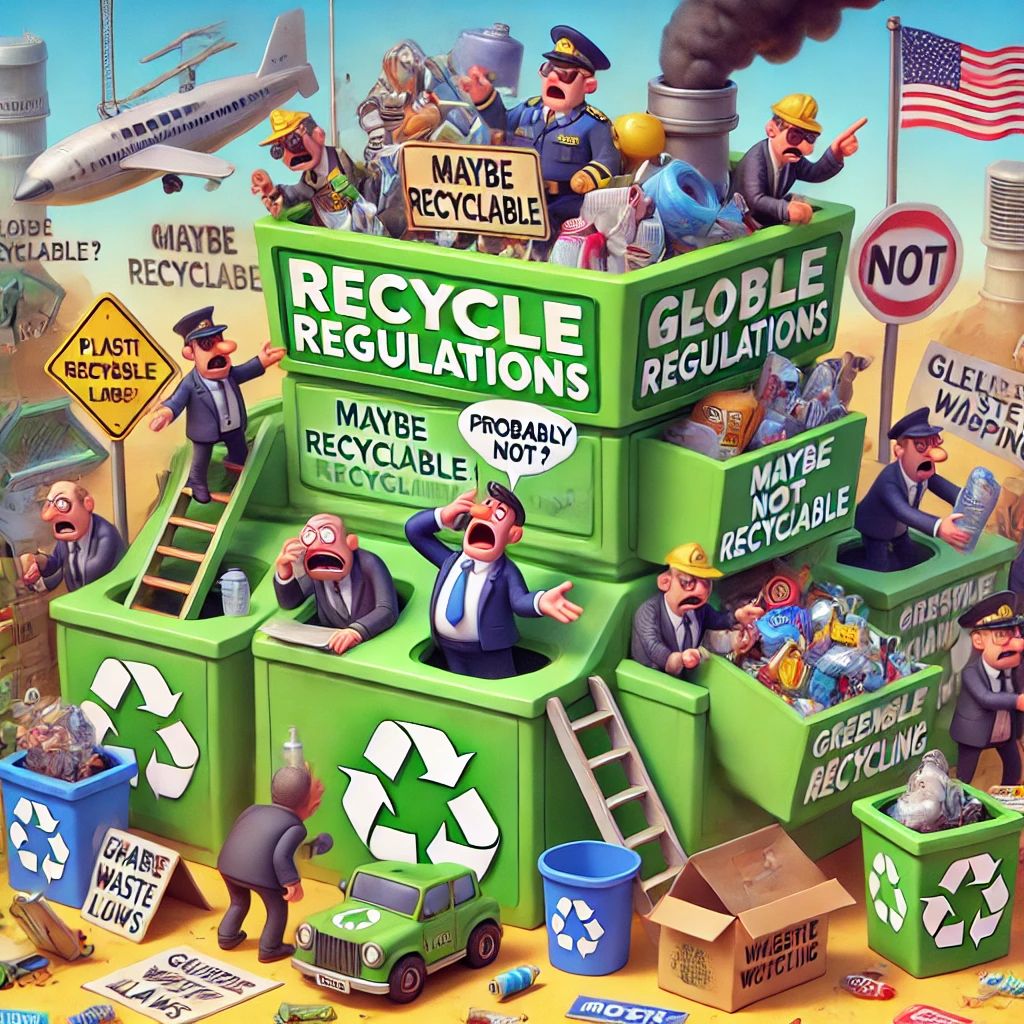
Recycle_Regulations: The New Gold Standard or a Global Mess?” ♻️🌍📜
Recycling isn’t just about throwing plastic into the right bin—it’s becoming a highly regulated industry with economic, environmental, and political implications. But are these recycle_regulations actually working, or are they just creating bureaucratic_chaos? Let’s break it down data-first.
📜 1. The Global Recycling Rulebook is Expanding
✅ Over 190 countries signed the Basel Convention, restricting plastic waste exports. (Source: UN, 2023)
✅ EU’s Circular Economy Package mandates 65% recycling targets by 2035. (Source: EU Commission, 2024)
✅ US States Are Taking the Lead: California’s SB 54 law requires 30% of plastic to be recyclable by 2028. (Source: CalRecycle, 2024)
🚨 The Problem? Many rules lack enforcement, and illegal waste dumping is still a #$10 billion global industry. (Source: Interpol, 2023)
⚖️ 2. Who’s Paying? The Battle Over EPR (Extended Producer Responsibility)
✅ Canada, EU & Japan require companies to fund recycling programs through EPR laws.
✅ India’s EPR Rules now hold businesses responsible for plastic recovery quotas. (Source: CPCB, 2024)
🚨 The Problem? Many companies shift costs to consumers, raising product prices.
🏆 Winner: Governments with strict accountability like Germany & South Korea.
❌ Loser: Developing nations drowning in imported plastic waste.
🛑 3. Greenwashing vs. Real Impact
✅ France bans ‘Recyclable’ labels unless companies prove 100% recyclability. (Source: French Gov, 2024)
✅ EU’s new Digital Product Passport tracks materials from production to disposal. (Source: EU Commission, 2024)
🚨 The Problem? 60% of ‘recyclable’ plastic isn’t actually recycled due to lack of infrastructure. (Source: Greenpeace, 2023)
🏆 Winner: Countries mandating transparency & product lifecycle tracking.
❌ Loser: Brands using misleading recycling claims.
🏗️ 4. The Future of Recycling Laws
📈 AI & Robotics to improve sorting efficiency & reduce contamination.
♻️ Chemical Recycling is gaining traction but faces cost & emissions concerns.
🚀 Global Agreements like the UN Plastics Treaty (2025) could reshape waste management worldwide.
🏆 Final Verdict: Recycling regulations are evolving, but enforcement is the real battle.
🏆 KeyTakeaway
Recycling isn’t just about being green—it’s about accountability. The future will belong to nations & businesses that get it right while others struggle with waste crises & regulatory chaos.
👉 Is your country leading or lagging in the recycling revolution?
RecycleRegulations CircularEconomy GreenLaws Sustainability PlasticCrisis NetZero
Originally published on LinkedIn on 2025-01-30 18:34:51: https://www.linkedin.com/feed/update/urn%3Ali%3AgroupPost%3A100646-7290799643045646336
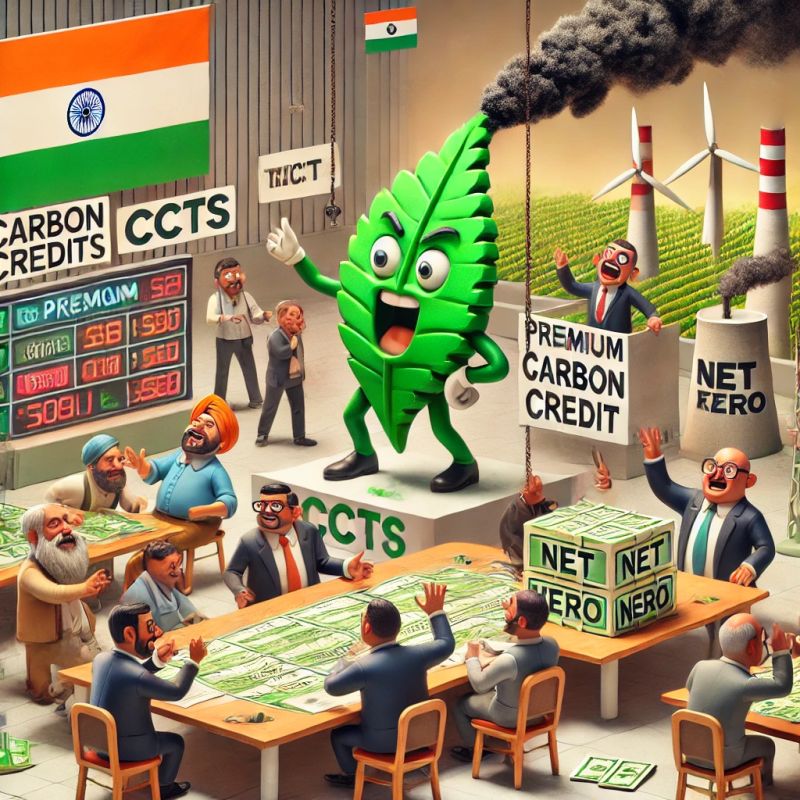
NamasteGreenIndia’s Carbon Market: A Game Changer or Just Another Framework?” 🇮🇳💨
India is making big moves in the carbon credit space with the Indian Carbon Market (ICM), but is it ready to deliver real impact? Here’s a data-driven breakdown of the Carbon_Credit_Trading_Scheme (CCTS) and what’s next.
🔍 What is the Indian Carbon Market (ICM)?
✅ Launched in June 2023 to enable carbon credit trading & cut emissions. (Source: Govt. of India, 2023)
✅ Aims to align with India’s Nationally Determined Contributions (NDCs) under the Paris Agreement.
✅ Regulated under the Carbon Credit Trading Scheme (CCTS), officially notified in June 2023 & amended in December 2023.
🏆 Why It Matters: India is one of the world’s top 3 carbon emitters, and this framework could reshape industries while driving carbon reductions.
📊 Current Status of CCTS
🛠 10 key sectors approved under the Offset Mechanism. (Source: Bureau of Energy Efficiency, 2024)
🚀 Phase 1 covers 6 sectors, with 12 methodologies developed for implementation. (BEE, Sept 2024)
🚨 Challenges:
Pricing clarity & credit validation remain uncertain.
Will industries truly cut emissions, or just buy offsets?
⚡ What’s Next for India’s Carbon Market?
📈 Expansion to more sectors, increasing carbon credit liquidity.
🌱 Stronger enforcement needed to prevent greenwashing.
🌍 Alignment with global carbon markets for international trading opportunities.
🏆 Final Verdict: High potential but execution will decide success.
KeyTakeaway
India’s Carbon Credit Trading Scheme (CCTS) could be a major climate tool, but real impact depends on strong enforcement & pricing mechanisms.
👉 Will India’s carbon market drive real change, or just be another framework?
IndiaCarbonMarket Sustainability ClimateAction NetZero CarbonCredits ESG
Originally published on LinkedIn on 2025-01-30 10:52:26: https://www.linkedin.com/feed/update/urn%3Ali%3Ashare%3A7290683269031907328

