KtalystFuelFlex Series 101:
The Macroeconomic Reality of Fuel Contamination
Fuel Flex is often misread as petty adulteration or local distributor malpractice.
That framing is no longer sufficient.
Modern fuel fraud operates as a systemic mechanism of fiscal leakage, subsidy capture, market distortion and climate-accounting failure. It weakens sovereign tax bases, diverts public incentives, penalizes legitimate market participants and puts green-transition credibility at risk.
The damage sits across four economic vectors:
1. Fiscal Leakage
Liquid fuels are high-volume, high-tax commodities. When untaxed or lower-taxed products are blended into commercial fuel streams, the state loses core fiscal yield. SARS estimates fuel adulteration drains approximately R3.6 billion annually from South Africa’s national fiscus.
2. Subsidy Capture
In green fuel markets, weak verification can turn policy support into an extraction mechanism. In the Washakie Renewable Energy case, a coordinated conspiracy generated $1.16 billion in fraudulent biofuel tax credits and extracted $511 million in IRS cash payouts.
3. Market Capture
Fraudulent or weakly verified supply creates artificial cost advantage. Under the U.S. Renewable Fuel Standard, the EPA Office of Inspector General identified nearly 339 million fraudulent RINs, linked to $87 million in illicit transactions. Ghost compliance supply dilutes legitimate credit value and undermines genuine producers.
The risk is also visible in global feedstock flows. Reuters reported that Chinese used cooking oil imports into the U.S. surged from under 200 million pounds per year to over 3 billion pounds in 2023, raising concerns around origin fraud, subsidy eligibility and domestic feedstock displacement.
4. Climate Distortion
The deepest risk is not only economic. It is atmospheric.
When fossil or high-emission pathways are misdeclared as renewable, carbon ledgers become unreliable. The European Commission’s 2025 review of Chinese biodiesel fraud allegations did not confirm intent to defraud, but it did identify systemic weaknesses in supply-chain certification audits.
That matters.
Because if the audit system cannot guarantee traceability, climate accounting becomes fragile.
The conclusion is simple:
Fuel fraud is not leakage.
It is economic extraction through weak authentication.
This is why the sector must move beyond asking:
Is the fuel marked?
The better question is:
Can the molecule, feedstock, custody route, carbon claim and money trail be independently authenticated?
Marked is not enough.
Certified is not enough.
Authenticated is the new minimum.
Dr. Anju Sharma
Originally published on LinkedIn on 2026-06-24 16:41:21: https://www.linkedin.com/feed/update/urn%3Ali%3Ashare%3A7475588889861214208
AI_ProfitPool LeavingScreens
Dr. Anju Sharma MrsSustainability
AI started as a software story, now it’s morphing to an hardware high cycle.
Wave1 was public fascination: models, copilots, agents, apps & chatbots.
Wave2 is less glamorous, more capital-intensive & far more strategic.
It sits behind the screen:
Data centres. Chips. Power systems. Cooling loops. Grid access. Specialty chemicals. Water systems. Transformers. Storage. Carbon accounting.
Ktalyst5Cs™ Lens translates a signal map for tracking where capital, capability, constraint & profit are moving in the AI economy:
Compute → Capex → Chemicals → Climate → Clean Growth
The data spine is already visible.
The IEA projects global data-centre electricity consumption could double to around 945 TWh by 2030, growing nearly 15% annually.
Reuters has reported Big Tech AI spending moving toward the US$600 billion range, shifting investor focus from AI excitement to capex productivity, cash-flow discipline & return visibility.
BloombergNEF estimates data-centre investment could reach US$3.3 trillion through 2029, with global data-centre demand already exceeding 84 GW.
Who captures the industrial profit pool that makes the model scalable?
Compute becomes the first scarcity gate.
GPU makers, advanced memory players, foundries, hyperscalers & AI accelerator suppliers sit closest to the first monetisation layer.
Data centres become the new industrial real estate.
Colocation players, REITs, EPC firms, modular infrastructure builders & hyperscalers gain as digital growth turns into land, shells, racks, cables, cooling & grid connections.
Power becomes the strategic moat.
Utilities, transformer makers, grid-equipment suppliers, storage providers, microgrid developers & backup-power companies move from support layer to core value chain.
Cooling becomes uptime insurance.
Immersion cooling, HVAC, chiller systems, heat-transfer fluids, water-treatment chemistry & recycling technologies become essential as AI servers generate concentrated heat.
Chemicals become the hidden material spine.
This may be the most underpriced profit pool.
AI infrastructure needs semiconductor chemicals, photoresists, etchants, CMP slurries, specialty gases, dielectric cooling fluids, flame-retardant polymers, cable insulation, transformer oils, coatings, adhesives, encapsulants & water-treatment chemistry.
The next petrochemical growth story may not be parked in a showroom.
It may be humming inside a data centre.
Clean energy becomes capacity credibility.
Renewables, storage, clean firm power, heat recovery, microgrids & energy-management systems gain as AI infrastructure faces pressure to prove reliability & climate legitimacy.
KtalystKlues™:
✓Compute captures demand.
✓Capex builds capacity.
✓Chemicals enable reliability.
✓Climate defines permission.
✓Clean Growth protects legitimacy.
Ktalyst5Cs™ KtalystKlues™ KtalystInsights™ KtalystKeystone ChemicalIndustry Petrochemicals
Originally published on LinkedIn on 2026-06-08 11:21:20: https://www.linkedin.com/feed/update/urn%3Ali%3AgroupPost%3A1910576-7469710148266106880
🧠💸 “Offsetting Reality” — How Carbon Credits Became Climate’s Cryptocurrency
> 🔍 “When profit meets planet, only integrity can keep the balance sheet honest.
Ktalyst Keystone
🎙️ A poem to stir your strategy soul:
They sold the smoke, they priced the air,
A ton of guilt, a clean affair.
But forests whisper what markets fake—
A credit bought can’t fix what we break.
🚨 Carbon Credits: The $700 Billion Climate Currency? 🌍
🌿 In the evolving climate economy, carbon credits are no longer the side hustle—they’re the main act. From voluntary offsets to full-blown compliance markets, we’re seeing the rise of a parallel economy where carbon has a price, a passport, and a passport control booth.
🌀 What’s Changing?
✔️ Market size: $120–135B (2024) ➡️ $700B+ (2037 forecast)
✔️ Voluntary market 💵 down, but removal credits 🌱 up
✔️ Article 6.4 has arrived—rules in place, trading begins
✔️ Corporate credit retirements ≈ issuances → Net neutral Q1 2025
📉 BUT… the fine print matters:
🔺 Greenwashing is still lurking
🔺 Quality is inconsistent
🔺 Trust depends on tech (MRV, satellite, blockchain)
💼 For investors, ESG heads, CFOs:
This is no longer just a checkbox.
Carbon is a tradable asset, a reputational hedge, and a regulatory lever.
🎯 TL;DR:
Is your company still paying to pollute, or profiting through accountability?
💬 Let’s talk credits, compliance, and credibility.
👇 Drop your thoughts. The market is watching.
Originally published on LinkedIn on 2025-06-17 16:10:06: https://www.linkedin.com/feed/update/urn%3Ali%3AgroupPost%3A4385073-7340772740360024064
Sunburn or SunBoom?
U.S. Slaps 3,521% Tariffs on Solar Imports — The SolarSector Feels the Heat (and Opportunity)
When the sun shines too bright on unfair play, tariffs bring the shade.” — KtalystInsight
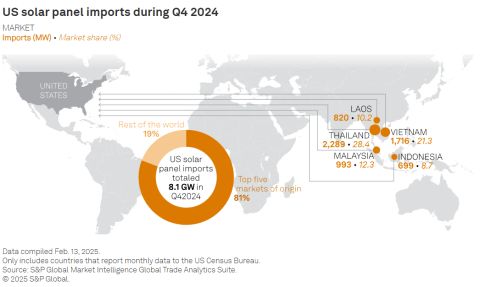
The UnitedStates has swung a solar sledgehammer — imposing tariffs as high as 3,521% on solar panel imports from Cambodia, Vietnam, Thailand, and Malaysia.
This stems from a Department of Commerce finding that Chinese companies were rerouting solar products through Southeast Asia to dodge existing duties.
Winners Emerging:
FirstSolar, Qcells, and other U.S. manufacturers celebrating a MadeInAmerica solar boom.
SolarBank CEO Dr. Richard Lu shared a sharp pivot — expanding domestic community solar and energy storage solutions, especially to feed the AI-driven data center boom.
SolarBank’s new 2.9 MW Gainesville, New York project is already under development.
Losers Worried:
Renewable project developers predict a 20–30% rise in project costs.
Supply chains could see 6–12 months delays, impacting Biden’s climate goals.
Global Echoes: Solar Under Trade Siege
EuropeanUnion’s CBAM (Carbon Border Adjustment Mechanism):
Though solar isn’t covered yet, solar supply chains are preparing for impact.
CBAM rollout from 2026 may push solar module prices up by ~10% if embedded carbon costs get added.
Manufacturers are already shifting wafer and polysilicon production to cleaner-energy countries like Canada and Brazil to avoid CBAM penalties.
India’s Solar Firewall:
Imposed 40% Basic Customs Duty on solar modules from April 2022 to promote Atmanirbhar Bharat.
Indian players like Adani Solar and Tata Power Solar are scaling local module capacity aggressively.
Canada’s Quiet Defense:
Continuing antidumping duties on Chinese modules, aiming to build a resilient domestic clean energy base.
Money Moves: Follow the Smart Investors
Brookfield Renewable Partners and BlackRock are pivoting funds into localized solar manufacturing and battery storage ecosystems.
NextEra Energy eyes major gains by scaling U.S.-based clean energy supply chains.
Ktalyst Perspective:
This tariff wave, plus the CBAM ripple effect, isn’t protectionism — it’s market redesign by climate necessity.
The winners will be solar companies that decarbonize supply chains, invest in local resilience, and pivot toward clean manufacturing clusters in NorthAmerica and India.

Originally published on LinkedIn on 2025-04-26 18:06:28: https://www.linkedin.com/feed/update/urn%3Ali%3AgroupPost%3A2153908-7321957853764677632
OilBarrels : BillionDollarMolecules
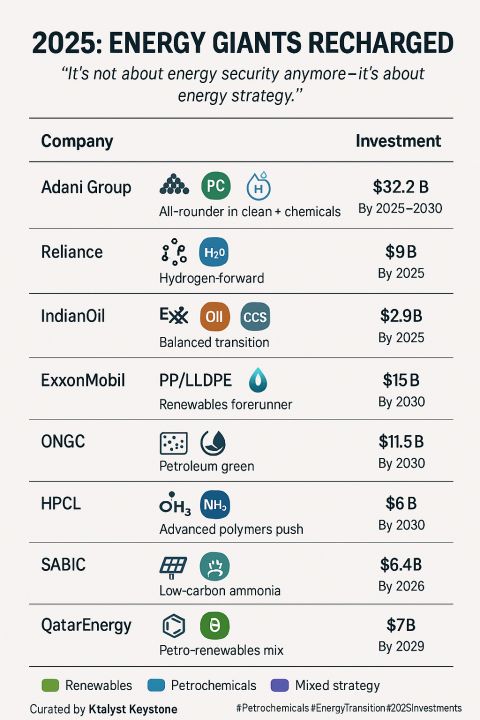
YR2025’s Top10 EnergyTransformers KtalystInsights
CapEx isn’t about crude anymore—it’s about chemistry, climate, and credibility.
Here’s who’s powering the future, and how they score on our SustainabilityRatings Matrix.
AdanGroup – Infra meets molecules
⚗️ 2 MTPA PVC + 🔋 30 GW RE + 🌊 Hydro storage
KtalystRating: 72% | StrategicTransformer
Insight: Import-substitution + energy dominance. India’s molecule multiplier.
ADNOC (XRG) – The sovereign VC
🧪 Hydrogen + Covestro + 🔁 Gas-to-Chemicals
KtalystRating: 81% | AlphaLeader
Insight: Not just oil-rich. Now molecule-smart.
RelianceIndustries – Hydrogen with a plan
⚡ Green H₂ + 🔋 Battery IP + ☀️ Solar wafers
KtalystRating: 78% | StrategicTransformer
Insight: Full-stack transition from fossil to future.
ExxonMobil – Late pivot, polymer-first
🏭 China cracker + 🧯 CCS + 🌪️ Clean plastics
KtalystRating: 69% | GreenExplorer
Insight: Global tech + Asian scale = quiet disruptor.
IndianOil (IOC) – Refining relevance
🧴 PP, Butyl Acrylate + ⛽ H₂ retail
KtalystRating: 64% | GreenExplorer
Insight: PSU polymer play with margin magic.
SABIC – Polymers with purpose
♻️ Circular PC + 🧬 PBT + 📈 Global push
KtalystRating: 76% | StrategicTransformer
Insight: Engineering meets ESG, at scale.
ONGC – Floating into the future
🌞 Ayana JV + 🚢 Floating solar
KtalystRating: 68% | GreenExplorer
Insight: Legacy firm learns to leap via smart alliances.
HPCL – Silent transformer
🌱 Biofuels + 🧪 Aromatics + ☀️ Solar parks
KtalystRating: 66% | GreenExplorer
Insight: Under-the-radar, over-the-curve.
QatarEnergy – Ammonia authority
🧊 Blue ammonia + 🚢 Export engine
KtalystRating: 73% | StrategicTransformer
Insight: Hydrogen’s maritime cousin. Ready to scale.
OQ (Oman) – Quietly clever
☀️ Solar + 🧴 Aromatics + 🧘 ESG buildout
KtalystRating: 71% | StrategicTransformer
Insight: Low volume, high vision—Middle East’s ESG whisperer.
KtalystSustainabilityRating Matrix
Scored on:
⚡ % Green CapEx
⏱️ Execution Timeline
🤝 JV IQ
⚗️ Product Mix (H₂, polymers, CCS)
📊 Policy Fit & Market Impact
Ktalyst:“In 2025, the smartest molecules—not the biggest barrels—win.
Originally published on LinkedIn on 2025-04-24 14:37:58: https://www.linkedin.com/feed/update/urn%3Ali%3AgroupPost%3A4385073-7321180610532679680
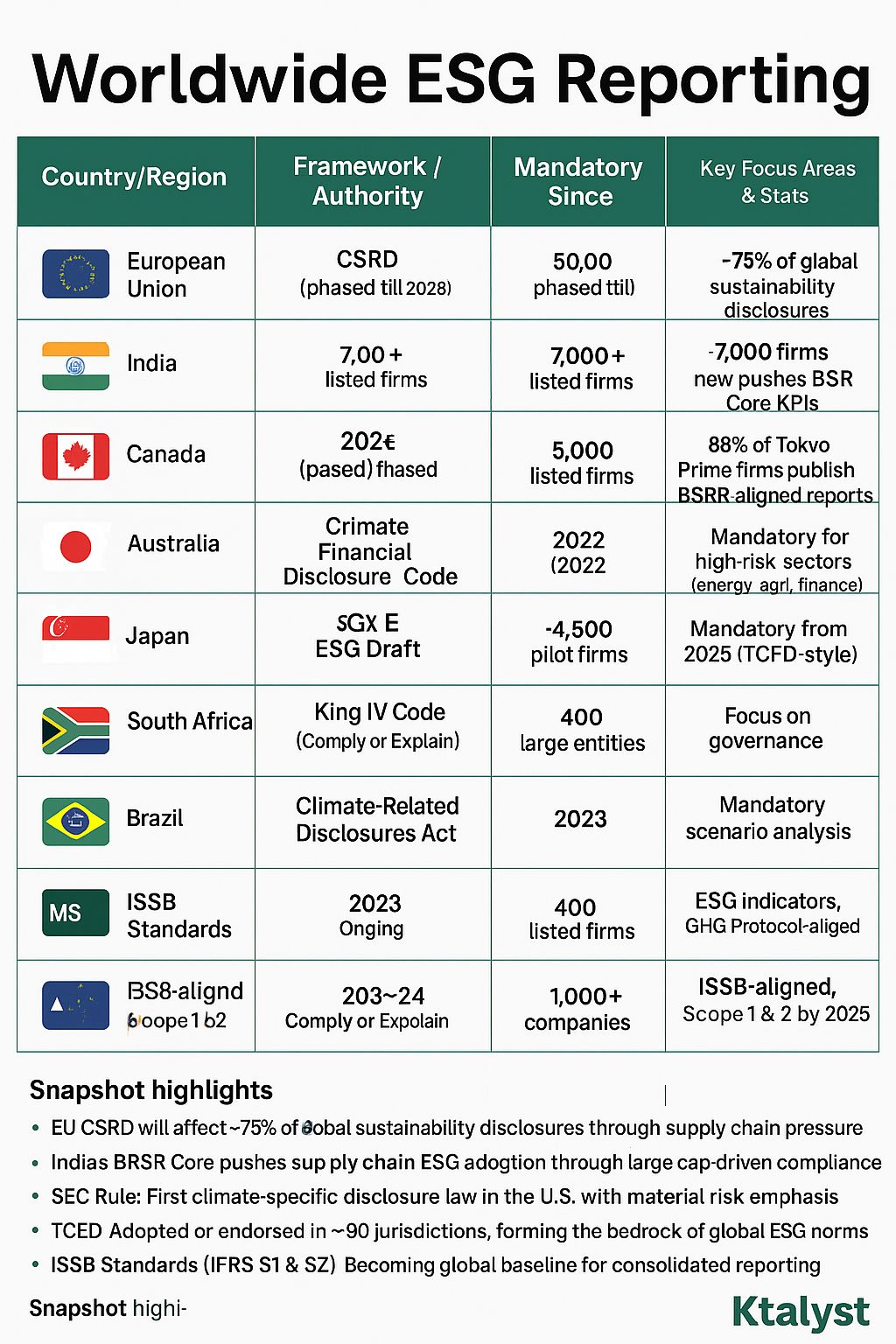
Why ESG Isn’t a Global Roadmap—It’s a Country_by_Country_Compass
ESG Isn’t One-Size-Fits-All—It’s One-Strategy-Fits-Nation
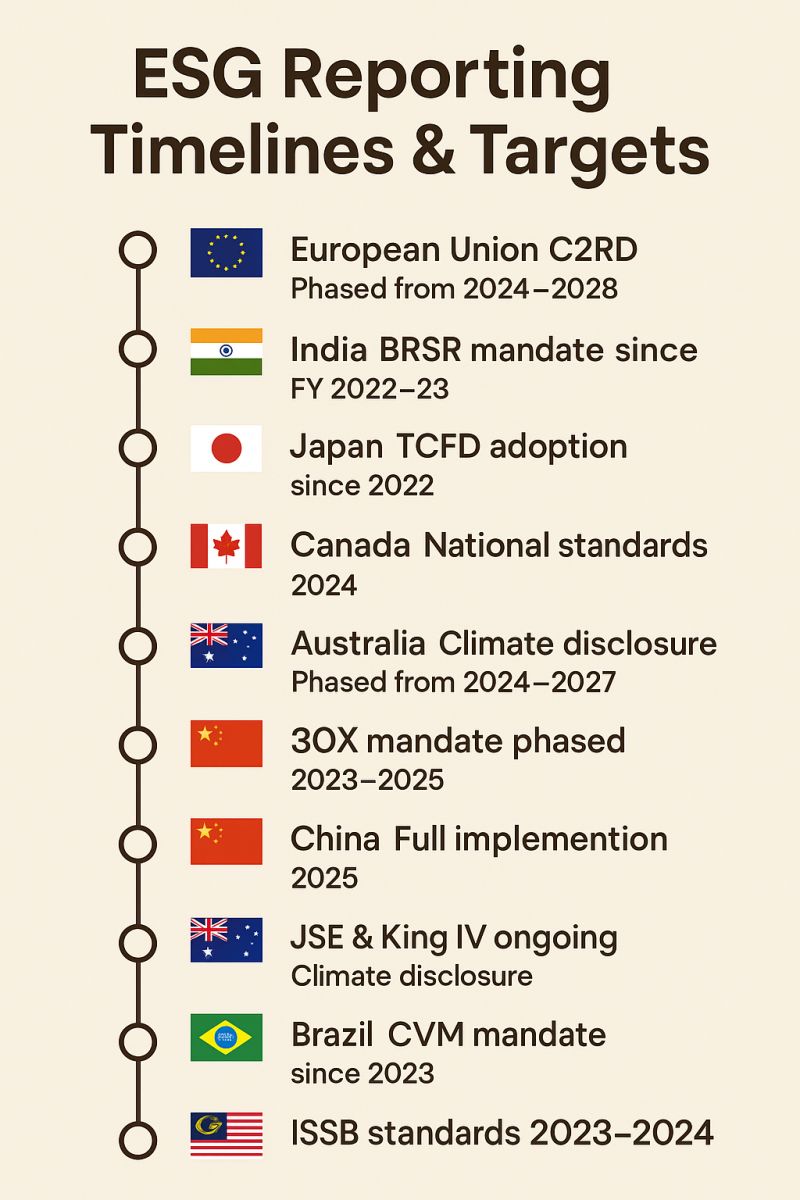
ESG reporting takes different roads because nations prioritize differently—economic maturity, regulatory style, investor pressure, and trade exposure all shape the path. The EU leads with CSRD—affecting 50,000+ firms through double materiality, taxonomy alignment, and mandatory assurance. The US sticks to financial materiality and climate risk, sidestepping Scope 3 and S&G. India’s BRSR ties ESG to development goals, starting with the top 1,000 and easing into assurance. Export-driven China, Malaysia, and Singapore accelerate ESG to meet global buyer expectations and bypass EU CBAM fallout. Japan prefers voluntary codes; South Africa excels in governance (King IV), but lacks integrated data.
Bottom line? ESG mirrors what each country values—growth, governance, global edge, or green capital. It’s not just compliance—it’s strategy, sovereignty, and survival.
🇪🇺 European Union
Timeline: CSRD phased from 2024 to 2028
Mandatory from:
2024: Large public-interest companies
2025: All large companies
2026–28: SMEs (limited scope)
FunFact: Will impact 75%+ of global ESG reporting indirectly via supply chains
🇺🇸 United States
Timeline: SEC Rule effective 2024–2025
Mandatory from:
FY2024: Large Accelerated Filers
FY2025: Accelerated Filers
Scope 3? Only if material (and still debated)
🇮🇳 India
Timeline:
BRSR mandatory since FY 2022–23
BRSR Core with limited assurance from FY 2023–24
Next up: Potential rollout for mid-size unlisted companies by 2026
🇯🇵 Japan
Timeline:
TCFD adoption by Prime listed firms since 2022
No fixed law, but >80% of large firms are already onboard voluntarily
🇨🇦 Canada
Timeline:
CSA rule aligned with TCFD from 2024
Mandated for:
Publicly listed entities, expanding coverage gradually
🇦🇺 Australia
Timeline:
Climate Disclosure Framework phased from July 2024
Rollout:
2024: Large companies
2026–27: Mid and small entities
🇸🇬 Singapore
Timeline:
SGX ESG reporting mandatory since 2023
Sector phased:
Energy, Agri, Finance by 2024
All others by 2025
🇨🇳 China
Timeline:
Draft ESG rules under CSRC in 2024
Target:
Full mandatory rollout by 2025
Pilots ongoing in green finance and energy sectors
🇿🇦 SouthAfrica
Timeline:
JSE & King IV apply ongoing since 2016
Mandate:
Comply or explain” model, no fixed year — but tightening expected by 2025
🇳🇿 NewZealand
Timeline:
Climate-Related Disclosure Act enforced from 2023
Applies to:
Financial institutions & large corporates (>NZ$1B AUM or turnover)
🇧🇷 Brazil
Timeline:
CVM ESG disclosure mandatory since 2023
Focus:
Annual reporting, with increasing pressure for Scope 3 inclusion by 2026
🇲🇾 Malaysia
Timeline:
ISSB-aligned standards adopted in 2023–2024
Mandated by:
Bursa Malaysia, full Scope 1–2 by 2025, Scope 3 optional till 2026


Originally published on LinkedIn on 2025-04-21 21:59:46: https://www.linkedin.com/feed/update/urn%3Ali%3AugcPost%3A7320204627323289601
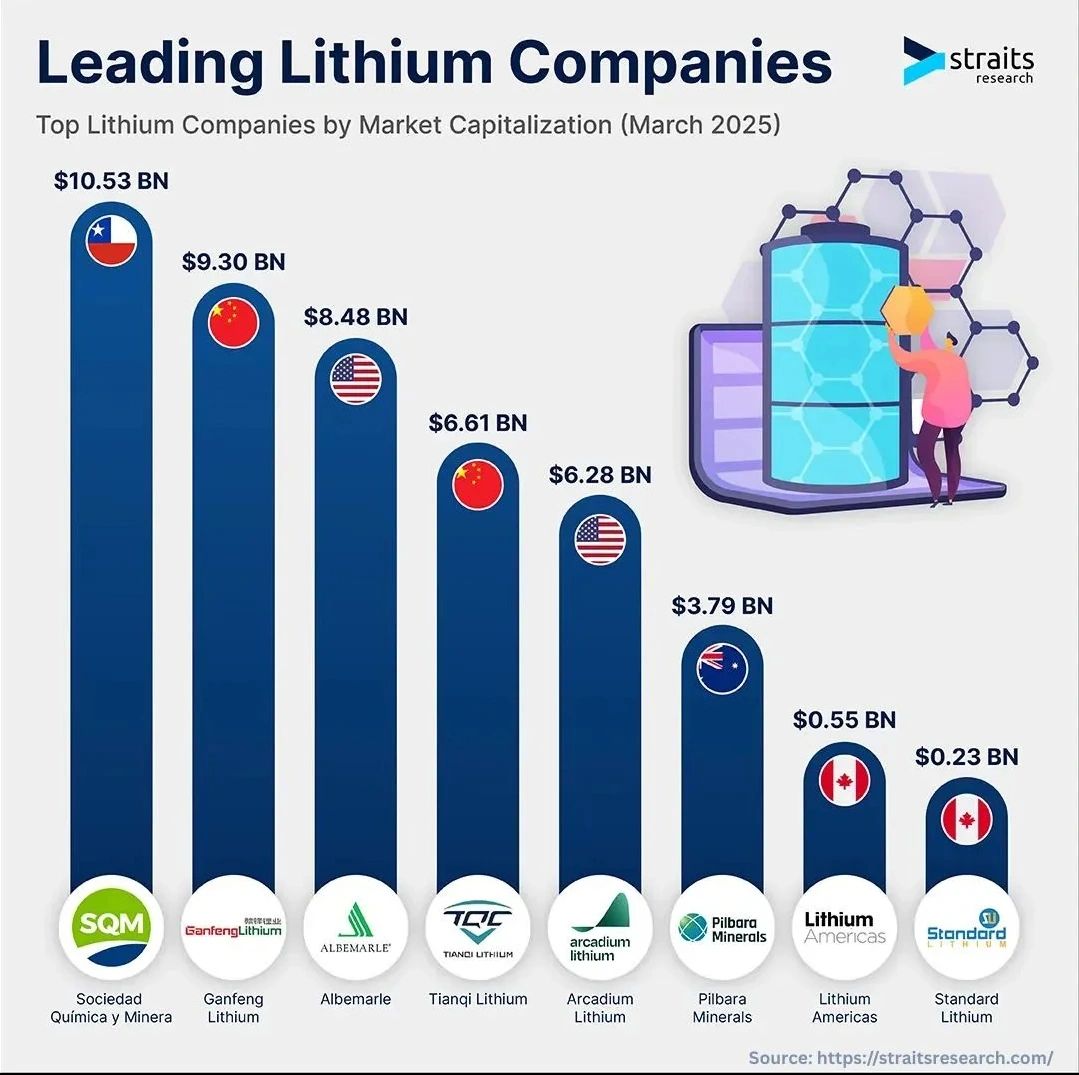
LithiumLocked: Are US. Tariffs Powering Sustainability—or Just Political Theater?
You can’t claim to save the planet while fencing off the minerals it runs on.
KtalystView
KtalystTake
While Uncle Trump champions GreenGoals, it’s also drawing tariff lines in lithium sand.
The question isn’t who refines more—it’s who’s refining the narrative.
#⚡ The Lithium Iron-y
70% of global lithium refining still happens in China—and that’s where the new U.S. tariffs bite.
Chile’s got the salt, but not the smelting muscle.
The U.S.? Big on policies, small on processing plants.
ESG or MSG? (Make Sustainability Geopolitical)
Blocking lithium from China = slowing down EVs, solar grids, battery storage.
Greenwashing 2.0: Wrap it in ESG, sell it as strategy, ignore the emissions from delays.
Is this climate leadership or supply chain sabotage?
Winners & Whiners
Winners:
Albemarle (stock says thank you)
Chilean lithium kings (Viva el Tariff!)
Lobbyists (gold medal in green gymnastics)
Losers:
EV affordability (price tags just got electric)
Startups (still waiting on IRA credit reality checks)
The planet (remember the Net Zero deadline? It doesn’t either.)
Around the Battery World in 80 Sanctions
Canada? Chill on delivery.
Australia? Mining yes, processing meh.
Africa? The new lithium darling—but watch out for GreenColonialism.
India? The quiet observer, prepping its next policy plot twist.
KtalystBurn
We’re taxing the bridge to Net Zero—and wondering why it’s collapsing.
KtalystView | TariffTantrum | LithiumIrony | GreenIsTheNewGold | PolicyVsPlanet | BatteryBattles | SupplyShockShow

Originally published on LinkedIn on 2025-04-18 07:56:06: https://www.linkedin.com/feed/update/urn%3Ali%3AgroupPost%3A2474261-7318905147248513024
KtalystKnowledgeSeries
USA SustainabilitySnapshot: Goals, Data & Drive
Targets are timelines. Transformation is the true triumph.” — KtalystKeystone
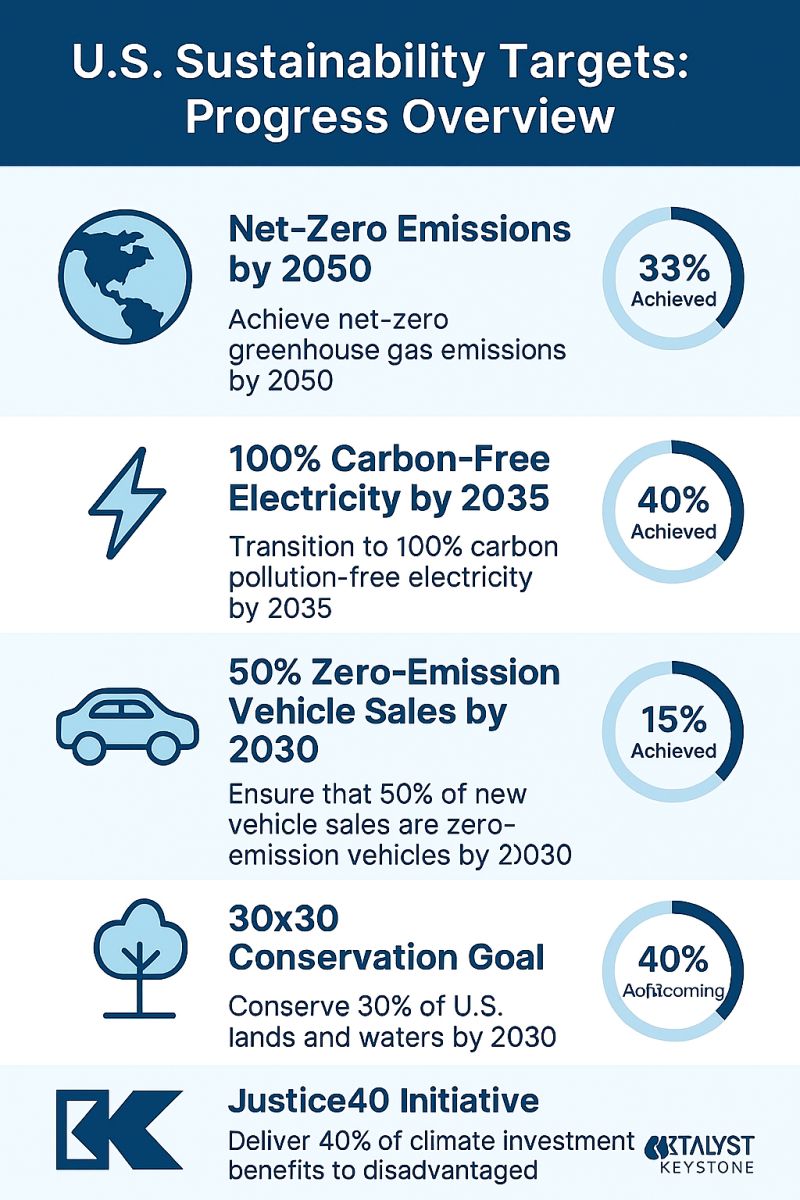
🌎 Net-Zero Ambition
Goal: Achieve net-zero emissions by 2050
Current Status: U.S. emissions were 17% below 2005 levels by 2023
Key Driver: Clean power shift, IRA incentives
Targets are timelines. Transformation is the true triumph.
⚡ Clean Power by 2035
Goal: 100% carbon-free electricity
Progress:
2023: ~41% from clean sources (solar, wind, nuclear, hydro)
Solar capacity: Quadrupled since 2015
Investment Push: $369B via Inflation Reduction Act
🚗 EV Nation
Goal: 50% new vehicle sales electric by 2030
2023 Stats:
EVs = 7.6% of total new U.S. car sales
500,000 EV chargers planned by 2030
♻️ Circular America
Goal: Cut food waste by 50% by 2030
Current:
30–40% of food still wasted
National Strategy launched in 2023 for plastics reduction & reuse
🌿 Nature Positive (30×30 Goal)
Goal: Conserve 30% of land & water by 2030
Status:
~12% of U.S. land currently protected
New partnerships with Indigenous and rural communities
⚖️ Justice40 Initiative
Goal: 40% of climate investments to disadvantaged communities
Covered Sectors:
Clean transit
Pollution clean-up
Water access
Workforce training
Tracking Tool: CEJST (Climate & Economic Justice Screening Tool)
📊 Climate Data Commitment
Goal: Enhance climate risk transparency
Push:
SEC climate disclosure rules (proposed)
Federal agencies adopting climate risk dashboards

Originally published on LinkedIn on 2025-04-09 06:22:18: https://www.linkedin.com/feed/update/urn%3Ali%3AgroupPost%3A82951-7315620051338825728
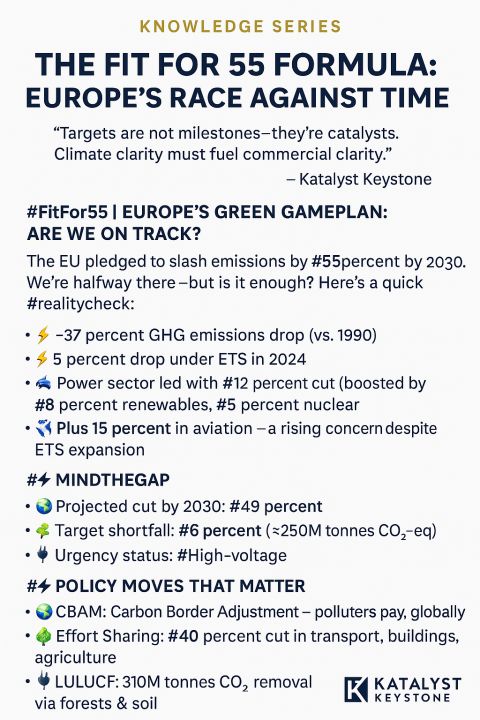
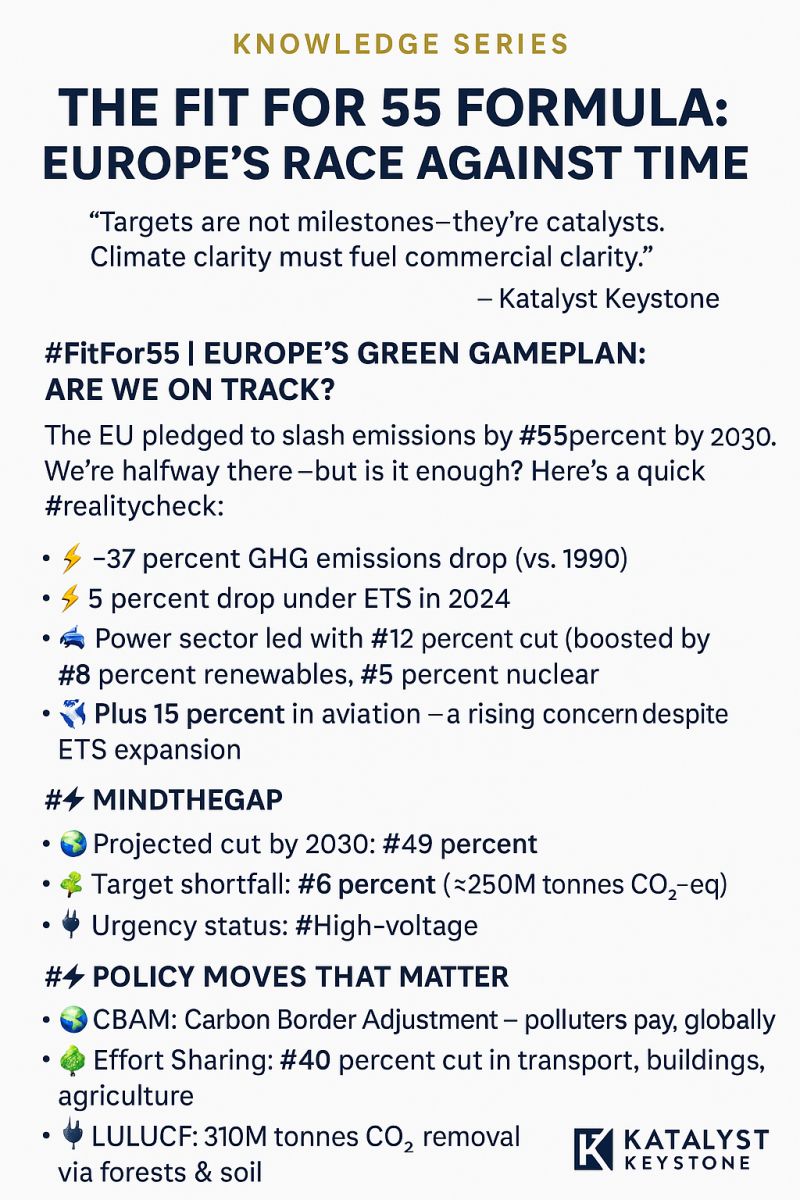
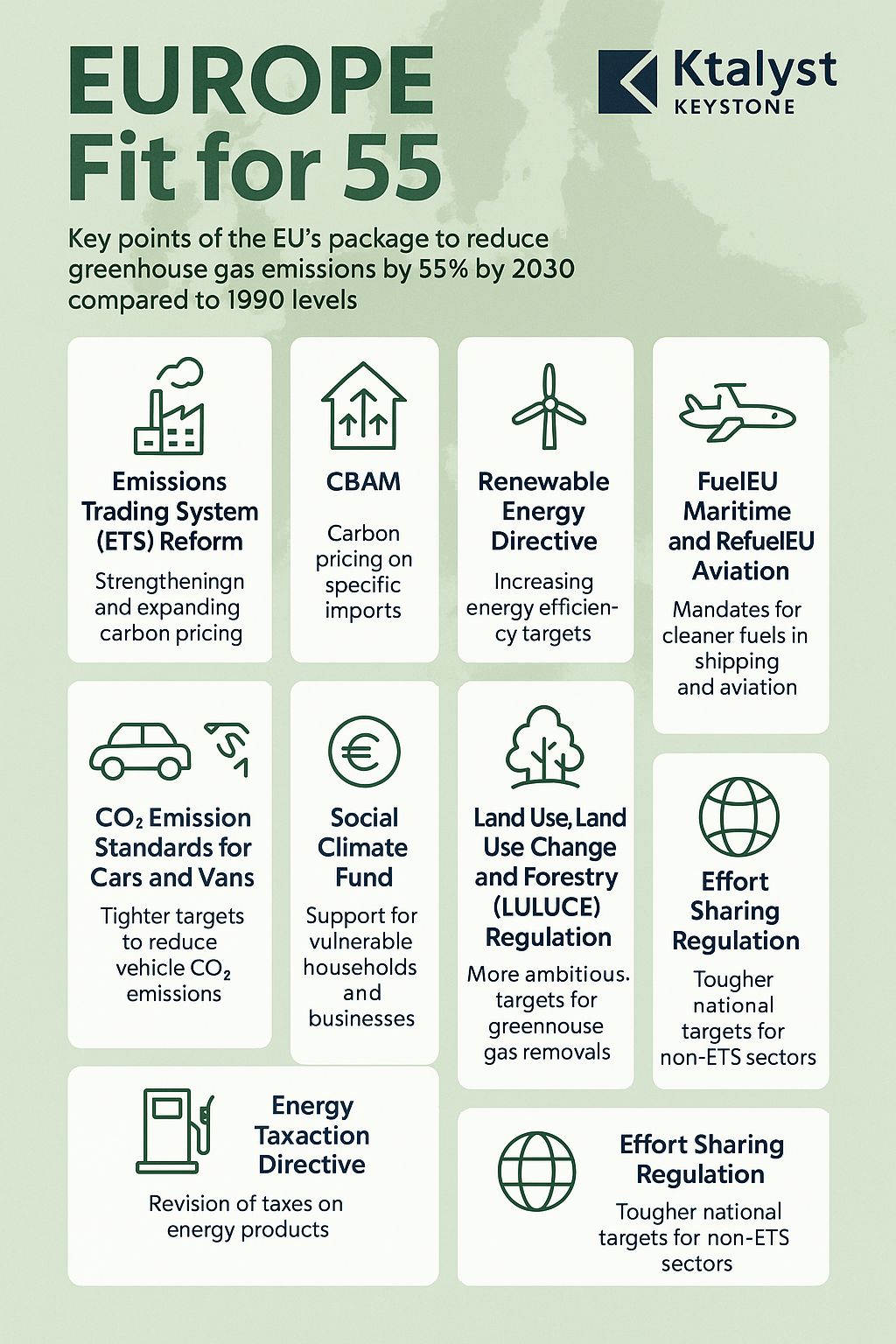
KatalystKnowledge | The FitFor55 Formula: Europe’s Race Against Time
Targets are not milestones—they’re catalysts. Climate clarity must fuel commercial clarity.
KtalystKeystone
FitFor55 | Europe’s Green Gameplan: Are We On Track?
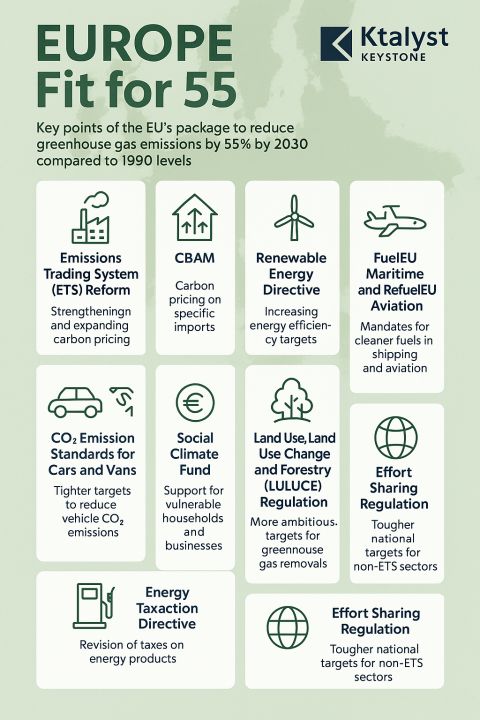
The EU pledged to slash emissions by 55percent by 2030. We’re halfway there—but is it enough? Here’s a quick realitycheck:
#️Progress So Far
⚡ Minus 37 percent GHG emissions drop (vs. 1990)
♻️ 5 percent drop under ETS in 2024
⚡ Power sector led with 12 percent cut (boosted by 8 percent renewables, 5 percent nuclear)
✈️ Plus 15 percent in aviation—a rising concern despite ETS expansion
🏭 Industry? Flat. Cement down, fertilizers up
MindTheGap
Projected cut by 2030: 49 percent
Target shortfall: 6 percent (≈250M tonnes CO₂-eq)
Urgency status: High-voltage
Policy Moves That Matter
🌍 CBAM: Carbon Border Adjustment – polluters pay, globally
🛣️ Effort Sharing: 40 percent cut in transport, buildings, agriculture
🌳 LULUCF: 310M tonnes CO₂ removal via forests & soil
🔌 Renewables Goal: 42.5 percent by 2030 (plus 2.5 percent aspirational boost to 45 percent)
Takeaway
The EU is moving—but not fast enough.
To reach the finish line:
Scale green hydrogen & biofuels
Electrify transport
Cut industrial emissions deeper
LeadershipLens
Green goals aren’t just numbers.
They’re strategy. They’re urgency. They’re our business future.
KtalystKeystone Insight:
We help you align business with policy—because climate clarity = profit clarity.
Originally published on LinkedIn on 2025-04-09 05:45:15: https://www.linkedin.com/feed/update/urn%3Ali%3AugcPost%3A7315610730253238272
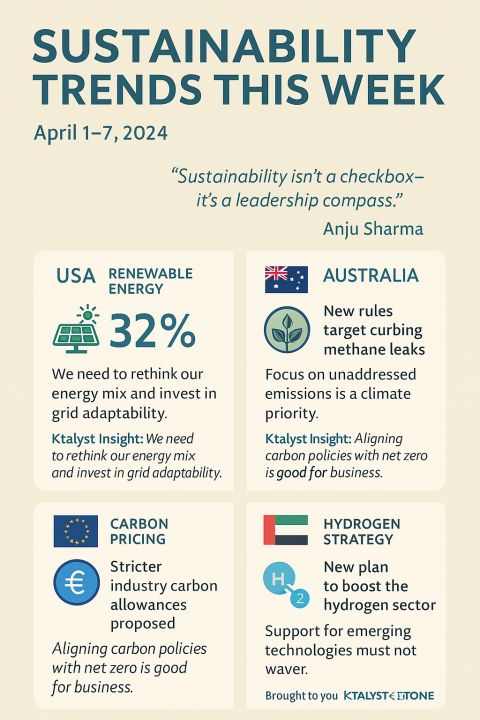
SustainabilityNow | Numbers That Shaped the Week 📊
In a world obsessed with noise 📢, we focus on what truly matters:
Data 📈. Direction 🧭. Decisions 🤝.
Here’s your 60_second ESG intel — through the sharp lens of KtalystKeystone 🔍:
⚡ Ard32% of Global Electricity Now Comes from Renewables (2024)
Driven by EVs, AI data centers & heatwaves
Ktalyst Insight:
Clean power without smart integration causes volatility.
We help businesses future-proof with resilient energy models that balance renewable input and grid flexibility.
🏭 8.5 Million Tonnes of CO₂ to Be Injected in Texas
EPA greenlights Occidental’s carbon storage wells
Ktalyst Insight:
Carbon capture isn’t a trophy — it’s a tool.
We guide leaders on carbon ROI, policy risk, and long-term decarbonization impact.
🇪🇺 EU Considers Global Carbon Credits to Meet 2040 Targets
Offsetting from forests in Brazil & Africa on the table
Ktalyst Insight:
You can’t outsource accountability or ethics.
We enable traceable, measurable, community-aligned offset strategies — beyond green optics.
🌍 Africa’s Climate Voice: “No Reverse Gear on Commitments
Push for finance equity, clean energy, just transitions
Ktalyst Insight:
Africa isn’t a follower — it’s a forerunner.
We help firms tap into clean-tech zones with local partnerships and impact-driven models.
🌡️ March 2025: Warmest Ever — 1.6°C Above Pre-Industrial Avg
20 of last 21 months breached 1.5°C threshold
Ktalyst Insight:
Resilience is the new insurance.
We embed climate forecasting into supply chains, infrastructure, and operations.
⛏️ Chile’s Lithium 2Push Faces Indigenous Pushback
Communities demand shared governance in Atacama
Ktalyst Insight:
True sustainability includes those who live on the land.
We co-design ethical sourcing policies with consent-led governance and justice principles.
💸 €25M Greenwashing Fine for Deutsche’s DWS
After $25M U.S. settlement for ESG misstatements
Ktalyst Insight:
If ESG is a checkbox — the penalty is a checkmate.
We help brands build audit-ready, data-backed ESG narratives with global compliance alignment.
💼 MUFG Appoints First EMEA Sustainability Chief
Strategic move after UNNZBA exit
Ktalyst Insight:
A title isn’t a transformation — implementation is.
We drive ESG ownership across teams with board-level playbooks, measurable KPIs, and incentive alignment.
KtalystQuoteOfTheWeek 💬
Sustainability isn’t a finish line — it’s the fuel line for future-ready growth.
Anju Sharma, Ktalyst Keystone

Originally published on LinkedIn on 2025-04-08 07:02:18: https://www.linkedin.com/feed/update/urn%3Ali%3AgroupPost%3A2474261-7315267732160110594

