E20_Traceability: Missing Consumer Question?
Dr. Anju Sharma | MrsSustainability
E20 is being positioned as an important fuel transition. The larger policy logic is clear: energy security, reduced crude import dependence, farmer income support, and cleaner fuel pathways.
But there is one question that still needs deeper public discussion:
Why is E20 traceability not visible to the consumer?
At the pump, the consumer is not simply buying fuel.
The consumer is buying trust.
Yet today, a vehicle owner has limited ability to independently verify what is entering the tank.
This raises several practical questions:
What is the actual ethanol percentage in the fuel being dispensed?
Is it exactly E20, or does it vary within an allowed tolerance?
Was the fuel blended at the refinery, terminal, depot, or another approved point?
Was the ethanol properly sourced, denatured, transported, and stored?
Was the tanker sealed, tracked, and verified before unloading?
Was the retail outlet tank tested for water contamination?
Was the pump-level batch tested before consumer dispensing?
Is the fuel quality certificate linked to the batch being sold?
Can the consumer access that certificate?
If a vehicle faces mileage loss or engine issues, who verifies whether fuel quality was a contributing factor?
The challenge is not that ethanol blending is inherently wrong.
The challenge is that fuel quality is invisible to the end user.
A consumer cannot look at the nozzle & distinguish between:
Correctly blended E20
Under-blended fuel
Over-blended fuel
Water-contaminated fuel
Poorly stored ethanol-blended fuel
Fuel affected by handling or logistics gaps
Fuel containing unintended contaminants
Testing exists.
But consumer-facing traceability does not. That_Gap_Matters.
As ethanol-blended fuel is more sensitive to water, storage discipline, handling quality, and blend accuracy than conventional petrol. When the molecule changes, the assurance system also needs to change.
The real question is not only:
Is E20 being supplied?
The real question is:
Can E20 be traced from source to tank with enough transparency for the consumer to trust it?
E20 system should ideally provide:
Blend percentage disclosure
Batch-level traceability
Pump-level quality certification
Water-content assurance
Random independent testing
Vehicle compatibility guidance
Clear warranty accountability
A consumer grievance pathway
A mechanism to test disputed fuel samples
This is not an anti-E20 position.
It is a pro-transparency position.
If the fuel transition is national, the proof system should also be national.
If the molecule is changing, the consumer should not be left with only faith at the nozzle.
E20 needs more than supply.
It needs visible custody.
It needs consumer-facing proof.
Trust in fuel quality cannot remain locked inside depots, files, & labs.
It must travel all the way to the pump.
KtalystFuelFlex
FuelMix
Originally published on LinkedIn on 2026-07-13 10:49:40: https://www.linkedin.com/feed/update/urn%3Ali%3Ashare%3A7482385756313784320
NamasteIndia:Put_Hydrogen_o_Track.
Dr. Anju Sharma
MrsSustainability | KtalystInsights
India doesn’t “catch up”,
India sets the pace.
Today, India didn’t just join the hydrogen-train club
we arrived with a broad-gauge, 10_coach, 2400kW statement.
NamasteIndianRailways has completed its first indigenous hydrogen-powered train, developed by RDSO and prepped for pilot operations.
It is now the world’s longest hydrogen train built on a Broad-Gauge platform and it emits nothing but water vapor.
No smoke. No soot. No compromise.
Just clean traction for a country that intends to grow without guilt.
🌍 Meanwhile, Around the World…
Germany
A 27-train hydrogen fleet is delayed to 2026 as tech and production challenges stack up.
Europe
Alstom is pausing parts of its hydrogen program due to funding shifts — existing orders continue, but expansion slows.
USA & Japan
Hydrogen rail pilots continue (California’s ZEMU, Japan’s HYBARI), but scale-up is cautious.
What Makes Hydrogen Trains Special?
✔ Zero CO₂ — only water vapor
✔ Long range, quick refuel
✔ Ideal for non-electrified tracks
✔ Renewable-ready (true zero when paired with green hydrogen)
🌱 Challenge
Hydrogen infrastructure isn’t cheap.
Fuel cells are still evolving.
But every revolution starts with one bold prototype.
Source / shared link: https://www.republicworld.com/india/another-step-towards-atmanirbhar-bharat-railway-minister-ashwini-vaishnaw-announce-completion-of-hydrogen-train-project?utm_source=chatgpt.com
Originally published on LinkedIn on 2025-12-11 13:49:15: https://www.linkedin.com/feed/update/urn%3Ali%3Ashare%3A7404879948001529856
🏛️ The Power & Pitfalls of IndependentDirectors in Corporate Governance
🔹 Independent directors are the guardians of corporate governance, ensuring transparency, accountability, and ethical decision-making. Yet, history shows that their effectiveness is often tested in times of crisis. Here are some lessons from the boardroom:
✅ Success Stories: When Independent Directors Stepped Up
🛞 Tata Nano Project – When land acquisition and operational hurdles threatened Tata’s “People’s Car,” independent directors played a crucial role in navigating the crisis.
🏢 Infosys Leadership Shuffle (2013) – The return of Narayana Murthy, accompanied by his son, sparked concerns over governance norms, pushing independent directors to uphold fairness and transparency.
🚗 Maruti Suzuki Gujarat Plant (2014) – A move that could have impacted minority shareholders was scrutinized by independent directors, reinforcing the need for stakeholderprotection.
🚨 Corporate Failures: When Oversight Fell Short
📉 Satyam Scandal (2009) – A corporate fraud that exposed how ineffective oversight can erode trust and devastate businesses.
⚖️ Nagarjuna Finance Scandal (2009) – Legal trouble for an independent director led to mass resignations across corporate India, raising concerns about their liability.
💰 Byju’s Financial Crisis (2024) – Governance failures at India’s edtech giant underscored why independent directors must challenge financial mismanagement proactively.
These cases reveal a clear message: IndependentDirectors are not just ornamental figures—they are critical to business ethics and sustainability. However, their ability to function effectively hinges on:
🔹 Real independence from promoters and management
🔹 Robust regulations that protect their autonomy
🔹 A corporate culture that values their role in decision-making
💬 What do you think? Are independent directors truly empowered in today’s corporate landscape? Let’s discuss!
Read more at:

Originally published on LinkedIn on 2025-02-18 05:06:55: https://www.linkedin.com/feed/update/urn%3Ali%3AugcPost%3A7297481688115249152
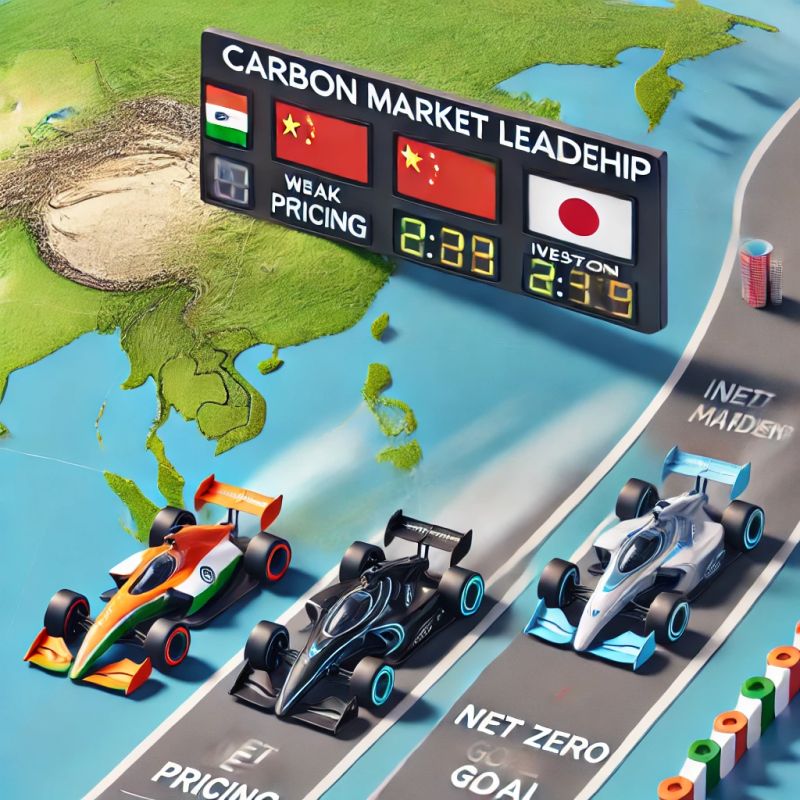
Asia’s Carbon_Market_Race: Who’s Leading and Who’s Lagging?” 🌏💨
Carbon markets are booming across Asia as nations compete to turn emissions into economic opportunities. But with different strategies at play, who’s actually making an impact, and who’s just carbon hustling? Let’s break it down data-first.
🇨🇳 China: The World’s Biggest Carbon Market
✅ Launched in 2021, covering 40% of national emissions.
✅ Expanding to heavy industries like cement & steel.
🚨 Challenge: Weak carbon pricing (~$8/ton) reduces impact. (Source: ICAP, 2024)
🏆 Verdict: Huge scale but weak incentives.
🇮🇳 India: The Emerging Carbon Giant
✅ Legislated in 2022, evolving into a regulated market.
✅ Integrating Renewable & Energy Savings Certificates by 2025.
🚨 Challenge: No firm carbon pricing yet. (Source: Ministry of Power, 2024)
🏆 Verdict: High potential, still in execution mode.
🇸🇬 Singapore: The Smart Carbon Hub
✅ Rising carbon tax from $5/ton (2022) to $50-80/ton by 2030.
✅ Pioneering biodiversity credits for ecosystem conservation.
🚨 Challenge: Small domestic market, reliant on external trading. (Source: Singapore Gov, 2024)
🏆 Verdict: Innovating beyond carbon into full environmental markets.
🇯🇵 Japan: The Tech-Driven Trader
✅ Carbon trading exchange launched in 2023 with investor backing.
✅ Banks investing heavily in climate advisory firms.
🚨 Challenge: Needs stricter corporate compliance. (Source: METI Japan, 2024)
🏆 Verdict: Strong financial backing but low enforcement
🇮🇩 Indonesia: The Controversial Play
✅ First global carbon credit transactions tied to energy projects.
✅ Huge potential from rainforests & nature-based solutions.
🚨 Challenge: Heavy reliance on fossil fuel-linked credits raises greenwashing concerns. (Source: Financial Times, 2024)
🏆 Verdict: Big opportunity, but investor skepticism is rising.
🇲🇾 Malaysia: The Carbon Market Architect
✅ Bursa Carbon Exchange (BCX) launched in 2022, first Shariah-compliant carbon trading platform.
✅ Voluntary Carbon Market (VCM) enabling corporate offsets.
✅ Carbon Tax by 2026 for high-emission industries.
🚨 Challenge: Needs stronger policy enforcement & carbon pricing clarity. (Source: PwC, 2024)
🏆 Verdict: Well-structured but awaiting execution impact.
📊 Who’s Winning the Carbon Market Race?
China = Biggest but Weak Pricing
India = High Potential, Early Stage
Singapore = Smartest Model, Small Scale
Japan = Investment-Driven, Needs Enforcement
Indonesia = High Risk, High Reward
Malaysia = Structuring Well, Needs Execution
🚀 The Future? Asia’s carbon markets must balance financial opportunities with real emission cuts—or risk becoming just another greenwashing tool.
👉 Which country’s approach will set the global standard?
CarbonMarkets AsiaLeadership NetZero Sustainability GreenInvesting ClimateAction

Originally published on LinkedIn on 2025-01-29 07:31:38: https://www.linkedin.com/feed/update/urn%3Ali%3AgroupPost%3A82951-7290270350309756931
NamasteGreenIndia’s DDGS Export Boom: USD 717 Million Market, But 2025 Holds the Key
The Surge: A 314% Export Boom
India is making waves in the global Distillers Dried Grains with Solubles (DDGS) market, a key ethanol byproduct used as animal feed. Here’s the story behind the numbers:
📦 1,212 shipments of DDGS in the last 12 months (314% growth).
🌏 Major buyers:
🇻🇳 Vietnam: 51% share.
🇳🇵 Nepal: 21% share.
🇺🇸 United States: 7% share.
💰 Market Value:
2023: USD 420.67 million.
2032 (Projected): USD 717.81 million (CAGR: 6.17%).
The Challenge: Falling Prices
Despite the export surge, the industry is battling a steep price drop:
🏷️ Domestic DDGS prices: #₹14–15/kg (~USD 0.17–0.18).
🌍 Global competition and oversupply are hitting margins hard.
1. Expanded Production Capabilities:
With ethanol blending targets set to increase to 20% by 2025, India’s DDGS production will reach record levels.
2. Market Diversification:
New export agreements with Africa, Southeast Asia, and Latin America are expected to reduce over-reliance on existing markets like Vietnam and Nepal.
3. Government Interventions:
Policies promoting minimum price guarantees and export incentives are likely to stabilize DDGS prices.
Focus on value-added DDGS products, such as enriched feed, to attract premium markets.
4. Sustainability Push:
Growing demand for sustainable feed solutions globally aligns perfectly with DDGS as a cost-effective, eco-friendly option.
Indian DDGS could gain significant traction in European markets following stricter feed sustainability regulations.
5. Technological Advancements:
Adoption of advanced processing techniques will improve DDGS quality and reduce production costs, ensuring competitiveness in global markets.
India is turning its ethanol growth into a global export advantage, but to sustain the momentum in 2025 and beyond:
🛠️ Strengthen Domestic Support: Build strategic reserves to manage price fluctuations.
🌍 Capture New Markets: Target countries with rising feed demand like Brazil, Indonesia, and Nigeria.
🚀 Lead the Sustainability Charge: Establish India as a key supplier of sustainable animal feed.
Why It Matters
India’s ethanol-driven DDGS market is poised for exponential growth in 2025. By embracing innovation, diversification, and sustainability, India can become a global powerhouse in the animal feed sector while ensuring long-term industry stability.
💬 Let’s connect to explore how IndiaExports and EthanolEconomy are setting the stage for a transformative 2025. 🚀
Originally published on LinkedIn on 2025-01-15 19:30:29: https://www.linkedin.com/feed/update/urn%3Ali%3Ashare%3A7285377825862283264

