KtalystESGDiaries: Europe Retuning ESG Investments?
Dr. Anju Sharma•MrsSustainability
For years, companies were being judged by people most boards could not even properly name.
MSCI Sustainalytics ISS S&P Moody’s Refinitiv Bloomberg. CDP EcoVadis.
Not regulators.
Not auditors.
Not stock exchanges.
Yet their ESG scores could shape:
✓ investor appetite
✓ lender comfort
✓ supplier confidence
✓ portfolio inclusion
✓ corporate reputation
That is exactly why Europe has stepped in, because once a score starts influencing money, the person giving the score is no longer just “an opinion provider.” They become the financialinfluencers. EU has finally said, fine the scorers must also face scrutiny.
The EU ESG Ratings Regulation entered into force on 1 January 2025 and starts applying from 2 July 2026, when ESMA begins supervising ESG rating providers operating in the Union. Existing providers face a key ESMA notification deadline of 2 August 2026, while some small providers get until 2 November 2026.
1. So who are these raters, really?
They are the firms whose ESG opinions sit behind thousands of dashboards, funds, screens, and risk filters.
ESMA’s own evidence-gathering found the names most often cited in the market were MSCI, Morningstar/Sustainalytics, ISS, S&P, Moody’s/Vigeo Eiris, Refinitiv, RepRisk, CDP, and Bloomberg.
2. Why is Europe regulating them?
Because the market got uncomfortable with one awkward reality:
Scores were influencing capital, but the machinery behind them often stayed fuzzy.
Different providers could rate the same company very differently. ESMA has highlighted both the market relevance of ESG ratings and the divergence across providers.
3. What is the regulation really targeting?
Not disagreement.
Opacity.
The new regime is about transparency, governance, conflicts of interest, and methodological clarity. Europe is not ordering every rater to think alike. It is saying they cannot operate like black boxes while shaping financial decisions.
4. Why should companies care?
This is not “just a rating agency issue.
It will flow into:
✓ investor due diligence
✓ asset manager vendor reviews
✓ sustainability data discipline
✓ boardroom response quality
✓ trade and financing conversations
A glossy ESG deck may impress LinkedIn.
It will not survive a system that starts asking:
Who scored you, how, and on what logic?
5. What changed in one sentence?
The ESG market is moving from:
What score did you get?
to
Why should anyone trust the people scoring you?
KtalystKlue™
Markets can tolerate disagreement.
They get nervous when influence hides behind methodology fog.
KtalystBottomLine
Europe has not declared war on ESG ratings.
It has declared war on unexamined influence.
And honestly, about time.
MrsSustainability KtalystESGDiaries KtalystInsights™ KtalystKlues™ KtalystKeystone DataComa ESGRegulation ESMA SustainableFinance
Originally published on LinkedIn on 2026-04-15 08:18:04: https://www.linkedin.com/feed/update/urn%3Ali%3AgroupPost%3A1910576-7450095083242123265
🚨 Moody’s & Sustainability: ESG is Now a Credit Rating Factor! 📊💚
With #$40T in ESG assets under management, Moody’s is reshaping how financial markets assess creditworthiness. No longer just about profits & losses, a company’s sustainability risks now directly impact credit ratings, borrowing costs, & investment potential.
🔍 How Moody’s Integrates Sustainability into Credit Ratings
🟢 ESG factors impact the credit ratings of 18% of companies & governments rated by Moody’s. (Source)
📊 Issuer Profile Scores (IPS): Measures 15 ESG subfactors (climate risk, governance strength, social responsibility).
📊 Credit Impact Scores (CIS): Rates how ESG performance affects a company’s credit rating & risk profile.
📊 Second Party Opinions (SPOs): Validates Green Bonds & Sustainability-Linked Loans, ensuring funds are climate-aligned.
🔹 Moody’s now assesses over 3,000 entities based on ESG factors.
💰 ESG & Financial Impact: Why Credit Ratings Depend on Sustainability
🏦 Banks & Investors Are Watching
📌 Companies with poor ESG ratings face higher borrowing costs, as investors demand sustainability-linked loans & bonds.
📉 Carbon-Intensive Companies Are High-Risk
📌 Firms with high Scope 3 emissions face 15-20% valuation risks due to carbon pricing & regulatory changes. (Source)
🚀 Sustainability-Linked Bonds & Loans Are Surging
📌 #$1.6T in sustainability-linked bonds & loans have been issued, with Moody’s validating green claims to prevent greenwashing. (Source)
🌍 Moody’s ESG Leadership: Recognitions & Market Influence
🏆 FTSE4Good Index Inclusion (6 Years Running) → Recognizing top ESG performers.
🏆 EcoVadis Bronze Medal → Top 35% of global companies for sustainability.
🏆 CDP Supplier Engagement Leader → Among the top 4% of companies driving supply chain decarbonization. (Source)
🔥 The Takeaway: Sustainability is No Longer Optional
🟢 18% of Moody’s rated companies now have ESG-driven credit adjustments.
🟢 Investors demand transparent sustainability metrics before lending.
🟢 Greenwashing is no longer profitable—credit ratings now hold companies accountable.
📢 Should ESG be an even bigger factor in credit ratings? Let’s discuss below! 👇

Originally published on LinkedIn on 2025-02-27 04:39:26: https://www.linkedin.com/feed/update/urn%3Ali%3AgroupPost%3A82951-7300736262829711360
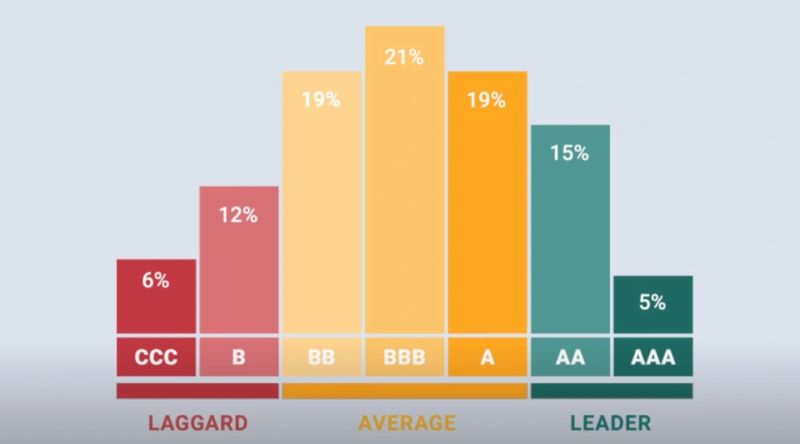
📚 KnowledgeSeries: Understanding MACI SustainabilityRatings
With ESG investing surpassing $40 trillion, sustainability metrics are no longer optional—they directly impact financial markets. But traditional ESG ratings often miss the biggest contributor to emissions: Scope 3 (supply chain & product lifecycle).
Enter MACI (Morningstar Absolute Carbon Impact)—a next-gen sustainability metric designed to measure real carbon impact, beyond corporate disclosures.
🔎 What is MACI?
📌 MACI (Morningstar Absolute Carbon Impact) is a carbon-focused rating that quantifies total emissions, unlike traditional ESG scores that rely on self-reported data.
✅ Scope 1 – Direct emissions from company operations
✅ Scope 2 – Indirect emissions from purchased energy
✅ Scope 3 – Supply chain & product lifecycle emissions (often 80-95% of total emissions)
📊 Only 5% of companies currently disclose full Scope 3 data, despite it making up 75% or more of their total carbon footprint. MACI ensures investors see the full picture.
🌍 Why is MACI a Game-Changer?
🟢 Exposes True Carbon Impact
📌 Over 90% of S&P 500 companies report ESG data, but less than 30% include Scope 3 emissions. MACI forces transparency by measuring actual environmental impact.
💰 Links Carbon Impact to Financial Risk
📌 Firms with high Scope 3 emissions face 10-15% valuation risks due to carbon pricing, regulation, and shifting consumer demand. Investors using MACI can identify & price these risks early.
📊 Goes Beyond Traditional ESG Ratings
📌 MSCI, Sustainalytics, & CDP rely on corporate sustainability claims—but MACI measures actual emissions data. This removes greenwashing from ESG scores.
🚀 Guides Net Zero Investments
📌 81% of global companies have Net Zero goals, but only 19% have credible transition plans. MACI identifies companies actually reducing emissions, ensuring investors back real sustainability leaders.
💡 How Financial Markets Depend on MACI
🏦 Sustainable Finance
📌 #$500 billion in Green Bonds & ESG Funds rely on sustainability scores. MACI ensures these funds actually reduce carbon impact.
📉 Investment Risk Assessment
📌 Climate risk is now considered a financial risk. Regulated markets (EU, US, UK, APAC) require stricter carbon disclosure. MACI helps investors assess exposure before risks impact stock prices.
📜 Regulatory Compliance
📌 The EU Taxonomy, SEC Climate Disclosures, & IFRS ESG Standards will require comprehensive Scope 3 reporting. MACI aligns with these frameworks, ensuring compliance-ready investments.
🔥 The Takeaway
As corporate greenwashing grows, investors need credible carbon metrics that go beyond PR campaigns. MACI is setting the new standard for data-driven sustainability investing.

Originally published on LinkedIn on 2025-02-27 01:47:03: https://www.linkedin.com/feed/update/urn%3Ali%3AgroupPost%3A9088131-7300692883345412096
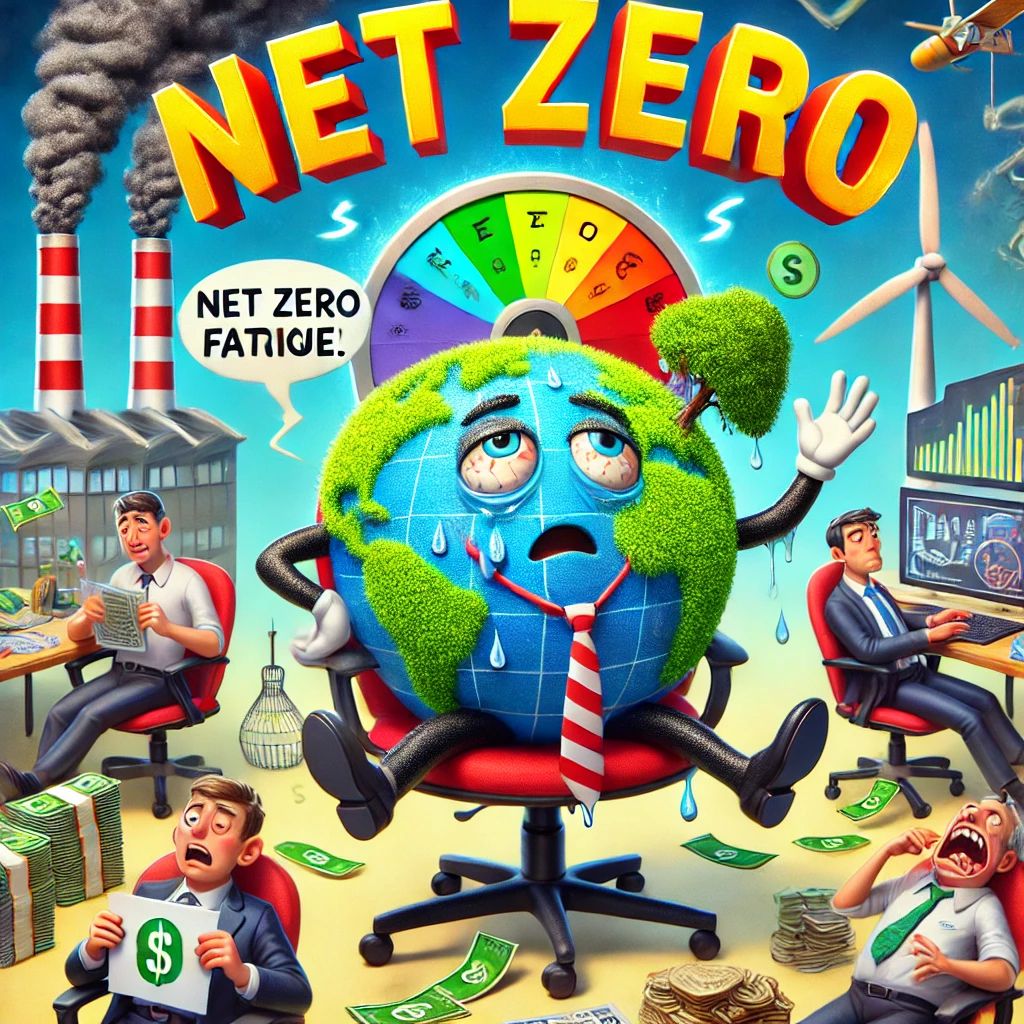
NetZeroFatigue: When GoingGreen Feels Like RunningOnEmpty 🌍
#🟢 Ambiguity Fatigue: “Lost in a maze of green fog!
72% of companies lack clear definitions for Net Zero goals. (Source: CDP, 2023)
Only 39% have science-based targets for Net Zero. (Source: SBTi, 2023)
Impact: Stakeholders are left confused, eroding trust and delaying action.
#🟠 Greenwashing Fatigue: “All talk, no trees!
63% of consumers distrust corporate Net Zero claims. (Source: Edelman Trust Barometer, 2024)
Greenwashing accusations grew 55% in 2023, with $40M+ in fines. (Source: UNEP, 2023)
Impact: Public skepticism grows, putting genuine efforts under scrutiny.
#🔵 Financial Fatigue: “Going green costs more green!
Achieving Net Zero needs #$4 trillion/year in clean energy investment by 2030. (Source: IEA, 2022)
Developing nations face a #$1.3 trillion/year funding gap. (Source: WorldBank, 2023)
Impact: Resource inequity slows global progress.
#🟡 Offset Dependence Fatigue: “Band-aids don’t fix bullet holes!
92% of carbon offset projects fail to deliver promised benefits. (Source: Guardian, 2023)
The global offset market hit #$2 billion in 2023, despite ineffectiveness. (Source: ICAP, 2023)
Impact: Over-reliance on offsets delays meaningful emission cuts.
#🟣 Technological Fatigue: “Waiting for tech miracles that don’t compute!
Carbon capture removes only 0.1% of global emissions today. (Source: IPCC, 2023)
By 2030, tech solutions may account for just 10-20% of required reductions. (Source: IEA, 2023)
Impact: Over-reliance on unproven tech wastes precious time.
#🔴 Public Engagement Fatigue: “Climate posters don’t pay the bills!
51% of citizens feel disconnected from national climate strategies. (Source: Pew Research, 2023)
Only 29% trust their government’s Net Zero plans. (Source: WEF, 2024)
Impact: Reduced public pressure stalls policy implementation.
#🟤 Equity Fatigue: “When the rich pollute, the poor pay!
The richest 10% emit over 50% of global emissions, while the poorest 50% contribute just 12%. (Source: Oxfam, 2022)
Developed nations pledged $100B/year in climate finance but delivered only #$83B in 2022. (Source: UNFCCC, 2023)
Impact: Inequity breeds global mistrust, slowing cooperation.
KeyTakeaway 🌍
NetZeroFatigue is real, driven by ambiguity, inequity, and overpromises. To truly go green, we need clearGoals, verifiedAction, and a whole lot of trust.
👉 Let’s make Sustainability about less spin and more action!
NetZero ClimateLeadership SustainabilityHumor ESG

Originally published on LinkedIn on 2025-01-24 14:13:50: https://www.linkedin.com/feed/update/urn%3Ali%3Ashare%3A7288559629452677121

