Greenwashing a Behaviour: What Makes You Choose It?
Dr. Anju Sharma MrsSustainability
(Inspired by the Forbes EZ Lynk write-up)
Greenwashing: Not just in your brochure.
✓ Sometimes it is product design.
✓ Sometimes it is a loophole.
✓ Sometimes it is a customer promise.
✓ Sometimes it is a digital tool that quietly says,
I only enabled the option. I did not choose how people used it.
A recent Forbes report on the DOJ demanding data from Apple, Google, Amazon & Walmart on more than 100K users linked to the EZ Lynk car-tuning app opens a bigger question than one company, one app, or one emissions case.
For me, the deeper sustainability question is:
When does innovation become evasion?
Every company loves the word innovation. It sounds clean, modern & future-ready. Yet innovation without behavioural accountability can become a polished escape route.
A product may be sold as freedom, tuning, diagnostics, flexibility or customer empowerment.
Yet when used differently, the same product may weaken emissions compliance, increase environmental harm & shift responsibility from manufacturer to user.
This is where greenwashing becomes more than false advertising, now it’s behaviour.
✓It begins when a company knows the grey zone & still chooses to live inside it.
✓It begins when ambiguity becomes profitable.
✓It begins when compliance is treated as a legal obstacle, not a design principle.
The EZLynk casestudy for new anatomy of greenwashing.
It’s no longer limited to “eco-friendly” claims on packaging.
It can sit inside software, app stores, aftermarket ecosystems, customer forums, data trails, hardware plugs & coded permissions.
Greenwashing: LabelToLogic
For serious companies, greenwashing risk is not just a reputation threat.
It can become a governance advantage.
The real question is no longer:
Can we market this as green?
It is:
Can we prove it cannot easily become dirty?
A responsible company must ask:
✓ Is misuse foreseeable?
✓ Are guardrails built in?
✓ Are users & distributors aligned?
✓ Is the claim backed by measurable proof?
Greenwashing is a behavioural choice.
It chooses convenience over correction, silence over warning, & clever wording over ethical clarity.
The future ESG question is not only:
What did you emit?
It is also:
What did you enable?
So the shift is clear:
✓From green claims to green controls.
✓From ESG storytelling to ESG engineering.
✓From “we didn’t intend misuse” to “we designed against misuse.
My view is simple:
Greenwashing is not born in marketing.
It is born in behaviour.
The cure is not a slogan.
The cure is cleaner courage”. Dr. Anju Sharma
MrsSustainability KtalystInsights™ KtalystKlues™ KtalystGreenLove Ktalyst5Ps5Es
https://lnkd.in/dbWH7Deb
Source / shared link: https://www.forbes.com/sites/thomasbrewster/2026/05/14/government-demands-apple-and-google-identify-over-100000-users-of-car-app/
Originally published on LinkedIn on 2026-05-16 02:28:42: https://www.linkedin.com/feed/update/urn%3Ali%3Ashare%3A7461241187933241345
Sustainability as a CompetitiveAdvantage: Data-Backed Insights from Market Leaders
How Green Strategies Drive Profitability and Market Dominance
1️⃣ The Business Case: Numbers Don’t Lie
Sustainability is no longer just CSR—it’s a profit-driver. Companies leading in ESG (Environmental, Social, Governance) outperform competitors in key metrics:
67% of consumers prefer sustainable brands, and 50% are willing to pay a premium (Nielsen)
ESG-focused firms achieve 23% higher return on assets (Harvard Business School)
Sustainable investments reached #$30.7 trillion globally (Global Sustainable Investment Alliance, 2023)
Green supply chains reduce costs by 9% to 16% (McKinsey & Co.)
2️⃣ CaseStudy: Unilever – Sustainability Driving Growth
The Challenge:
Stagnant growth, rising operational costs, and increasing consumer skepticism.
TheStrategy:
✅ Launched Sustainable Living Plan – focusing on carbon neutrality, waste reduction, and ethical sourcing
✅ Introduced eco-friendly products – biodegradable detergents, refillable packaging
✅ Integrated sustainable supply chain – ethical sourcing, fair wages
TheOutcome:
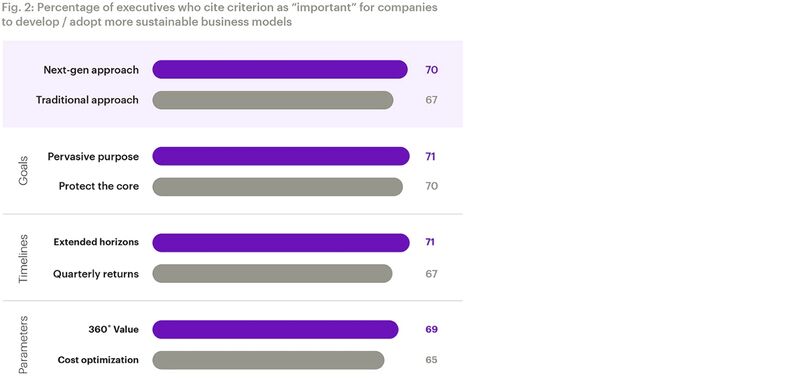
Sustainable brands grew 69% faster than Unilever’s traditional portfolio
Cost savings of #€1.2 billion from energy efficiency & waste reduction
65% reduction in CO2 emissions while maintaining profit growth
3️⃣ The TeslaEffect: Sustainability as a Disruptor
TheChallenge:
EVs were costly, niche, and lacked mass adoption.
TheStrategy:
✅ Positioned EVs as luxury, creating aspirational demand
✅ Invested in battery innovation & circular economy for cost reduction
✅ Built renewable-powered gigafactories for operational efficiency
TheOutcome:
Stock value surged 5,500% in a decade (NASDAQ)
25% gross margin per vehicle, higher than traditional automakers (Toyota: 16%)
Industry-wide shift: Ford, GM, and Volkswagen investing heavily in EVs
4️⃣ IKEA: Circular Economy for Cost & Brand Loyalty
TheChallenge:
Fast furniture was unsustainable, affecting brand reputation.
TheStrategy:
✅ Shifted to circular design, using recyclable & repairable materials
✅ Built energy-positive stores, investing in solar & wind farms
✅ Launched buy-back programs, promoting a second-hand economy
TheOutcome:
50% carbon footprint reduction while increasing revenue
#$3 billion savings from renewable energy investments
World’s largest buyer of sustainable wood
5️⃣ Data-Proven Takeaways: Making Sustainability a Business Advantage
🔹 Sustainability is a growth driver – ESG-focused companies outperform peers by 20% in stock market returns (McKinsey)
🔹 Green innovation cuts costs – Sustainable practices lower operational costs by up to 16% (Deloitte)
🔹 Consumers reward sustainability – 77% of millennials consider environmental impact when purchasing (Forbes)
🔹 Investors prioritize ESG – 88% of global investors consider sustainability a key factor (Morningstar)
Originally published on LinkedIn on 2025-03-18 16:14:07: https://www.linkedin.com/feed/update/urn%3Ali%3AgroupPost%3A82093-7307796454041935875
🚨 “Sustainability is No Longer Optional: How Australia is Leading the Corporate GreenShift” 🌏♻️
Australia’s corporate sector is making headlines as a global leader in sustainability readiness, driven by strict upcoming climate disclosure laws set to roll out in January 2025. A Capgemini report highlights that Australian businesses are outpacing their global counterparts in energy tracking, workforce sustainability training, and green compliance efforts.
📊 KeyFindings: What’s Driving Australia’s Corporate Sustainability?
✅ RegulatoryPressure: Companies are proactively integrating sustainability due to strict government mandates and penalties for non-compliance. (Capgemini, 2024)
✅ ESGMetricsMatter: Over 70% of Australian businesses now measure their energy consumption, a significant rise compared to 45% globally. (Capgemini, 2024)
✅ BoardroomShift: 67% of senior executives now see sustainability as a profitability driver, up from 40% in 2022. (Capgemini, 2024)
✅ WorkforceTraining: Employees at 80% of Australian companies are undergoing sustainability-focused training, double the global average. (Capgemini, 2024)
📌 CaseStudy: Woolworths’ Sustainable Growth Strategy
Australian retail giant Woolworths is setting a benchmark for sustainability with:
✔️ CarbonNeutralGoal: Targeting net-zero emissions by 2050 with major investments in solar energy & supply chain decarbonization. (Woolworths Sustainability Report, 2024)
✔️ FoodWasteReduction: Diverted 100% of food waste from landfills through redistribution & composting programs. (Woolworths, 2024)
✔️ GreenTransport: Piloting 100% electric delivery fleets, reducing fuel dependency. (Woolworths, 2024)
⚖️ The Global Perspective: How Does Australia Compare?
🔹 Australia 🇦🇺: Leading in policy-driven corporate sustainability with mandatory ESG disclosure laws from 2025.
🔹 US 🇺🇸: Lags in mandatory ESG rules; SEC’s proposed climate disclosure law is facing resistance.
🔹 India 🇮🇳: BRSR mandatory for top 1,000 firms, but enforcement remains a challenge.
🔹 EU 🇪🇺: Corporate Sustainability Reporting Directive (CSRD) enforces strict green reporting, with huge penalties for greenwashing.
🔎 KeyLearnings: What Should Businesses Do?
📌 ProactiveCompliance: Companies must integrate sustainability before regulations force costly last-minute changes.
📌 BoardroomEngagement: Sustainability must shift from CSR to a core profitability strategy.
📌 DataTransparency: ESG data must be measurable & verifiable to avoid greenwashing risks.
🏆 KeyTakeaway
📌 Sustainability could be a compliance headache or a competitive advantage.
📌 Sustainability should be backed by real action, not just reports.
📌 Sustainability would be a financial risk if businesses don’t act before regulations hit.

Originally published on LinkedIn on 2025-02-22 05:21:28: https://www.linkedin.com/feed/update/urn%3Ali%3AgroupPost%3A9270968-7298934901536428032

