How_Hyperscaler_Capex Is Repricing_Global_Capital
Dr. Anju Sharma MrsSustainability
When one sector absorbs capital at sovereign scale, risk travels through everyone else’s cost of money.” Dr. Anju Sharma
Everyone is asking if AI will take their job.
Wrong question.
Ask what happens to your interest rate when Big Tech starts borrowing like sovereign nations.
AI isn’t software floating in the cloud. It’s heavy metal. ⚡
Gigawatts of firm power. High-voltage substations. Millions of gallons of cooling water. Custom silicon.
And cash. More cash than even Big Tech’s legendary balance sheets can self-fund.
The era of funding AI from free cash flow is dead.
Hyperscalers have officially entered the debt markets bonds, private credit, synthetic leases, off-balance-sheet SPVs.
Here’s the catch: Capital is finite. 💰
When the richest companies on earth issue hundreds of billions in debt, they sit at the exact same table as:
A chemical plant expanding in Gujarat
A utility upgrading power grids in Europe
A mid-market manufacturer refinancing a term loan
A sovereign issuing development bonds
None of them bought a GPU.
Yet all of them are about to pay higher coupons because Big Tech did.
The plumbing is simple:
Tech debt floods the market ➔ Portfolios hit concentration limits ➔ Investors demand higher yields ➔ Spreads widen ➔ WACC rises everywhere ➔ Marginal real-world projects die.
This isn’t a default risk. Microsoft isn’t going bust.
It’s a crowding-out crisis.
Worse, traditional metrics are lying to you.
Look past reported net debt. A 20-year PPA or a multi-billion synthetic lease doesn’t always show up as conventional leverage—but the cash flow is already gone.
Add real-world friction: Transformer lead times are 3+ years. Grids are choked. Water permits are denied.
When execution pushes right and borrowing costs push up, physical bottlenecks become higher discount rates.
The promise is that AI will deliver massive productivity gains someday.
Maybe.
The reality for CFOs and risk leaders is right here:
You don’t need to run a single LLM to feel this boom. You just have to refinance your debt.
Productivity gains might arrive in ten years. A repriced cost of capital arrives on your next term sheet. 📈
Originally published on LinkedIn on 2026-09-08 08:02:58: https://www.linkedin.com/feed/update/urn%3Ali%3AugcPost%3A7502999912553463808
🌍 GeopoliticalFlashFloodIndex (GFFI)3Decade 11Events
Dr. Anju Sharma | MrsSustainability | KtalystInsights
Geopolitical crises no longer move slowly. They behave like flash floods, transmitting through the global economy in a predictable sequence:
Conflict → Energy → Markets → Capital → SupplyChains
🌐 11Largest GeopoliticalShocks (1999–2024)
Ranked by Geopolitical Flash Flood Index (GFFI)
1️⃣ Russia–Ukraine War (2022) | GFFI 2.4
European gas crisis • Oil & LNG spikes • Grain disruption → inflation
2️⃣ COVID Global Shutdown (2020) | GFFI 2.3
Production freeze • Financial crash • Logistics paralysis
3️⃣ 9/11 Terror Attacks (2001) | GFFI 2.0
Market shutdown • Aviation collapse • Security restructuring
4️⃣ Iraq War (2003) | GFFI 1.8
Oil volatility • Middle East instability • Supply chain repricing
5️⃣ Saudi Aramco Abqaiq Attack (2019) | GFFI 1.7
5% global oil supply disrupted overnight
6️⃣ Crimea Annexation (2014) | GFFI 1.6
Sanctions on Russia • Energy market uncertainty
7️⃣ U.S.–China Trade War (2018) | GFFI 1.5
$350B tariffs • Supply chain migration
8️⃣ Red Sea Shipping Crisis (2024) | GFFI 1.5
Suez disruption • Insurance surge • Africa rerouting
9️⃣ Arab Spring Oil Disruptions (2011) | GFFI 1.4
Libyan oil collapse • Brent spike
🔟 Kosovo War (1999) | GFFI 1.3
NATO intervention • European instability
1️⃣1️⃣ Israel–Hamas War (2023) | GFFI 1.3
Middle East risk premium • Energy shipping risks.
📊 What 3DecadeData Reveals
1️⃣ Energy transmits the shock first
~30% global seaborne oil via Hormuz
~12% global trade via Suez
~20% LNG through Middle East routes
Energy shocks rapidly become inflation shocks.
2️⃣ Markets before governments
Markets reprice geopolitical risk within hours. Policy responses follow weeks later.
Financial volatility becomes the first alarm system.
3️⃣ SupplyChains move slowest
Structural adjustments take years, not months:
Europe’s gas diversification after 2022
China+1 manufacturing shift
Red Sea reroutes adding 10–15 days
Resilience competes with efficiency.
Geopolitical crises rarely destroy companies, execution dysfunction does. Resilient organizations practice five strategic habits:
✔ Signal Intelligence – treat energy, freight, insurance spikes as early signals
✔ Scenario Discipline – rehearse geopolitical shocks in advance
✔ Coordinated Execution – align finance, procurement, logistics
✔ Networked Supply Chains – multi-route sourcing and logistics
✔ Margin Strategy – protect pricing power and portfolio resilience
The difference between crisis and opportunity is reaction speed.
GFFI Geopolitical Flash Flood Index
GFFI = 0.30E + 0.25M + 0.20C + 0.20S + 0.05P
E = Energy Shock
M = Market Repricing
C = Capital Rotation
S = Supply Chain Impact
P = Policy Lag
Higher score, faster systemic disruption. ( for Customized versions ping us)
Originally published on LinkedIn on 2026-03-04 06:29:35: https://www.linkedin.com/feed/update/urn%3Ali%3Ashare%3A7434847493542039552
AI_Feels_Like_a_Crisis? Or Is Strategy_Mispriced?
Dr. Anju Sharma | MrsSustainability
Calling AI disruption a ‘Citrini Crisis’ won’t save you. Sometimes it’s not Ghost GDP. It’s Sour Strategy.” Dr. Anju Sharma
What Is the CitriniReport?
The “2028 Global Intelligence Crisis” by Citrini Research is not a forecast.
It’s a forward-dated stress simulation.
A system test, the core diagnostic:
AV (Automation Velocity) vs AD (Adaptation Velocity)
If AV > AD → labor compression
If AV ≈ AD → neutral transition
If AV < AD → productivity expansion
This is a velocity model, not a prophecy.
1️⃣ Labor Shock Sensitivity
❌ U-3 stress case: 10.2%
❌ Doubling from structural base (~3.5–4.2%)
❌ Implied rapid white-collar displacement
✅ Prime-age unemployment historically lower
✅ Structural shifts ≠ cyclical recessions
🧭 KtalystKlue:
Measure automation exposure at task level, not job title.
2️⃣ Labor Demand Compression
❌ Job openings < 5.5M
❌ ↓ ~15% YoY
❌ Hiring freezes lead unemployment spikes
✅ JOLTS ratio ≈ 1.7
(Historical structural band: 1.2–2.2)
✅ Beveridge Curve shifts signal mismatch, not collapse
🧭 KtalystKlue:
Track vacancy-to-unemployment spread quarterly.
3️⃣ Capital Repricing Risk
❌ Scenario: S&P 500 −38% from 2026 highs
❌ Cognitive labor premium repriced
Historical anchors:
Dot-com: −49%
GFC: −34%
🧭 KtalystKlue:
Stress-test EPS under 20–30% automation compression.
4️⃣ Claims Inflection
❌ Weekly claims stress: ~487k
❌ Structural steady state: 300–350k
❌ Sustained break above baseline = structural shift
🧭 KtalystKlue:
Segment workforce by automatable task density (>40%).
5️⃣ “Ghost GDP” Divergence
❌ Nominal GDP: 5–7%
❌ Productivity ↑ double digits
❌ Real wages ↓
❌ Money velocity weak
Historical context:
Long-run productivity avg: 1–2%
Pre-2020 money velocity ≈ 1.3
🧭 KtalystKlue:
Watch productivity–real wage gap >5ppt.
That gap = political risk.
6️⃣ Structural Demand Concentration
❌ White-collar ≈ 50% of employment
❌ Discretionary consumption concentrated there
❌ Redeployment lag >18–24 months = demand drag
🧭 KtalystKlue:
Reskilling velocity must exceed automation velocity.
7️⃣ The Leadership Variable
AI replaces routine cognition.
It compresses inefficiency.
It does not replace:
✅ Capital allocation
✅ Governance
✅ Strategic judgment
✅ Institutional design
🧭 KtalystKlue:
Institutional upgrade rate must exceed tech adoption rate.
KtalystInsights
This is not a doom model.
It’s a velocity mismatch model.
If:
❌ AV > AD
❌ Capital concentration > wage participation
❌ Policy lag > labor shock
→ Structural stress.
If not?
→ Productivity expansion.
Crisis is conditional.
Complacency is measurable.
And strategy mispricing is fixable.
Originally published on LinkedIn on 2026-02-25 05:58:13: https://www.linkedin.com/feed/update/urn%3Ali%3Ashare%3A7432302885994119169
NamasteIndia Built_for_the_World
Dr. Anju Sharma
Policy Builds the Framework. Politics Enables the Corridor. People Deliver the Returns
1️⃣ The Runway Is Already Built ✈️
▪ EU–India trade is not a concept—it’s ~€120B live traffic
▪ The deal unlocks +25–30% altitude over 5–7 years
▪ Growth comes from cleaner flight paths, not heavier cargo
2️⃣ The Fog Lifts from Pricing
▪ Tariff rationalisation (~4–8%) sharpens price visibility
▪ CBAM (€80–120/tonne CO₂) turns into a line item, not a shock
▪ Markets reward clarity. Confusion lives in DataComa.
3️⃣ The Margin Firewall Activates
▪ Verified carbon data shields 10–30% EBITDA
▪ Assurance converts compliance into pricing power
▪ Carbon is no longer a belief systemit’s margin insurance
4️⃣ Capital Learns Whom to Trust
▪ EU banks and insurers now separate ready from risky
▪ Audit-ready exporters earn 50–150 bps funding advantage
▪ Lower spreads = higher ROCE, stronger multiples
5️⃣ NamasteIndia Upgrades from Scale to Signal 📡
▪ Cost + speed + assurance = financeable scale
▪ India shifts from low-cost sourcing to trusted corridor partner
▪ Capital flows where execution speaks louder than intent
KtalystInsights
This trade deal is not about exporting more.
It’s about compounding better.
Markets don’t punish cost. They punish uncertainty.
Kill the DataComa & capital will follow.
Dr. Anju Sharma
KtalystInsights DrAnjuSharma
EUIndiaTrade PolicyPoliticsPeople
TradeIsFinance CapitalEfficiency
DataComa RiskAdjustedGrowth
CBAM BoardroomMath
SustainableScale NamasteIndia Ktalystklues
Originally published on LinkedIn on 2026-01-27 08:01:54: https://www.linkedin.com/feed/update/urn%3Ali%3AgroupPost%3A39683-7421824760805838849
NamasteIndia overtakes Japan.
The GoldenBird is making nests again, this time with systems.
Dr. Anju Sharma
KtalystInsights™ | MrsSustainability
YR2025 confirmed something fundamental: capacity, discipline, & design.
ViksitBharat has always been development_through_sustainability because at India’s scale, anything else is economically unstable.
KtalystKlues:
✓ ~44.5 GW renewable capacity added in 2025
✓ ~262–265 GW non-fossil capacity now installed
✓ ~50% of installed power capacity from non-fossil sources, achieved ~5 years early
✓ 500 GW non-fossil capacity committed for 2030
✓ Renewables account for >65% of new power capacity additions
Together, this marks a shift from energy ambition to energy architecture.
Not climate idealism — macro risk engineering.
Enterprise_Impact_Lens
Value Creation
✓ Sustainability is now a cost-stability lever
✓ Improves earnings quality and EBITDA predictability
Risk Compression
✓ Strengthens trade continuity and compliance readiness
✓ Builds capital confidence as standards tighten
Growth Enablement
✓ Preserves the license to operate, expand, and partner
Sustainability scaled because it strengthened core business fundamentals.
Demographics, Capital & Policy — PullingTogether
✓ Median age ~28–29 years → long consumption runway
✓ Digitally native, price-aware consumers value reliability over rhetoric
✓ Sustainability interpreted as efficiency and resilience, not sacrifice
✓ ~USD 80–90 bn annually flowing into clean energy & transition
✓ Policy shifted from subsidies to architecture (PLI, PM Gati Shakti, Green Hydrogen, grid & storage reforms)
✓ Long-dated visibility (2030 / 2040 / 2047) reduces policy risk
✓ Public capital crowds in private and global investment
When infrastructure, demographics, and policy align, capital compounds.
Operating_Model_Implications
For MNCs
✓ India is now a system-ready operating base, not just a demand market
✓ Clean power, digital rails, policy clarity, and demographics enable resilient supply chains
✓ Sustainability supports long-term strategic anchoring, beyond compliance
For Startups
✓ Sustainability is a design baseline, not a future differentiator
✓ Capital rewards durable unit economics
✓ Embedded sustainability enables faster, cheaper, more credible scale
KtalystInsights™ | Conclusion
✓ India’s rise is structural, not cyclical
✓ Sustainability is now economic architecture
✓ Demographics and policy reinforce — not resist — this transition
✓ Viksit Bharat is being built through systems before scale
Disciplined in 2025, India steps into 2026 with quiet pride — steady, structured, and sure.” Dr. Anju Sharma
KtalystInsights™ | MrsSustainability
Originally published on LinkedIn on 2025-12-31 01:27:52: https://www.linkedin.com/feed/update/urn%3Ali%3AgroupPost%3A100646-7411941126439387136
Sleepwalking through DataComa?
The costliest risk today isn’t being wrong, it’s being late.” Dr. Anju Sharma
Here’s the uncomfortable question.
What if the global economy isn’t sleepwalking at all?
What if it’s consciously slowing down?
CentralBanks today are not confused, they are boxed in.
They see:
✓ Sticky inflation in services
✓ Slowing growth and weaker jobs
✓ TradeWars fragmenting supply chains
✓ Debt levels limiting bold policy moves
So they do the only thing possible:
move cautiously, communicate carefully, and avoid shocks.
From the outside, this looks like DataComa.
From the inside, it looks like riskcontainment.
Rates are adjusted in small steps.
Liquidity is added without commitment.
Policy language stays flexible.
Because one wrong move now:
✓ Spikes inflation
✓ Crashes currencies
✓ Breaks trust
So yes, hesitation looks rational.
Until it doesn’t.
Where caution quietly turns into DataComa
DataComa doesn’t begin when leaders hesitate. It begins when hesitation becomes the strategy.
That’s when:
✓ Temporary measures become permanent
✓ “Waitingforclarity” replaces decision-making
✓ Economic burden shifts silently to businesses and households
NoCrisis.NoCrash.
Just:
Higher cost of capital
Slower investment
Delayed transitions
Productivity that never quite lifts
This is not stability.
This is slow erosion.
The risk is that everyone waits for someone else to act first.
And while policymakers wait:
✓ Capital becomes defensive
✓ Businesses postpone bets
✓ Transitions cost more than planned
That’s how DataComa spreads.
Not through ignorance.
But through collective delay.
The point (clear and simple)
✓ Caution is sensible
✓ Paralysis is expensive
The world is not asleep.
But it is stuck between prudence and postponement.
And history shows:
✓ Economic burdens don’t come from bad decisions
✓ They come from decisions taken too late
KtalystInsights
DataComa is not a failure of intelligence or policy. It is a failure of timing. The economic burden ahead will not be driven by interest rates or data gaps, but by delayed leadership decisions quietly compounding into higher capital costs, execution drag, and lost momentum. Economies that decide early absorb pain once. Those that wait keep paying interest on hesitation.
Sleepwalking ends when ownership begins.
Source / shared link: https://deloi.tt/4s5gqrZ
Originally published on LinkedIn on 2025-12-20 05:12:22: https://www.linkedin.com/feed/update/urn%3Ali%3Ashare%3A7408011359482720256
🌌 TheChipInUniverse
(Why AI isn’t artificial. It’s industrial)
By Dr. Anju Sharma | MrsSustainability | KtalystInsights
Everyone talks about AI models.
Few talk about the systems that decide who gets to scale them.
Welcome to the ChipIn Universe now a five_orbit economy where power, policy, capital, silicon, and sustainability collide.
Orbit1: The Chip Forgers
(Where power is etched, not coded)
✓ NVIDIA / AMD — Designing the brains that think at scale
✓ TSMC — The quiet emperor manufacturing the world’s most advanced silicon
✓ ASML — The single point of failure nobody dares to ignore
🔍 KtalystInsights: Silicon capacity, not algorithms, is the real bottleneck of artificial intelligence.
This orbit decides who gets to compute — and who gets to wait.
Orbit2: The Compute Landlords
(Rent is charged per millisecond)
✓ Microsoft (Azure) — Compute, capital, and model alliances
✓ Amazon (AWS) — Infrastructure muscle with custom silicon
✓ Google — Cloud, models, and vertical integration
✓ Oracle — The dark horse scaling quietly
🔍 KtalystInsights: In AI markets, access to compute defines competitive advantage more than intellectual property.
Orbit3: The Model Alchemists
(Turning compute into cognition)
✓ OpenAI — Intelligence as a service
✓ Meta — Open models, closed monetisation
✓ Anthropic — Safety-first, enterprise-ready
✓ xAI — Speed, scale, spectacle
🔍 KtalystInsights: Every AI model is ultimately a hardware economics decision.
Orbit4: The Money Trail (LiveEconomics)
✓ Chips are sold 18–24 months in advance
✓ Compute is billed per second, per query, per token
✓ Models monetise volume, not margin
🔍 KtalystInsights: AI profitability concentrates where capacity is scarce and contracts are enforceable.
Orbit5: Capital, Carbon & Permission to Scale
(The orbit that decides who grows next)
✓ Data centers becoming a new base-load energy class
✓ Chips and fabs driving energy-, water-, and mineral intensity
✓ Capital increasingly pricing compute efficiency and carbon exposure
✓ Regulation moving from AI ethics to AI infrastructure accountability
🔍 KtalystInsights:
The next AI leaders will not be chosen by model benchmarks but by energy discipline, carbon transparency, and capital alignment.
🔍 KtalystInsights | Dr. Anju’s Strategic Lens
This isn’t an AI race.
It’s a chip-constrained, capital-screened, sustainability-gated industrial war.
✓ Chips = Booked revenue
✓ Compute = Recurring annuity
✓ Models = Adoption layer
✓ Sustainability = License to scale
Those who control fabrication, compute, and carbon intensity control AI destiny.
AI will impress the world.
Chips will decide who profits from it.
Sustainability will decide who is allowed to scale.
Dr. Anju Sharma
ChipInUniverse
KtalystInsights
DrAnjuSharma
AIeconomics
SustainableAI
ComputeIsCurrency
SemiconductorPower
FutureOfProfit
StrategyNotHype
Originally published on LinkedIn on 2025-12-12 11:30:47: https://www.linkedin.com/feed/update/urn%3Ali%3Ashare%3A7405207486380625920
🌊 Angels_in_the_Algae: Meet the Backers Fueling India’s Seaweed Revolution
KtalystInsights | AngelInvesting | SeaweedStartups | BlueEconomy | SustainableIndia | ClimateCapital | NamasteIndia
With 7,500 km of coastline and over 844 native species, India has what it takes to lead the green tide.
Potential seaweed yield? 👉 9.7 million tonnes annually
Actual production? 👇 ~34,000 tonnes
The gap is a kelp-sized opportunity. And smart capital is starting to swim in 🐟💸
Here’s how angel investors are seeding India’s blue economy boom:
🔹 🚀 Sea6 Energy (Bengaluru)
🔧 Mechanized ocean farming | 🌱 Bioplastics & biofuel | 📈 Exports to 20+ countries
💰 Backed by:
🔸 Aqua-Spark (Netherlands)
🔸 Silverstrand Capital (Singapore)
🔸 Tata Capital Innovations Fund
✨ Notable Innovation: SeaCombine harvester & AgroGain biostimulant
🔹 🌿 AquAgri Processing Pvt Ltd (TamilNadu)
🌾 Seaweed-to-carrageenan | 🧪 Crop yield boosters | 👩🌾 600+ fisherfolk employed
💰 Backed by:
🔸 Founder Abhiram Seth (ex-PepsiCo)
🏆 Winner of Tom Ford Plastic Innovation Prize
🔹 ♻️ ZEROCIRCLE Alternatives (Gujarat, Maharashtra)
🎯 Bioplastics for packaging, fashion, F&B
💰 Backed by:
🔸 Rainmatter Foundation (Zerodha)
🔸 GIZ Germany
🔸 Tom Ford Foundation / XPrize
🔹 🍴 Devaamritam | AMMACHI Labs (Kerala)
🥒 Seaweed pickles & superfoods | 🚺 Women-led rural ventures
💰 Backed by:
🔸 Amrita Vishwa Vidyapeetham (Institutional incubation)
🧺 Community-first entrepreneurship meets marine nutrition
🎯 Why It Matters
✅ Global seaweed market = $18.4B (2024)
✅ Climate-positive & methane-reducing
✅ Plastics, proteins, and petrol alternatives from the sea
✅ Supported by PMMSY, NABARD, and India’s Blue Economy 2.0
📉 But Watch the Undercurrents
⛔️ Capital-intensive tech & long product approvals
⛔️ Few earlyexits = investor hesitation
⛔️ Environmental impact assessments required at scale
🧠 “Algae may be ancient, but India’s seaweed startups are new-age disruptors—decarbonizing one frond at a time.
KtalystKeystone
Originally published on LinkedIn on 2025-06-16 13:28:56: https://www.linkedin.com/feed/update/urn%3Ali%3Ashare%3A7340369794669449216
🇮🇳 NamasteIndia | GreenFinance India’s Draft Taxonomy Faces the Coal Question
🗂️ [India’s Draft ClimateFinance Taxonomy – May 2025]
📍 Announced in Union Budget 2024–25, Paragraph 104
🧾 The GovernmentofIndia is developing its Climate Finance Taxonomy to mobilize capital for adaptation and mitigation:
🧑⚖️ “We will develop a taxonomy for climate finance for enhancing the availability of capital for climate adaptation and mitigation. This will support achievement of the country’s climate commitments and green transition.
UnionBudget Speech 2024–25, Para 104
India’s ClimateTaxonomy is designed to:
💸 Channel finance to green and transitional activities
🌱 Support the Net Zero by 2070 goal
🇮🇳 Align with the Viksit Bharat 2047 vision
⚡ Ensure energy access and affordability
🧩 What’s the Controversy?
Despite noble intentions, the taxonomy’s inclusion of coal has ignited debate:
🔸 No sector-level exclusions or safeguards—coal is in, undefined
🔸 No clarity on classification (Green / Transitional / Excluded)
🔸 Not aligned with existing BRSR, SEBI green bond norms, RBI taxonomy
🔸 Global investors worry about greenwashing and capital misdirection
🌍 Global Capital Is Watching
🔍 Over 200 financial institutions have adopted coal exclusion policies (IEEFA, 2023)
❌ Many may steer clear of taxonomies that blur fossil boundaries
💡 Climate finance flows on trust, transparency, and taxonomy credibility
💡 KtalystPerspective
> “A green taxonomy isn’t a checklist—it’s a climate contract.
If coal walks in undefined, clean capital may walk out unannounced.
Originally published on LinkedIn on 2025-06-01 09:01:21: https://www.linkedin.com/feed/update/urn%3Ali%3Ashare%3A7334866635339485184
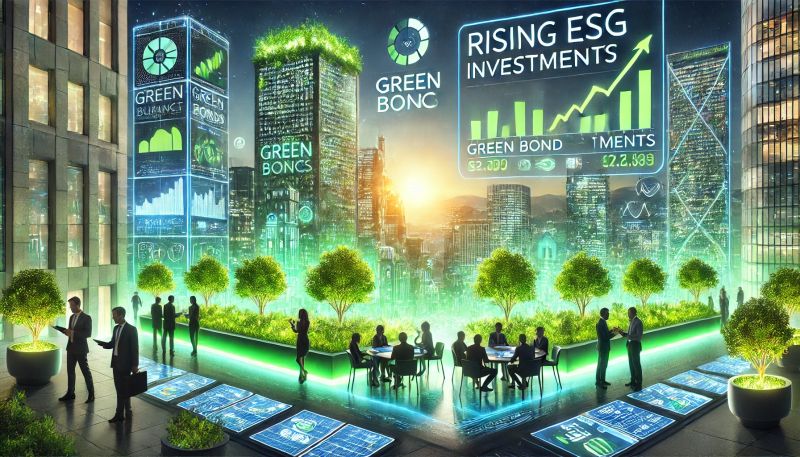
KnowledgeSeries: GreenFinance – The $80 Trillion Opportunity Reshaping Global Capital Markets
🌍 Sustainability = Economics.
💰 GreenFinance is now mainstream, with ESG assets surpassing $50T in 2023, projected to hit $80T by 2030.
🚀 CapitalShiftAlert: Banks, VCs, and InstitutionalInvestors are prioritizing low-carbon businesses. Those who ignore GreenFinance risk obsolescence.
📊 WhyGreenFinance is Taking Over?
✔️ ESGOutperforms: Since 2015, ESG-aligned companies have outperformed markets by 30% (HarvardBusinessReview).
✔️ InvestorShift: ESGFunds saw #$650B inflows in 2023, while traditional funds saw outflows (Morningstar).
✔️ RegulationsTighten: EU & SEC climate disclosure rules mandate carbon reporting, forcing companies to prove sustainability.
✔️ GreenBondsSurge: #$1.5T issued in 2023, funding renewables, transport, and smartcities.
✔️ RiskAndProfitability: Banks raise borrowing costs for polluters, offering low rates to green firms.
🏦 Who’sLeading the GreenFinanceMovement?
✔️ Banks & AssetManagers: BlackRock, GoldmanSachs, JPMorgan—trillions in climate portfolios.
✔️ VentureCapital & PrivateEquity: ClimateTech funding up 210% in 3 years—battery storage, carbon capture.
✔️ SovereignGreenFunds: Norway, Singapore, UAE shifting billions from oil to renewables.
✔️ CorporateGiants: Apple, Microsoft, Tesla issue multi-billion-dollar GreenBonds.
✔️ CarbonMarketsExploding: VoluntaryCarbonMarket set to grow 15X by 2030.
💡 HowBusinessesCanLeverage GreenFinance?
✔️ IssueGreenBonds → Secure low-cost funding for sustainability projects.
✔️ AlignWithESGCriteria → Attract institutional investors & capital.
✔️ TradeCarbonCredits → Monetize emission reductions.
✔️ LeverageImpactInvesting → Tap into VCs, sovereign funds & ESG-focused investors.
✔️ AdoptSmartFinanceTools → Use AI & blockchain for transparent sustainability tracking.
🔍 ComingUpNext: “The Rise of ClimateUnicorns – Where VCs Are Betting in 2025
💬 IsYourBusinessReady for the ClimateEconomy? Let’s discuss!
Originally published on LinkedIn on 2025-03-09 17:24:23: https://www.linkedin.com/feed/update/urn%3Ali%3AgroupPost%3A9500072-7304552646428823552

