G7 2026: The Ball Is in the Court But the Planet Is Already on the Clock
The G7 is no longer only a theatre of global power.
It is becoming a mirror of systemic liability.
When global leaders meet, the commentary usually focuses on politics, positioning and summit statements. But beneath the language of diplomacy, something more structural is visible.
This is not just a meeting.
It is an operational course-correction architecture.
Legacy growth models created scale, speed and margin. But too often, those margins were supported by costs pushed outside the balance sheet: onto the planet, supply chains, resource systems and weaker economies.
Now, the bill is coming due.
That is why the G7 conversation needs a sharper leadership lens.
The AccountabilityLens: 5W + 1H
A diagnostic framework to convert macro volatility into structural foresight.
What is malfunctioning?
The old global architecture is struggling to scale. Growth is fragile, AI is becoming power-intensive, critical minerals are concentrated, energy routes are exposed and sovereign debt stress is rising.
Why did the blind spot widen?
Old economic playbooks optimized efficiency, cost and control, but underpriced resilience. High margins looked strong because many systemic risks were not fully priced.
Who holds the custody of capital?
The same institutions, capital systems and advanced economies that shaped the global ruleset now carry the responsibility to fund the correction.
Where are the fracture lines visible?
Risk is no longer abstract. It is visible in energy chokepoints, mineral concentration, infrastructure vulnerability, climate exposure and debt pressure.
When does risk become liability?
When macro tail risks stop being boardroom talking points and start appearing as real cost, delayed capex, inflation pressure, supply disruption and balance-sheet stress.
How should leadership respond?
By moving from summit rhetoric to correction architecture.
The operating pillars are clear:
Invest. Rebalance. Redesign. Repair.
This is where the metaphor matters.
The ball may still appear to be in the court.
But in climate risk, energy insecurity, debt stress and mineral dependency, the clock is already running.
The world is not waiting for the match to begin.
It is already reading the result.
For boards, investors and leadership teams, the old question was:
What do the headlines mean?
The sharper question now is:
What liability is the system transferring to us?
Run the signal through the lens:
Malfunction → Blind Spot → Custody → Fracture Lines → Tipping Point → Correction Architecture
The next superpower will not be the one that controls the most.
It will be the one that repairs the fastest.
The ball is in the court.
But the planet is already on the clock.
Originally published on LinkedIn on 2026-06-17 12:18:52: https://www.linkedin.com/feed/update/urn%3Ali%3AgroupPost%3A2153908-7472986117768802305
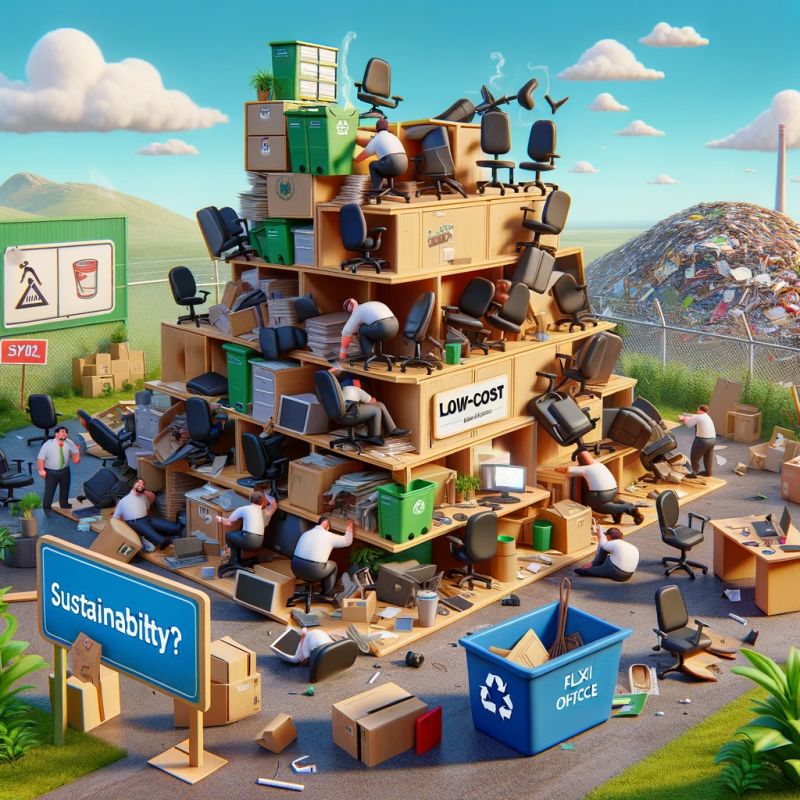
Knowledge Series: “Flexi Offices & Low_Cost Furniture – The Hidden Sustainability Crisis
You wouldn’t throw away your office every year—so why do we treat office furniture as disposable?
As FlexiOffices and coworking spaces boom, so does the demand for low-cost, fast furniture. While these setups are great for cost-cutting, they come with a massive environmental price tag—landfill waste, deforestation, and rising carbon emissions.
📊 The Hidden Environmental Cost of Flexi Office Trends
🔹 Furniture Waste Explosion
✔️ Over 12 million tons of furniture end up in landfills yearly in the US alone. (EPA, 2024)
✔️ 90% of discarded office furniture is non-recyclable due to toxic glues and laminates. (Circular Economy Report, 2024)
✔️ RealityCheck: The average lifespan of cheap office furniture? Just 5 years.
🔹 Deforestation & Resource Drain
✔️ The furniture industry drives 60% of illegal logging globally. (WWF, 2024)
✔️ One desk = One tree (50+ years to grow), yet most desks are discarded within 3-5 years. (FAO, 2024)
✔️ RealityCheck: The “cost-effective” furniture trend is accelerating deforestation and biodiversity loss.
🔹 Carbon Footprint & Toxic Chemicals
✔️ Many budget office setups rely on MDF and particleboard, releasing formaldehyde, a known carcinogen. (Environmental Health Report, 2024)
✔️ The furniture industry contributes 5% of global carbon emissions. (Carbon Trust, 2024)
✔️ RealityCheck: That “affordable” office setup could be an environmental nightmare.
🛠️ What Needs to Change?
✅ CircularEconomy Approach – Promote furniture leasing, second-hand markets, and repair initiatives.
✅ SustainableMaterials – Choose solid wood, bamboo, or recycled materials over disposable MDF.
✅ DesignForLongevity – Furniture should be modular, durable, and repairable—not landfill-bound.
🏆 KeyTakeaway
🌍 FlexiOffices could be both cost-efficient and sustainable with better material choices.
📉 They should be designed for reuse, not rapid disposal.
🚨 But they would be an environmental crisis if businesses prioritize cheap over green.
👉 Would you pay more for sustainable office furniture? Let’s discuss! 👇
Originally published on LinkedIn on 2025-02-21 14:47:52: https://www.linkedin.com/feed/update/urn%3Ali%3AgroupPost%3A2474261-7298715054588239872
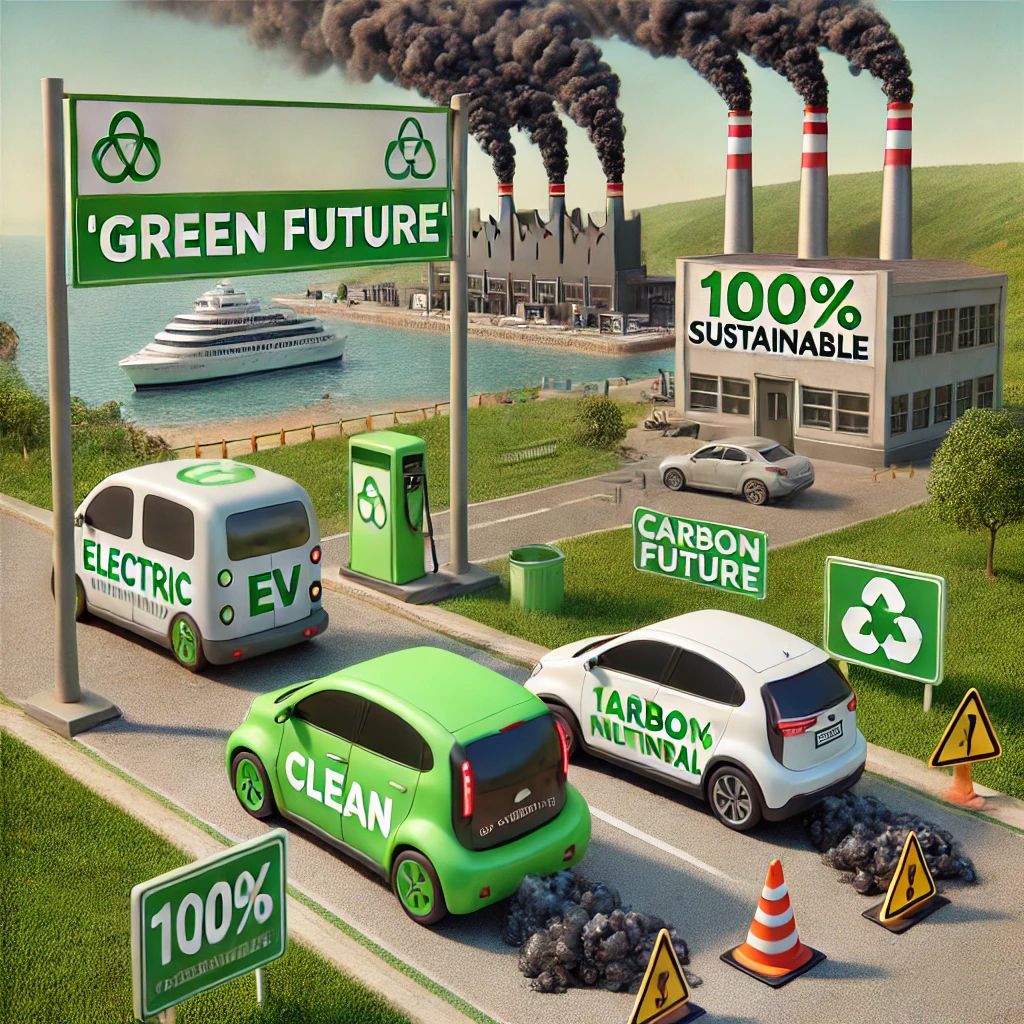
🚗⚡ YR2035’s Green_Auto_Mirage: Are EVs, Hydrogen Fuel Cells, and Synthetic Fuels Truly Sustainable or Just Greenwashing? 🌍💨
As we race toward 2035’s petrol-diesel ban, automakers push EVs, HFCVs, and SyntheticFuels as the future. But are these real solutions or clever marketing?
🔋 EVs: Cleaner or Just Elsewhere Emissions?
📌 Battery Production: An 80 kWh battery emits 2.4 – 16 metric tons of CO₂—equal to driving a gasoline car for 5-7 years. (MIT, 2024)
📌 Resource Impact: Each EV battery needs 63kg lithium, cobalt, & nickel, causing deforestation & water pollution. (GreenCars, 2024)
📌 Power Grid Dependence: An EV running on coal-based electricity emits more CO₂ per mile than hybrids. (EPA, 2024)
📌 Reality Check: EVs help only if powered by clean energy.
💧 Hydrogen: Clean Hype or Fossil Fuel Disguise?
📌 Production Problem: 96% of global hydrogen is made from natural gas & coal, emitting 830M metric tons of CO₂. (IEA, 2024)
📌 Efficiency Loss: HFCVs require 3x more renewable electricity than EVs. (US DOE, 2024)
📌 Reality Check: Unless made from renewables, hydrogen is just another fossil fuel.
⛽ Synthetic Fuels: Carbon-Neutral or Clever Greenwashing?
📌 Energy Guzzler: Producing 1L of synthetic fuel takes 6x more energy than refining petrol. (Fraunhofer, 2024)
📌 Still Polluting: Burns CO₂ and emits more NOx than conventional fuels. (MDPI, 2024)
📌 Reality Check: Synthetic fuels aren’t zero-emission—they just relocate pollution.
🚨 Greenwashing in the Auto Industry
🔻 BMW, Toyota, Honda exaggerated EV carbon savings by omitting battery emissions. (Greenpeace, 2024)
🔻 Porsche’s synthetic fuel plant claims zero emissions but runs on coal-powered electricity. (The Guardian, 2024)
🔻 India & U.S. promised 1M EV chargers by 2025, yet less than 20% installed. (BloombergNEF, 2024)
📌 Reality Check: Many automakers sell ‘green’ promises, but not real sustainability.
🏆 Key Takeaway: Hype or Hope?
🚘 EVs, HFCVs, & Synthetic Fuels could be clean if the supply chain is green.
♻️ They should be backed by strict sustainability policies.
⚠️ But they would be just another greenwashing scandal if industries don’t walk the talk.
👉 Are we truly heading toward sustainable mobility, or just another green illusion? 👇
Originally published on LinkedIn on 2025-02-18 11:22:14: https://www.linkedin.com/feed/update/urn%3Ali%3AgroupPost%3A82093-7297576141614190592
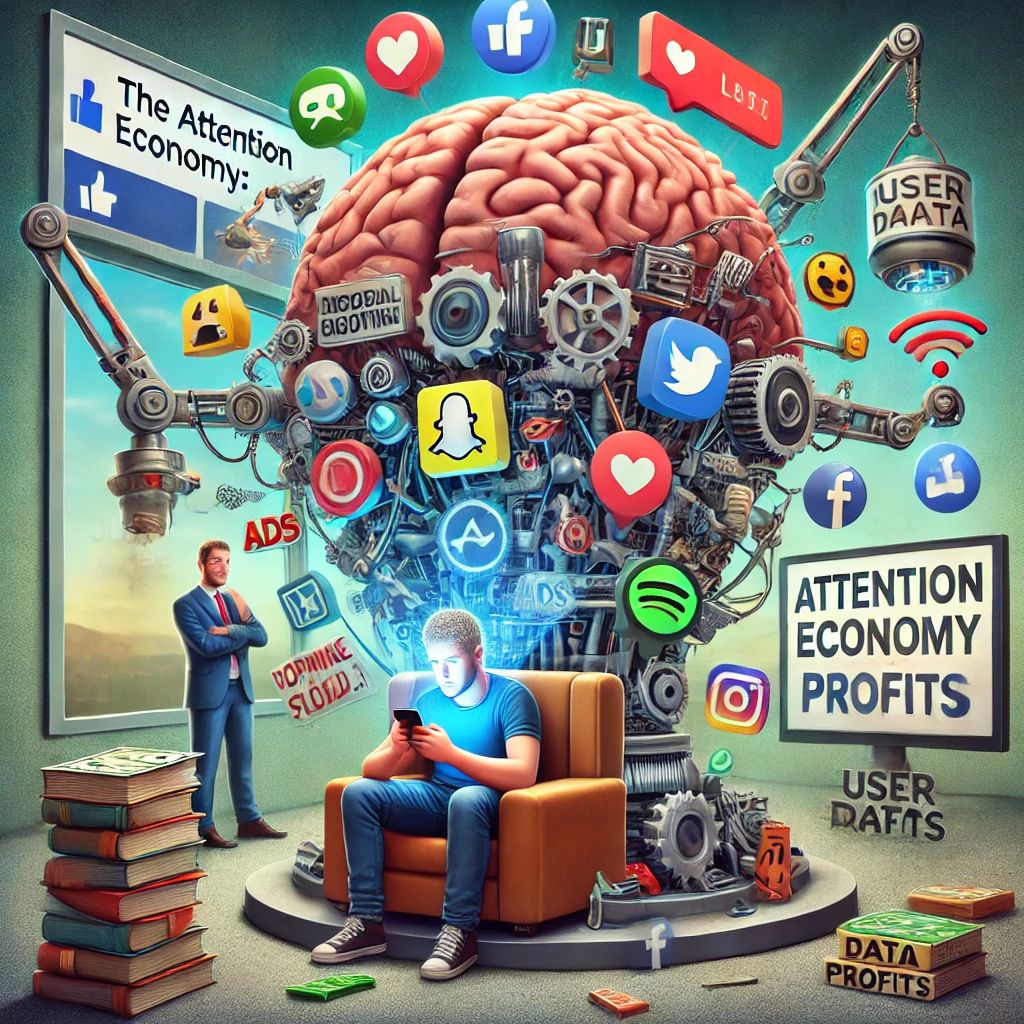
🚀 “The Attention Economy: Are We Paying or Being Played?” 🧠📱💰
In a world where notifications never stop and algorithms know us better than we do, attention has become the most valuable commodity. But are we truly in control, or just products in the digital marketplace?
📊 The Business of Attention
✅ The average person spends 7 hours a day on screens. (Statista, 2024)
✅ Digital ad spending hit $700B globally in 2023. (eMarketer, 2024)
✅ Social media engagement is worth $1.5T to tech giants. (Forbes, 2024)
❌ But attention spans have dropped from 12 seconds (2000) to 8 seconds (2024). (Microsoft Study)
🚨 Reality Check: Are we consuming content, or is content consuming us?
🔴 How the Attention Economy Manipulates Us
🧠 Dopamine Loops: Infinite scrolling & notifications keep us addicted.
📱 Algorithm Traps: AI-driven feeds push extreme content to maximize engagement.
💰 Monetized Distraction: Platforms profit from every second of our attention.
🚨 Reality Check: If it’s free, you’re the product.
🔎 Who’s Winning in the Attention Economy?
🔹 🇺🇸 TikTok & Instagram: Hooking Gen Z with ultra-short content.
🔹 🇺🇸 YouTube & Netflix: Using AI to predict and control viewing habits.
🔹 🇨🇳 Tencent & Bytedance: Monetizing micro-engagement with gamification.
🔹 🇮🇳 Jio & ShareChat: Expanding India’s digital consumption at record speed.
🚨 Reality Check: Are we really choosing what we watch, or is it choosing us?
🏆 KeyTakeaway
The Attention Economy could be a tool for learning and connection, should be designed for well-being, but would be a dystopian trap if we let tech control our focus.
👉 Are you in charge of your attention, or is someone else profiting from it?
AttentionEconomy DigitalAddiction BigTech AI SocialMedia
Originally published on LinkedIn on 2025-02-04 12:25:19: https://www.linkedin.com/feed/update/urn%3Ali%3AgroupPost%3A9270968-7292518584398893056
Personally used every AI whenever it was launched taking paid subscription my experience:
Key Challenges Across AI Platforms:
1. ChatGPT & Bard: Struggle with real-time data, context loss in long queries, and safety overreach. Never trust their data but they give real good source links.
2. Copilot: Worked great till Aug 2024 and then suddenly change in format and Slowdowns, code inaccuracies, and extension conflicts.
3. Gemini: Frequent “unable to generate” errors, strict safety filters. Using advertisement free Google is better!
4. Claude: Limited technical depth and context handling. But good inputs with breakdown queries.
5. DALL·E & MidJourney: Output inconsistency, ethical restrictions, struggles with complex prompts. Kill_Me spellings
6. Voice AI (Alexa, Siri, etc.): Predefined tasks, privacy concerns, and integration issues.
General AI Issues:
Performance Drops: With complex tasks or high demand.
Ethical & Safety Blocks: Limit creative and nuanced queries.
Bias & Training Gaps: Impacts accuracy and fairness.
Keys
Simplify inputs, update tools, combine platforms, and provide feedback.
Originally published on LinkedIn on 2024-11-20 10:37:17: https://www.linkedin.com/feed/update/urn%3Ali%3Ashare%3A7264949920426573824

