Sleepwalking through DataComa?
The costliest risk today isn’t being wrong, it’s being late.” Dr. Anju Sharma
Here’s the uncomfortable question.
What if the global economy isn’t sleepwalking at all?
What if it’s consciously slowing down?
CentralBanks today are not confused, they are boxed in.
They see:
✓ Sticky inflation in services
✓ Slowing growth and weaker jobs
✓ TradeWars fragmenting supply chains
✓ Debt levels limiting bold policy moves
So they do the only thing possible:
move cautiously, communicate carefully, and avoid shocks.
From the outside, this looks like DataComa.
From the inside, it looks like riskcontainment.
Rates are adjusted in small steps.
Liquidity is added without commitment.
Policy language stays flexible.
Because one wrong move now:
✓ Spikes inflation
✓ Crashes currencies
✓ Breaks trust
So yes, hesitation looks rational.
Until it doesn’t.
Where caution quietly turns into DataComa
DataComa doesn’t begin when leaders hesitate. It begins when hesitation becomes the strategy.
That’s when:
✓ Temporary measures become permanent
✓ “Waitingforclarity” replaces decision-making
✓ Economic burden shifts silently to businesses and households
NoCrisis.NoCrash.
Just:
Higher cost of capital
Slower investment
Delayed transitions
Productivity that never quite lifts
This is not stability.
This is slow erosion.
The risk is that everyone waits for someone else to act first.
And while policymakers wait:
✓ Capital becomes defensive
✓ Businesses postpone bets
✓ Transitions cost more than planned
That’s how DataComa spreads.
Not through ignorance.
But through collective delay.
The point (clear and simple)
✓ Caution is sensible
✓ Paralysis is expensive
The world is not asleep.
But it is stuck between prudence and postponement.
And history shows:
✓ Economic burdens don’t come from bad decisions
✓ They come from decisions taken too late
KtalystInsights
DataComa is not a failure of intelligence or policy. It is a failure of timing. The economic burden ahead will not be driven by interest rates or data gaps, but by delayed leadership decisions quietly compounding into higher capital costs, execution drag, and lost momentum. Economies that decide early absorb pain once. Those that wait keep paying interest on hesitation.
Sleepwalking ends when ownership begins.
Source / shared link: https://deloi.tt/4s5gqrZ
Originally published on LinkedIn on 2025-12-20 05:12:22: https://www.linkedin.com/feed/update/urn%3Ali%3Ashare%3A7408011359482720256
🚀 Sustainability in 2025: Who’s Leading, Who’s Lagging & What’s Changing? 🌍📉⚡
If sustainability were a race, some are sprinting, some are jogging, and others are still tying their shoes.
In 2025, sustainability is no longer just about ESGCompliance—it’s about survival. But as regulations shift, businesses hesitate, and grassroots efforts grow stronger, the question remains: Who is truly walking the talk?
📊 1. Europe is Tightening Rules—But Not for Everyone 🇪🇺
🔹 EU’s Corporate Sustainability Reporting Directive (CSRD) is evolving—planning to raise the reporting threshold from 250 employees & €40M turnover to 1,000 employees & €450M.
🔹 Impact? This will exempt thousands of smaller companies while still holding big corporations accountable.
🔹 RealityCheck: Is this a win for business flexibility or a loophole for greenwashing?
📌 Source: Reuters
📊 2. CEOs Know Sustainability = Profit, But Are They Acting? 📈
🔹 PwC’s 2025 CEO Survey: 🌱 29% of Irish CEOs skipped climate investments last year due to regulatory confusion—yet companies that link sustainability to executive compensation see higher revenues.
🔹 The Dilemma: CEOs acknowledge climate risks but struggle with unclear policies.
🔹 RealityCheck: Are companies stalling progress just because it’s complicated?
📌 Source: The Times
📊 3. Grassroots Action is Filling the Gaps 🌱🏡
🔹 Local Sustainability Wins: In Iowa City, a retirement community has diverted thousands of pounds of food waste from landfills—something that big corporations fail to do at scale.
🔹 The Takeaway: Real impact isn’t just about billion-dollar pledges—it’s about execution, big or small.
📌 Source: The Gazette
🏆 KeyTakeaway: The Sustainability Race in 2025
✅ Regulators could be making reporting easier, but risks of weaker accountability loom.
✅ CEOs should be making sustainability a financial strategy, not just PR.
✅ Communities are proving that action matters more than announcements.
💬 What’s your take? Are we moving forward fast enough, or just shifting responsibilities? Drop your thoughts below! 👇
Sustainability ESG ClimateAction GreenBusiness CorporateResponsibility CircularEconomy
https://lnkd.in/d-EBgCzk
Source / shared link: https://www.reuters.com/sustainability/eu-pare-back-sustainability-rules-companies-draft-shows-2025-02-22/
Originally published on LinkedIn on 2025-02-23 03:52:40: https://www.linkedin.com/feed/update/urn%3Ali%3Ashare%3A7299274941965721601
What_You_Havenot_Heard_About_the_New_Income_Tax_Bill 2025 💼💰
While headlines have focused on new tax slabs and simplified tax laws, there are hidden provisions in the Income Tax Bill 2025 that could quietly reshape how individuals and businesses manage their taxes. Here’s what hasn’t made the news yet—but should be on your radar.
🔎 What’s New & What You Haven’t Heard Yet
📌 NRIs Now Have a Tax Wake-Up Call → If you earn over #₹15 lakh ($18,000) in India, you’re now classified as a tax resident. This means taxation on salary, property income, capital gains, and dividends from Indian sources. But foreign earnings? They remain outside India’s tax net for now.
📌 The Unspoken Impact on Gig Workers & Freelancers → With the rise of digital taxation and AI-driven audits, freelancers, content creators, and independent consultants who previously operated in a tax grey area may now be pulled into the formal tax system.
📌 Your Digital Footprint is Being Watched → The bill lays the foundation for AI-driven tax compliance tracking. Expect automated scrutiny of large transactions, crypto earnings, and foreign remittances linked to India.
📌 No Clear Carbon Tax Yet—But Watch This Space → Sustainability is a global priority, but this bill doesn’t yet introduce green tax incentives or penalties for high-emission businesses. However, future amendments may align India’s tax policies with ESG (Environmental, Social, and Governance) goals.
📌 Real Estate May No Longer Be a Safe Tax Haven for NRIs → With stricter capital gains taxation, NRIs who buy and sell Indian property may face higher tax liabilities, especially if they don’t reinvest in eligible tax-saving assets.
📌 More Tax Scrutiny for High-Income Earners → If you fall in the #₹20 lakh+ ($24,000+) bracket, tax authorities may now flag large transactions and offshore holdings, ensuring better compliance without manual intervention.
📉 What Should You Do Next?
✅ NRIs: Review your income sources from India and DTAA agreements in your country to avoid double taxation.
✅ Freelancers & Gig Workers: Ensure your earnings are properly declared to avoid potential penalties.
✅ Investors: Keep an eye on potential capital gains tax reforms affecting stocks, crypto, and real estate.
✅ Businesses: Start preparing for digital compliance requirements that could change audit processes.
💡 “The real impact of tax reform isn’t in what’s obvious—it’s in what changes behind the scenes.
💬 What are your thoughts? Have we missed an important tax change that will impact professionals and businesses? Let’s discuss!

Originally published on LinkedIn on 2025-02-13 11:43:42: https://www.linkedin.com/feed/update/urn%3Ali%3Ashare%3A7295769602515431426
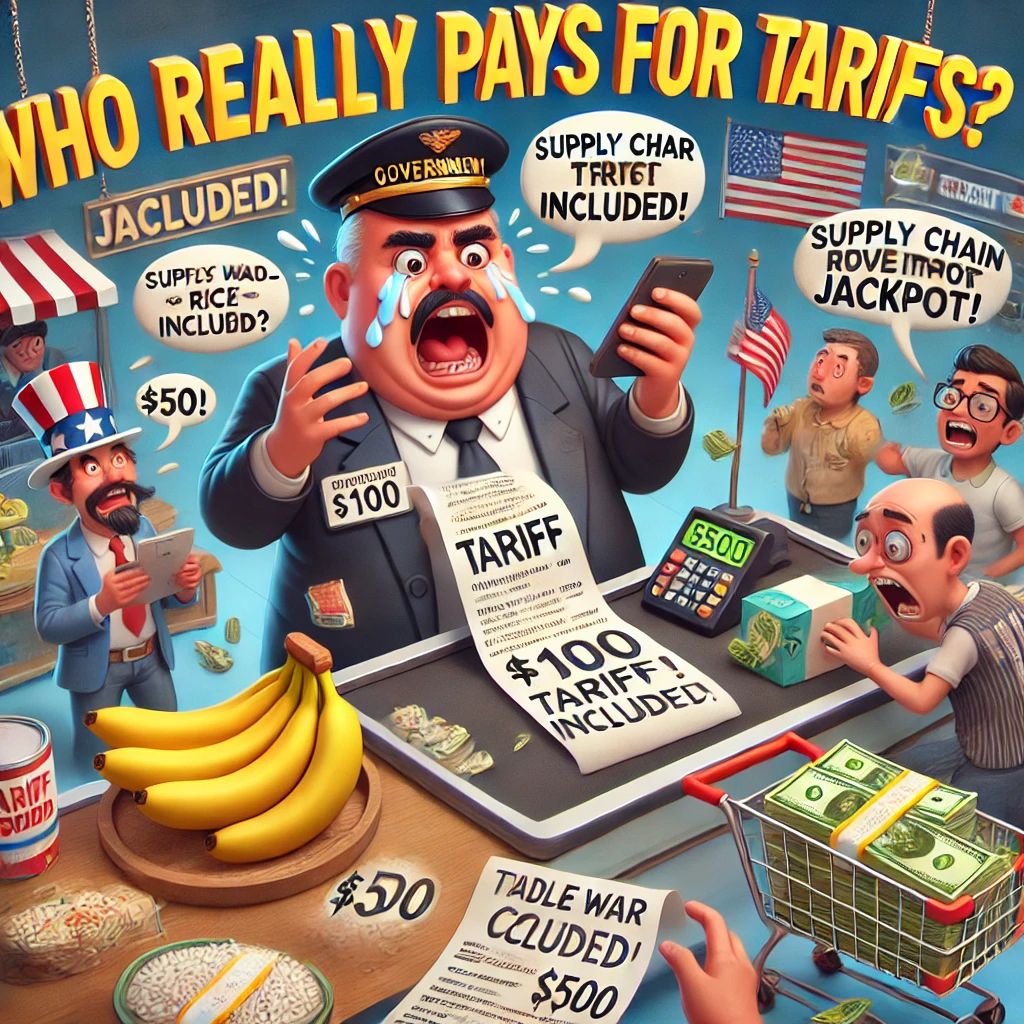
💰🌎 Tariff Wars: Who Really Pays the Price?
As governments escalate trade wars, businesses adjust supply chains, and consumers brace for price hikes, are tariffs truly protecting economies, or just shifting the cost?
🚨 Who Pays for Tariffs?
📉 Consumers Bear the Burden – 60% of tariff costs are passed on to consumers through higher prices. (IMF, 2024)
📉 Businesses Face Higher Costs – US companies paid $105B in tariffs since 2018, impacting supply chains. (USTR, 2024)
📉 Job Loss Risks – Tariffs on auto parts could cost 700K US jobs as production shifts. (Peterson Institute, 2024)
📉 Inflation Pressure – Every 10% tariff hike increases inflation by 0.5% globally. (World Bank, 2024)
📌 Reality Check: Tariffs aren’t just taxes on imports—they’re taxes on people.
🏆 Who Benefits?
✅ Governments Cash In – Tariffs generated $80B for the US Treasury in 2023. (USTR, 2024)
✅ Local Manufacturers Get Protection – Steel & aluminum industries saw a 20% production boost. (Reuters, 2024)
✅ Nearshoring Countries Profit – Mexico & Vietnam gained $65B in trade diversions from China. (IMF, 2024)
📌 Reality Check: While some industries win, the average consumer still loses.
🔮 What’s Next?
💡 Regional Trade Over Globalization – Supply chains are shifting closer to home to avoid tariff risks.
💡 Digital & AI Trade Solutions – Automated trade processing could reduce costs by 15%. (McKinsey, 2024)
💡 Green Tariffs Rising – Carbon-based tariffs will add new costs to imports, reshaping global trade. (EU CBAM, 2024)
📌 Reality Check: The cost of tariffs may outweigh the benefits if trade wars escalate.
🏆 KeyTakeaway
Tariffs could be a tool for protecting industries, should be used strategically, but would be an economic strain if prices keep rising.
👉 Who really pays for the trade war—governments, businesses, or you?
TradeWar Tariffs GlobalEconomy SupplyChainCrisis Inflation
Originally published on LinkedIn on 2025-02-05 16:37:39: https://www.linkedin.com/feed/update/urn%3Ali%3AgroupPost%3A2474261-7292944474018611204
NamasteSustainableIndia!
Corporate Sustainability: Beyond ESG Trends
ESG Era and Its Impact
The ESG (Environmental, Social, and Governance) era has been influential in shaping corporate practices.
ESG metrics have guided investment decisions, risk assessments, and stakeholder engagement.
The Current Landscape
Recent news may suggest we’re exiting the ESG era, but that’s not entirely accurate.
Why?
Sustainability Imperative: Businesses recognize that sustainability isn’t a passing trend; it’s a strategic imperative.
Long-Term Vision: Companies committed to long-term success continue to prioritize sustainability efforts.
Addressing Vulnerabilities
Proactive Measures: Organizations must proactively address vulnerabilities related to sustainability.
Hard Work Continues: Even as the initial ESG fervor fades, the hard work on corporate sustainability remains essential.
Areas to Focus On:
Climate Action: Mitigating climate risks and transitioning to a low-carbon economy.
Social Equity: Ensuring fair labor practices, diversity, and community engagement.
Governance: Transparent and ethical governance practices.
Adaptability and Innovation
Wide Spectrum: Adaptability serves a wide range of enterprises, from net-zero frontrunners to those just starting their sustainability journey.
Embrace Change: Organizations must evolve, experiment, and innovate to thrive sustainably.
Remember, sustainability isn’t a trend—it’s a compass guiding businesses toward a resilient and responsible future.
Source / shared link: https://www.forbes.com/sites/maryfoley/2024/07/16/hard-work-on-corporate-sustainability-begins-just-as-luster-of-esg-seems-to-be-fading/
Originally published on LinkedIn on 2024-07-20 17:10:17: https://www.linkedin.com/feed/update/urn%3Ali%3AgroupPost%3A2474261-7220475113169690624
NamasteSustainableIndia!
Corporate Sustainability: Beyond ESG Trends
ESG Era and Its Impact
The ESG (Environmental, Social, and Governance) era has been influential in shaping corporate practices.
ESG metrics have guided investment decisions, risk assessments, and stakeholder engagement.
The Current Landscape
Recent news may suggest we’re exiting the ESG era, but that’s not entirely accurate.
Why?
Sustainability Imperative: Businesses recognize that sustainability isn’t a passing trend; it’s a strategic imperative.
Long-Term Vision: Companies committed to long-term success continue to prioritize sustainability efforts.
Addressing Vulnerabilities
Proactive Measures: Organizations must proactively address vulnerabilities related to sustainability.
Hard Work Continues: Even as the initial ESG fervor fades, the hard work on corporate sustainability remains essential.
Areas to Focus On:
Climate Action: Mitigating climate risks and transitioning to a low-carbon economy.
Social Equity: Ensuring fair labor practices, diversity, and community engagement.
Governance: Transparent and ethical governance practices.
Adaptability and Innovation
Wide Spectrum: Adaptability serves a wide range of enterprises, from net-zero frontrunners to those just starting their sustainability journey.
Embrace Change: Organizations must evolve, experiment, and innovate to thrive sustainably.
Remember, sustainability isn’t a trend—it’s a compass guiding businesses toward a resilient and responsible future.
Source / shared link: https://www.forbes.com/sites/maryfoley/2024/07/16/hard-work-on-corporate-sustainability-begins-just-as-luster-of-esg-seems-to-be-fading/
Originally published on LinkedIn on 2024-07-20 17:10:10: https://www.linkedin.com/feed/update/urn%3Ali%3Ashare%3A7220475084249956352

