🌳KtalystInsights | Rooting CarbonCredits
❝ Carbon credits aren’t just traded—they’re rooted in Policy, People, & Proof. A plantation today is a portfolio tomorrow. ❞
Dr. Anju Sharma
📊 Global Carbon Credit Forestry: At a Glance
🌍 ~30% of the global Voluntary Carbon Market (VCM) is nature-based
💰 Credit Prices:
🇹🇭 Thailand T-VER: $45–55/ton (🌏 highest)
🇮🇳 NamasteIndia: ₹10,000 upfront + survival-linked credits
🇯🇵 Japan: 100 MtCO₂ JCM goal by 2030
🔁 Payouts based on tree survival + GPS = measurable trust
🌴 ASEAN: Trees are even used as loan collateral
☕ Japan’s credits now include tea fields. Seriously!
🧭 KtalystInsights Quick Scan
🌏 Country 💼 Payment Model 🧪 Verification 📌 Unique Feature
🇮🇳 NamasteGreenIndia’s Green Credit Programme (GCP) KtalystUttarPradesh is leading by example, offering ₹10,000 (~$120) upfront + 30-year annuity-linked credits. From plantation to prosperity—this is policy with purpose.
🇺🇸 USA Market-driven, no direct cash Verra, CAR, staged audits Urban aggregation, voluntary VCM
🇨🇳 ChinaSale to CDM/CCER buyers AI + satellite + local reporting 3,000 ha projects, cash-crop forestry
🇹🇭 ASEAN Annual baht/rai + credit sales Registry + audits by TGO Tree Bank, mangroves, rubber credits
🇰🇷 Korea Public + private co-funded CDM + biochar MRV Coffee waste → carbon offsets
🇯🇵 Japan J_Credit + JCM (ASEAN) Digital MRV + Article 6 alignment Tea, forest, and overseas projects
📥 DM KtalystKeystone for: • ✅
📊 Agro-credit models linked to survival tracking
📁 Voluntary Carbon Market (VCM) entry toolkit for MSMEs
Originally published on LinkedIn on 2025-07-21 08:38:54: https://www.linkedin.com/feed/update/urn%3Ali%3AgroupPost%3A2153908-7352980378069938176
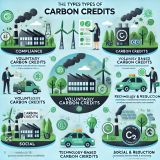
KnowledgeSeries – Decoding Carbon Credits: Which Ones Truly Make an Impact?
Carbon credits are essential tools in the fight against climate change, but not all credits are created equal. Here’s a quick guide to understanding their types and impact.
🌍 Compliance Carbon Credits
✅ Regulated Offsets – Mandatory under government-led carbon markets.
✅ Examples: EU ETS, California Cap-and-Trade, China ETS.
✅ Who Uses Them? Heavy industries, power plants, airlines, and corporations with emission limits.
💡 Voluntary Carbon Credits
✅ Market-Driven Offsets – Purchased by businesses and individuals to meet sustainability goals.
✅ Examples: Renewable Energy Credits (RECs), Forestry & Land Use, Methane Capture.
✅ Who Uses Them? Airlines, event organizers, eco-conscious brands.
🌱 Nature-Based Carbon Credits
✅ Carbon Sequestration – Uses ecosystems to absorb CO₂.
✅ Examples: Reforestation, Blue Carbon (Mangroves & Seagrass), Soil Carbon Farming.
✅ Why It Matters? Restores biodiversity, improves water cycles, and benefits local communities.
🔬 Technology-Based Carbon Credits
✅ Innovative Carbon Removal – Uses advanced tech to pull carbon from the air.
✅ Examples: Direct Air Capture (DAC), Carbon Capture & Storage (CCS), Waste-to-Energy.
✅ Challenges: High cost, scalability, and energy consumption.
⚡ Avoidance & Reduction Credits
✅ Preventing Emissions at the Source – Focuses on eliminating carbon before it’s released.
✅ Examples: Wind & Solar Energy, Energy Efficiency, Clean Cooking Stoves.
✅ Why It’s Crucial? Immediate impact with proven effectiveness.
🤝 Social Carbon Credits
✅ Climate + Community Benefits – Supports sustainability while improving lives.
✅ Examples: Sustainable Farming, Water Purification, Community Reforestation.
✅ Beyond Carbon? Jobs, education, and health improvements.
🔥 Biochar Carbon Credits
✅ Long-Term Carbon Storage – Converts biomass into stable carbon that remains in the soil.
✅ Benefits: Boosts soil health, prevents methane release, locks carbon for centuries.
✅ The Future? High permanence with agricultural benefits.
Which Carbon Credit Makes the Most Impact?
✅ Compliance Credits – Necessary but market-dependent.
✅ Voluntary Credits – Flexible, but risk of greenwashing.
✅ Nature-Based – Cost-effective and high-impact.
✅ Tech-Based – Promising, but expensive.
✅ Avoidance & Social Credits – Immediate reductions with co-benefits.
✅ Biochar – One of the most durable carbon storage solutions.
💬 Which one do you think has the highest potential for a net-zero future? Comment below!
Sustainability CarbonMarkets NetZero ClimateAction
Originally published on LinkedIn on 2025-03-06 08:05:21: https://www.linkedin.com/feed/update/urn%3Ali%3AgroupPost%3A100646-7303324797692747776
#️⃣ KnowledgeSeries | Biochar: The Silent Climate Solution 🌱🔥
🌍 Can_We_Lock_Carbon for Centuries While Boosting Soil? Yes—With Biochar!
📊 # Key Biochar Facts & Figures
📉 3Tons of CO₂ Sequestered Per Ton of Biochar – One of the most efficient carbon capture tools. (IPCC)
🌾 # 28% Increase in Crop Yields – Improves soil fertility and water retention. (Nature Communications)
💧 # 50% Less Nitrogen Runoff – Reduces water pollution from fertilizers. (Environmental Science & Technology)
♻ 3BillionUSD Market by 2030 – Growing at 13.2% CAGR, driven by climate policies. (MarketsandMarkets)
🏗 60% Lower Concrete Emissions – Biochar-infused cement is cutting industrial carbon footprints. (MIT Research)
🏭 # 90% Efficiency in Industrial Wastewater Treatment – Filters heavy metals & pollutants. (Journal of Environmental Management)
🔥 Who’s Investing?
💰 Microsoft & Shopify – Using biochar as verified carbon offsets.
🛍 IKEA & H&M – Researching biochar-infused textiles.
🚜 Indian & African Farmers – Improving soil health in degraded lands.
🏆 Biochar’s Future: From Farms to Factories
💡 Could biochar become a global standard in climate strategy? Drop your thoughts! 👇

Originally published on LinkedIn on 2025-03-02 15:37:10: https://www.linkedin.com/feed/update/urn%3Ali%3AgroupPost%3A2474261-7301988952033419264
🌟NamasteGreenIndia
Google’s Game-Changing Move: Partnering with India for CarbonRemoval 🌍
Google has taken a monumental step toward achieving NetZero emissions by investing in 100,000 tons of carbon credits from India’s biochar initiative—its first-ever carbon dioxide removal (CDR) deal in the country.
What’s the Impact?
🌿 NatureBasedInnovation: Biochar locks away 1.8–2.2 tons of CO₂ for every ton produced while enriching soil health.
🚗 EmissionReduction: Equal to removing emissions from 21,500 cars annually or powering 12,000 homes for a year.
🌾 EmpoweringFarmers: Indian smallholders benefit from increased crop yields (+15–30%) and new revenue streams through carbon credits.
📈 MarketGrowth: The global biochar market is set to soar from $1.3B in 2023 to $3.1B by 2030.
🌏 IndiasLeadership: With 500M tons of agricultural waste produced annually, India is a key player in the global carbon removal economy.
Why It Matters?
✅ SustainabilityLeadership: Google showcases how tech giants can catalyze global climate action. ✅ FarmersAsClimateChampions: Turning agricultural waste into a win-win for the planet and rural communities. ✅ ScalingInnovation: India’s vast agricultural resources + tech innovation = scalable climate solutions.
💡 This partnership is more than a deal—it’s a vision for a sustainable, inclusive future. Together, we can make climate action profitable, impactful, and scalable.
👉 What’s your take on biochar’s role in shaping the carbon removal market? Let’s discuss in the comments!
Originally published on LinkedIn on 2025-01-17 06:52:34: https://www.linkedin.com/feed/update/urn%3Ali%3AgroupPost%3A12538632-7285911863932952576

