NamasteIndia Circularity: Old Ships Are Now Linked to New Ships
June2026, NamasteIndia has created a policy loop between old vessels and new vessels.
Under the scheme, shipowners recycling vessels at Hong Kong Convention-compliant Indian yards can receive a creditnote equivalent to 40% of the vessel’s fair scrap value. The note can be redeemed against new vessel construction in India, subject to a 5% cap on the new vessel cost and defined validity.
Process
→ compliant recycling yard
→ recovered steel and materials
→ credit note
→ new shipbuilding in India
India has also launched a Unified Ship Recycling Portal to support the credit-note mechanism and improve transparency, governance and processing.
NewRegulatoryBase
The Hong Kong Convention entered into force on 26 June 2025. It brings ship recycling under a stronger compliance framework covering:
Inventory of Hazardous Materials
authorised recycling facilities
ship-specific recycling plans
worker safety
environmental controls
certification and reporting
India’s 2026 ship-recycling framework strengthens this direction by aligning yard operations, hazardous-material handling, worker safety and reporting with a formal compliance system.
The global market is highly concentrated. Bangladesh, India, Pakistan and Türkiye together account for over 91% of global ship-recycling activity, with Bangladesh and India leading the market.
India’s position is anchored by Alang_Sosiya in Gujarat, one of the world’s largest ship-recycling clusters.
Key facts:
Bangladesh continues to lead by recycled tonnage.
India remains a top global player and major South Asian recycling hub.
More than 110 Indian recycling yards hold Hong Kong Convention Statements of Compliance.
No Indian ship-recycling yard is currently on the EU European List, while the latest EU list includes 41 approved facilities across Europe, Türkiye and the US.
Alang saw only one ship beached in May 2026, the lowest monthly intake since operations began in 1983.
How the world approaches ship recycling:
IMO: Hong Kong Convention as the global baseline.
Europe: EU-flagged large vessels must use approved facilities on the European List.
Türkiye: regulated regional recycling hub with multiple EU-listed facilities.
South Asia: volume centre, but under scrutiny for beaching, worker safety and hazardous waste.
India: large recycling base, HKC-compliant yards, credit-note linkage and domestic shipbuilding opportunity.
The fact pattern is clear.
India has scale.
India has compliant-yard capacity.
India has a new circular-policy incentive.
The next measurable shift will depend on vessel inflows, EU-list recognition, digital traceability, worker-safety proof and stronger linkage between recycled material & Indian shipbuilding.
Originally published on LinkedIn on 2026-06-20 05:10:51: https://www.linkedin.com/feed/update/urn%3Ali%3AgroupPost%3A2474261-7473965569030057984
NamasteIndia’s Economic_Ascent: Leading_Among_Unequals and the Path to Higher Per Capita Income
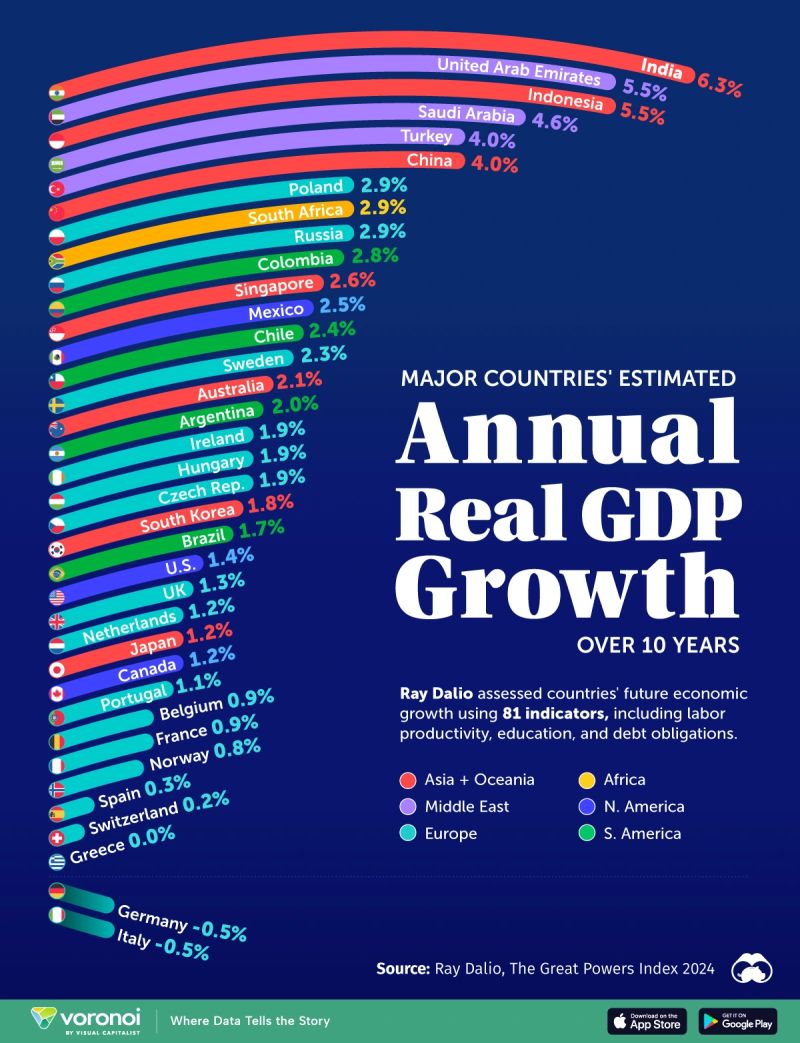
India is projected to lead global economic growth over the next decade, driven by a youthful population, significant infrastructure investments, policy reforms, and rapid technological adoption. This positions India as a major economic powerhouse.
Digging_deeper Per_Capita_Income_Comparison
1. India:
Current_$2,500
Projected (2034): Significant rise, but lower than advanced economies.
2. China:
Current: $12,000
Projected (2034): Higher than India.
3. Vietnam:
Current: $3,500
Projected (2034): Potentially surpassing India.
4. Bangladesh:
Current: $2,200
Projected (2034): Likely below India.
5. Philippines:
Current: $3,500
Projected (2034): Higher than India.
India_Path to $12,000 Per Capita Income
India’s per capita income is expected to reach $4,000 by 2030. Sustaining a 6-7% growth rate, it could take 20-25 years to reach $12,000, around 2050.
Influencing Factors
Continued economic reforms.
Investment in education and healthcare.
Leveraging technology.
Infrastructure development.
Conclusion
India’s growth highlights its potential to become a leading global economy. However, improving individual economic well-being remains a challenge, requiring sustained efforts in various sectors.
Originally published on LinkedIn on 2024-09-24 09:56:55: https://www.linkedin.com/feed/update/urn%3Ali%3Ashare%3A7244283652468043777
NamasteIndia reads Fashion industry is a significant contributor to global greenhouse gas (GHG) emissions, accounting for an estimated 3% to 8% of the total¹.
Many fashion brands are struggling to meet their decarbonization targets¹².
High Emissions: The fashion industry emits around 2.1 billion metric tons of GHGs annually².
Decarbonization Challenges: About two-thirds of fashion brands are behind on their decarbonization schedules, with 40% seeing an increase in emissions since making sustainability commitments¹.
Supply Chain Impact: A significant portion of emissions comes from the supply chain, particularly in manufacturing countries like Bangladesh, China, India, and Vietnam¹.
Collaborative Efforts: Bestseller, Gap Inc., H&M Group, and Mango, are collaborating to share the costs and responsibilities of reducing CO2 emissions in the supply chain⁴⁹.
References
(1) Sustainable style: How fashion can afford decarbonization | McKinsey. https://lnkd.in/d3p8jfEx.
(2) How the fashion industry can reduce its carbon footprint | McKinsey. https://lnkd.in/dyRsnJd5.
(3) Fashion Giants Join Forces to Share Cost of Supply Chain …. https://lnkd.in/dU5N8JHe.
(4) Major brands commit to innovative collective financing model to …. https://lnkd.in/dFQ9_tm6.
(5) Six cost-effective ways fashion brands can decarbonise. https://lnkd.in/dcf6FEg2.
(6) Fashion brands, part of high-emitting industry, hide decarbonisation plans. https://lnkd.in/dGsgY246.
(7) Why fixing fashion’s pollution crisis requires big brands to share the cost. https://lnkd.in/ddMFsiET.
(8) Six cost-effective ways fashion brands can decarbonise – MSN. https://lnkd.in/dqxc9rp8.
(9) Fashion brands falling behind on decarbonisation targets. https://lnkd.in/dhBSVZFw.
(10) Fashion Brands Unite To Decarbonise The Sector. https://lnkd.in/dnGh7vQH.
https://lnkd.in/d3p8jfEx
Originally published on LinkedIn on 2024-08-09 20:42:21: https://www.linkedin.com/feed/update/urn%3Ali%3AgroupPost%3A2474261-7227776240793866240

