🚨 “Diversity & Inclusion: A Smart Strategy or Corporate Suicide?
💰 #$8 Billion – U.S. companies spent this on DEI programs in 2022. (McKinsey, 2023)
📉 35% of Fortune 500 companies have slashed DEI budgets since 2023. (HBR, 2024)
⚠️ 68% of employees say their company’s DEI progress has stalled or regressed. (Reboot Survey, 2024)
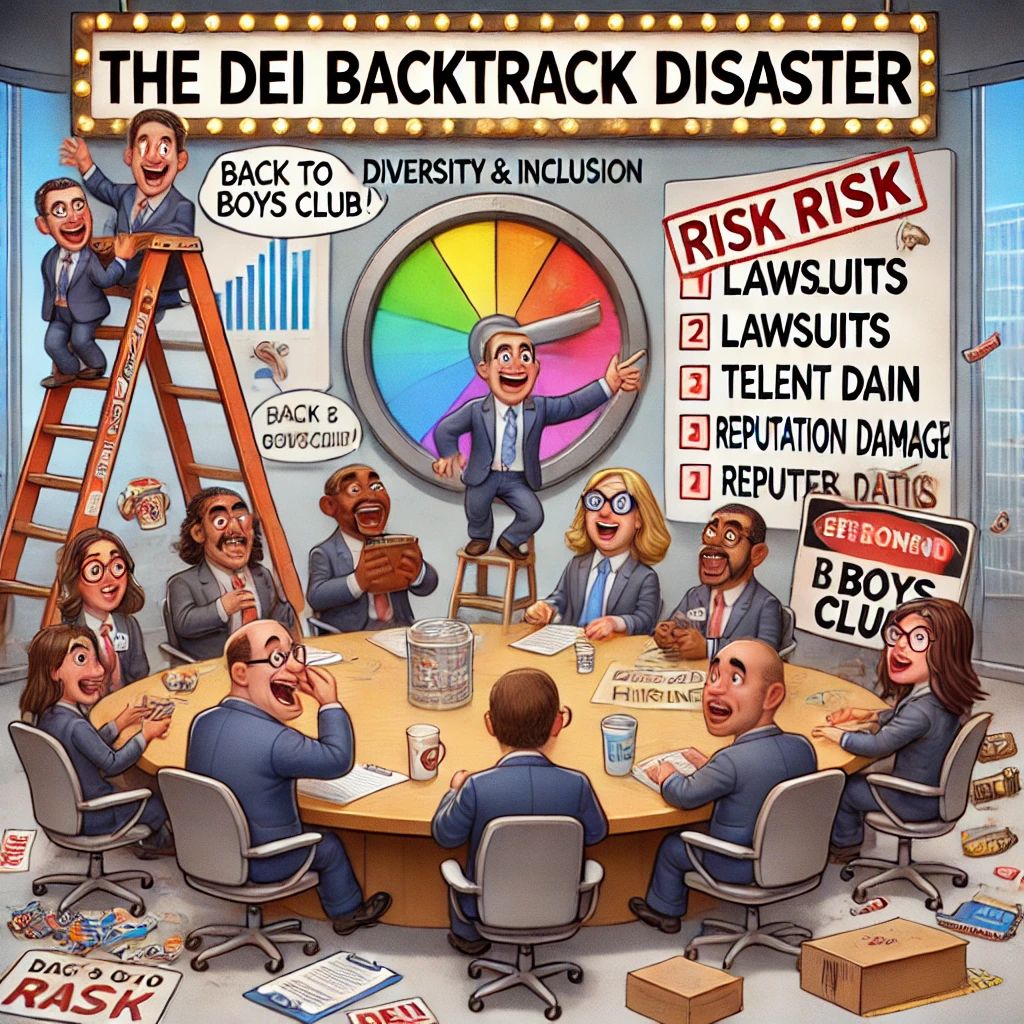
🚨 Backtracking on DEI = Lawsuits, Talent Drain & Reputation Damage.
📌 Reality Check: Cutting DEI might save costs today—but could cost billions in lawsuits, lost talent & investor trust tomorrow.
🏢 Companies That Hit Reverse—And The Fallout
🚨 Accenture:
🔹 Scrapped global DEI goals & career programs for underrepresented employees.
📉 Risk: Employee backlash + rising attrition in diverse leadership. (Financial News London, 2024)
🚨 Target:
🔹 Faced a class-action lawsuit over DEI claims → Stock crashed 22%.
📉 Risk: Investor scrutiny & eroded customer trust. (New York Post, 2024)
🚨 Google:
🔹 Axed diversity hiring targets after government pressure.
📉 Risk: Losing top diverse talent in AI & tech. (Associated Press, 2024)
🚨 Meta, Walmart, McDonald’s:
🔹 Eliminated DEI roles, citing economic slowdowns.
📉 Risk: Lower employee engagement & weaker brand loyalty. (Time, 2024)
📌 Reality Check: DEI isn’t just ‘woke’—it’s workforce strategy. Companies pulling out now may pay a heavy price later.
🌍 DEI & Sustainability: The Unbreakable Link
✅ Diverse teams = higher profits. Companies with inclusive leadership see 30% better financial performance. (McKinsey, 2024)
✅ Women-led firms score 35% higher on climate risk management & ESG strategy. (Harvard Business Review, 2024)
✅ Green industries need diversity. Yet women hold only 32% of clean energy jobs. (IEA, 2024)
📌 Reality Check: Sustainability without diversity is like net zero without emissions cuts—it doesn’t work.
🏆 KeyTakeaway
💡 DEI could be a competitive advantage, should be part of corporate resilience, but would be a massive liability if companies walk away now.
👉 Is your company setting itself up for a DEI backlash disaster? Let’s talk. 💬
Originally published on LinkedIn on 2025-02-07 16:24:10: https://www.linkedin.com/feed/update/urn%3Ali%3AgroupPost%3A82951-7293665858097192961
NamasteGreenIndia: Why Corporate Giants Are Backtracking on Plastic Commitments
In recent years, major corporations have made bold pledges to address plastic pollution and embrace sustainable practices. However, many of these promises have been abandoned or scaled back, revealing the challenges of aligning environmental goals with profit maximization.
Coca_Cola has revised its environmental commitments, now aiming to use 35-40% recycled materials in its packaging by 2035, a reduction from the earlier target of 50% by 2030. The company also scaled back its pledge to collect and recycle one bottle or can for every one sold by 2030, now targeting 70-75% collection by 2035. These adjustments, attributed to business growth pressures, have drawn criticism for potentially increasing plastic waste.
Unilever: initially committed to halving its virgin plastic use by 2025 but recently revised this target to a one-third reduction by 2026. The company cited the need to balance sustainability with shareholder expectations, raising concerns about its ability to address plastic pollution effectively.
Amazon: In May 2023, Amazon discontinued its “Shipment Zero” initiative, which aimed to make 50% of shipments carbon neutral by 2030. The removal of this commitment from its website indicates a shift in the company’s environmental priorities, sparking criticism from sustainability advocates.
Hermès: The luxury brand Hermès altered its commitment to eliminating single-use plastic by 2030, now focusing on unnecessary virgin plastics instead. This softened goal reflects a less ambitious approach, highlighting the complexities of meeting sustainability targets in the luxury sector.
Colgate-Palmolive pledged to make 100% of its packaging recyclable by 2025. However, the company remains one of the top global plastic polluters, producing billions of non-recyclable sachets annually. This gap between commitment and action underscores the difficulties of transitioning to sustainable packaging on a large scale.
Broader Trends and Statistics
These corporate shifts are part of a larger trend. According to the Ellen_MacArthur Foundation’s Global Commitment report, signatories collectively use as much virgin plastic now as at the start of the initiative, with only 27% on track to meet their 2025 goals. Similarly, a report by As You Sow revealed that only 22 of 147 companies with recyclability goals are on target.
Balancing Sustainability with Profit Maximization
While corporations cite economic pressures and operational challenges for abandoning their sustainability promises, these decisions have serious environmental consequences. Companies must adopt robust, transparent strategies to reduce plastic pollution and meet their commitments without compromising long-term environmental health.
Originally published on LinkedIn on 2024-12-08 09:40:37: https://www.linkedin.com/feed/update/urn%3Ali%3AgroupPost%3A59930-7271458640639741952

