KnowledgeSeries – Decoding Carbon Credits: Which Ones Truly Make an Impact?
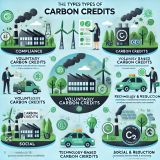
Carbon credits are essential tools in the fight against climate change, but not all credits are created equal. Here’s a quick guide to understanding their types and impact.
🌍 Compliance Carbon Credits
✅ Regulated Offsets – Mandatory under government-led carbon markets.
✅ Examples: EU ETS, California Cap-and-Trade, China ETS.
✅ Who Uses Them? Heavy industries, power plants, airlines, and corporations with emission limits.
💡 Voluntary Carbon Credits
✅ Market-Driven Offsets – Purchased by businesses and individuals to meet sustainability goals.
✅ Examples: Renewable Energy Credits (RECs), Forestry & Land Use, Methane Capture.
✅ Who Uses Them? Airlines, event organizers, eco-conscious brands.
🌱 Nature-Based Carbon Credits
✅ Carbon Sequestration – Uses ecosystems to absorb CO₂.
✅ Examples: Reforestation, Blue Carbon (Mangroves & Seagrass), Soil Carbon Farming.
✅ Why It Matters? Restores biodiversity, improves water cycles, and benefits local communities.
🔬 Technology-Based Carbon Credits
✅ Innovative Carbon Removal – Uses advanced tech to pull carbon from the air.
✅ Examples: Direct Air Capture (DAC), Carbon Capture & Storage (CCS), Waste-to-Energy.
✅ Challenges: High cost, scalability, and energy consumption.
⚡ Avoidance & Reduction Credits
✅ Preventing Emissions at the Source – Focuses on eliminating carbon before it’s released.
✅ Examples: Wind & Solar Energy, Energy Efficiency, Clean Cooking Stoves.
✅ Why It’s Crucial? Immediate impact with proven effectiveness.
🤝 Social Carbon Credits
✅ Climate + Community Benefits – Supports sustainability while improving lives.
✅ Examples: Sustainable Farming, Water Purification, Community Reforestation.
✅ Beyond Carbon? Jobs, education, and health improvements.
🔥 Biochar Carbon Credits
✅ Long-Term Carbon Storage – Converts biomass into stable carbon that remains in the soil.
✅ Benefits: Boosts soil health, prevents methane release, locks carbon for centuries.
✅ The Future? High permanence with agricultural benefits.
Which Carbon Credit Makes the Most Impact?
✅ Compliance Credits – Necessary but market-dependent.
✅ Voluntary Credits – Flexible, but risk of greenwashing.
✅ Nature-Based – Cost-effective and high-impact.
✅ Tech-Based – Promising, but expensive.
✅ Avoidance & Social Credits – Immediate reductions with co-benefits.
✅ Biochar – One of the most durable carbon storage solutions.
💬 Which one do you think has the highest potential for a net-zero future? Comment below!
Sustainability CarbonMarkets NetZero ClimateAction
Originally published on LinkedIn on 2025-03-06 08:05:21: https://www.linkedin.com/feed/update/urn%3Ali%3AgroupPost%3A100646-7303324797692747776

