✈️ When_Indi_No_Go:
Dr. Anju Sharma ESG_POV (with a Devil’s Advocate Lens)
1️⃣ The ESG Lens: Resilience Is Compliance
December 2025 proved ESG isn’t “extra paperwork.” IndiGo hit a Social + Governance stress test, not a technical glitch.
✓ Social: Rested pilots = safety device. Families on floors = “S” warning.
✓ Governance: FDTL wasn’t a surprise; buffers were mandatory.
✓ Environmental: The only silent stakeholder.
Devil’s Advocate:
Is this ESG failure or ESG language applied to a classic capacity + complexity miscalculation across the ecosystem?
2️⃣ What Was Said vs What Was Heard
CEO & Chairman were unusually honest “blemish,” “regret,” “nothing engineered.
They admitted:
✓ Roster transition gaps
✓ Underestimating fatigue rules
✓ Hiring slower than scheduling
✓ Weather + tech + congestion as multipliers
✓ Early board involvement
✓ External audits
DGCA responded:
✓ Officers at IndiGo HQ
✓ Real-time oversight of fatigue, rosters, refunds
✓ 10% schedule cut for stability
Devil’s Advocate:
If FDTL was known, did IndiGo alone misjudge?
Or did regulator + airports + India Inc’s growth bias underestimate the hit on lean systems?
Numbers:
✓ 3,000–4,000 flights disrupted
✓ Refunds > ₹1,100 crore (≈ USD 132M)
✓ DGCA embedded
✓ 10% flight cut mandated
Takeaway:
No villain just a pile of “we’ll manage” assumptions collapsing together.
3️⃣ MyPOV: A Governance Reality Check, Not an Ops Failure
Aviation held up a mirror to India Inc.
✓ Worship of lean staffing
✓ Scale mistaken for immunity
✓ Optimistic scheduling
✓ Adjustable compliance mindset
✓ Regulators expected to accommodate
IndiGo forgot a foundational rule:
Redundancy isn’t inefficiency — it’s resilience. With ~60% market share, you’re critical infrastructure, & such systems fail visibly, not quietly.
Devil’s Advocate:
Have we over-romanticised “lean” while ignoring that buffers, backups & boredom are the real foundations of resilience?
4️⃣ The GeopoliticalAmplifier
Aviation never sits outside geopolitics. In 2025:
✓ Middle East corridor shifts
✓ Engine & spare-part constraints
✓ China–EU–India delivery delays
✓ Fuel volatility
✓ Pilot shortages
✓ Winter expat surges
The Real Question:
✓ Did global turbulence amplify IndiGo’s fragility?
or
✓ Did thin internal margins exaggerate normal pressures?
Devil’s Advocate:
Are we blaming “geopolitics” because it sounds smart when the real issue is running hot, fast, and thin?
5️⃣ Final Thought: The Exam Isn’t for IndiGo, It’s for India Inc
IndiGo promises “actions, not words.
But the bigger question: Are Indian industries flying too close to the sun on lean staffing, fragile systems, and optimism-led planning? The next rule safety, labour, data, climate, carbon won’t check readiness. It will test it.
Devil’s Advocate:
Is your business truly resilient
or one regulation away from its own Indi-No-Go moment?
Originally published on LinkedIn on 2025-12-11 05:27:00: https://www.linkedin.com/feed/update/urn%3Ali%3AgroupPost%3A121193-7404753548846272512
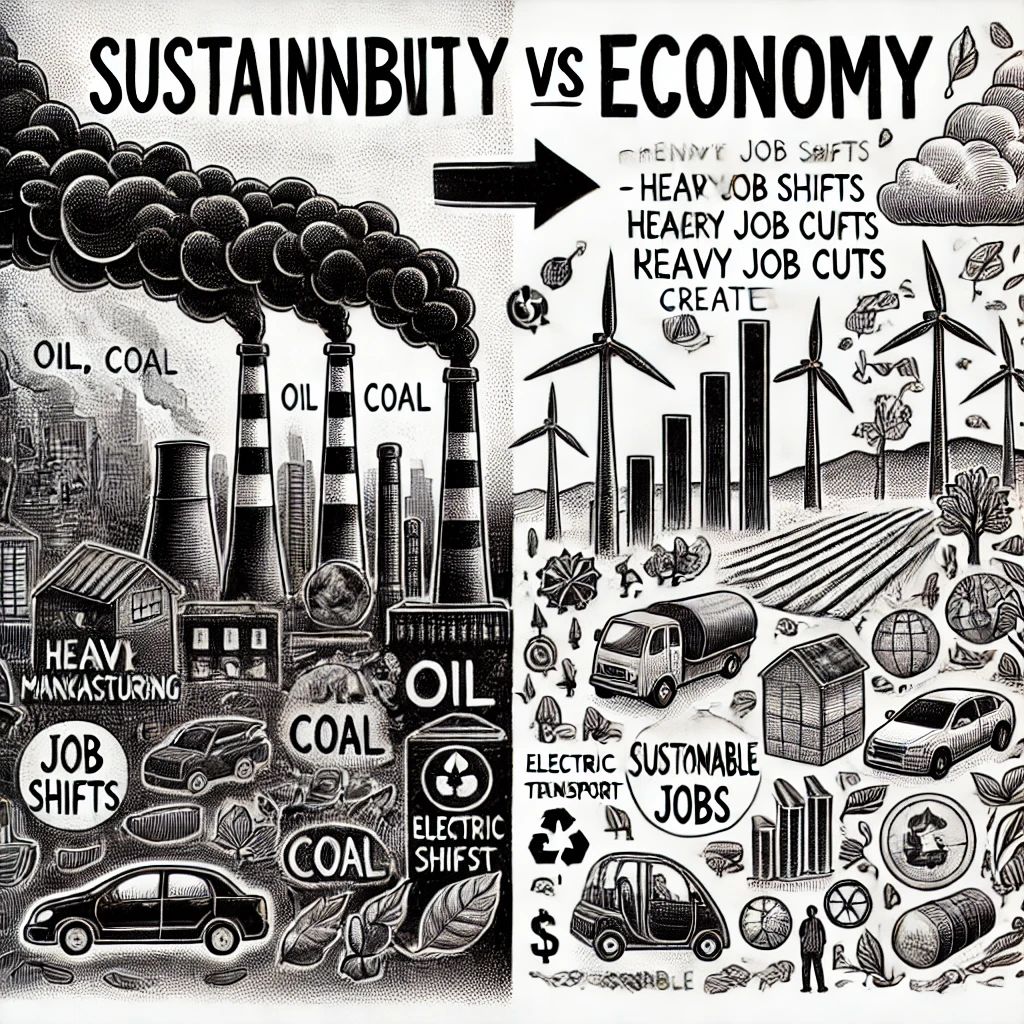
🚨 “TheGreenParadox: If the Top100 Polluters Go Green, Do Economies Go Red?” 🌍💸🔥
71% of global emissions come from just Just100 companies—but what happens if they actually go green?
📊 TheHardNumbers: Who’s Driving Emissions?
🔹 100Companies = 71% of Global Emissions (CDP Carbon Majors Report, 2025)
🔹 TotalMarketValue = $15.4 Trillion (Forbes, 2025)
🔹 Sectors Dominating Emissions:
✔️ Oil & Gas (ExxonMobil, Shell, Aramco, BP, Reliance) – 52% of global industrial CO₂.
✔️ Coal Giants (ChinaEnergy, Peabody, Glencore) – 14% of all emissions, powering entire nations.
✔️ Steel & Cement (ArcelorMittal, Holcim, TataSteel, JSW) – 8% of emissions, critical to infrastructure.
✔️ Shipping & Aviation (Maersk, Boeing, Delta, Emirates) – 5% of emissions, enabling global trade.
🚨 RealityCheck: Transitioning these industries overnight would shake economies to the core.
💰 TheEconomicCrashPotential
🔻 JobLosses in FossilFuel Sectors – 34M jobs globally depend on oil, coal, and heavy industries. (ILO, 2025)
🔻 GDPImpact on EmergingMarkets – India, China, and Indonesia rely on fossilfuels for 20-35% of GDP. (World Bank, 2025)
🔻 SupplyChain Disruptions – 42% of global logistics, steel, and chemicals are tied to high-emission industries. (McKinsey, 2025)
🔻 EnergyTransition Costs – Full decarbonization needs #$275T investment by 2050—but who’s paying? (IEA, 2025)
📌 TheDilemma: Accelerating sustainability risks a financialcrisis, while delaying it fuels climate disaster.
🔄 IsThereAMiddlePath?
🏆 IndustriesFindingBalance:
✅ SaudiAramco’s CarbonCapture Push – #$50B invested, but still expanding fossilfuel extraction.
✅ Tesla & BYD’s EVRevolution – EVs now 18% of global carsales, but lithiummining is a sustainability disaster.
✅ GreenSteel Investments (Hybrit, H2GreenSteel) – Promising tech, but adoption is too slow.
🚨 TheProblem: Green initiatives often don’t move fast enough—or they create new environmental costs.
🏆 KeyTakeaway: The TradeOff No One Wants to Talk About
📌 GoingGreen could be an economic revolution if planned strategically.
📌 ItShouldBe a shift that protects jobs, not eliminates them overnight.
📌 ItWouldBe an economicdisaster if industries collapse before sustainable alternatives scale.
👉 CanTheWorldAffordToDecarbonize without crashing economies? Drop your insights below! 👇
Originally published on LinkedIn on 2025-02-20 03:57:07: https://www.linkedin.com/feed/update/urn%3Ali%3AgroupPost%3A82951-7298188896939479040
Namaste Indian Sugar Mills Association (ISMA) has presented a forward-thinking plan to the government: **transform sugar mills into bio-refineries**. Here are the key points:
Objective: Boost production of sustainable aviation fuel and other green energy sources.
Policy Framework: ISMA representatives discussed this transition with Food Minister Pralhad Joshi.
Beyond Ethanol: The plan expands beyond current ethanol, bioelectricity, and biogas production.
International Goals: Aligns with international aviation blending targets (CORSIA mandates) for 2027.
Farmer Incomes: Aims to create alternative markets for India’s **55 million sugarcane farmers**.
Energy Security: Expected to set new benchmarks and strengthen India’s energy security.
Sugar industry body proposes bio-refinery transition plan to govt. https://lnkd.in/ddw3ZbJn.
Source / shared link: https://link.springer.com/article/10.1007/s12155-022-10406-4
Originally published on LinkedIn on 2024-07-26 19:27:42: https://www.linkedin.com/feed/update/urn%3Ali%3Ashare%3A7222684023309893632

