NamasteIndia 🇮🇳🤝🇪🇺 TariffThermostat.
Dr. Anju Sharma | MrsSustainability | KtalystInsights™
Think of this deal like a smart grid:
Not one big ON/OFF switch but calibrated settings (quotas, phase-downs, rules-of-origin) that decide who gets stable flow… and who trips the breaker.
TheNumbers
✅ >90% of EU goods exports: tariffs eliminated / reduced
✅ €4B/year duty savings (EU estimate)
✅ EU exports to India already support ~800,000 EU jobs
✅ EU expects exports to India to double (ambition stated)
Where the “tariff cliff” drops
⚙️ Machinery: up to 44% → ~0% (almost all)
🧪 Chemicals: up to 22% → ~0% (almost all)
💊 Pharma: 11% → ~0% (almost all)
🩺 Medical/optical: up to 27.5% → 0% (90% items)
Automotive
🚗 Cars: 110% → 10% (phased)
🎟️ Quota: 250,000 vehicles/year
Translation: this is not a floodgate — it’s a metered pipeline.
Agri-food: the “lifestyle tariff reset
🍷 Wine: 150% → 20–30%
🥃 Spirits: up to 150% → 40%
🍺 Beer: 110% → 50%
🥫 Processed foods: up to 50% → 0% (many lines)
Compliance architecture.
✅ Rules of Origin = “passport control for products
If value-add isn’t proven, preference is denied.
✅ Sustainability isn’t a brochure page: commitments on labour + environment + women’s empowerment are framed as binding + enforceable (via consultation mechanism).
✅ Digital + IP + Dispute settlement = the operating system that makes trade predictable.
Reality check (before the victory lap)
This is negotiated… not yet operational.
EU still lists 7 steps before entry into force: publish texts → legal scrub/translation → Council proposal/adoption → signature → Parliament consent → Council conclusion → then India ratification.
KtalystLens
If tariffs are the price, then proof is the new currency.
The winners won’t be the lowest-cost manufacturers.
They’ll be the firms with the cleanest documentation + traceability + audit stamina.
Originally published on LinkedIn on 2026-01-29 06:36:14: https://www.linkedin.com/feed/update/urn%3Ali%3AugcPost%3A7422527981144723456
♻️ PlasticRecycling: TheSilentBillionDollarRevolution
isn’t just saving waste — it’s reshaping economies.
Discover the real market movers with KtalystInsights.
#♻️ “Recycling isn’t just renewal; it’s reinvention. Every plastic reimagined is a future reclaimed.” — KtalystKeystone
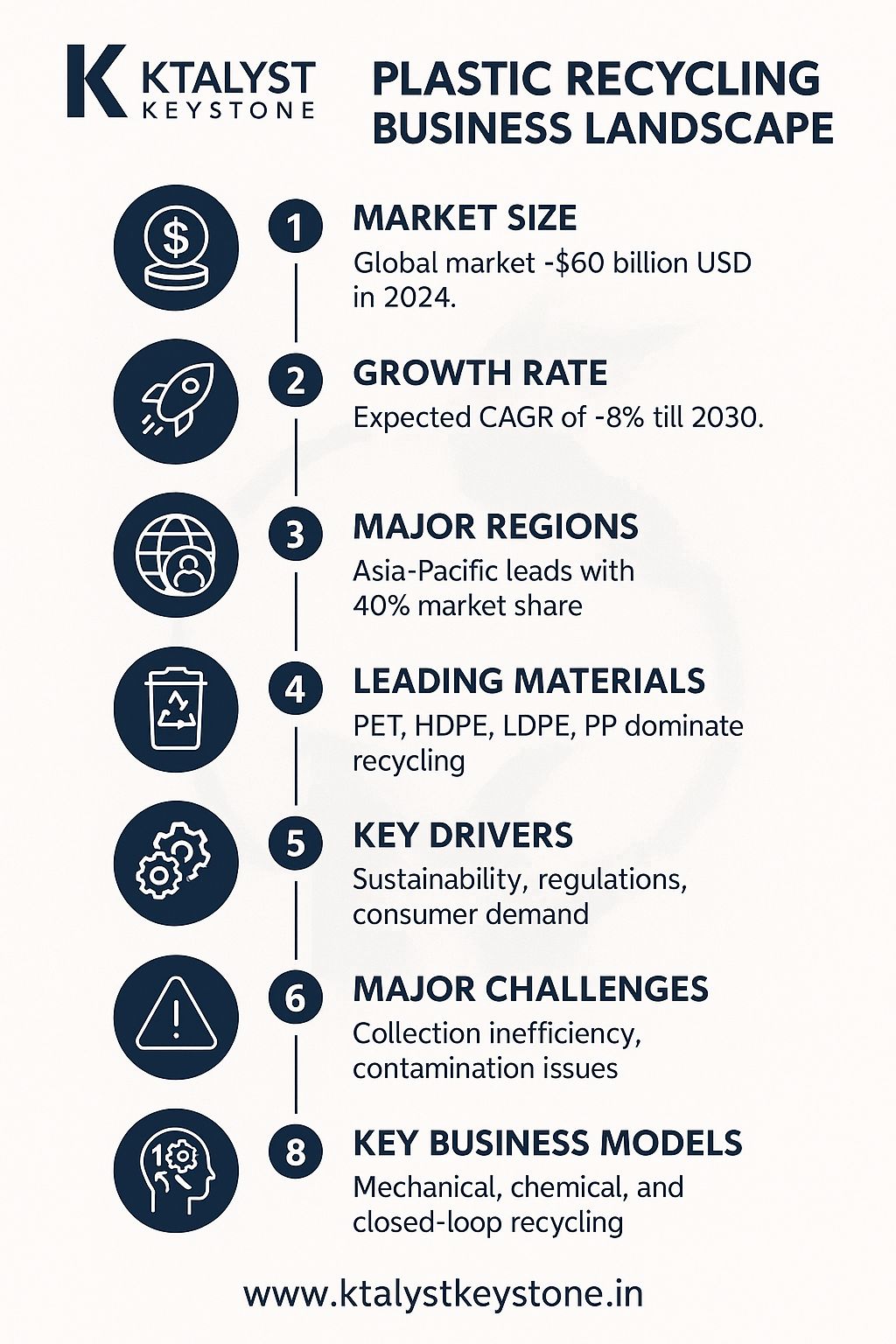
GlobalLandscape
🌎 MarketSize (2024): ~$60 billion USD
📈 ExpectedCAGR (2024–2030): ~8%
🗺️ TopRegions:
AsiaPacific (~40% share)
Europe (~25%)
NorthAmerica (~20%)
KtalystInsight:
Asia’s dominance is fueled by aggressive policyshifts (China’s Green Fence, India’s EPR regulations) — local recycling startups and global joint ventures are booming.
KtalystRecyclingRating
⭐ AsiaPacific: 8.5/10 — Rapid growth, moderate tech.
⭐ Europe: 9.2/10 — High regulation, tech leadership.
⭐ NorthAmerica: 8.0/10 — Innovation-led recycling but slower mass adoption.
⭐ LATAM & Africa: 5.5/10 — Emerging opportunity zones with infra gaps.
KtalystInsight:
Europe sets the goldstandard with circulareconomy laws, while Asia leads in volume but needs advanced tech and traceability upgrades.
5KeyApplications
🛍️ Packaging – Bottles, containers, films (PET, HDPE).
👕 Textiles – Recycled polyester for apparel and furnishings.
🚗 Automotive – Lightweight components from recycled PP and composites.
🏗️ Construction – Pipes, panels, roofing from recycled plastics.
🎮 ConsumerGoods – Toys, gadgets, daily-use products.
KtalystInsight:
Packaging & Textiles together consume over 60% of all recycled plastics — brands chasing ESG targets are pivoting toward 100% recycled content.
FuturePotential
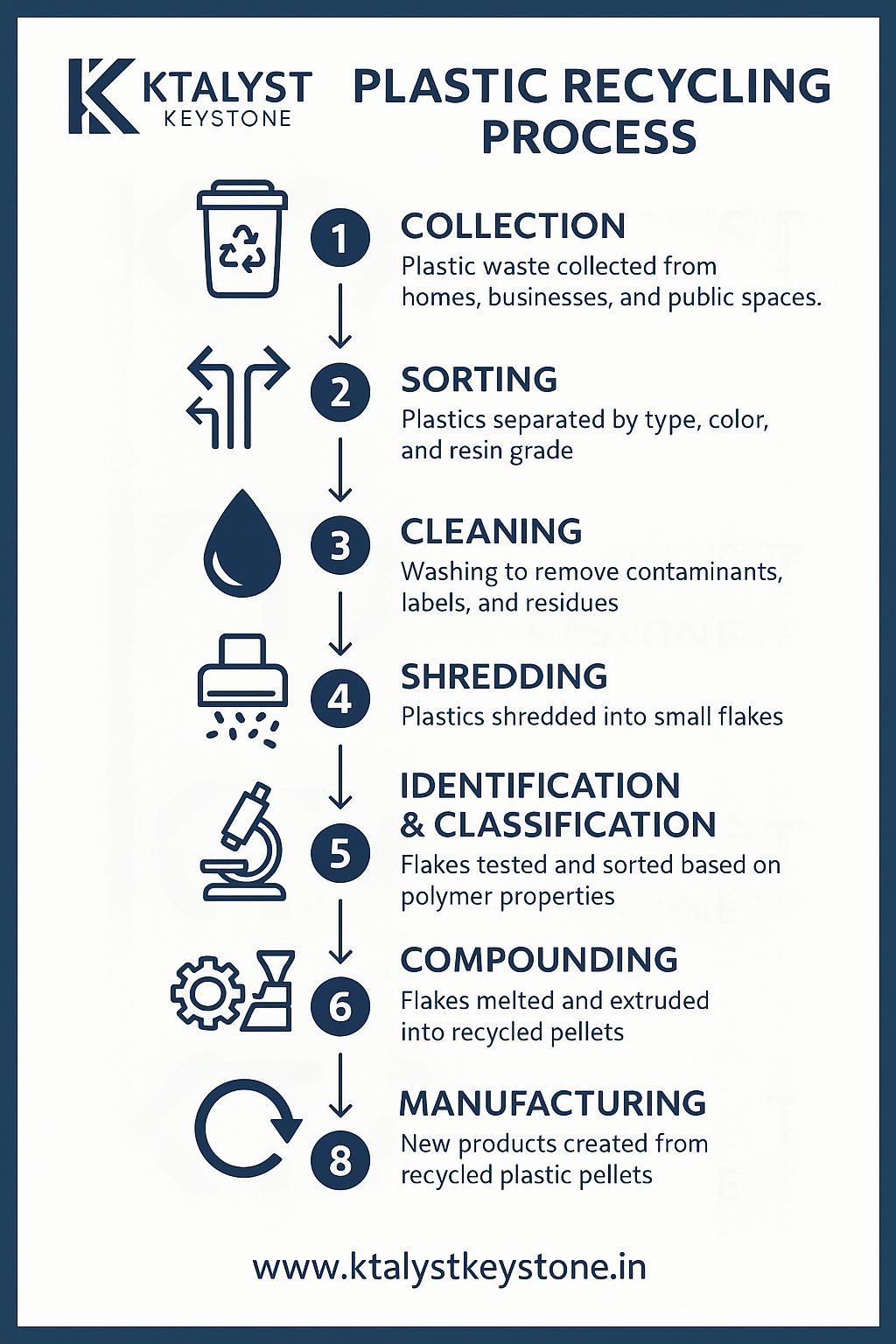
⚙️ AdvancedRecyclingTech (ChemicalRecycling): Unlocking hard-to-recycle plastics.
🤖 AIandRobotics: Smart sorting tech increasing plant yields by 25–30%.
🌿 BioplasticsHybridization: Next-gen materials mixing recycled polymers with bio-based resins.
KtalystInsight:
MechanicalRecycling dominates today, but ChemicalRecycling will be the investmentmagnet for the next decade, especially in Asia and the US, driven by stricter EPR mandates.
FinalThought
The PlasticRecycling economy is no longer a side act.
It’s the next trilliondollaropportunity, the ESGcredibility anchor, and a critical climatestrategy.
At KtalystKeystone, we believe recycling is no longer optional; it’s industrialevolution.
Originally published on LinkedIn on 2025-04-27 11:21:36: https://www.linkedin.com/feed/update/urn%3Ali%3AugcPost%3A7322218357754081280
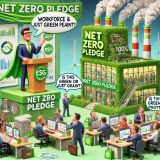
🚨 “Workforce, Workplace & Greenwashing: The ESG Illusion?” 🌍💼📊
Companies boast sustainability targets, but without employee buy_in, ESG is just a boardroom mirage. Are businesses embedding sustainability in workplace culture, or just selling a greenwashed dream?
📊 The Workforce Sustainability Gap
🚨 83% of ESG commitments lack workforce integration. (Morningstar, 2025)
🚨 Only 17% of employees understand their company’s sustainability strategy. (WEF, 2025)
🚨 65% don’t know how their work impacts ESG goals. (McKinsey, 2025)
🚨 92% of CEOs discuss ESG, but only 46% invest in workforce training. (Deloitte, 2025)
🚨 Just 18% of businesses provide sustainability upskilling. (ILO, 2025)
📌 RealityCheck: If employees don’t understand sustainability, ESG is just corporate greenwashing.
🏢 The Workplace ESG Contradiction
🔻 Companies push sustainability, but offices tell another story:
✔️ 56% of companies with net-zero pledges still run high-carbon workspaces. (Carbon Disclosure Project, 2025)
✔️ 78% of corporate buildings lack energy-efficient retrofits. (Green Building Council, 2025)
🔻 Greenwashing in workplace sustainability:
✔️ 48% of “paperless” companies still rely heavily on printed documents. (PwC, 2025)
✔️ 73% of companies claim sustainable procurement, yet 60% import from high-emission suppliers. (Supply Chain ESG, 2025)
📌 RealityCheck: The modern workplace often contradicts corporate sustainability goals.
🛑 Who’s Greenwashing? Workforce & ESG Failures
🔻 Big Tech – Companies like Google & Meta push clean energy narratives but struggle with e-waste & server carbon footprints.
🔻 Fast Fashion – Brands like H&M & Zara promote ‘conscious collections’ while continuing mass production.
🔻 Automotive Giants – Toyota & GM commit to EVs but still invest billions in fossil fuel vehicles.
📌 RealityCheck: ESG goals without internal transformation = Greenwashing 101.
🏆 Who’s Getting ESG Right?
✅ Unilever – Mandatory ESG training for all employees.
✅ Microsoft – Internal ‘Green Skills’ certification program.
✅ Mahindra Group – Ties sustainability KPIs to employee performance.
📌 RealityCheck: Real ESG progress starts with an informed and engaged workforce.
🏆 KeyTakeaway
ESG could be the key to a greener corporate world, should be part of daily workforce operations, but would be just corporate greenwashing if it doesn’t go beyond PR.
👉 Does your workplace walk the ESG talk, or is it just a well-branded illusion? Drop your thoughts below! 👇
Originally published on LinkedIn on 2025-02-16 08:06:14: https://www.linkedin.com/feed/update/urn%3Ali%3AgroupPost%3A100646-7296802039798403073
NamasteGreenIndia’s Ethanol Revolution: Achieving 20% Blending with a Sustainable Edge
India is on the brink of achieving a 20% ethanol blending target, a transformative step towards energy independence, environmental sustainability, and agricultural empowerment. Here’s how this revolution is shaping up:
📈 The Progress So Far
🟢 2014: Ethanol blending in petrol was just 1.53%.
🟢 2024: Achieved 15%, with 4.62 million metric tonnes (MMT) of ethanol produced.
🟢 2025 Target: Projected to produce 10.2 MMT annually to meet blending and industrial needs.
🌍 Economic & Environmental Wins
💰 USD 4 Billion Saved: Annual savings on crude oil imports.
🌎 10 MMT CO₂ Reduced: Emissions cut significantly with 20% ethanol blending.
👷 500,000 Jobs Created: Boosting rural employment through distilleries and supply chains.
🚢 USD 300 Million Export Potential: Surplus ethanol positioned for international markets.
🚗 Automotive Industry’s Ethanol Push
🔧 Flex-Fuel Vehicles: Tata Motors, Mahindra, Maruti Suzuki, and Hyundai to launch 100% bio-ethanol vehicles within six months.
🛢️ Fossil Fuel Demand Cut: Flex-fuel vehicles to reduce reliance on fossil fuels by 5.5 MMT annually.
🏭 Toyota’s Commitment: Investing ₹20,000 crore (USD 2.4 billion) in ethanol-compatible vehicle production.
🌾 Agricultural Boost
🌱 8-9 MMT of Sugar: Diverted annually for ethanol production, stabilizing prices and supporting farmers.
🌾 1.5 MMT of Surplus Grains: Utilized for ethanol, ensuring sustainable revenue for agriculture.
⚡ Challenges & Opportunities
📊 Feedstock Demand: India needs an additional 2 MMT of sugarcane and 1.5 MMT of surplus grains for sustainable production.
🏗️ Infrastructure Gaps: Only 30% of fuel pumps are ready for E20 blending.
🌍 Global Leadership: Scaling production and refining distribution could position India as a leader in ethanol exports.
💡 Why This Matters
India’s ethanol revolution is more than a blending target—it’s about energy self-reliance, cutting carbon footprints, and empowering rural economies. This initiative showcases India as a global benchmark for sustainable energy transitions.
💬 Let’s discuss how India’sEthanolJourney is driving SustainableEnergy, AutomotiveInnovation, and RuralEmpowerment! 🚀
Originally published on LinkedIn on 2025-01-16 09:51:29: https://www.linkedin.com/feed/update/urn%3Ali%3AgroupPost%3A12538632-7285594503120347137

