🚀 Sustainability in 2025: Who’s Leading, Who’s Lagging & What’s Changing? 🌍📉⚡
If sustainability were a race, some are sprinting, some are jogging, and others are still tying their shoes.
In 2025, sustainability is no longer just about ESGCompliance—it’s about survival. But as regulations shift, businesses hesitate, and grassroots efforts grow stronger, the question remains: Who is truly walking the talk?
📊 1. Europe is Tightening Rules—But Not for Everyone 🇪🇺
🔹 EU’s Corporate Sustainability Reporting Directive (CSRD) is evolving—planning to raise the reporting threshold from 250 employees & €40M turnover to 1,000 employees & €450M.
🔹 Impact? This will exempt thousands of smaller companies while still holding big corporations accountable.
🔹 RealityCheck: Is this a win for business flexibility or a loophole for greenwashing?
📌 Source: Reuters
📊 2. CEOs Know Sustainability = Profit, But Are They Acting? 📈
🔹 PwC’s 2025 CEO Survey: 🌱 29% of Irish CEOs skipped climate investments last year due to regulatory confusion—yet companies that link sustainability to executive compensation see higher revenues.
🔹 The Dilemma: CEOs acknowledge climate risks but struggle with unclear policies.
🔹 RealityCheck: Are companies stalling progress just because it’s complicated?
📌 Source: The Times
📊 3. Grassroots Action is Filling the Gaps 🌱🏡
🔹 Local Sustainability Wins: In Iowa City, a retirement community has diverted thousands of pounds of food waste from landfills—something that big corporations fail to do at scale.
🔹 The Takeaway: Real impact isn’t just about billion-dollar pledges—it’s about execution, big or small.
📌 Source: The Gazette
🏆 KeyTakeaway: The Sustainability Race in 2025
✅ Regulators could be making reporting easier, but risks of weaker accountability loom.
✅ CEOs should be making sustainability a financial strategy, not just PR.
✅ Communities are proving that action matters more than announcements.
💬 What’s your take? Are we moving forward fast enough, or just shifting responsibilities? Drop your thoughts below! 👇
Sustainability ESG ClimateAction GreenBusiness CorporateResponsibility CircularEconomy
https://lnkd.in/d-EBgCzk
Source / shared link: https://www.reuters.com/sustainability/eu-pare-back-sustainability-rules-companies-draft-shows-2025-02-22/
Originally published on LinkedIn on 2025-02-23 03:52:40: https://www.linkedin.com/feed/update/urn%3Ali%3Ashare%3A7299274941965721601
🚀 “The 3Es of ₹Ethanol: Environment, Economy & Efficiency – Is India Getting It Right?” 🌱💰⚡
Fueling sustainability or fueling a crisis?
India’s EthanolBlending mission is racing toward 20% ethanol-petrol blending (E20) by 2025-26, aiming to slash ₹53,894 crore ($6.5B) in crude oil imports annually while cutting CO₂ emissions by 2.3 million tonnes—equivalent to taking 4.2 lakh cars off the road. (MoPNG, 2024) But does ethanol truly deliver on Environment, Economy, and Efficiency?
🌍 1. Environment: Green or Resource-Heavy?
✔️ CO₂ Reduction: Ethanol blending cut 2.3M tonnes of CO₂ in 2023, but its full lifecycle emissions remain debated. (MoPNG, 2024)
✔️ Water Crisis: Producing 1L of ethanol from sugarcane requires 2,860L of water, straining groundwater. (NITI Aayog, 2024)
✔️ Crop Dependency: 92% of India’s ethanol comes from sugarcane, a crop linked to declining soil fertility. (IEA, 2024)
✔️ Air Quality Gains: E20 reduces particulate matter by 30-50%, improving urban air pollution. (ICCT, 2024)
📌 RealityCheck: Can ethanol be truly sustainable when it risks food & water security?
💰 2. Economy: Cost Savings vs. Inflation?
✔️ Fuel Independence: Ethanol saved India $6.5B in oil imports in 2023. (MoPNG, 2024)
✔️ Investment Boom: The sector is attracting ₹41,000 crore ($4.9B) in new investments by 2025. (NITI Aayog, 2024)
✔️ Job Creation: Ethanol production has generated 4 lakh jobs in rural India. (MoPNG, 2024)
✔️ Food Price Spike: 40L tonnes of sugarcane & 25L tonnes of grain were diverted to ethanol in 2023, contributing to food inflation. (FAO, 2024)
📌 RealityCheck: Are we trading food security for fuel independence?
⚡ 3. Efficiency: Can Ethanol Compete with Petrol?
✔️ Mileage Drop: E20 reduces fuel efficiency by 6-10%, requiring more frequent refueling. (SIAM, 2024)
✔️ Vehicle Readiness: Only 20% of India’s petrol vehicles are E20-ready. (MoRTH, 2024)
✔️ Slow Adoption: Just 6% of fuel stations nationwide are E20-compliant. (BPCL, 2024)
✔️ Flex-Fuel Future: Maruti, Toyota & Honda have launched E85-compatible vehicles, but mass adoption is slow. (AutoCar India, 2024)
📌 RealityCheck: Can ethanol match petrol’s efficiency without major tech breakthroughs?
🇺🇸 US Interest in India’s Ethanol Push
🔹 Corn Exports: The US exported $1.2B worth of ethanol-friendly corn to India in 2023. (USDA, 2024)
🔹 Big Oil & Biofuels: ExxonMobil & Chevron have invested $800M in India’s ethanol supply chain. (Bloomberg, 2024)
🔹 Strategic Partnerships: US firms are eyeing India’s ₹41,000 crore ($4.9B) ethanol market for global expansion. (Reuters, 2024)
Originally published on LinkedIn on 2025-02-21 17:04:12: https://www.linkedin.com/feed/update/urn%3Ali%3AgroupPost%3A82951-7298749364091428865
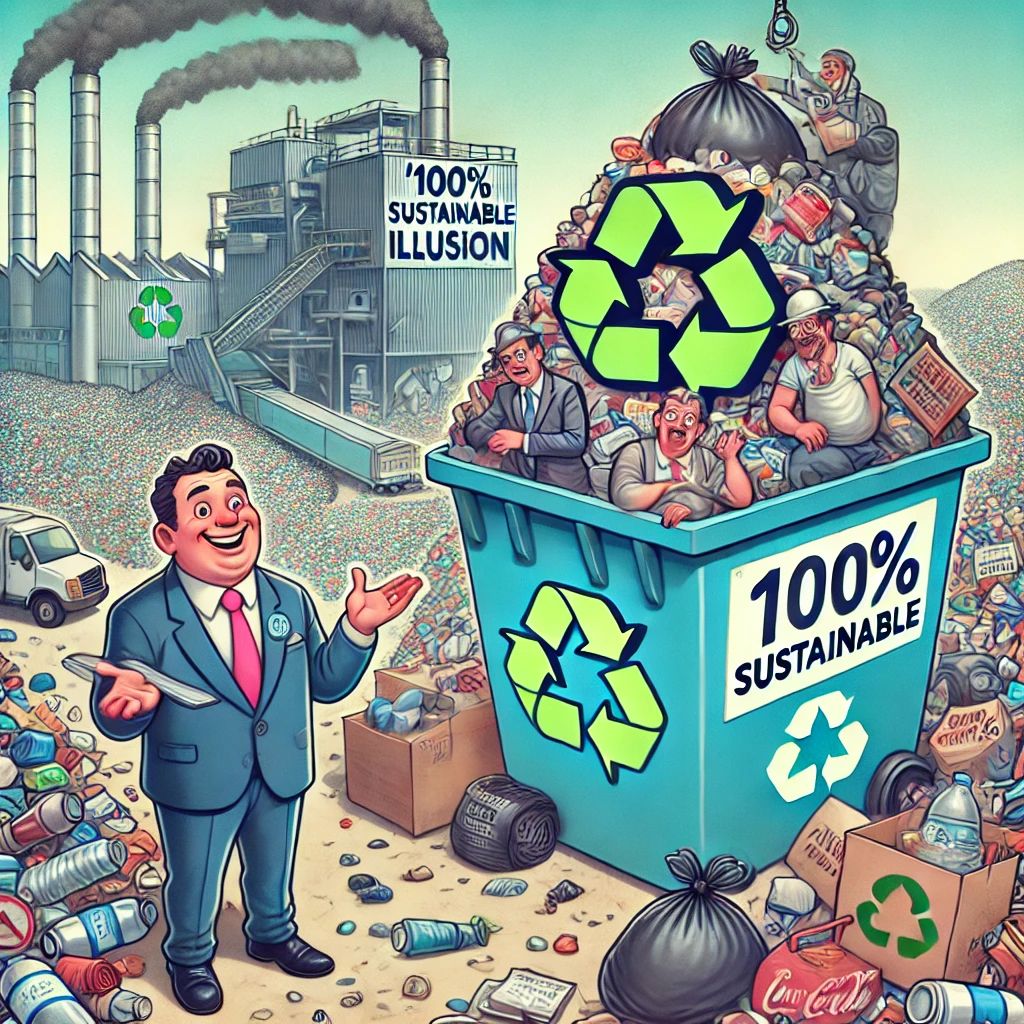
♻️ “The Waste Illusion: Is Sustainability Solving or Just Shifting_the_Problem?” 🌍🚮
Recycling alone won’t save the planet if we keep producing waste at record speed.
From plastic bans to circular economies, sustainability efforts often focus on waste reduction and recycling. But the truth? We’re generating_more_waste_than_ever_before.
🚨 Global waste production will hit 3.4 billion metric tons by 2050—a 70% increase from today. (WorldBank, 2025)
🚨 Only 9% of all plastic waste ever produced has been recycled. (UNEP, 2025)
🚨 Fashion waste alone contributes 92 million tons of landfill every year. (EllenMacArthurFoundation, 2025)
📌 RealityCheck: If sustainability isn’t fixing the waste cycle, are we just postponing the crisis?
🔄 The Waste Cycle: Are We Really Closing the Loop?
✅ Reduce – Brands promote low-waste lifestyles, yet global consumerism is at an all-time high.
✅ Reuse – Circular economies grow, but single-use culture dominates in food, fashion, and tech.
✅ Recycle – Waste sorting improves, but less than 20% of e-waste and plastics are ever recycled. (WEF, 2025)
🚨 RealityCheck: If new waste keeps outpacing recycling, how sustainable is our solution?
⚠️ Biggest Sustainability Loopholes in Waste Management
🔹 Plastic Offsets: Many brands buy plastic credits instead of reducing actual waste. (WWF, 2025)
🔹 Fast Fashion Recycling Myths: Less than 1% of clothing is truly recycled into new garments. (Greenpeace, 2025)
🔹 Food Waste Greenwashing: 30% of all food produced is still wasted despite “sustainable” sourcing. (FAO, 2025)
🔹 E-Waste Lies: Brands promote “recyclable electronics,” but 53.6M tons of e-waste were trashed last year. (UN, 2025)
📌 RealityCheck: A circular economy isn’t working if companies keep producing waste faster than we can recycle.
🏆 KeyTakeaway
♻️ Sustainability should be about eliminating waste at its source, not just recycling it later.
🚨 Greenwashing could be misleading us into thinking waste is under control.
🔄 A real circular economy would be about reducing overproduction, not just increasing recycling efforts.
👉 Are we solving waste or just shifting it around? Drop your thoughts below! 👇
Originally published on LinkedIn on 2025-02-19 05:44:35: https://www.linkedin.com/feed/update/urn%3Ali%3AgroupPost%3A9088131-7297853557188227072
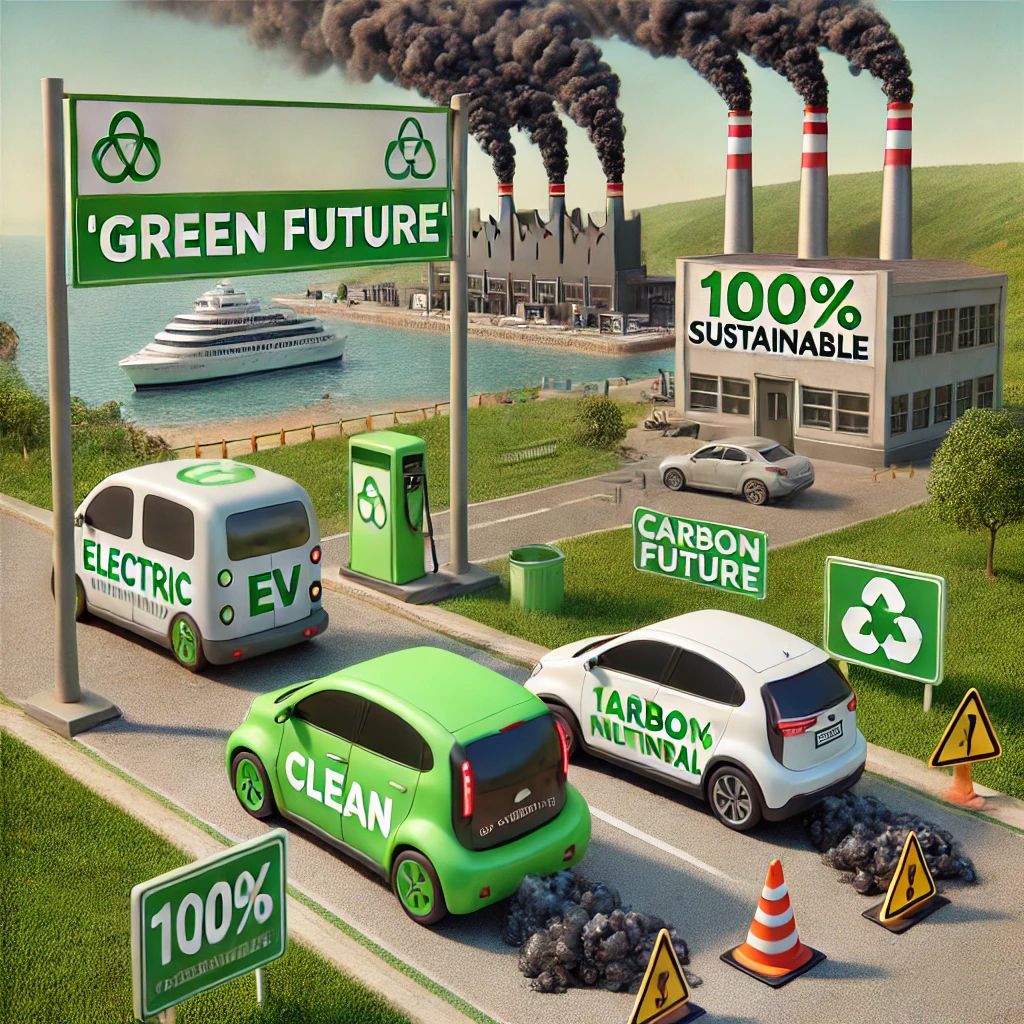
🚗⚡ YR2035’s Green_Auto_Mirage: Are EVs, Hydrogen Fuel Cells, and Synthetic Fuels Truly Sustainable or Just Greenwashing? 🌍💨
As we race toward 2035’s petrol-diesel ban, automakers push EVs, HFCVs, and SyntheticFuels as the future. But are these real solutions or clever marketing?
🔋 EVs: Cleaner or Just Elsewhere Emissions?
📌 Battery Production: An 80 kWh battery emits 2.4 – 16 metric tons of CO₂—equal to driving a gasoline car for 5-7 years. (MIT, 2024)
📌 Resource Impact: Each EV battery needs 63kg lithium, cobalt, & nickel, causing deforestation & water pollution. (GreenCars, 2024)
📌 Power Grid Dependence: An EV running on coal-based electricity emits more CO₂ per mile than hybrids. (EPA, 2024)
📌 Reality Check: EVs help only if powered by clean energy.
💧 Hydrogen: Clean Hype or Fossil Fuel Disguise?
📌 Production Problem: 96% of global hydrogen is made from natural gas & coal, emitting 830M metric tons of CO₂. (IEA, 2024)
📌 Efficiency Loss: HFCVs require 3x more renewable electricity than EVs. (US DOE, 2024)
📌 Reality Check: Unless made from renewables, hydrogen is just another fossil fuel.
⛽ Synthetic Fuels: Carbon-Neutral or Clever Greenwashing?
📌 Energy Guzzler: Producing 1L of synthetic fuel takes 6x more energy than refining petrol. (Fraunhofer, 2024)
📌 Still Polluting: Burns CO₂ and emits more NOx than conventional fuels. (MDPI, 2024)
📌 Reality Check: Synthetic fuels aren’t zero-emission—they just relocate pollution.
🚨 Greenwashing in the Auto Industry
🔻 BMW, Toyota, Honda exaggerated EV carbon savings by omitting battery emissions. (Greenpeace, 2024)
🔻 Porsche’s synthetic fuel plant claims zero emissions but runs on coal-powered electricity. (The Guardian, 2024)
🔻 India & U.S. promised 1M EV chargers by 2025, yet less than 20% installed. (BloombergNEF, 2024)
📌 Reality Check: Many automakers sell ‘green’ promises, but not real sustainability.
🏆 Key Takeaway: Hype or Hope?
🚘 EVs, HFCVs, & Synthetic Fuels could be clean if the supply chain is green.
♻️ They should be backed by strict sustainability policies.
⚠️ But they would be just another greenwashing scandal if industries don’t walk the talk.
👉 Are we truly heading toward sustainable mobility, or just another green illusion? 👇
Originally published on LinkedIn on 2025-02-18 11:22:14: https://www.linkedin.com/feed/update/urn%3Ali%3AgroupPost%3A82093-7297576141614190592
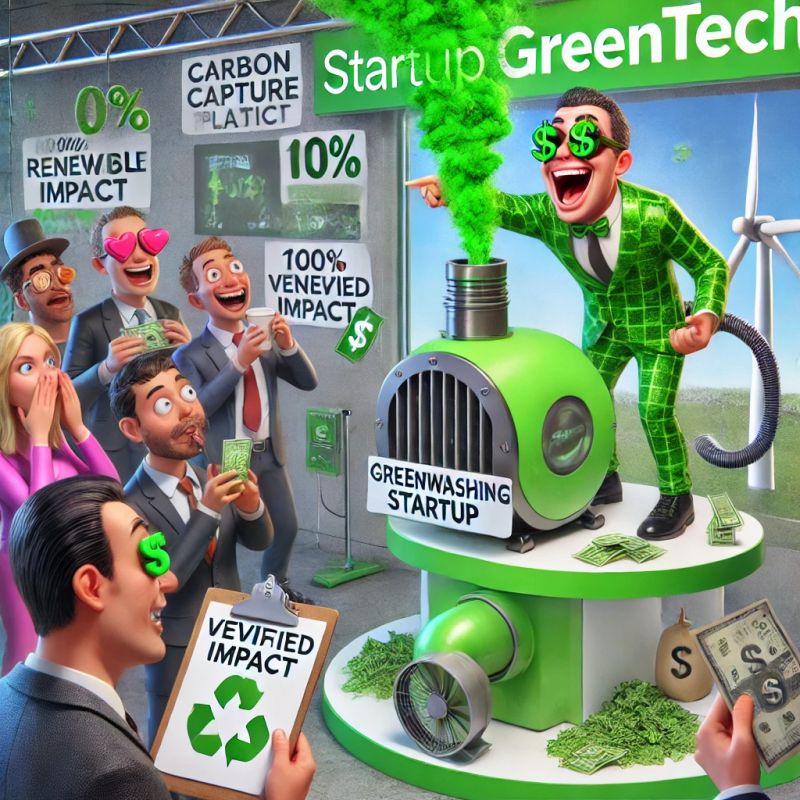
🌿💸 “The Billion_Dollar_Carbon_Mirage: Are Climate Startups the New Face of Greenwashing?
With venture capital flooding into climate tech, the world is betting big on startups promising net-zero innovations. But how many of these so-called ‘climate disruptors’ are truly sustainable, and how many are just cashing in on the green gold rush?
📊 The_Climate_Startup_Boom – Hype vs. Reality
✅ VC Money is Pouring In:
✔️ $60B invested in climate startups in 2024, a record high. (PitchBook, 2025)
✔️ Green energy & carbon capture saw a 310% funding surge in 3 years. (WEF, 2025)
🚨 Reality Check: Funding doesn’t equal impact—many startups prioritize valuations over verified sustainability.
🔍 How Climate Startups Greenwash Investors & Consumers
🛑 1. Carbon_Capture Scams: Startups claiming to remove CO₂ from air but with no independent verification.
🛑 2. ‘Green_AI’ That Isn’t Green: AI-powered sustainability platforms that run on carbon-heavy data centers.
🛑 3. Fake_Circular_Economy Models: Brands advertising “100% recycled” but only 10% of their product actually is.
🛑 4. Tree_Planting Offsets Without Proof: Companies raising billions on reforestation projects—but the land remains barren.
📌 Reality Check: Green startups can be just as guilty of false sustainability claims as big corporations.
⚠️ Biggest Climate Startup Greenwashing Scandals (2024)
❌ CarbonX: Raised $500M for direct air capture, but reports show 95% of emissions “captured” were never stored. (Forbes, 2024)
❌ EcoFuel: Claimed “cleanest biofuel” but emitted 2x more CO₂ than diesel. (Bloomberg, 2024)
❌ ReGen Plastics: Promised 100% ocean plastic recycling, but used only 8% in production. (Greenpeace, 2024)
📌 Reality Check: If climate startups mislead, are they solving the problem—or becoming it?
🏆 KeyTakeaway
The Climate Startup Boom could be a game-changer if real innovation leads the way, should be held accountable through independent audits, but would be the next greenwashing scandal if hype replaces real action.
👉 Are climate startups the future or just another sustainability bubble? Let’s discuss! 👇
Originally published on LinkedIn on 2025-02-17 17:37:01: https://www.linkedin.com/feed/update/urn%3Ali%3AgroupPost%3A4385073-7297308068034363394
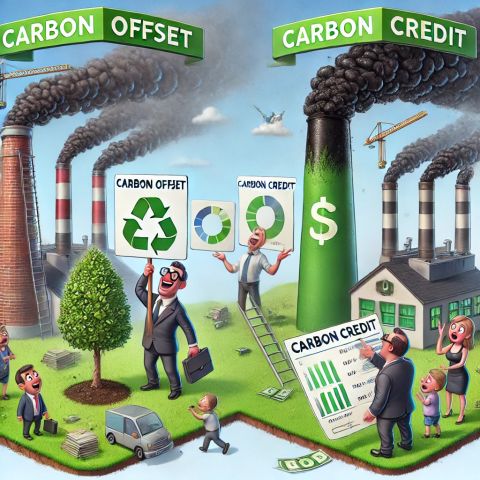
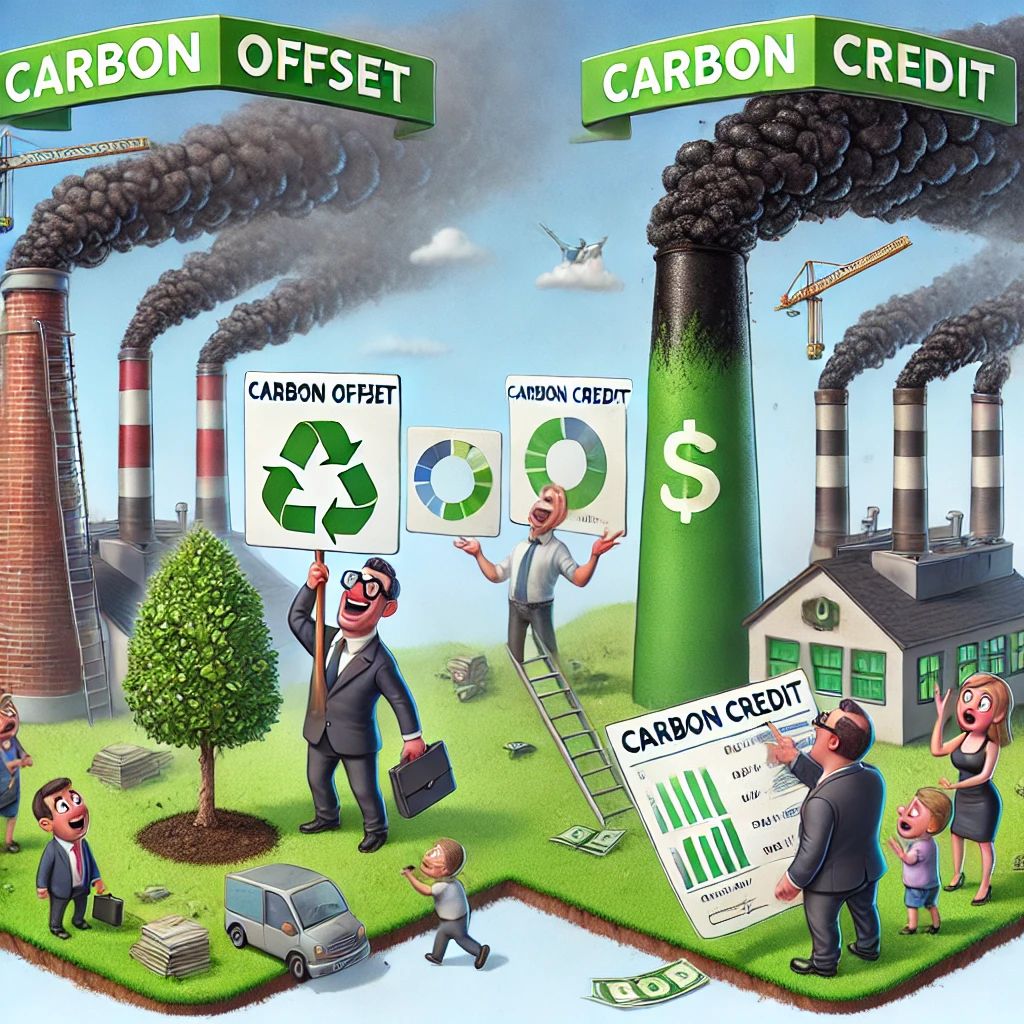
🚨 “Carbon_Offsets vs. Carbon_Credits: TheGreenwashingLoophole?” 💰♻️
With corporations pledging net-zero goals, carbon markets are booming—but do we really understand carbon offsets vs. carbon credits? Or is this just a billion-dollar greenwashing loophole?
📊 CarbonOffsets vs. CarbonCredits: What’s the Difference?
🔹 CarbonOffset = A company/individual voluntarily compensates for emissions by investing in green projects (e.g., tree planting, renewable energy).
🔹 CarbonCredit = A tradable permit issued by governments or markets, allowing companies to emit 1 metric ton of CO₂—can be sold, bought, or banked.
📌 RealityCheck: Offsets are voluntary; credits are part of regulated carbon markets.
📉 TheMarketBoom: Who’s Buying?
🚨 Global carbon market value hit $950B in 2024, up 30% YoY. (World Bank, 2025)
🚨 Corporate demand for carbon offsets surged 47%, led by tech, finance & oil giants. (Carbon Market Watch, 2025)
🚨 Top buyers:
✅ Microsoft: 1.5M tons in forest-based offsets.
✅ Shell: Spent $450M on credits—but still expands fossil fuel ops.
✅ Amazon: Invested in nature-based offsets but emissions grew 40% since 2020.
📌 RealityCheck: Many companies buy offsets while continuing high-carbon activities.
⚠️ TheGreenwashingProblem: Offsets ≠ Real Reductions
🔻 95% of carbon offsets fail to deliver actual emission cuts. (ProPublica, 2025)
🔻 Only 6% of forest-based carbon credits are verifiable. (Guardian, 2025)
🔻 Oil giants buy millions in offsets but expand fossil fuel extraction. (IEA, 2025)
📌 RealityCheck: Carbon credits allow polluters to delay real decarbonization.
🏆 Who’s Doing It Right?
✅ Sweden 🇸🇪 – 100% transparent carbon pricing & strict offset validation.
✅ Singapore 🇸🇬 – First global carbon exchange (CIX) for verifiable credits.
✅ EU 🇪🇺 – Carbon Border Tax enforces real cuts, not just offsets.
📌 RealityCheck: Strong policies + transparency = real impact.
🏆 KeyTakeaway
Carbon markets could be a powerful tool for climate action, should be strictly regulated, but would be a loophole for greenwashing if companies keep using them to avoid real emission cuts.
👉 Are carbon offsets a real solution or just a climate smokescreen? Drop your thoughts below! 👇
Originally published on LinkedIn on 2025-02-13 20:46:18: https://www.linkedin.com/feed/update/urn%3Ali%3AgroupPost%3A82093-7295906154327498752
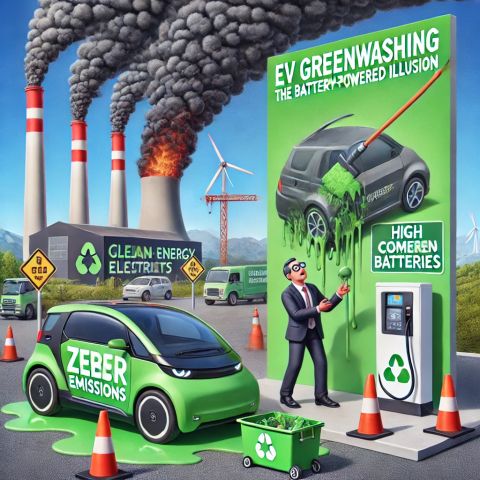
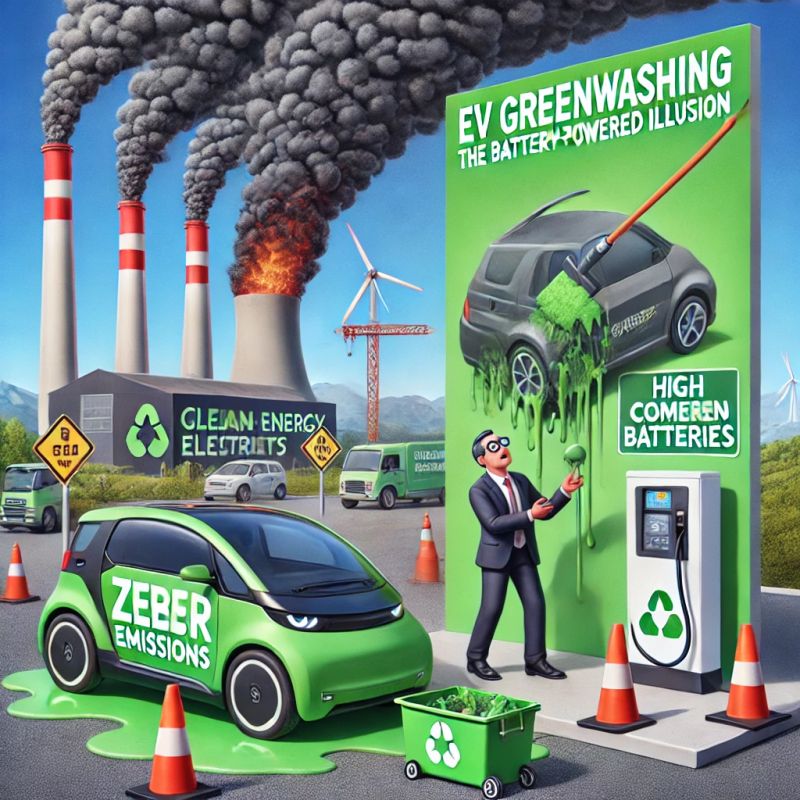
🚘🔋 “EVs & Greenwashing: The Truth_Behind_Zero_Emissions_Claims” 🌍⚡
🚨 Are electric vehicles (EVs) really green, or are they just a new kind of greenwashing?
📊 Global EV sales surged past 14 million in 2024, yet concerns about misleading sustainability claims are rising. (IEA, 2024)
💰 EV companies received over $100B in green subsidies last year, but are they truly sustainable? (World Bank, 2024)
📌 Reality Check: EVs may not emit carbon, but their supply chains sure do.
🌱 Greenwashing in the EV Industry
🚨 #‘Zero Emissions’ Claims Are Misleading
🔹 EVs produce no tailpipe emissions, but battery production & charging still generate CO₂.
🔹 BMW & MG Motors were banned from advertising ‘zero emissions’ without disclaimers. (UK ASA, 2024)
🚨 Hybrid Vehicles Marketed as ‘Electrified
🔹 Toyota accused of misleading consumers by branding hybrids as ‘electrified.’ (Consumer Watchdog Ekō, 2024)
🔹 Most hybrids still rely on fossil fuels—but their marketing suggests otherwise.
🚨 Battery Supply Chain Concerns
🔹 An EV battery requires 500,000 lbs of earth mining for lithium, cobalt & nickel. (IEA, 2024)
🔹 China controls 70% of the world’s lithium refining, raising geopolitical concerns. (Bloomberg, 2024)
🚨 Coal-Powered EVs? The Dirty Secret
🔹 Over 60% of global electricity still comes from fossil fuels. (IEA, 2024)
🔹 Charging an EV in a coal-powered country negates its ‘green’ impact.
📌 Reality Check: EVs are a step forward, but their true sustainability depends on clean energy grids.
⚖️ Regulatory Crackdowns Begin
✅ EU’s Green Claims Directive – Stricter rules on misleading sustainability claims. (EU Commission, 2024)
✅ US SEC’s ESG Disclosure Rules – EV makers must prove their green claims. (Reuters, 2024)
✅ India’s EV Incentives Shift – Government tightening ESG norms for subsidies. (Economic Times, 2024)
📌 Reality Check: Greenwashing fines are increasing—is the EV industry ready?
🏆 KeyTakeaway
💡 EVs could be the future of transport, should be part of a broader clean energy transition, but would be another greenwashing disaster if sustainability claims aren’t backed by action.
👉 Are EVs really driving us to a greener future, or is it just a battery-powered illusion? Let’s discuss. 💬
Originally published on LinkedIn on 2025-02-09 17:38:07: https://www.linkedin.com/feed/update/urn%3Ali%3AgroupPost%3A82951-7294409242336227329
💰📈 CSR in India: ₹29,000 Crore ($3.5B) Spent—But Is It Really Making an Impact?
🚀 ₹29,000 Crore ($3.5 Billion). That’s how much Indian companies invested in Corporate Social Responsibility (CSR) in FY 2022-23—a 13% jump from last year. (Business Standard, 2024)
📊 Yet, only 2.5% of CSR funds have reached India’s most backward districts in 9 years. (Sattva Consulting, 2024)
🏆 56% of companies are now exceeding their 2% CSR mandate, signaling a shift from compliance to impact. (CSR Outlook Report, 2024)
📌 Reality Check: CSR budgets are growing—but is the impact reaching where it matters most?
📊 Where Did India’s CSR Money Go?
✅ Top 3 CSR Priorities in 2024:
🔹 Education – ₹8,670 Crore ($1.04B) – 29.9% of total CSR funds. (Sattva, 2024)
🔹 Healthcare – ₹6,325 Crore ($760M) – 21.8% of total CSR funds. (CSR Box, 2024)
🔹 Rural Development – ₹2,543 Crore ($305M) – 8.77% of total CSR funds. (MCA Data, 2024)
🚨 Underfunded Sectors:
❌ Climate & Sustainability – Just 5% of total CSR spending. (India ESG Report, 2024)
❌ Backward Districts – Only 2.5% of CSR funds in 9 years. (Sattva, 2024)
❌ Skill Development – Lagging despite workforce challenges. (Economic Times, 2024)
📌 Reality Check: More money doesn’t always mean better impact—are CSR funds going where they’re needed?
💼 Companies Leading the CSR Game in India
🏆 Reliance Industries – ₹1,271 Crore ($152M) spent on healthcare & rural development. (CSR India Tracker, 2024)
🏆 Tata Group – ₹1,066 Crore ($127M) spent on education & skill-building. (Business Standard, 2024)
🏆 Infosys – ₹377 Crore ($45M) invested in climate action & digital literacy. (Infosys ESG Report, 2024)
🚨 The Flip Side: Companies Falling Short
❌ Several mid-sized firms yet to meet 2% CSR mandate. (MCA Report, 2024)
❌ Growing focus on ‘brand-building CSR’ vs. grassroots impact. (India CSR Network, 2024)
📌 Reality Check: CSR isn’t just a compliance checkbox—it’s about meaningful change.
🏆 KeyTakeaway
💡 CSR could be India’s game-changer for inclusive growth, should be strategically focused on high-impact areas, but would be wasted if it remains a PR exercise.
👉 Are Indian companies truly driving change, or just chasing compliance? Let’s discuss. 💬

Originally published on LinkedIn on 2025-02-07 19:01:12: https://www.linkedin.com/feed/update/urn%3Ali%3AgroupPost%3A121193-7293705375868977153
💰🌍 GreenBonds: A $5 Trillion Climate Fix or Just a Financial Illusion?
🚨 USD_5_Trillion. That’s the estimated value of the green bond market—but is it financing real climate action or just another Wall Street ESG bubble? Let’s break down who’s issuing, who’s benefiting, and who’s being misled.
📊 Global Green Bond Issuance: Who’s Leading?
🏦 Top Green Bond Issuers (2023):
🇨🇳 China – $85B issued, but 50% linked to ‘clean coal’ and fossil gas. (CBI, 2024)
🇺🇸 United States – $96B issued, primarily in renewables, clean transport, and grid expansion. (Climate Bonds Initiative, 2024)
🇪🇺 Europe – $309.6B total issuance, with Germany ($36B) and France ($42B) leading. (FT, 2024)
🇮🇳 India – $15B issued, with 60% YoY growth, targeting solar, wind & green hydrogen. (RBI, 2024)
📌 Reality Check: If ‘clean coal’ qualifies for green bonds, are we really funding sustainability?
⚠️ The Greenwashing Problem
❌ Only 2% of corporate & municipal green bonds actually fund new green projects. (NYU Stern, 2024)
❌ 60% of green bonds lack full transparency on fund usage. (Moody’s, 2024)
❌ Many green bonds still finance high-carbon sectors, using weak ESG criteria.
📌 Reality Check: Without strict regulations, green bonds are just cheap debt for corporations, not climate solutions.
🔍 Green Bond Market Success vs. Failures
✅ Success: EU’s Green Bond Leadership
The EU is set to become the first region with a mandatory ‘Green Bond Standard’. (EU Commission, 2024)
#$160B in green bond issuance funded renewables, clean mobility & climate adaptation.
❌ Failure: India’s Green Bond Struggles
70% of India’s latest green bond auction failed to attract buyers. (Reuters, 2024)
Investors demanded higher yields, questioning climate impact & financial viability.
✅ Success: Sovereign Green Bonds Booming
Governments in Germany, France, and Canada are issuing record green bonds to fund infrastructure.
📌 Reality Check: Green bonds work when they’re strictly regulated—but weak rules = corporate greenwashing.
🏆 KeyTakeaway
💡 Green Bonds could be the financial engine of global decarbonization, should be held to stricter transparency standards, but would be just another Wall Street ESG gimmick if accountability doesn’t improve.
👉 Are we financing sustainability, or just making Wall Street feel good?
SustainableFinance GreenInvesting ClimateBonds ESG ImpactInvestment Greenwashing

Originally published on LinkedIn on 2025-02-07 13:17:22: https://www.linkedin.com/feed/update/urn%3Ali%3AgroupPost%3A2474261-7293618848744808448
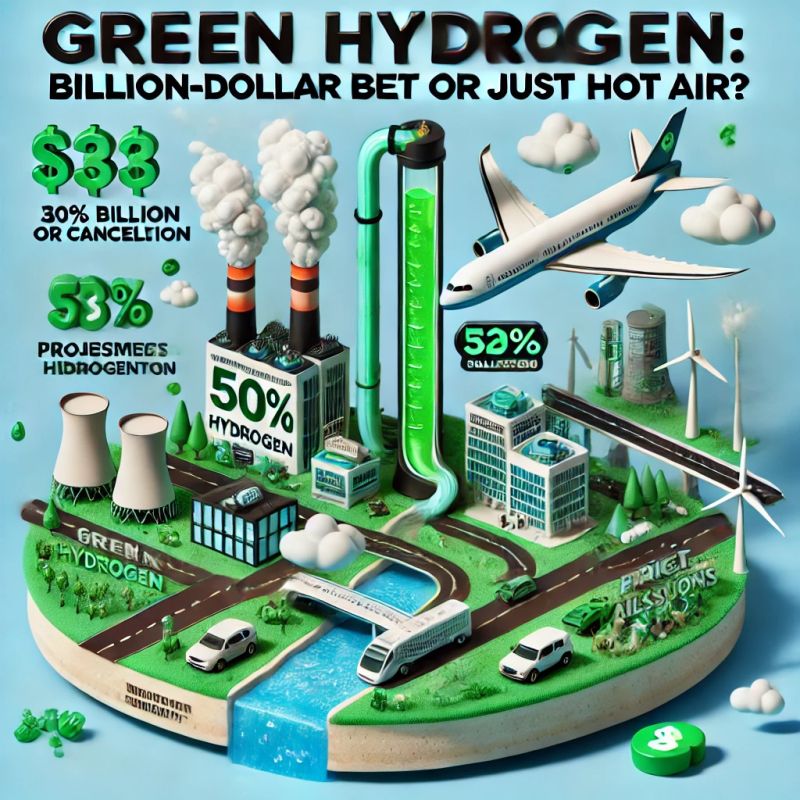
⚡🌍 Green_Hydrogen: Billion_Dollar_Bet or Just Hot Air?
💰 USD320 Billion. That’s how much global green hydrogen investments are expected to hit by 2030. (IEA, 2024)
💨 80 Million Tons. That’s the world’s hydrogen demand—yet only 0.5% comes from green sources. (Hydrogen Council, 2024)
🚀 #$1.50/kg. That’s the break-even cost for green hydrogen to compete with fossil fuels, but only 10% of projects are hitting this target. (BloombergNEF, 2024)
📌 Reality Check: Is green hydrogen scaling fast enough or suffocating under its own hype?
🌍 Game-Changers: Who’s Leading the Hydrogen Race?
🇳🇴 Norway & 🇩🇪 Germany: Floating Hydrogen Terminal
✅ #$3 Billion Project – First floating hydrogen hub to supply 1.3 million tons of green hydrogen annually. (Reuters, 2024)
✅ Price Target: $3-$3.5/kg—50% cheaper than current European hydrogen costs. (IEA, 2024)
✅ Operational By: 2027.
🇪🇸 Spain: Cepsa’s €3B Hydrogen Hub
✅ 2 GW of green hydrogen capacity planned by 2030. (Reuters, 2024)
✅ Phase 1: 400 MW by 2027, reducing 6 million tons of CO₂ annually.
📌 Reality Check: Green hydrogen is growing—but is it growing fast enough?
❌ Setbacks: Why Are Big Projects Failing?
🇦🇺 Australia: $12.5B Hydrogen Project Canceled
❌ Queensland pulled funding for its largest hydrogen project due to skyrocketing costs. (CourierMail, 2024)
❌ Kansai Electric withdrew, citing lack of commercial viability.
🇦🇺 BP’s $600M Hydrogen Hub Shelved
❌ BP paused its green hydrogen project in Western Australia, raising doubts over economic feasibility. (Hydrogen Insight, 2024)
📌 Reality Check: Over 50% of hydrogen projects risk delay or cancellation due to high costs & supply chain challenges. (Hydrogen Council, 2024)
✈️ Hydrogen-Powered Flight: The Next Big Bet?
🚀 ZeroAvia’s Hydrogen Aircraft Takes Off
✅ First 19-seat plane powered by hydrogen-electric engines. (Time, 2024)
✅ Raised #$150M from Airbus, Amazon, & Bill Gates’ Breakthrough Energy Fund.
✅ Commercial hydrogen flights targeted for 2025.
📌 Reality Check: Hydrogen aviation could cut emissions by 90%, but cost & infrastructure remain barriers.
🏆 KeyTakeaway
💡 Green Hydrogen could be the game-changer for clean energy, should be scaled urgently, but would be another overhyped tech if costs don’t fall fast.
👉 Are we heading for a green hydrogen boom or bust?
HydrogenEconomy NetZero CleanEnergy Sustainability GreenHydrogen EnergyTransition
Originally published on LinkedIn on 2025-02-06 18:33:57: https://www.linkedin.com/feed/update/urn%3Ali%3Ashare%3A7293336130429546496

