The27TrillionShift: Sustainable finance market
Dr. Anju Sharma MrsSustainability
The rules of capital access are being rewritten & sustainability information is holding the pen.
The sustainable finance market expands from USD 13.4 trillion in 2025 to nearly USD 26.93 trillion by 2031 at a 12.34% CAGR. This is no longer ethical investing’s niche corner. It is the new financial matrix.
Can your green claim withstand scrutiny?
The GreenClaimForensics series maps a journey from badge-wearing to forensic-grade proof and that journey now has direct financial consequences.
Access to capital will increasingly depend on credible climate governance, risk management, transition planning, and evidence-backed claims.
Companies that fall short may face:
✓ Higher scrutiny
✓ Reduced lender confidence
✓ Tougher covenants
✓ Weaker ESG-screened capital access
✓ Greater reputational and regulatory risk
The shift is structural, not seasonal.
85% of institutional investors now integrate sustainability criteria into investment decisions — asking sharper questions:
✓ Which exact claim does this support?
✓ What product, plant, supplier, or batch does it cover?
✓ Is the data assured or self-declared?
✓ Can the claim survive audit and regulatory review?
These are not ESG questions anymore.
They are pricing questions.
Covenant questions.
Capital-access questions.
The proof gap is already costing companies dearly.
A Paris court ordered TotalEnergies to pay €10,000 per day until it removed carbon-neutrality claims — the first greenwashing judgment against an oil and gas major under EU consumer law.
Net-zero ambition without a traceable proof system is now a courtroom liability.
A Frankfurt court banned Apple’s “CO₂ neutral” Apple Watch advertising, with €250,000 per repeat violation. Apple has since begun phasing out carbon-neutral language across EU markets ahead of the EmpCo Directive enforcement in September 2026.
Green loan issuance rose 36% in 2025 to USD 225 billion. Sustainability_linked loan volumes fell 17%.
The market is already rewarding evidence trails over intent-based commitments.
Badge → Disclosure → Evidence → Traceability → Assurance → Forensic Sustainability
The Claim-Specific Proof Architecture is not a compliance checklist.
It is the due diligence language CFOs, treasury teams, and boards must speak fluently to access green bonds, sustainability-linked financing, and ESG-screened capital.
A green claim without proof is not a strategy.
It is a financing risk wearing a recycled badge.
No receipt. No repeat.
The financial matrix has made that literal.
KtalystGreenProof™ KtalystProofStack™ KtalystAuditReadyESG™ KtalystInsights™ KtalystKlues™ KtalystKeystone Ktalyst5Ts Ktalyst5Ps5Es DataComa KtalystGreenLove GreenClaimForensics
Originally published on LinkedIn on 2026-05-22 07:54:08: https://www.linkedin.com/feed/update/urn%3Ali%3AgroupPost%3A1910576-7463497411232112642
KnowledgeSeries: GreenFinance – The $80 Trillion Opportunity Reshaping Global Capital Markets
🌍 Sustainability = Economics.
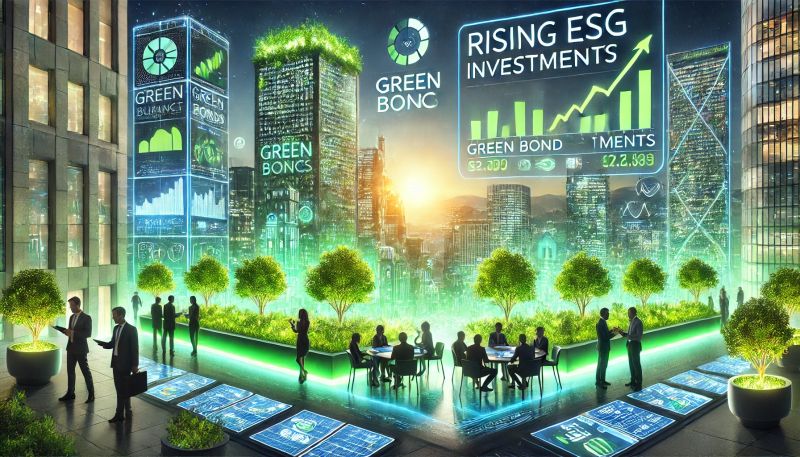
💰 GreenFinance is now mainstream, with ESG assets surpassing $50T in 2023, projected to hit $80T by 2030.
🚀 CapitalShiftAlert: Banks, VCs, and InstitutionalInvestors are prioritizing low-carbon businesses. Those who ignore GreenFinance risk obsolescence.
📊 WhyGreenFinance is Taking Over?
✔️ ESGOutperforms: Since 2015, ESG-aligned companies have outperformed markets by 30% (HarvardBusinessReview).
✔️ InvestorShift: ESGFunds saw #$650B inflows in 2023, while traditional funds saw outflows (Morningstar).
✔️ RegulationsTighten: EU & SEC climate disclosure rules mandate carbon reporting, forcing companies to prove sustainability.
✔️ GreenBondsSurge: #$1.5T issued in 2023, funding renewables, transport, and smartcities.
✔️ RiskAndProfitability: Banks raise borrowing costs for polluters, offering low rates to green firms.
🏦 Who’sLeading the GreenFinanceMovement?
✔️ Banks & AssetManagers: BlackRock, GoldmanSachs, JPMorgan—trillions in climate portfolios.
✔️ VentureCapital & PrivateEquity: ClimateTech funding up 210% in 3 years—battery storage, carbon capture.
✔️ SovereignGreenFunds: Norway, Singapore, UAE shifting billions from oil to renewables.
✔️ CorporateGiants: Apple, Microsoft, Tesla issue multi-billion-dollar GreenBonds.
✔️ CarbonMarketsExploding: VoluntaryCarbonMarket set to grow 15X by 2030.
💡 HowBusinessesCanLeverage GreenFinance?
✔️ IssueGreenBonds → Secure low-cost funding for sustainability projects.
✔️ AlignWithESGCriteria → Attract institutional investors & capital.
✔️ TradeCarbonCredits → Monetize emission reductions.
✔️ LeverageImpactInvesting → Tap into VCs, sovereign funds & ESG-focused investors.
✔️ AdoptSmartFinanceTools → Use AI & blockchain for transparent sustainability tracking.
🔍 ComingUpNext: “The Rise of ClimateUnicorns – Where VCs Are Betting in 2025
💬 IsYourBusinessReady for the ClimateEconomy? Let’s discuss!
Originally published on LinkedIn on 2025-03-09 17:24:23: https://www.linkedin.com/feed/update/urn%3Ali%3AgroupPost%3A9500072-7304552646428823552
TheSustainabilityReckoning: Data, Dollars & DueDiligence
📊💡 Sustainability is no longer a choice—it’s a business imperative backed by hard data. In 2025, companies face a stark reality: greenwashing lawsuits, evolving regulations, and shifting investor priorities are reshaping the LicenseToOperate. The cost of inaction? Fines, lostmarketaccess, and reputationaldamage.
Here’s what the numbers reveal:
3_Billion_USD_Lawsuit: Apple’s “CarbonNeutral” Claims Under Fire
Apple faces a classactionlawsuit challenging its carbonneutralityclaims, highlighting the #$20Billion+ global fines for greenwashing in 2024 alone. The lesson? Transparency and tangibleaction matter more than marketing.
🔹 EUSlashesSustainabilityReporting by 80%—But Not for BigPlayers
The EU’s CorporateSustainabilityReportingDirective (CSRD) has been relaxed, reducing compliance for smaller firms. However, largecorporations must still navigate stringentESGrequirements, ensuring verifiablesustainability efforts.
🔹 #$2Trillion in ClimateInvestments Defies ESGBacklash
Despite politicalheadwinds, globalclimateinvestments hit #$2trillion in 2024, with renewables and infrastructure leading. Resilientcompanies are attracting capital, proving that climatepositivebusinessmodels aren’t just ethical—they’re profitable.
🔹 WellsFargoDropsNetZeroTargets—A Sign of ESGRealignment?
One of the largestUSbanks has walked back its financedemissionsgoals, citing technological and policygaps. This shift signals a movefromoverambitious targets to pragmaticESGstrategies that align with businessrealities.
🔹 BCorpBoom: 2,400+ Certified Companies in the UK Alone
With consumerdemand for ethicalbusinesspractices soaring, over 2,400UKcompanies, including DanoneUK and GoodEnergy, have achieved BCorpstatus, proving that sustainability isn’t just compliance—it’s a competitiveadvantage.
🔹 #$1BillionCircularEconomyFund Eyes WasteToWealthGrowth
With globalwastecosts projected to exceed #$400billion by 2035, PlanetArk and BostonGlobal are launching a #$1billionfund to support circulareconomyinnovations. The future belongs to businesses that turn wasteintovalue.
📉🔍 TheVerdict?
✅ Sustainability isn’t a cost—it’s an investment in resilience.
✅ Regulatoryshifts are redefining corporateaccountability.
✅ Greenwashinglawsuits are a wake-up call—datadriventransparency is key.
IsYourBusinessFutureProofed for this SustainabilityReckoning? Let’s discuss how compliance, strategy, and innovation can secure your LicenseToOperate in this evolving landscape. Drop your thoughts below! 👇

Originally published on LinkedIn on 2025-03-01 07:39:37: https://www.linkedin.com/feed/update/urn%3Ali%3AgroupPost%3A2474261-7301506382598430720
Sustainability = ProfitMaximization
The most profitable companies of 2024 are proving one thing: Sustainability isn’t a cost—it’s an investment in future profits.
Here’s how the Top10 ProfitLeaders are turning green into gold:
1️⃣ SaudiAramco ($120.7B, Energy) – Started: 2021 | Net-Zero by 2050 | Invested $1.5B in clean tech. Focus: Carbon capture & hydrogen expansion.
2️⃣ Apple ($97B, Tech) – Started: 2007 | Net-Zero by 2030 (supply chain) | Issued $4.7B in green bonds. Focus: 100% recycled materials & carbon-neutral supply chain.
3️⃣ BerkshireHathaway ($96.2B, Financials) – Started: 2000s (via utilities) | No corporate net-zero target, but $30B+ invested in renewables. Focus: Largest wind energy investor in the US.
4️⃣ Google ($73.8B, Tech) – Started: 2007 | Net-Zero by 2030 (carbon-free energy) | Invested $3.5B in renewables. Focus: AI-powered energy efficiency & nuclear-backed data centers.
5️⃣ Microsoft ($72.4B, Tech) – Started: 2012 | Carbon Negative by 2030 | Launched $1B Climate Innovation Fund. Focus: Nuclear-powered data centers & carbon removal offsets.
6️⃣ ICBC ($51.4B, Financials) – Started: 2015 | Net-Zero by 2060 (China-aligned) | Largest green loan issuer globally. Focus: Financing renewables over coal expansion.
7️⃣ JPMorganChase ($49.6B, Financials) – Started: 2020 | Net-Zero by 2050 (portfolio-wide) | Committed $2.5T to sustainable projects. Focus: Phasing out fossil fuel lending.
8️⃣ ChinaConstructionBank ($47B, Financials) – Started: 2016 | Net-Zero by 2060 | Largest solar & wind financier in Asia. Focus: Cutting coal financing.
9️⃣ Meta ($39.1B, Tech) – Started: 2011 | Net-Zero by 2030 (value chain) | Invested $1B in sustainable data centers. Focus: 100% renewable operations since 2020.
🔟 AgriBankofChina ($38B, Financials) – Started: 2018 | Net-Zero by 2060 | Deployed $240B+ in green finance. Focus: Driving sustainable rural and agricultural tech investments.
Verdict: Sustainability = Profit
💰 Big Tech is using AI-driven energy savings to cut costs and scale.
💰 Finance giants are shifting capital into ESG and green bonds to hedge risk.
💰 Energy leaders are hedging fossil fuel decline with renewables.
These companies aren’t going green for charity—they’re doing it because sustainability is the most profitable strategy for the future.
Originally published on LinkedIn on 2025-02-14 17:14:01: https://www.linkedin.com/feed/update/urn%3Ali%3AgroupPost%3A2474261-7296215118588108801
NamasteIndia gets you some interesting facts:
Top5 IndianStates vrs. Top5 global companies Electricity usage:
Maharashtra: Google (~180 TWh)
UttarPradesh: Microsoft (~120 TWh)
TamilNadu: Amazon (~110 TWh)
Gujarat: Apple (~100 TWh)
Karnataka: Meta (Facebook) (~90 TWh)
Top5 Countries by Electricity Consumption
China: Over 8,000 TWh in 20223.
UnitedStates: Over 4,000 TWh in 20223.
India: Around 1,443 TWh in 20214.
Russia: Approximately 996 TWh in 20214.
Japan: Around 913 TWh in 2021
Top5 Indian companies their equalent states for using electricity in India:
Reliance Industries Limited (RIL): Goa (~1.5 GW)
Tata Steel: Sikkim (~1.2 GW)
Adani Group: Mizoram (~1.1 GW)
NTPC Limited: Nagaland (~1 GW)
SteelAuthority of India Limited (SAIL):Arunachal Pradesh (~0.9 GW)
Top 5
Charted: Big Tech Uses More Electricity Than Entire Countries https://lnkd.in/dc-jDN2B
Originally published on LinkedIn on 2024-08-18 15:58:29: https://www.linkedin.com/feed/update/urn%3Ali%3Ashare%3A7230966294903197697

