FuelMix or FiscalRemix?
Dr. Anju Sharma | MrsSustainability
FuelMix on paper wears a clean-energy badge, a farm-income smile, and a policy-approved halo.
At the pump, the consumer often gets a less glamorous experience:
Lower mileage anxiety
Unclear quality confidence
No real fuel choice
Same premium-looking bill
More questions than answers
Let us be honest. A litre is not always a litre anymore.
It may be petrol, ethanol, biofuel, solvent traces, naphtha temptation, or a cheerful PolicyCocktail being sold through the same nozzle with the same confidence.
The customer pays in rupees.
The engine pays in chemistry.
The economy pays in ambiguity.
Fuel blending is not the villain.
✓Poorly explained blending is.
✓Poorly monitored blending is.
✓Quiet quality drift is.
When fuel changes but consumer communication does not, the pump becomes a courtroom:
Every mileage drop becomes evidence
Every engine cough becomes suspicion
Every invoice becomes a small financial insult
India’s E20 debate shows the real issue. The policy case is clear: energy security, farmer support, import reduction, and cleaner fuel.
Fair.
But consumers are asking a much simpler question:
Why am I paying the same if my vehicle may run fewer kilometres?
That is not anti-transition.
That is household economics wearing a helmet.
Then comes the darker cousin of legitimate blending: adulteration.
This is where fuel mix stops being policy and starts behaving like a money-laundering smoothie.
Cheaper molecules enter higher-value streams
Tax differentials become profit pools
Quality certificates become decorative wallpaper
Honest players sell fuel
Dishonest players sell confusion with margins
Brazil’s recent naphtha controversy is the warning label. When markers fail and solvents move like ghosts, fuel fraud is no longer roadside jugaad. It becomes industrial-scale leakage with a refinery smile and a criminal balance sheet.
The real waste is not only in fuel.
It is in trust.
A poor-quality fuel mix wastes money through:
Lower mileage
Maintenance risk
Emissions uncertainty
Tax leakage
Warranty disputes
Regulatory audits
Consumer anger
It also creates a beautiful fog where nobody knows what failed:
The policy?
The molecule?
The engine?
The distributor?
The storage tank?
The pump?
My bratty but serious question:
If fuel is being blended scientifically, why is it not being disclosed scientifically?
Every fuel sold should carry a clean quality identity:
Blend percentage
Energy impact
Compatibility guidance
Marker assurance
Batch traceability
Consumer grievance pathway
Not poetry.
Not press releases.
Proof.
FutureFuel is not just alternative molecules. It is verified molecules.
Fuel transition cannot run on vibes.
It needs custody, chemistry, carbon, and consumer clarity.
Otherwise, the pump is not selling mobility.
It is selling a mystery liquid with a national mission statement.
KtalystFuelFlex
Originally published on LinkedIn on 2026-07-08 07:16:00: https://www.linkedin.com/feed/update/urn%3Ali%3AgroupPost%3A1807371-7480520045060812801
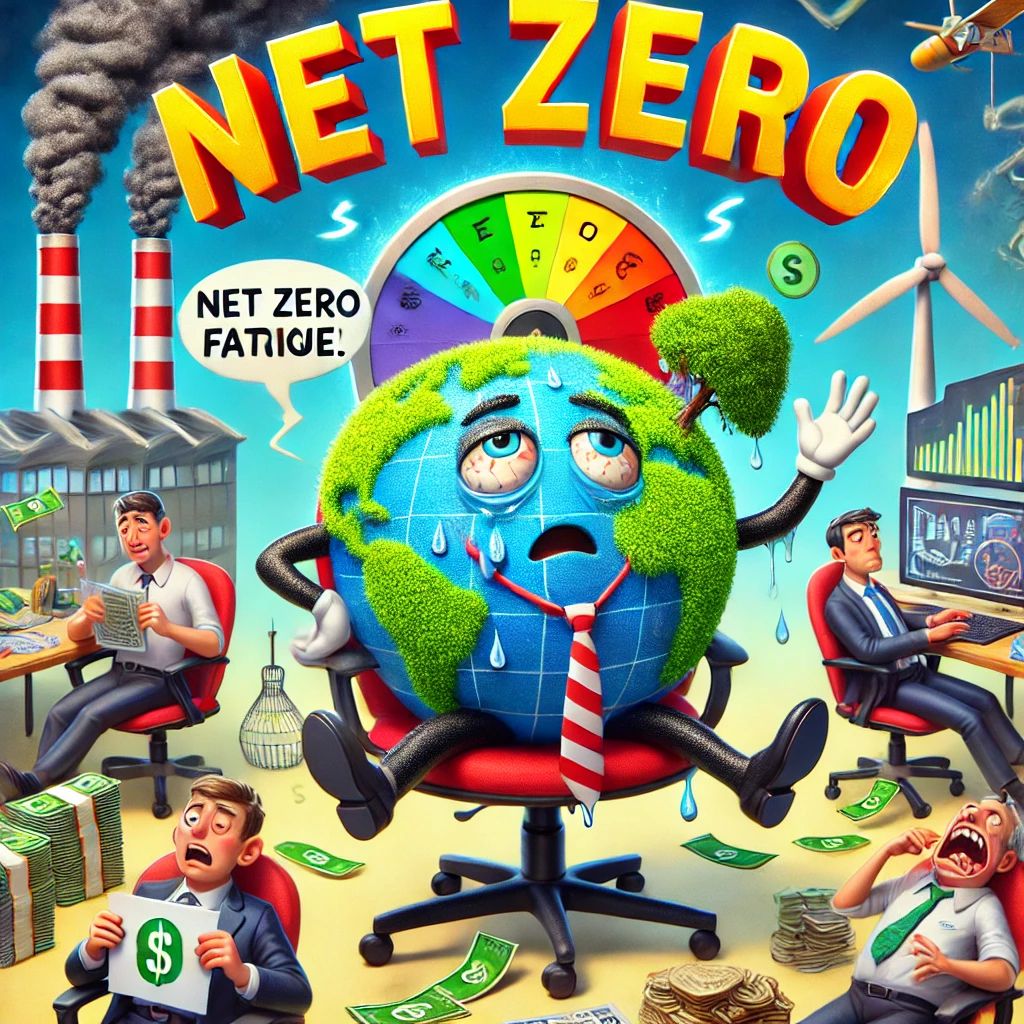
NetZeroFatigue: When GoingGreen Feels Like RunningOnEmpty 🌍
#🟢 Ambiguity Fatigue: “Lost in a maze of green fog!
72% of companies lack clear definitions for Net Zero goals. (Source: CDP, 2023)
Only 39% have science-based targets for Net Zero. (Source: SBTi, 2023)
Impact: Stakeholders are left confused, eroding trust and delaying action.
#🟠 Greenwashing Fatigue: “All talk, no trees!
63% of consumers distrust corporate Net Zero claims. (Source: Edelman Trust Barometer, 2024)
Greenwashing accusations grew 55% in 2023, with $40M+ in fines. (Source: UNEP, 2023)
Impact: Public skepticism grows, putting genuine efforts under scrutiny.
#🔵 Financial Fatigue: “Going green costs more green!
Achieving Net Zero needs #$4 trillion/year in clean energy investment by 2030. (Source: IEA, 2022)
Developing nations face a #$1.3 trillion/year funding gap. (Source: WorldBank, 2023)
Impact: Resource inequity slows global progress.
#🟡 Offset Dependence Fatigue: “Band-aids don’t fix bullet holes!
92% of carbon offset projects fail to deliver promised benefits. (Source: Guardian, 2023)
The global offset market hit #$2 billion in 2023, despite ineffectiveness. (Source: ICAP, 2023)
Impact: Over-reliance on offsets delays meaningful emission cuts.
#🟣 Technological Fatigue: “Waiting for tech miracles that don’t compute!
Carbon capture removes only 0.1% of global emissions today. (Source: IPCC, 2023)
By 2030, tech solutions may account for just 10-20% of required reductions. (Source: IEA, 2023)
Impact: Over-reliance on unproven tech wastes precious time.
#🔴 Public Engagement Fatigue: “Climate posters don’t pay the bills!
51% of citizens feel disconnected from national climate strategies. (Source: Pew Research, 2023)
Only 29% trust their government’s Net Zero plans. (Source: WEF, 2024)
Impact: Reduced public pressure stalls policy implementation.
#🟤 Equity Fatigue: “When the rich pollute, the poor pay!
The richest 10% emit over 50% of global emissions, while the poorest 50% contribute just 12%. (Source: Oxfam, 2022)
Developed nations pledged $100B/year in climate finance but delivered only #$83B in 2022. (Source: UNFCCC, 2023)
Impact: Inequity breeds global mistrust, slowing cooperation.
KeyTakeaway 🌍
NetZeroFatigue is real, driven by ambiguity, inequity, and overpromises. To truly go green, we need clearGoals, verifiedAction, and a whole lot of trust.
👉 Let’s make Sustainability about less spin and more action!
NetZero ClimateLeadership SustainabilityHumor ESG

Originally published on LinkedIn on 2025-01-24 14:13:50: https://www.linkedin.com/feed/update/urn%3Ali%3Ashare%3A7288559629452677121

