Climate_Change_Disrupting_Global Supply Chains: A Call for Immediate Action
As the world grapples with escalating climate challenges, the ability to secure essential commodities is under threat. PwC’s insights reveal how heat_stress and drought could profoundly impact industries and communities, emphasizing the need for proactive measures.
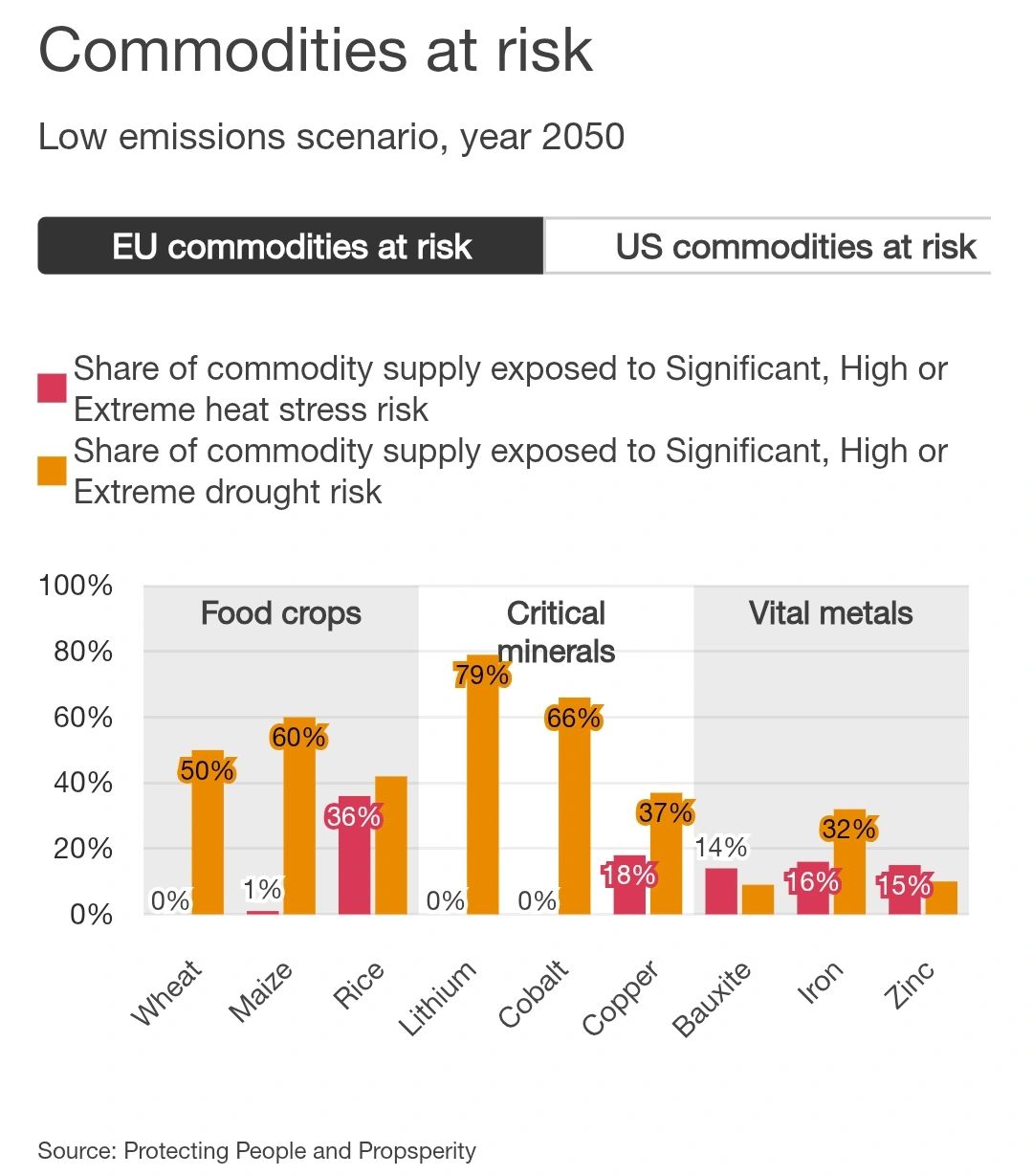
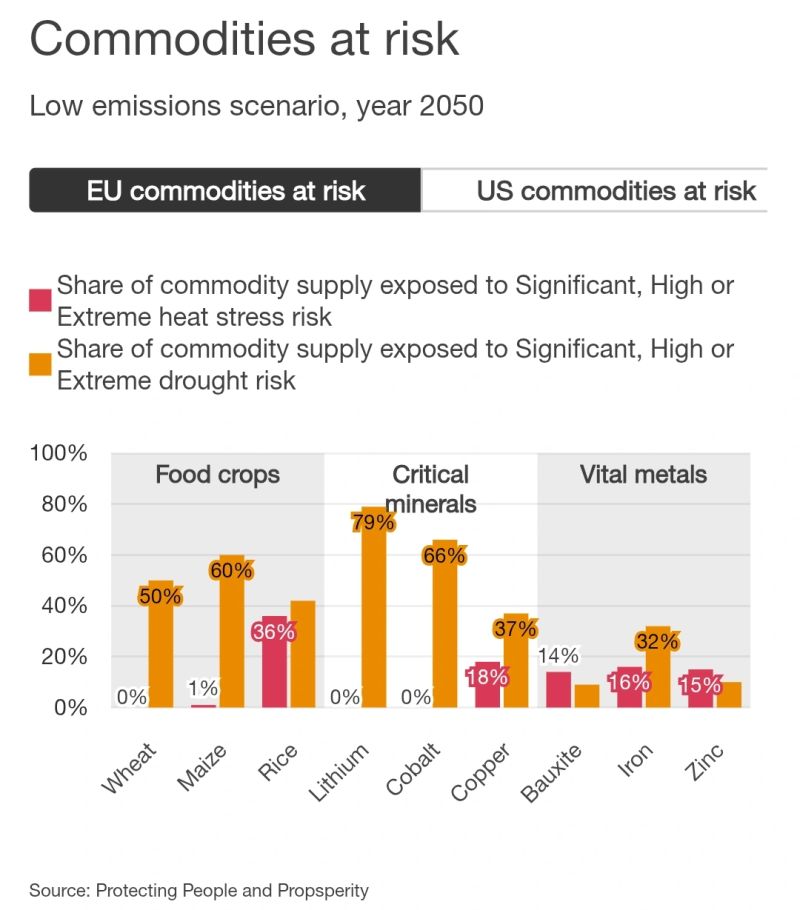
Critical_Minerals at Risk: Heat stress and drought threaten the supply of cobalt, copper, and lithium—key to electronics, green energy, and transportation sectors.
Food Security Challenges: Maize, rice, and wheat, which provide 42% of human calories, are vulnerable to production instability, jeopardizing global food supplies.
Vital Metals Under Pressure: Iron, zinc, and bauxite (used in aluminum production) face disruption due to mining challenges caused by extreme weather.
Industries in Peril: Transportation, construction, and manufacturing sectors heavily reliant on these commodities risk operational breakdowns.
Impact on Producers and Communities: Farmers and miners are already experiencing hardships from extreme heat and water scarcity, reducing productivity and health safety.
Supply Chain Resilience is Critical: PwC highlights the urgency for businesses to assess climate-related vulnerabilities and mitigate risks to prevent supply chain disruptions.
Call for Proactive Action: The cascading effects of climate change demand swift preventive strategies to safeguard commodities and ensure industrial continuity.
PwC’s report serves as a stark reminder of the growing vulnerabilities within global supply chains. Businesses must act now to incorporate sustainable practices, enhance resilience, and mitigate climate-related risks.
For a detailed analysis, explore PwC’s full report here.https://https://lnkd.in/d_9bwcRn
Originally published on LinkedIn on 2024-12-25 03:55:16: https://www.linkedin.com/feed/update/urn%3Ali%3AgroupPost%3A3880479-7277532326702534656
NamasteGreenIndia Advances Climate Action: Setting Up Carbon Trading and Green Bond Regulator
Key Developments:
1. Establishment of a Regulatory Body:
India plans to set up a dedicated regulator for carbon trading and green bonds.
The body will oversee activities related to domestic carbon markets and sustainable financing.
2. Legislative Framework:
The Energy Conservation (Amendment) Bill 2022 laid the foundation for a regulated carbon market.
Carbon_Credit_Trading_Scheme 2023 has been approved, which involves forming a National Steering Committee for market governance.
3. Integration with Global Frameworks:
Aligns with the global carbon market rules finalized under Article 6.4 of the Paris_Agreement at COP29 in Baku, Azerbaijan.
Focused on achieving India’s commitment to reducing greenhouse gas emissions by 2030.
4. Securities Market Expansion:
The Securities and Exchange Board of India (SEBI) proposed including green securitization and sustainable debt instruments under its sustainable finance framework.
Key Actions to be Taken:
1. Formation of the Regulatory Body:
Establish an agency similar to NAFED to regulate carbon trading and green bonds.
2. Operationalizing Carbon Trading:
Develop clear rules for carbon credit issuance, trading, and compliance.
Ensure alignment with international standards for credibility and market participation.
3. Promoting Green Bonds:
Create incentives for businesses to issue and invest in green bonds.
Strengthen frameworks for transparency and accountability in green bond utilization.
4. Stakeholder Engagement:
Collaborate with industries, investors, and global climate bodies to ensure successful implementation.
Promote public and private sector participation in carbon markets and sustainable finance.
5. Monitoring and Reporting Mechanisms:
Implement robust systems for tracking carbon emissions reductions and reporting.
Enhance capacity-building efforts to ensure compliance with regulatory norms.
6. Market Integration:
Foster a domestic carbon market and facilitate integration with international carbon trading systems.
Leverage global best practices to establish India as a leader in green finance and carbon trading.
Strategic Objectives:
Drive India’s transition to a low-carbon economy.
Mobilize green investments to meet climate goals.
Achieve a balance between economic growth and environmental sustainability.
This initiative positions India as a key player in global climate action, aligning national economic policies with environmental priorities.
Originally published on LinkedIn on 2024-12-02 16:46:50: https://www.linkedin.com/feed/update/urn%3Ali%3AgroupPost%3A60128-7269391576076800000
NamasteIndia find it interesting to read inputs from PwC climates Bridging the gaps: Setting the stage for an orderly energy-system transition
1.Global Ambitions: Aggressive emission reduction goals highlight gaps in technology, infrastructure, and investment needed for an orderly energy transition.
2. Targets and Urgency: Governments and institutions aim for net-zero emissions by 2050, but there’s a significant gap between current emissions and targets.
3. Energy Consumption: The world consumes a staggering amount of energy, with rising demand due to economic growth.
4. Decarbonization: Reducing greenhouse gas emissions requires decarbonizing the global energy system.
5. Molecules and Electrons: Energy systems consist of molecules (hydrocarbons) and electrons (electricity). Constructing a reliable, affordable, and cleaner system is challenging.
6. Action Needed: Leaders must identify gaps, accelerate bridge construction, and marshal execution powers to achieve energy transition goals¹.
India’s strides in bridging the gaps for an orderly energy-system transition:
1. Advanced Energy Solutions: India targets clean hydrogen, energy storage, and carbon capture. By 2030, it plans to invest over $35 billion annually in these areas.
2. Renewable Growth: Surpassing 2030 goals, India embraces renewables through policies, subsidies, and incentives.
3. Battery Storage: Aiming for 47 GW/236 GWh capacity by 2031-32—equivalent to 80 large battery facilities.
4. Clean Hydrogen**: Targeting 5 MMT production capacity by 2030, with 40 GW electrolyzer capacity.
5. Carbon Capture and Aviation Fuels: Ambitious goals for 30 MMT carbon capture and 2 MMT sustainable aviation fuels by 2030.
[^(source)](https://lnkd.in/dc7Qpreh)
Originally published on LinkedIn on 2024-08-04 03:35:07: https://www.linkedin.com/feed/update/urn%3Ali%3Ashare%3A7225705789414342657
NamasteIndia Hindustan Zinc’s recent announcement regarding their focus on batteries for the energy transition:
1. Zinc Batteries: Hindustan Zinc is exploring new applications of zinc in batteries as an alternative to lithium. Zinc batteries offer safety and stability.
2. Company Background: A Vedanta Group firm, Hindustan Zinc is a major global zinc and silver producer.
3. Climate Action Initiatives: The company aims to partner with Aesir Tech for next-gen zinc battery technology.
In summary, Hindustan Zinc’s commitment aligns with the global push toward cleaner energy.
Source / shared link: https://m.economictimes.com/industry/renewables/hindustan-zinc-to-focus-on-batteries-for-energy-transition/articleshow/112115051.cms
Originally published on LinkedIn on 2024-07-30 10:54:34: https://www.linkedin.com/feed/update/urn%3Ali%3AgroupPost%3A131340-7224004442910543874
NamasteIndia Hindustan Zinc’s recent announcement regarding their focus on batteries for the energy transition:
1. Zinc Batteries: Hindustan Zinc is exploring new applications of zinc in batteries as an alternative to lithium. Zinc batteries offer safety and stability.
2. Company Background: A Vedanta Group firm, Hindustan Zinc is a major global zinc and silver producer.
3. Climate Action Initiatives: The company aims to partner with Aesir Tech for next-gen zinc battery technology.
In summary, Hindustan Zinc’s commitment aligns with the global push toward cleaner energy.
Source / shared link: https://m.economictimes.com/industry/renewables/hindustan-zinc-to-focus-on-batteries-for-energy-transition/articleshow/112115051.cms
Originally published on LinkedIn on 2024-07-30 10:54:26: https://www.linkedin.com/feed/update/urn%3Ali%3Ashare%3A7224004408336908289

