🚀 “The Dark Side of Sustainability: Are We Creating a Green Divide?” 🌍⚖️💰
Sustainability for whom? If green solutions leave half the world behind, is it truly sustainable?
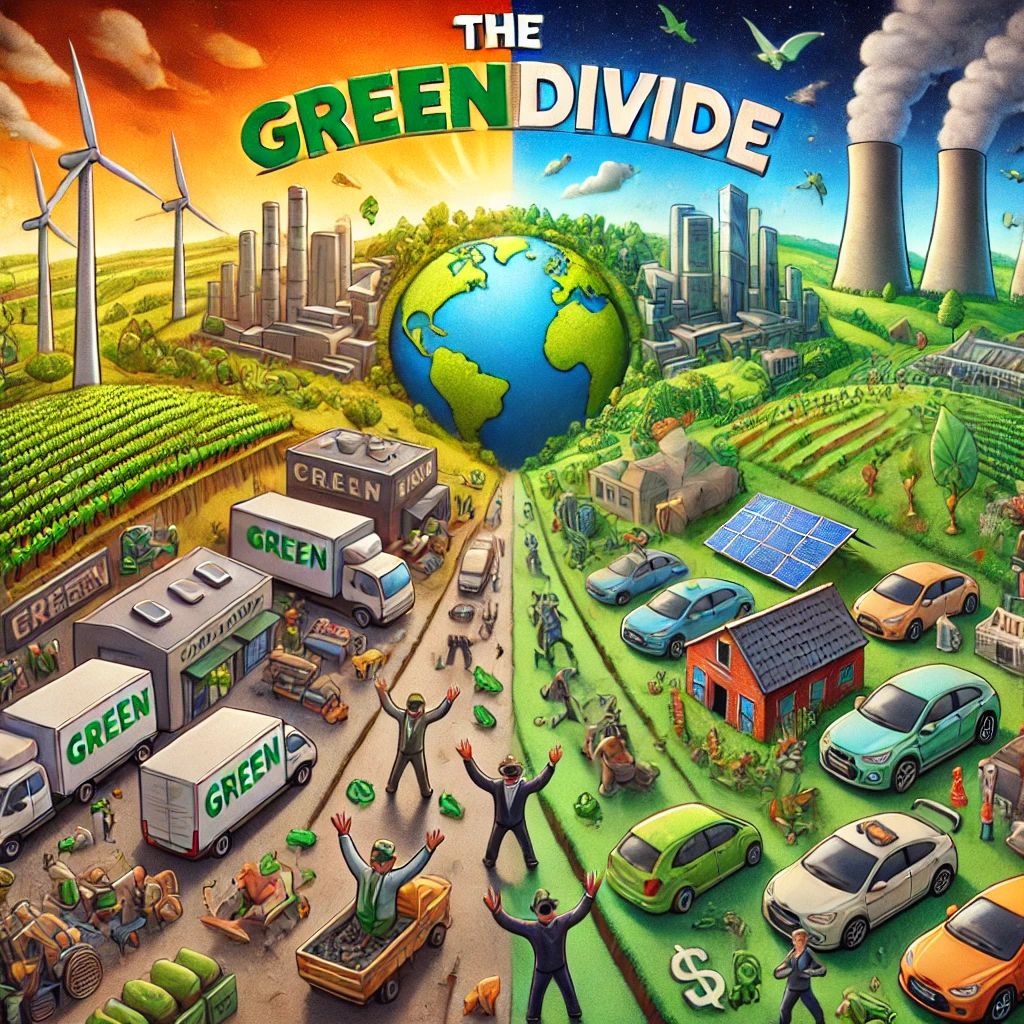
As the world pushes for NetZero, EVs, CarbonTaxes, and SustainableFinance, a new reality emerges—TheGreenDivide.
📊 The Hidden Cost of Going Green
🔹 EV Affordability Gap: The average EV costs 50-70% more than petrol/diesel cars in India, making them a luxury, not a necessity. (IEA, 2024)
🔹 Carbon Taxes & Inequality: EU’s Carbon Border Adjustment Mechanism (CBAM) is expected to cost developing economies $16B annually as they struggle to decarbonize. (IMF, 2024)
🔹 Green Job Displacement: 2.7 million fossil fuel jobs are set to be lost globally by 2030, while only half will be replaced by green jobs. (WEF, 2024)
🔹 Rural Access to Sustainability: While urban India talks about solar panels & ESG investing, only 7% of rural households have access to renewable energy. (MNRE, 2024)
📌 RealityCheck: If sustainability leaves millions behind, is it truly progress?
💰 Who Wins & Who Pays?
🏆 Winners: Corporations & Wealthy Nations
✔️ Carbon Credit Traders: The voluntary carbon market hit $2B in 2024, but 80% of credits are purchased by MNCs to offset emissions instead of reducing them. (Bloomberg, 2024)
✔️ Developed Nations: US & EU firms control 90% of critical minerals used in batteries, keeping the supply chain monopolized. (World Bank, 2024)
✔️ Tech & EV Giants: Companies like Tesla & BYD gained over $400B in green subsidies, while developing nations struggle to fund clean tech. (IEA, 2024)
❌ Losers: SMEs, Emerging Markets & The Poor
🔻 SMEs: Over 60% of Indian MSMEs cannot afford ESG compliance costs, risking lost global contracts. (FICCI, 2024)
🔻 Developing Nations: Bangladesh & Vietnam are losing textile exports due to high sustainability requirements from EU buyers. (OECD, 2024)
🔻 Consumers: Sustainable products cost 30-50% more, pricing out low-income families. (McKinsey, 2024)
📌 RealityCheck: Green capitalism is real. Who’s paying the price?
📜 What Needs to Change?
🔹 Equitable Green Policies: Climate financing must prioritize developing nations.
🔹 Accessible Green Tech: EV & solar subsidies should be focused on affordability for the masses.
🔹 Real ESG Accountability: Stop “green compliance” from becoming a pay-to-play game.
🔹 Inclusive Sustainability: Policy reforms must address rural electrification, SME funding & job displacement.
🏆 KeyTakeaway: Sustainability Shouldn’t Be a Privilege
📌 Sustainability could be the great equalizer—if green policies support all economies.
📌 It should be accessible, not a corporate power game.
📌 If it remains profit-driven, it would be another tool of economic disparity.
Originally published on LinkedIn on 2025-02-24 07:22:32: https://www.linkedin.com/feed/update/urn%3Ali%3AgroupPost%3A82951-7299690143739764736

