A Time to Kill… Slowly: A Lazy Sunday Conversation with Myself
Dr. Anju Sharma
So there I was on a hot, lazy Sunday, watching A Time to Kill again. Most people see a courtroom drama.
I, apparently, put humanity itself on trial.
Somewhere between the dialogues, the heat, and that old ache about justice, one thought kept circling in my mind:
What if the real crime scene is not in the film? What if it is the planet outside our own window?
We humans have somehow become everything at once the accused, the judge, the beneficiary, the policymaker, and naturally, the keynote speaker at the sustainability conference.
What range.
We cut down a forest, name the project Green Meadows, plant decorative shrubs at the gate, and call it environmental commitment.
That, in corporate language, is confidence without conscience.
And at the heart of it all sits one dangerous sentence:
I do because I can.
Not because it is wise.
Not because it is fair.
Not because it is necessary.
Just because we have the tools, the capital, and the audacity.
5 Ps.
Suddenly felt like witnesses.
People
We talk about development as if heat stress, anxiety, polluted air, broken food systems, and water insecurity are part of the employee benefits package.
Amazing model.
First make life harder.
Then send a mindfulness link.
Planet
Overworked. Underfunded. Ignored. Blamed when things go wrong.
We dig, drill, burn, dump, flatten, and extract then act surprised when nature stops behaving like a patient service provider.
Earth is not overreacting.
Earth is escalating.
Profit
Profit is not the villain. Let me be fair.
We have become experts at renaming damage:
cutting becomes growth,
depletion becomes expansion,
waste becomes externality.
And if EBITDA goes up while the river gives up, someone still wants a celebration deck by Monday.
Policy “let us take this offline,” creates a task force, and disappears.
We protect with one hand, dilute with the other, and then wonder why the outcome still looks tragic.
Politics
Politics, of course, is the grand performance wing.
carbon remains stubbornly nonpartisan.
Oceans refuse to respect election cycles.
And physics is not impressed by speeches.
TheKtalystBottomLine
The real tragedy is not that humanity is powerful.
It is that we keep confusing power with permission.
The 5 Ps are not decorative words for reports and conferences.
They are survival terms.
When People are stretched, the Planet is wounded, Profit loses perspective, Policy loses courage, and Politics becomes theatre the verdict is not coming.
It is already here.
The darkest joke of all?
We may be the only species intelligent enough to create ESG, climate strategy, and governance frameworks and still foolish enough to believe we can negotiate with the laws of nature.
That is not leadership.
That is deluxe denial.
MrsSustainability KtalystInsights™ KtalystKlues™ KtalystKeystone Ktalyst5Ts Ktalyst5Ps5Es DataComa KtalystGreenLove
Originally published on LinkedIn on 2026-04-12 12:04:09: https://www.linkedin.com/feed/update/urn%3Ali%3Ashare%3A7449064816297635841
KnowledgeSeries: The Future of CarbonCredits – A USD250B Market by 2050
The carboncredit market is no longer a side conversation—it’s becoming a mainstream financial instrument. With projections hitting #$250B by 2050, businesses and investors must pay attention.
Why? Because companies that integrate NetZero strategies today will gain a competitive edge, while those that don’t will face higher costs, regulatory risks, and shrinking investor confidence.
🌎 The Carbon Credit Boom: Why It’s a Business Imperative
✔️ The voluntary carbon market is set to grow 15X by 2030, reaching #$10B–$40B. (McKinsey)
✔️ Investments in carbon credits hit #$1.7B in 2023, up 50% YoY. (BloombergNEF)
✔️ 6,000+ global companies have set Science-Based Targets (SBTi), driving demand for verified carbon offsets.
✔️ Indonesia, Brazil, and Kenya are integrating carbon markets into their economies, generating revenue from forests, renewable energy, and carbon capture projects.
✔️ Article 6 of the ParisAgreement is enabling international carbon credit trading, boosting market credibility.
🚀 What does this mean for businesses?
✔️ A carbon credit strategy is no longer optional—it’s a business necessity.
✔️ Companies without a decarbonization plan will face higher compliance costs.
✔️ Investors are prioritizing NetZero leaders, making carbon credits a key ESG performance driver.
📊 Who’s Leading the Carbon Credit Race?
✔️ Big Tech & Carbon Capture:
Meta, Microsoft, and Google are securing multi-million-dollar deals in Direct Air Capture (DAC) to future-proof their carbon strategies.
✔️ Financial Institutions Going Green:
BlackRock, JP Morgan, and Goldman Sachs are launching climate-focused funds, treating carbon credits as an emerging asset class.
✔️ Corporate Adoption Soaring:
40%+ of Fortune500 companies are embedding carbon offsets into their business models.
✔️ Government-Led Action:
The EU, Singapore, and Japan are developing regulated carbon exchanges to ensure transparency & standardization.
🌱 What to Expect in 2025 & Beyond?
✔️ Stricter Regulations → Carbon credit verification will be tighter, reducing low-quality offsets & greenwashing risks.
✔️ Rising Prices → As demand outstrips supply, carbon credit prices could triple by 2030, making early adoption a smart financial move.
✔️ Emerging Markets in Play → Africa, Southeast Asia, and Latin America will dominate nature-based carbon solutions (reforestation, soil carbon, etc.).
✔️ Carbon as a Tradable Asset → Institutional investors are pushing for liquid carbon credit markets, making carbon a financialized commodity.
🔍 ComingUpNext: “The Business Case for Carbon Credits – Risks, Rewards & Strategy
Originally published on LinkedIn on 2025-03-08 07:02:05: https://www.linkedin.com/feed/update/urn%3Ali%3AgroupPost%3A82951-7304033651044839424
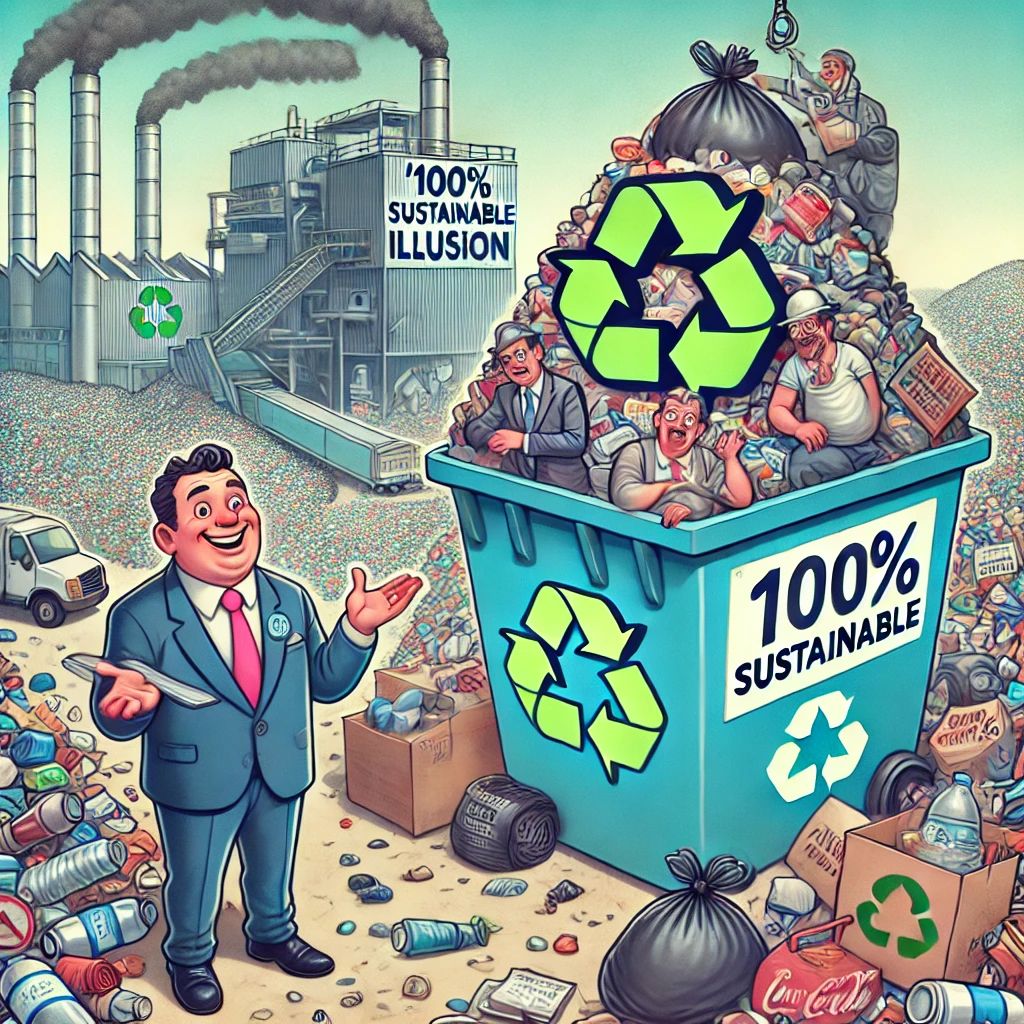
♻️ “The Waste Illusion: Is Sustainability Solving or Just Shifting_the_Problem?” 🌍🚮
Recycling alone won’t save the planet if we keep producing waste at record speed.
From plastic bans to circular economies, sustainability efforts often focus on waste reduction and recycling. But the truth? We’re generating_more_waste_than_ever_before.
🚨 Global waste production will hit 3.4 billion metric tons by 2050—a 70% increase from today. (WorldBank, 2025)
🚨 Only 9% of all plastic waste ever produced has been recycled. (UNEP, 2025)
🚨 Fashion waste alone contributes 92 million tons of landfill every year. (EllenMacArthurFoundation, 2025)
📌 RealityCheck: If sustainability isn’t fixing the waste cycle, are we just postponing the crisis?
🔄 The Waste Cycle: Are We Really Closing the Loop?
✅ Reduce – Brands promote low-waste lifestyles, yet global consumerism is at an all-time high.
✅ Reuse – Circular economies grow, but single-use culture dominates in food, fashion, and tech.
✅ Recycle – Waste sorting improves, but less than 20% of e-waste and plastics are ever recycled. (WEF, 2025)
🚨 RealityCheck: If new waste keeps outpacing recycling, how sustainable is our solution?
⚠️ Biggest Sustainability Loopholes in Waste Management
🔹 Plastic Offsets: Many brands buy plastic credits instead of reducing actual waste. (WWF, 2025)
🔹 Fast Fashion Recycling Myths: Less than 1% of clothing is truly recycled into new garments. (Greenpeace, 2025)
🔹 Food Waste Greenwashing: 30% of all food produced is still wasted despite “sustainable” sourcing. (FAO, 2025)
🔹 E-Waste Lies: Brands promote “recyclable electronics,” but 53.6M tons of e-waste were trashed last year. (UN, 2025)
📌 RealityCheck: A circular economy isn’t working if companies keep producing waste faster than we can recycle.
🏆 KeyTakeaway
♻️ Sustainability should be about eliminating waste at its source, not just recycling it later.
🚨 Greenwashing could be misleading us into thinking waste is under control.
🔄 A real circular economy would be about reducing overproduction, not just increasing recycling efforts.
👉 Are we solving waste or just shifting it around? Drop your thoughts below! 👇
Originally published on LinkedIn on 2025-02-19 05:44:35: https://www.linkedin.com/feed/update/urn%3Ali%3AgroupPost%3A9088131-7297853557188227072
🏛️ The Power & Pitfalls of IndependentDirectors in Corporate Governance
🔹 Independent directors are the guardians of corporate governance, ensuring transparency, accountability, and ethical decision-making. Yet, history shows that their effectiveness is often tested in times of crisis. Here are some lessons from the boardroom:
✅ Success Stories: When Independent Directors Stepped Up
🛞 Tata Nano Project – When land acquisition and operational hurdles threatened Tata’s “People’s Car,” independent directors played a crucial role in navigating the crisis.
🏢 Infosys Leadership Shuffle (2013) – The return of Narayana Murthy, accompanied by his son, sparked concerns over governance norms, pushing independent directors to uphold fairness and transparency.
🚗 Maruti Suzuki Gujarat Plant (2014) – A move that could have impacted minority shareholders was scrutinized by independent directors, reinforcing the need for stakeholderprotection.
🚨 Corporate Failures: When Oversight Fell Short
📉 Satyam Scandal (2009) – A corporate fraud that exposed how ineffective oversight can erode trust and devastate businesses.
⚖️ Nagarjuna Finance Scandal (2009) – Legal trouble for an independent director led to mass resignations across corporate India, raising concerns about their liability.
💰 Byju’s Financial Crisis (2024) – Governance failures at India’s edtech giant underscored why independent directors must challenge financial mismanagement proactively.
These cases reveal a clear message: IndependentDirectors are not just ornamental figures—they are critical to business ethics and sustainability. However, their ability to function effectively hinges on:
🔹 Real independence from promoters and management
🔹 Robust regulations that protect their autonomy
🔹 A corporate culture that values their role in decision-making
💬 What do you think? Are independent directors truly empowered in today’s corporate landscape? Let’s discuss!
Read more at:

Originally published on LinkedIn on 2025-02-18 05:06:55: https://www.linkedin.com/feed/update/urn%3Ali%3AugcPost%3A7297481688115249152
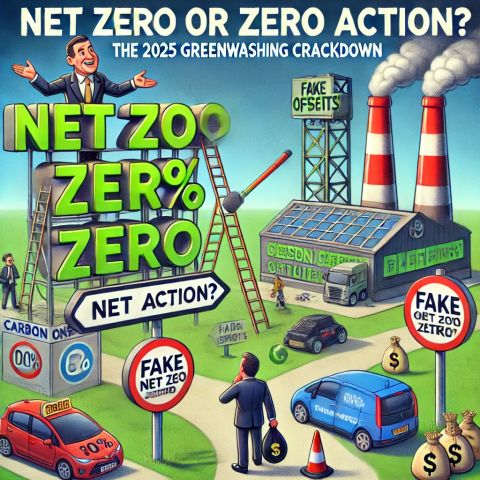
🚨 “NetZero or ZeroAction? The YR2025 GreenwashingCrackdownBegins” 🌍💰
With corporate greenwashing under the microscope, 2025 could be the year net-zero pledges get real—or exposed.
📊 Only 30% of companies with net-zero targets have interim milestones. (UNEP, 2024)
📊 $2B in voluntary carbon offsets are now flagged as ‘ineffective.’ (Carbon Market Watch, 2024)
📌 Reality Check: If a company has no interim milestones, is net zero just a PR move?
🔍 Who’s Transparent & Who’s Stalling?
✅ Companies with Clear Interim Targets
✔️ Procter & Gamble (P&G): Targets 2030 reductions en route to net zero by 2040. (P&G, 2024)
✔️ Volkswagen Group: Aims for 30% carbon reduction in vehicles by 2030 before hitting net zero in 2050. (Volkswagen, 2024)
✔️ Colgate-Palmolive: Science-based targets as part of its 2025 Sustainability Strategy. (Colgate, 2024)
✔️ Stellantis, Mercedes-Benz, Volvo: Net-zero by 2040, a decade ahead of industry peers. (JustAuto, 2024)
✔️ Morgan Stanley: Industry-specific 2030 milestones for a 2050 net-zero goal. (MorganStanley, 2024)
❌ Companies with Vague or No Interim Goals
🔻 Rio Tinto: Net-zero by 2050 but no Scope 3 milestones—95% of their emissions left unchecked. (TheTimes, 2024)
🔻 ExxonMobil: No interim goals, relying on offset purchases instead of real emission cuts. (IEA, 2024)
🔻 General Motors (GM): Claims 100% electric future but lacks clear reduction goals before 2040. (Bloomberg, 2024)
🔻 Nestlé: Net-zero by 2050, yet plastic packaging waste remains a growing issue. (Consumer Reports, 2024)
📌 Reality Check: A 2050 net-zero target without 2030 action is just corporate procrastination.
🚨 Greenwashing Trends to Watch in 2025
🔹 Net Zero Without a Roadmap – 70% of corporate pledges lack accountability checkpoints. (UNEP, 2024)
🔹 Carbon Offsets Scrutiny – Up to 80% of offset credits are now under question. (Carbon Market Watch, 2024)
🔹 Hydrogen Hype vs. Reality – 95% of global hydrogen is still fossil-fuel-based. (IEA, 2024)
🔹 #‘Recycled’ Claims Under Fire – Brands using 1% recycled content but advertising 100% green. (Consumer Reports, 2024)
🔹 EV Greenwashing – Companies exaggerating EV sustainability while relying on coal-powered grids. (IEA, 2024)
📌 Reality Check: 2025 will test which companies walk the talk—and which just greenwash.
🏆 KeyTakeaway
💰 NetZero could be a real climate solution, should be backed by real milestones, but would be a legal disaster for companies that fake it.
👉 Which companies do you trust to deliver real climate action—and which are just playing the PR game? Let’s discuss. 💬

Originally published on LinkedIn on 2025-02-11 03:39:18: https://www.linkedin.com/feed/update/urn%3Ali%3AgroupPost%3A82951-7294922924702978049
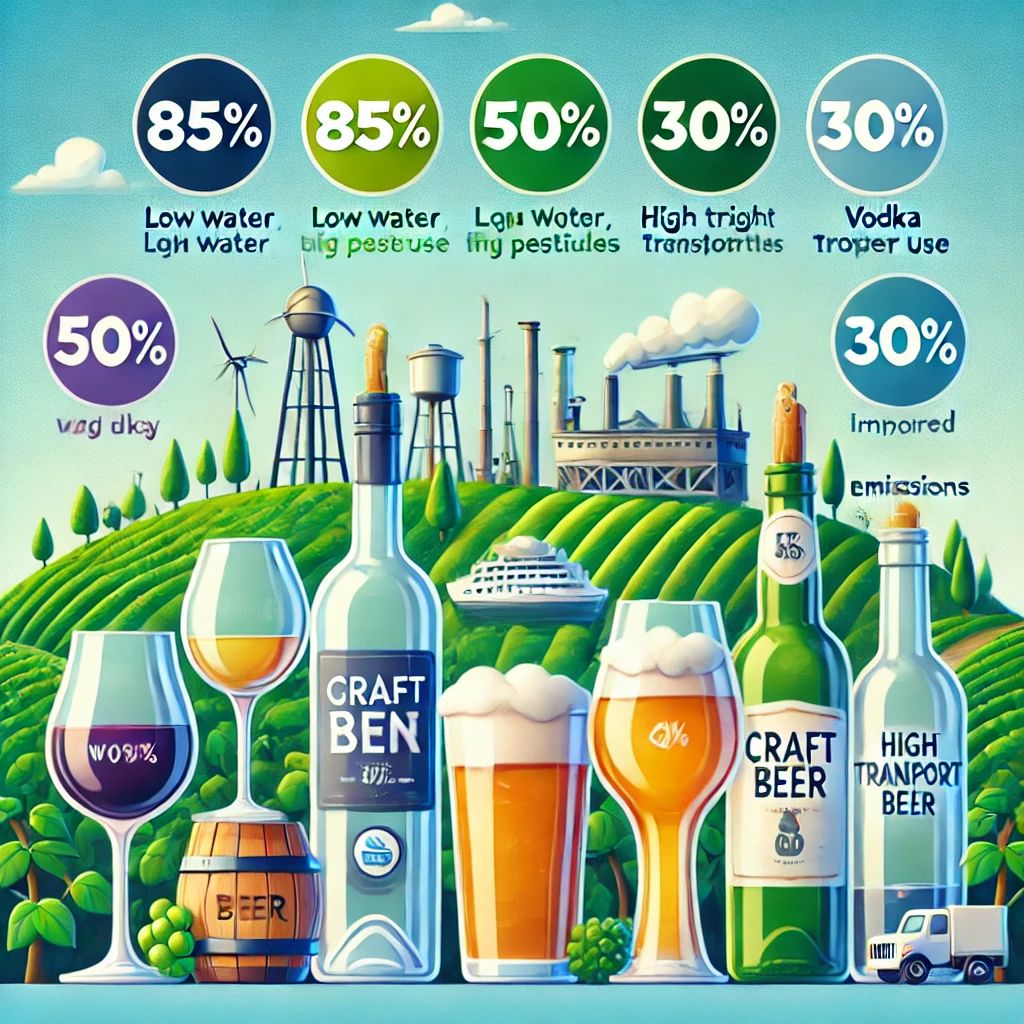
🍻🌱 “Green Booze: Is Your Drink Really Sustainable?
From beer to whiskey to wine, the alcohol industry is a silent sustainability offender—water-intensive, carbon-heavy, and waste-generating. But is booze going green, or just another case of marketing buzz?
📊 The Environmental Cost of Alcohol
🚨 Water Guzzler – Producing 1L of beer takes 4-6L of water, while 1L of whiskey requires up to 50L! (WWF, 2024)
🚨 High Carbon Emissions – A single pint of beer emits 3x more CO₂ than a soft drink. (IEA, 2024)
🚨 Glass Waste Crisis – Over 60% of alcohol packaging is glass, but only 31% is recycled globally. (Recycling International, 2024)
🚨 Grape Waste in Winemaking – Wine production leaves behind 13M tons of grape waste annually. (FAO, 2024)
📌 Reality Check: That happy hour drink may have a heavier footprint than you think.
♻️ Which Alcohols Are Actually Sustainable?
✅ Organic & Biodynamic Wines – Lower pesticide use and 30% less water-intensive. (Rainforest Alliance, 2024)
✅ Local & Craft Beers – Shorter supply chains reduce emissions by 20-30% compared to imported brands. (BrewTech, 2024)
✅ Sustainable Distilleries – Brands like Glenfiddich are converting distillery waste into biofuel-powered trucks. (WhiskeyNet, 2024)
✅ Plastic-Free Spirits – Companies switching to 100% recycled glass & aluminum bottles. (EcoPackaging, 2024)
🚨 Reality Check: A wine bottle may be recyclable, but transporting it across continents isn’t exactly green.
🛑 Greenwashing in the Alcohol Industry
❌ #‘Eco-Friendly’ Labels on Mass-Produced Booze – Big brands use buzzwords but still rely on carbon-heavy production.
❌ Carbon-Neutral Claims – Some distilleries buy offsets instead of actually reducing emissions.
❌ Recyclable Bottles That Aren’t Recycled – Glass recycling rates are still low due to lack of infrastructure.
📌 Reality Check: Just because a drink is labeled ‘sustainable’ doesn’t mean it actually is.
🏆 KeyTakeaway
Green Booze could be the future with real sustainability efforts, should be focused on reducing waste & emissions, but would be another greenwashing gimmick if brands don’t take real action.
👉 Is your drink as eco-friendly as it claims to be?
SustainableAlcohol GreenBreweries EcoDistilleries CarbonNeutral CircularEconomy
Originally published on LinkedIn on 2025-02-05 05:17:13: https://www.linkedin.com/feed/update/urn%3Ali%3AgroupPost%3A2474261-7292773237057314816
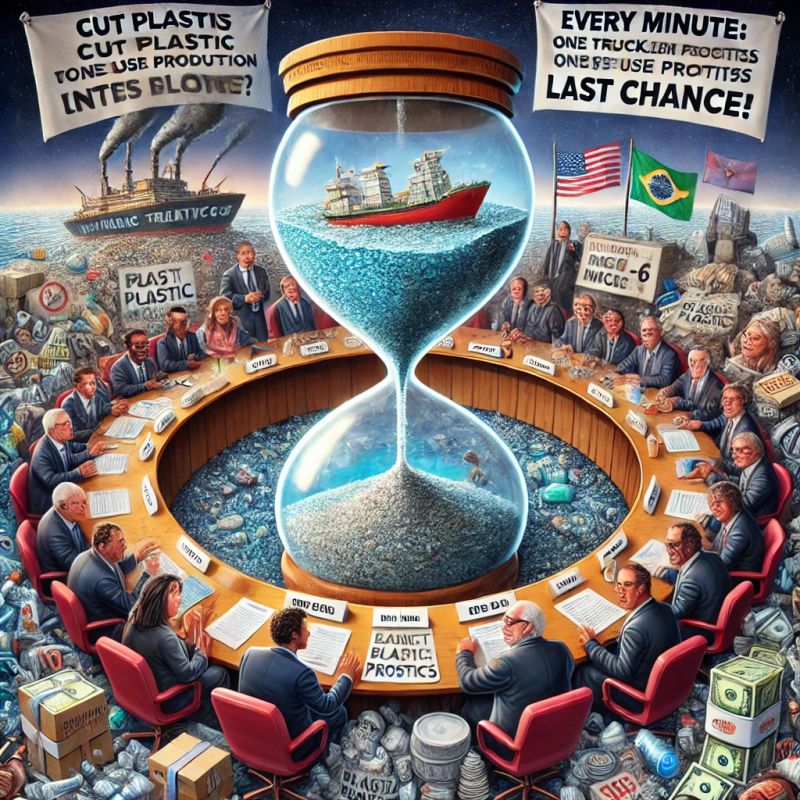
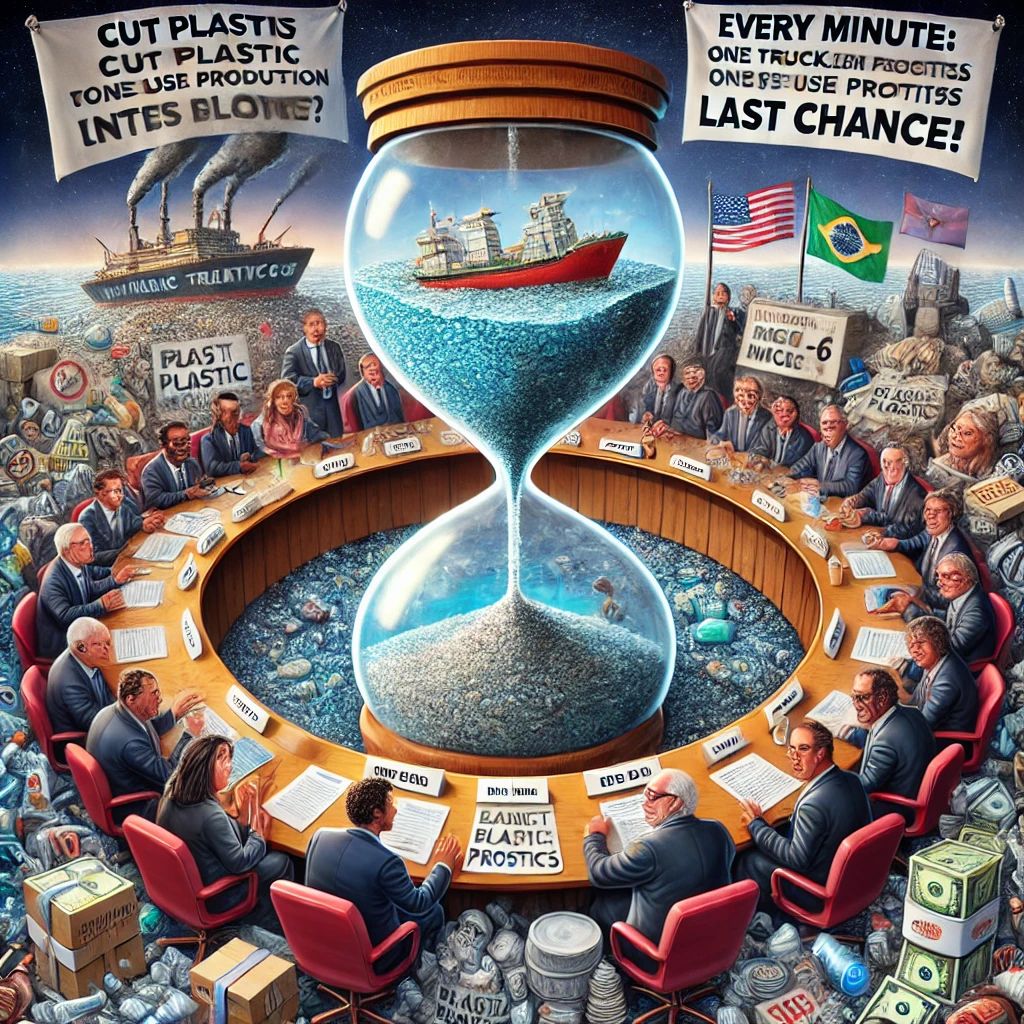
🚨 “Plastic Treaty Deadlock: Is INC-5 Fighting Pollution or Protecting Profits?” ♻️🌍💰
The Intergovernmental Negotiating Committee (INC-5) just wrapped up in Busan, South Korea, aiming to finalize a legally binding treaty on plastic pollution. Instead, the world got another delay. Why? A battle between cutting plastic production and protecting corporate interests.
🔴 1. The Big Divide: Who Wants Action vs. Who Wants Delay?
✅ 85 countries, including the EU and small island nations, pushed for binding plastic production cuts. (Source: UNEP, 2024)
❌ Saudi Arabia, Iran, and Russia led opposition, arguing waste management—not production—is the issue. (Source: The Guardian, 2024)
✅ Plastic waste is projected to triple by 2060 without drastic cuts. (OECD, 2024)
❌ Fossil fuel lobbyists outnumbered environmental groups 3:1 at INC-5, weakening proposals. (Source: WSJ, 2024)
🚨 Reality Check: Plastic production is expected to double by 2040, worsening the crisis. (Source: OECD, 2024)
🟡 2. The Stalemate: Key Proposals vs. Pushback
✅ Caps on virgin plastic production – would target the 450M tons of plastic produced annually. (Source: UNEP, 2024)
✅ Phase-out of toxic chemicals – over 16,000 chemicals are used in plastic, many unregulated. (IPEN, 2024)
✅ Stronger Extended Producer Responsibility (EPR) – shifts waste costs from consumers to corporations.
❌ Plastic production is still expected to grow by 80% by 2050 under current policies. (IEA, 2024)
❌ Half of all plastic ever made has been produced since 2000. (National Geographic, 2024)
🚨 Reality Check: Without cuts, plastic pollution will double in the ocean by 2040. (Source: Pew Charitable Trusts, 2024)
⚠️ 3. The Hard Truth: INC-5 is Running Out of Time
❌ Every minute, the equivalent of a garbage truck of plastic enters the ocean. (WWF, 2024)
❌ Only 9% of all plastic ever made has been recycled. (UNEP, 2024)
❌ Microplastics have been found in 80% of human blood samples tested. (Science Advances, 2024)
🚨 Reality Check: If INC-6 doesn’t enforce production cuts in 2025, this treaty risks becoming another empty climate agreement.
🏆 KeyTakeaway
The INC-5 negotiations ended in deadlock, as plastic-producing nations prioritize profits over pollution cuts. Without stronger global action in INC-6, this treaty could turn into just another greenwashed agreement.
👉 Will the world get a real plastic treaty—or just more delays?
PlasticCrisis NetZero Greenwashing ClimateAction INC5
Originally published on LinkedIn on 2025-02-03 08:51:04: https://www.linkedin.com/feed/update/urn%3Ali%3AgroupPost%3A9270968-7292102277627105281
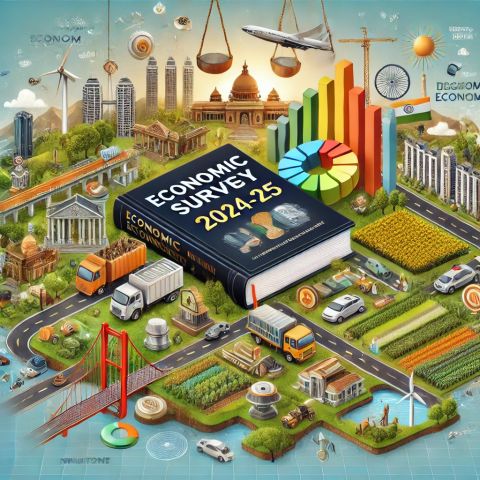
📊 India_Economic_Survey_2024-25: Growth, Resilience & Future Focus 🇮🇳📈
India’s economy is defying global uncertainties, powered by investment, reforms, and innovation. Here’s a concise breakdown of the key takeaways.
🌏 Economic Strength & Fiscal Health
✅ Growth remains strong, driven by domestic investment.
✅ Inflation moderate, but food prices remain volatile.
✅ Capital spending up, ensuring long-term stability.
🏆 Key Shift: India prioritizes investment over short-term spending.
💰 Banking & Financial Sector
✅ Low NPAs & strong credit growth signal a healthy banking sector.
✅ Global interest rate risks monitored to ensure market stability.
🏆 Key Shift: A robust financial system supports economic momentum.
🌐 Trade & External Sector
✅ FDI remains a focus, with business reforms easing entry.
✅ Export challenges persist, due to global trade tensions.
✅ Reducing import dependency on China to boost self-reliance.
🏆 Key Shift: Reshaping trade policies to adapt to global disruptions.
🏗️ Infrastructure & Industry
✅ Post-election boost to infrastructure—transport, digital, energy.
✅ MSMEs get policy push, enhancing industrial output.
🏆 Key Shift: Building for the future with targeted investments.
🌱 Climate & Sustainability
✅ Energy transition & green investments expanding.
✅ Air pollution & emissions remain critical issues.
🏆 Key Shift: Sustainability is now a policy priority, not an afterthought.
🚀 Employment, AI & Future of Work
✅ Upskilling & gig economy shaping future jobs.
✅ AI disruption expected, but workforce adaptation in progress.
🏆 Key Shift: Balancing tech advancement with job security.
📈 Vision 2047: India’s Long-Term Economic Strategy
✅ Deregulation & ease of doing business accelerating growth.
✅ Viksit Bharat 2047 aims to make India a developed economy.
🏆 Key Shift: From short-term fixes to long-term economic transformation.
🏆 KeyTakeaway
India’s Economic Survey 2024-25 highlights resilience, investment-driven growth, and policy innovation. The focus is on long-term stability, sustainability, and self-reliance.
👉 Is India ready for its next economic leap?
EconomicSurvey IndiaGrowth Infrastructure GreenEconomy DigitalIndia ViksitBharat2047
Originally published on LinkedIn on 2025-01-31 19:21:29: https://www.linkedin.com/feed/update/urn%3Ali%3Ashare%3A7291173766041059329
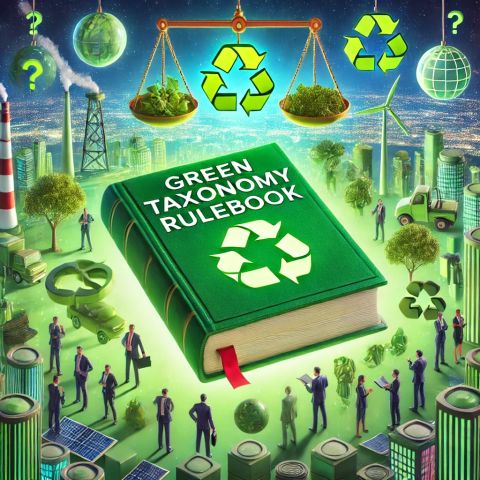
🌍 Green_Taxonomy: The Billion_Dollar_Climate_Rulebook” 📖💰♻️
Governments & investors are pumping trillions into ‘green projects’, but how do we know what’s actually sustainable and what’s greenwashing? That’s where Green Taxonomy comes in—a global rulebook defining what’s truly green.
Let’s break it down data-first.
📖 1. What is Green_Taxonomy?
✅ A classification system that defines which economic activities are truly ‘green.
✅ Prevents greenwashing by ensuring companies & funds don’t falsely claim sustainability.
✅ Guides investors & governments toward legitimate climate-friendly projects.
🚨 Why It Matters? Over $1.5 trillion in ESG investments may be at risk due to misleading green claims. (Bloomberg, 2024)
🏆 Key Impact: Governments use Green Taxonomy to shape climate policies, carbon markets, and financial incentives.
🌎 2. Global Green Taxonomies: Who’s Leading?
✅ 🇪🇺 EU Taxonomy: Strictest framework, defining what counts as green. (Source: EU Commission, 2024)
✅ 🇨🇳 China’s Green Bonds Catalog: Focuses on renewable energy & pollution control. (PBOC, 2024)
✅ 🇮🇳 India’s Green Taxonomy: Aligned with Sustainable Finance Guidelines. (RBI, 2024)
✅ 🇺🇸 US SEC ESG Rules: Weaker than EU’s, but cracking down on greenwashing. (SEC, 2024)
🚨 The Problem? Each country defines ‘green’ differently, creating market confusion for investors.
🏆 What’s Needed? A globally harmonized green taxonomy to ensure credibility & consistency.
💰 3. How Green Taxonomy Affects Business & Investments
✅ Corporations Must Report Sustainability Metrics or risk losing ESG funding.
✅ Green Bonds & Climate Finance—Only certified green projects qualify for funding.
✅ High-Carbon Industries (Oil, Gas, Cement) face stricter compliance & reporting rules.
🚨 Reality Check: #$4.2 trillion in green bonds were issued in 2023—but without strong taxonomy rules, many may not be truly ‘green.’ (Climate Bonds Initiative, 2024)
🏆 Who Wins? Companies investing in real sustainability, not just optics.
⚖️ 4. The Green Taxonomy Controversies
🔴 Is Nuclear Energy Green? 🇪🇺 The EU says YES. Critics say radioactive waste isn’t sustainable.
🔴 Is Natural Gas Green? 🇪🇺 Labeled it ‘transitional green’, sparking backlash from climate groups.
🔴 Are Carbon Offsets Valid? Many taxonomies exclude carbon credits due to verification concerns.
🚨 The Challenge? Balancing economic growth & real sustainability without greenwashing.
🏆 KeyTakeaway
The Green Taxonomy is reshaping global finance & sustainability rules. Countries that set clear standards will attract more green investments, while loopholes & weak regulations risk fueling greenwashing.
👉 Will Green Taxonomy stop greenwashing or just create more loopholes?
GreenFinance Sustainability ESG CarbonMarkets NetZero ClimateAction

Originally published on LinkedIn on 2025-01-31 08:57:08: https://www.linkedin.com/feed/update/urn%3Ali%3AgroupPost%3A100646-7291016643428704256
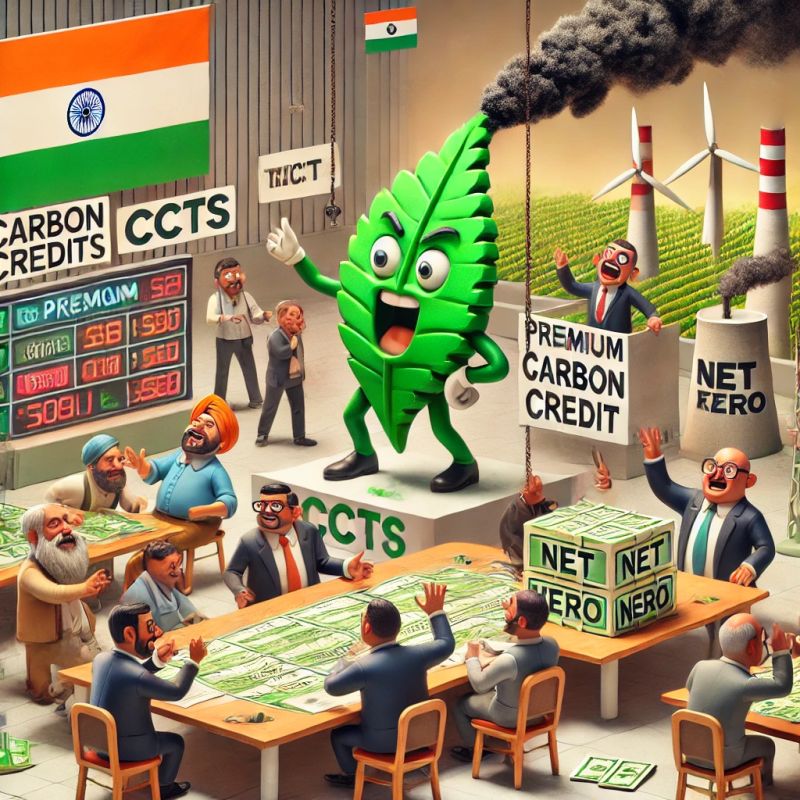
NamasteGreenIndia’s Carbon Market: A Game Changer or Just Another Framework?” 🇮🇳💨
India is making big moves in the carbon credit space with the Indian Carbon Market (ICM), but is it ready to deliver real impact? Here’s a data-driven breakdown of the Carbon_Credit_Trading_Scheme (CCTS) and what’s next.
🔍 What is the Indian Carbon Market (ICM)?
✅ Launched in June 2023 to enable carbon credit trading & cut emissions. (Source: Govt. of India, 2023)
✅ Aims to align with India’s Nationally Determined Contributions (NDCs) under the Paris Agreement.
✅ Regulated under the Carbon Credit Trading Scheme (CCTS), officially notified in June 2023 & amended in December 2023.
🏆 Why It Matters: India is one of the world’s top 3 carbon emitters, and this framework could reshape industries while driving carbon reductions.
📊 Current Status of CCTS
🛠 10 key sectors approved under the Offset Mechanism. (Source: Bureau of Energy Efficiency, 2024)
🚀 Phase 1 covers 6 sectors, with 12 methodologies developed for implementation. (BEE, Sept 2024)
🚨 Challenges:
Pricing clarity & credit validation remain uncertain.
Will industries truly cut emissions, or just buy offsets?
⚡ What’s Next for India’s Carbon Market?
📈 Expansion to more sectors, increasing carbon credit liquidity.
🌱 Stronger enforcement needed to prevent greenwashing.
🌍 Alignment with global carbon markets for international trading opportunities.
🏆 Final Verdict: High potential but execution will decide success.
KeyTakeaway
India’s Carbon Credit Trading Scheme (CCTS) could be a major climate tool, but real impact depends on strong enforcement & pricing mechanisms.
👉 Will India’s carbon market drive real change, or just be another framework?
IndiaCarbonMarket Sustainability ClimateAction NetZero CarbonCredits ESG
Originally published on LinkedIn on 2025-01-30 10:52:26: https://www.linkedin.com/feed/update/urn%3Ali%3Ashare%3A7290683269031907328

