KatalystKnowledge | The FitFor55 Formula: Europe’s Race Against Time
Targets are not milestones—they’re catalysts. Climate clarity must fuel commercial clarity.
KtalystKeystone
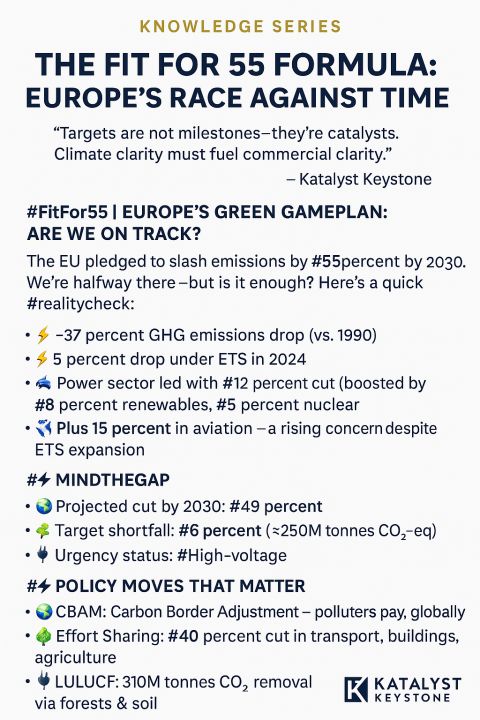
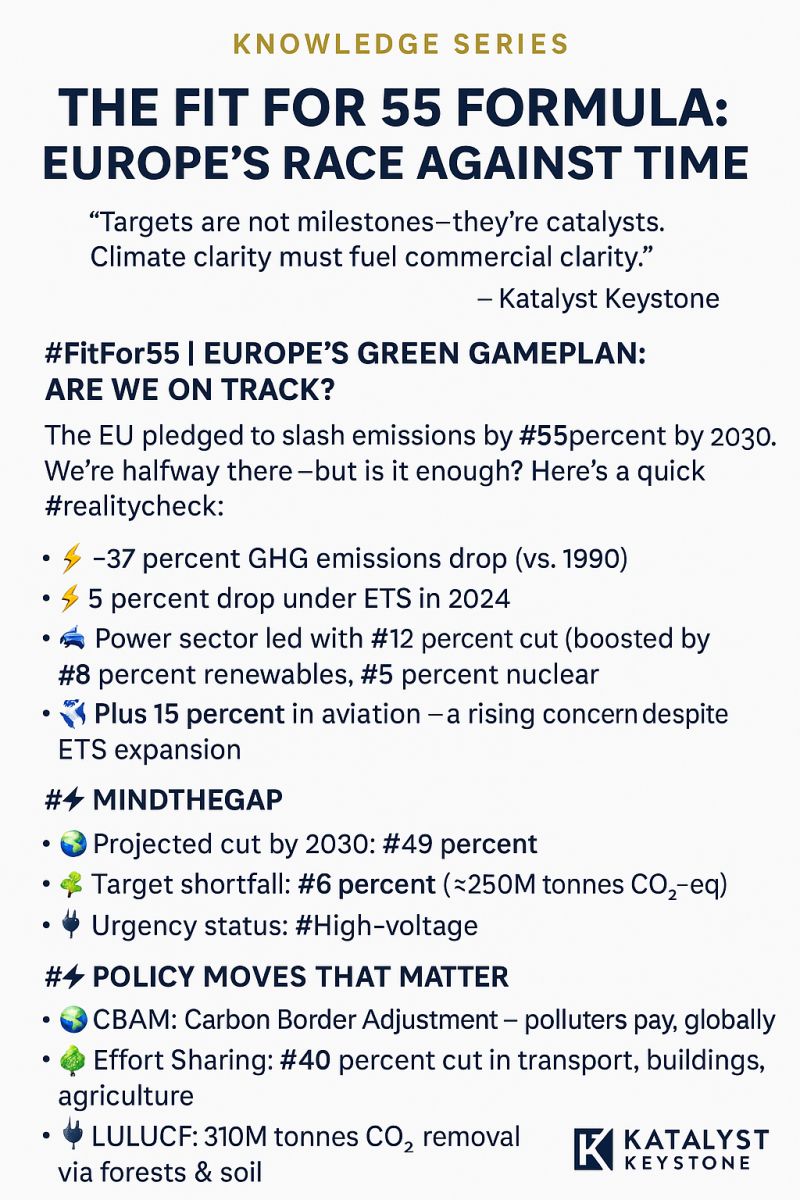
FitFor55 | Europe’s Green Gameplan: Are We On Track?
The EU pledged to slash emissions by 55percent by 2030. We’re halfway there—but is it enough? Here’s a quick realitycheck:
#️Progress So Far
⚡ Minus 37 percent GHG emissions drop (vs. 1990)
♻️ 5 percent drop under ETS in 2024
⚡ Power sector led with 12 percent cut (boosted by 8 percent renewables, 5 percent nuclear)
✈️ Plus 15 percent in aviation—a rising concern despite ETS expansion
🏭 Industry? Flat. Cement down, fertilizers up
MindTheGap
Projected cut by 2030: 49 percent
Target shortfall: 6 percent (≈250M tonnes CO₂-eq)
Urgency status: High-voltage
Policy Moves That Matter
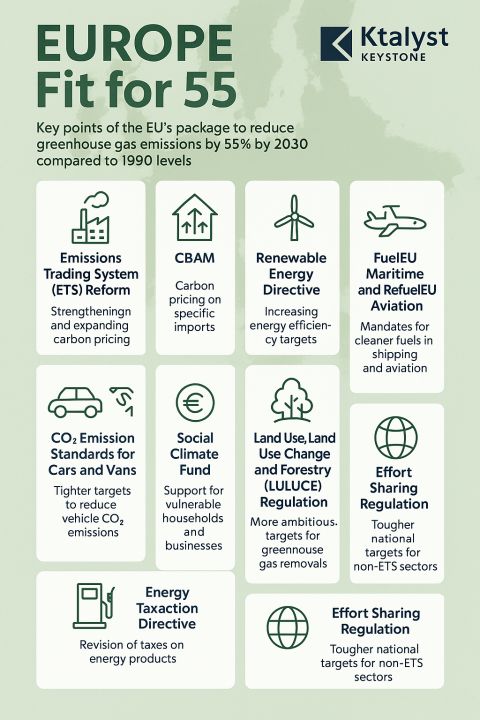
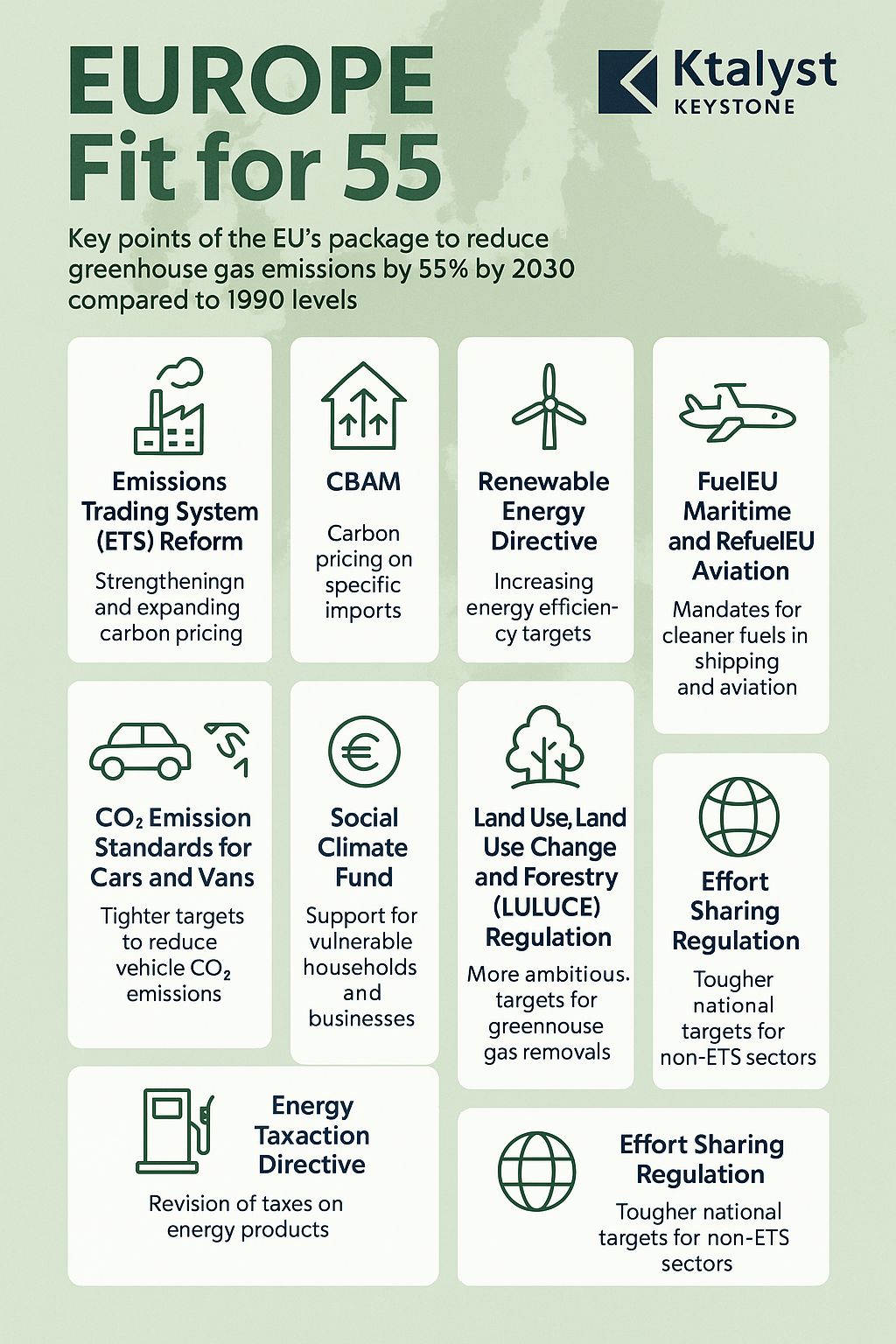
🌍 CBAM: Carbon Border Adjustment – polluters pay, globally
🛣️ Effort Sharing: 40 percent cut in transport, buildings, agriculture
🌳 LULUCF: 310M tonnes CO₂ removal via forests & soil
🔌 Renewables Goal: 42.5 percent by 2030 (plus 2.5 percent aspirational boost to 45 percent)
Takeaway
The EU is moving—but not fast enough.
To reach the finish line:
Scale green hydrogen & biofuels
Electrify transport
Cut industrial emissions deeper
LeadershipLens
Green goals aren’t just numbers.
They’re strategy. They’re urgency. They’re our business future.
KtalystKeystone Insight:
We help you align business with policy—because climate clarity = profit clarity.
Originally published on LinkedIn on 2025-04-09 05:45:15: https://www.linkedin.com/feed/update/urn%3Ali%3AugcPost%3A7315610730253238272
PredictionPost: India’s Smart Playbook Could Turn Trade Turmoil into Triumph
April 2, 2025 isn’t just a reaction—it’s a redirection.
OurTake:
India’s rapid tariff concessions, tech-friendly signals, and energy diplomacy suggest a bigger play—positioning itself as a reliable, reform-ready trade partner just when global supply chains are rebalancing.
Data That Talks
1. U.S. Tariff Tsunami Is Real
🔸 #$1.4 trillion in imports now under “reciprocal tariffs” from the U.S.
🔸 Targeting countries like India, China, and EU for what the U.S. sees as unfair trade barriers.
(Source: TOI)
2. India’s Stakes Are High
🔸 #$87.4 billion – India’s 2024 exports to the U.S.
🔸 66B worth of goods now at risk due to new tariff duties
(Source: USTR & Reuters)
3. India’s Counter Move: Strategic Concessions
🔸 Tariff relief on 55% of U.S. goods worth #$23 billion
🔸 GoogleTax Gone – 6% tax repealed to woo global tech
🔸 Likely removal of LNG import duties
(Source: FT, Reuters)
4. Currency & Market Volatility Incoming
🔸 Rupee forecasted to dip below 85 INR/USD in next 12 months
🔸 NSE Nifty 50 down 0.25%, BSE Sensex slips 0.4%
(Source: Reuters)
5. Sectoral Deep Cuts
💎 Gems & Jewelry: $11.88B exports face 13.32% tariffs
💊 Pharma: $12.72B exports under 10.9% tariff gap
👚 Textiles: $2.76B worth now under 6.59% duty
(Source: Livemint)
OurPrediction
By Q4 2025, expect:
✅ A revamped US-India Trade Pact 2.0
✅ Rise in FDI inflows to tech and energy
✅ Short-term currency hit, long-term rupee rebound in 83–84 range
✅ India positioned as supply chain savior in the Indo-Pacific
BoardroomCue:
Geopolitics drives policy. Policy drives profit.
This isn’t just trade strategy—it’s global chess.
IndiaNext TradeTrends April2Update GlobalMarkets LeadershipLens FDIIndia BoardroomRadar DigitalIndia
Let’s not just read headlines—let’s lead with insight.

Originally published on LinkedIn on 2025-04-01 20:24:23: https://www.linkedin.com/feed/update/urn%3Ali%3AgroupPost%3A13927028-7312932866701647872
Greenwashing Exposed: 11_Companies That Got Caught!
🌍 Sustainability is a business imperative. Fake green claims aren’t just unethical—they’re costly.
⚽ 1 FIFA – The “Carbon-Neutral” World Cup Myth
📢 Claim: Qatar 2022 was 100% carbon-neutral.
📊 Reality: Actual emissions were 3X higher than FIFA reported. Carbon credits used were questionable.
💰 Backlash: Carbon Market Watch called it “climate deception.
🚗 2 Volkswagen – The $33B Diesel Lie
📢 Claim: “Clean diesel” cars with low emissions.
📊 Reality: Vehicles emitted 40X above legal NOx limits.
💰 Backlash: $33B in fines & lawsuits (Dieselgate).
☕ 3 Keurig – “Recyclable” Pods That Weren’t
📢 Claim: Pods are 100% recyclable.
📊 Reality: Most recycling centers rejected them.
💰 Backlash: $3M fine in Canada for misleading claims.
🍔 4 McDonald’s – A Green Logo, Not Green Actions
📢 Claim: New green-and-yellow logo reflected sustainability.
📊 Reality: No real operational changes to reduce waste or emissions.
💰 Backlash: Public dismissed it as cosmetic rebranding.
👗 5 H&M – The “Conscious” Collection That Wasn’t
📢 Claim: Ethical, sustainable fashion.
📊 Reality: Lack of transparency, over-reliance on fast fashion.
💰 Backlash: UK & Norway regulators investigated false claims.
🥤 6 Coca_Cola – The 70% Plastic “PlantBottle
📢 Claim: Eco-friendly bottle made from plant-based plastic.
📊 Reality: Only 30% plant-based, rest was petroleum plastic.
💰 Backlash: 1 global plastic polluter (Break Free from Plastic Report).
🛢 7 BP – “Beyond Petroleum” or Just PR?
📢 Claim: Heavy investments in renewables.
📊 Reality: Only 4% of BP’s budget went into green energy.
💰 Backlash: Media and activists called out the misdirection.
💄 8 L’Oréal – “Sustainable Beauty” with a Plastic Problem
📢 Claim: Ethical beauty products with lower carbon impact.
📊 Reality: Plastic-heavy packaging, unsustainable ingredients.
💰 Backlash: Exposed for greenwashing without meaningful changes.
✈ 9 Ryanair – The “Lowest Emissions” Airline Claim
📢 Claim: “Europe’s lowest emissions airline.
📊 Reality: UK regulators banned the ad for misleading data.
💰 Backlash: Campaign forced to be withdrawn.
👟 10 Adidas – “Ocean Plastic” Sneakers That Weren’t
📢 Claim: Shoes made of 100% recycled ocean plastic.
📊 Reality: Only a fraction was from ocean waste.
💰 Backlash: Sustainability claims faced scrutiny.
🚰 11 Nestlé – The “Sustainable” Water Extraction Scandal
📢 Claim: Bottled water is “sustainably sourced.
📊 Reality: Over-extracted from drought-prone areas.
💰 Backlash: Faced lawsuits, protests, and reputational damage.
🚨 Takeaways
✅ Fake green claims = regulatory & reputational risk.
✅ Consumers demand transparency & data-backed sustainability.
✅ Sustainability isn’t a PR stunt—it’s a long-term commitment.
Sustainability BusinessEthics GreenwashingFails BrandReputation


Originally published on LinkedIn on 2025-03-15 05:41:42: https://www.linkedin.com/feed/update/urn%3Ali%3AgroupPost%3A4385073-7306550139257577472
KnowledgeSeries: The Future of CarbonCredits – A USD250B Market by 2050
The carboncredit market is no longer a side conversation—it’s becoming a mainstream financial instrument. With projections hitting #$250B by 2050, businesses and investors must pay attention.
Why? Because companies that integrate NetZero strategies today will gain a competitive edge, while those that don’t will face higher costs, regulatory risks, and shrinking investor confidence.
🌎 The Carbon Credit Boom: Why It’s a Business Imperative
✔️ The voluntary carbon market is set to grow 15X by 2030, reaching #$10B–$40B. (McKinsey)
✔️ Investments in carbon credits hit #$1.7B in 2023, up 50% YoY. (BloombergNEF)
✔️ 6,000+ global companies have set Science-Based Targets (SBTi), driving demand for verified carbon offsets.
✔️ Indonesia, Brazil, and Kenya are integrating carbon markets into their economies, generating revenue from forests, renewable energy, and carbon capture projects.
✔️ Article 6 of the ParisAgreement is enabling international carbon credit trading, boosting market credibility.
🚀 What does this mean for businesses?
✔️ A carbon credit strategy is no longer optional—it’s a business necessity.
✔️ Companies without a decarbonization plan will face higher compliance costs.
✔️ Investors are prioritizing NetZero leaders, making carbon credits a key ESG performance driver.
📊 Who’s Leading the Carbon Credit Race?
✔️ Big Tech & Carbon Capture:
Meta, Microsoft, and Google are securing multi-million-dollar deals in Direct Air Capture (DAC) to future-proof their carbon strategies.
✔️ Financial Institutions Going Green:
BlackRock, JP Morgan, and Goldman Sachs are launching climate-focused funds, treating carbon credits as an emerging asset class.
✔️ Corporate Adoption Soaring:
40%+ of Fortune500 companies are embedding carbon offsets into their business models.
✔️ Government-Led Action:
The EU, Singapore, and Japan are developing regulated carbon exchanges to ensure transparency & standardization.
🌱 What to Expect in 2025 & Beyond?
✔️ Stricter Regulations → Carbon credit verification will be tighter, reducing low-quality offsets & greenwashing risks.
✔️ Rising Prices → As demand outstrips supply, carbon credit prices could triple by 2030, making early adoption a smart financial move.
✔️ Emerging Markets in Play → Africa, Southeast Asia, and Latin America will dominate nature-based carbon solutions (reforestation, soil carbon, etc.).
✔️ Carbon as a Tradable Asset → Institutional investors are pushing for liquid carbon credit markets, making carbon a financialized commodity.
🔍 ComingUpNext: “The Business Case for Carbon Credits – Risks, Rewards & Strategy
Originally published on LinkedIn on 2025-03-08 07:02:05: https://www.linkedin.com/feed/update/urn%3Ali%3AgroupPost%3A82951-7304033651044839424
📚 KnowledgeSeries: Sustainability Taxonomy – The Rulebook for Green Investments 🌱💰
As #$5T in ESG investments grows, defining what is truly sustainable is critical. Enter Sustainability Taxonomy—a classification system ensuring green capital flows into real climate solutions, not greenwashing.
📊 EU Taxonomy – Setting the Global Standard
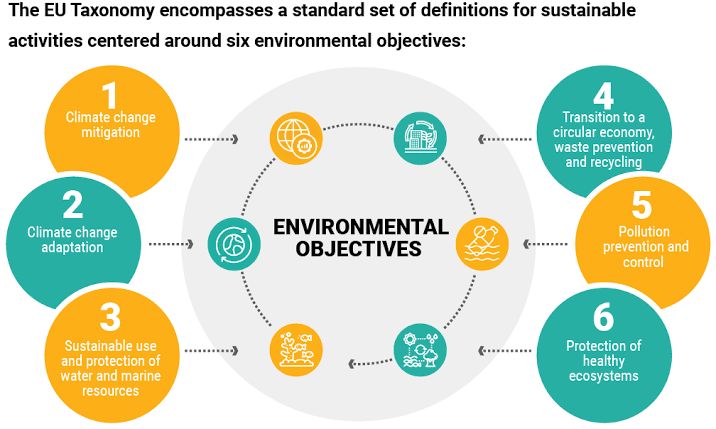
🟢 6 Environmental Objectives → Activities must significantly contribute to at least one while causing no harm to others:
Climate Change Mitigation
Climate Change Adaptation
Water & Marine Resource Protection
Circular Economy Transition
Pollution Prevention & Control
Biodiversity & Ecosystem Restoration
🟢 Impact → Covers 50K+ companies, shaping 80% of EU capital markets. (Source)
🟢 Challenges → Simplification Omnibus (2025 Proposal) could reduce company reporting, raising concerns about greenwashing risks. (Source)
🌍 Global Adoption: Who’s Following the EU Model?
🟢 Australia → Developing Sustainable Finance Taxonomy to attract #$200B+ in green capital. (Source)
🟢 China → Green Bond Principles aligned with EU Taxonomy in 2023, covering #$150B+ in issuances.
🟢 ASEAN → Launched ASEAN Taxonomy 2024, targeting climate finance growth in 10 nations.
🟢 US & UK → No official taxonomy, relying on SEC climate rules & UK Green Finance Strategy instead.
🔥 The Takeaway: Green Finance Needs Clear Rules
📌 #$5T+ ESG investments need clarity—taxonomy prevents greenwashing.
📌 EU model sets the benchmark, but simplification risks loosening standards.
📌 More countries adopting taxonomies → Will we see a global standard soon?
📢 Do we need a worldwide taxonomy for sustainability? Let’s discuss! 👇
Originally published on LinkedIn on 2025-03-04 03:47:30: https://www.linkedin.com/feed/update/urn%3Ali%3AgroupPost%3A2474261-7302535131989164034
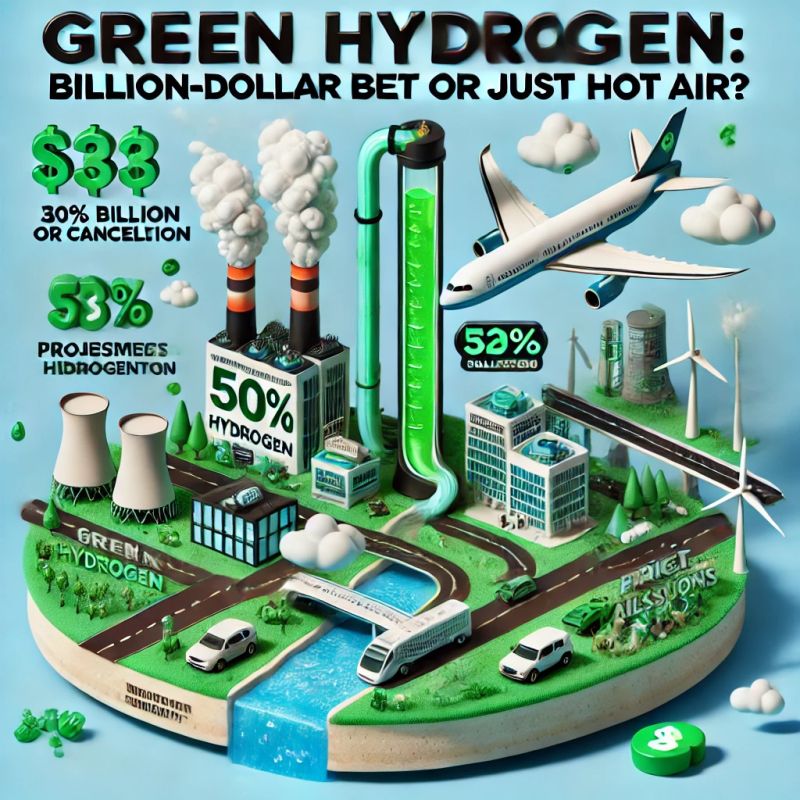
⚡🌍 Green_Hydrogen: Billion_Dollar_Bet or Just Hot Air?
💰 USD320 Billion. That’s how much global green hydrogen investments are expected to hit by 2030. (IEA, 2024)
💨 80 Million Tons. That’s the world’s hydrogen demand—yet only 0.5% comes from green sources. (Hydrogen Council, 2024)
🚀 #$1.50/kg. That’s the break-even cost for green hydrogen to compete with fossil fuels, but only 10% of projects are hitting this target. (BloombergNEF, 2024)
📌 Reality Check: Is green hydrogen scaling fast enough or suffocating under its own hype?
🌍 Game-Changers: Who’s Leading the Hydrogen Race?
🇳🇴 Norway & 🇩🇪 Germany: Floating Hydrogen Terminal
✅ #$3 Billion Project – First floating hydrogen hub to supply 1.3 million tons of green hydrogen annually. (Reuters, 2024)
✅ Price Target: $3-$3.5/kg—50% cheaper than current European hydrogen costs. (IEA, 2024)
✅ Operational By: 2027.
🇪🇸 Spain: Cepsa’s €3B Hydrogen Hub
✅ 2 GW of green hydrogen capacity planned by 2030. (Reuters, 2024)
✅ Phase 1: 400 MW by 2027, reducing 6 million tons of CO₂ annually.
📌 Reality Check: Green hydrogen is growing—but is it growing fast enough?
❌ Setbacks: Why Are Big Projects Failing?
🇦🇺 Australia: $12.5B Hydrogen Project Canceled
❌ Queensland pulled funding for its largest hydrogen project due to skyrocketing costs. (CourierMail, 2024)
❌ Kansai Electric withdrew, citing lack of commercial viability.
🇦🇺 BP’s $600M Hydrogen Hub Shelved
❌ BP paused its green hydrogen project in Western Australia, raising doubts over economic feasibility. (Hydrogen Insight, 2024)
📌 Reality Check: Over 50% of hydrogen projects risk delay or cancellation due to high costs & supply chain challenges. (Hydrogen Council, 2024)
✈️ Hydrogen-Powered Flight: The Next Big Bet?
🚀 ZeroAvia’s Hydrogen Aircraft Takes Off
✅ First 19-seat plane powered by hydrogen-electric engines. (Time, 2024)
✅ Raised #$150M from Airbus, Amazon, & Bill Gates’ Breakthrough Energy Fund.
✅ Commercial hydrogen flights targeted for 2025.
📌 Reality Check: Hydrogen aviation could cut emissions by 90%, but cost & infrastructure remain barriers.
🏆 KeyTakeaway
💡 Green Hydrogen could be the game-changer for clean energy, should be scaled urgently, but would be another overhyped tech if costs don’t fall fast.
👉 Are we heading for a green hydrogen boom or bust?
HydrogenEconomy NetZero CleanEnergy Sustainability GreenHydrogen EnergyTransition
Originally published on LinkedIn on 2025-02-06 18:33:57: https://www.linkedin.com/feed/update/urn%3Ali%3Ashare%3A7293336130429546496
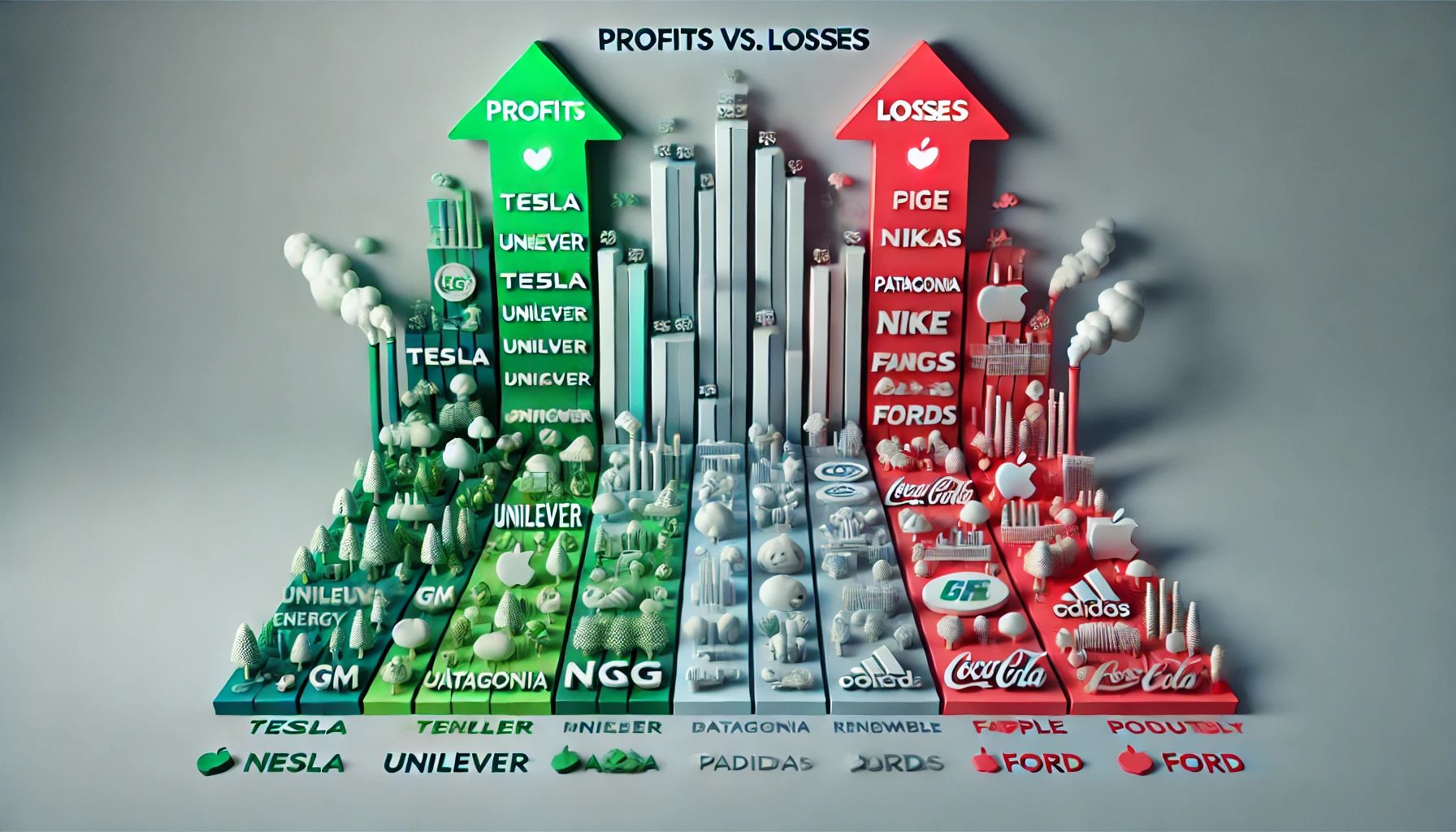
Sustainability Wars: Profits of the Bold, Losses of the Blind
Sustainability isn’t just a buzzword—it’s the defining strategy for profitability in modern business. These 10 examples showcase how companies that embraced sustainability secured financial success, while competitors who hesitated faced staggering losses and shrinking market share.
📊 1. Unilever vs. Procter & Gamble (P&G)
Unilever: Sustainable brands grew 69% faster, saving #€1 billion by 2020.
P&G: Lost #$8 billion in 2023, struggling to appeal to eco-conscious consumers in Europe.
📊 2. Tesla vs. General Motors (GM)
Tesla: EV dominance earned #$12.6 billion net income (2022) and an 800% valuation increase in 5 years.
GM: EVs accounted for just 2% of revenue (2022), causing a 25% market share drop in China.
📊 3. IKEA vs. Wayfair
IKEA: Renewable energy and circular practices saved #€2 billion and grew customer loyalty by 25%.
Wayfair: Suffered #$1.5 billion losses (2022) due to unsustainable operations.
📊 4. Patagonia vs. Columbia Sportswear
Patagonia: Eco-friendly initiatives helped achieve #$1 billion annual revenue and build brand trust.
Columbia: Lost 15% market share between 2020-2023 to Patagonia due to lack of sustainability focus.
📊 5. Walmart vs. Target
Walmart: Energy efficiency saved #$1 billion annually, cutting operational costs significantly.
Target: Reported a #$2 billion profit dip (2022) due to slower sustainability adoption.
📊 6. Nike vs. Adidas
Nike: Flyknit technology saved 60% material costs, generating #$3.5 billion in savings.
Adidas: Faced a #€500 million revenue loss (2023) from delayed sustainable innovations.
📊 7. Apple vs. Samsung
Apple: 100% renewable energy adoption fueled record #$394 billion revenue (2022) and 40% brand equity growth.
Samsung: Lost 15% EU market share, criticized for lagging in renewable energy initiatives.
📊 8. Microsoft vs. Oracle
Microsoft: Sustainability efforts drove 27% Azure growth (2023), securing eco-conscious enterprise clients.
Oracle: Missed #$1.2 billion in contracts, trailing in cloud services for sustainability-focused industries.
📊 9. PepsiCo vs. Coca-Cola
PepsiCo: Water-saving initiatives saved #$80 million annually, stabilizing global supply chains.
Coca-Cola: Lost #$2 billion (2022) due to water mismanagement protests and plant shutdowns in India.
📊 10. Toyota vs. Ford
Toyota: Sold 16 million hybrid vehicles, generating #$70 billion in cumulative profits.
Ford: Lost 10% market share (2020-2023) due to delayed EV and hybrid innovations.
The Bottom Line
Companies that lead with sustainability strategies not only maximize profits but also future-proof their business. Those that delay or ignore the shift face crippling losses in revenue, market share, and reputation.
SustainabilityWins GreenGrowth ProfitWithPurpose CorporateLeadership
Originally published on LinkedIn on 2025-01-24 05:11:11: https://www.linkedin.com/feed/update/urn%3Ali%3AgroupPost%3A82951-7288423065552609280
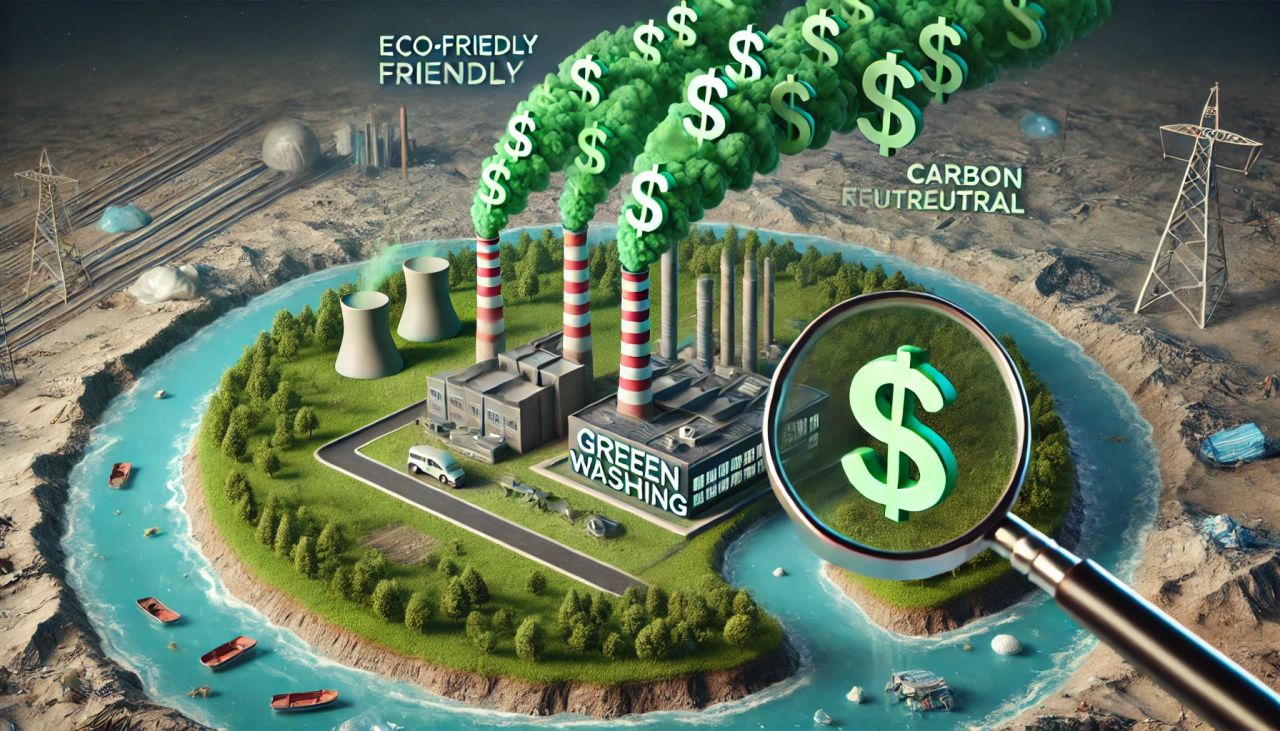
Exposing the Numbers: Top10 Greenwashing Scandals That Misled Millions
As sustainability becomes a priority, some corporations have capitalized on it with Greenwashing—making false or exaggerated environmental claims. Here’s a statistics-driven expose of the top 10 cases that misled consumers on a massive scale:
🌍 1. Volkswagen’s “Dieselgate” Scandal
Fines: Over $30 billion globally
Vehicles Impacted: 11 million with emissions-cheating software
Carbon Deception: Real emissions were up to 40x higher than reported.
🌿 2. Procter&Gamble’s Charmin Toilet Paper
Forests Logged: Over 1 million hectares annually in Canada’s boreal region
Carbon Release: Logging contributes to over 26% of global forest-related emissions annually.
♻️ 3. Keurig’s Recyclable K-Cups
Consumers Misled: 7.5 million households in Canada
Recycling Reality: Only 30% of cities accepted the pods, making claims infeasible.
⛽ 4. Shell’s Carbon Neutral Fuel Claims
Carbon Offsets: Over 80% deemed ineffective
Advertising Reach: Misleading campaigns impacted 40 million Europeans.
✈️ 5. Delta’s Carbon Neutral Airline Claim
Investment in Offsets: $1 billion
Global Aviation Emissions: Aviation accounts for 2.1% of global CO2 emissions annually.
👟 6. Allbirds’ Sustainability Metrics
Wool Production Footprint: Emits 50% more CO2 than advertised
Consumer Reach: Misled 2.5 million buyers annually with incomplete data.
💸 7. Mercer Superannuation’s “Eco-Investments
Fined: $11.3 million in 2024
Green Fund Reality: Included companies linked to fossil fuels—contradicting eco-claims.
🍾 8. CocaCola’s Plastic Recycling Initiatives
Plastic Production: Over 3 million tonnes annually, the largest globally
Recycling Reality: Less than 10% of plastic waste is effectively recycled.
👗 9. H&M’s Conscious Collection
Collection Size: 250+ products marketed as sustainable
False Claims: Over 96% of materials were found to have minimal environmental benefit.
⛽ 10. Applegreen’s Carbon Neutral Fuel
Customer Deception: Affected 1.8 million buyers in the UK and Ireland
Offset Schemes: Criticized for taking up to 50 years to achieve results.
💡 Key Takeaways:
💰 Cost of Greenwashing Fines (Last 5 Years): Over #$45 billion globally
👥 Consumers Impacted: Over 500 million annually exposed to false eco-claims
These cases prove the importance of transparency, regulation, and consumerawareness. Let’s demand RealSustainability, not just empty promises.
SustainabilityMatters ESG CorporateAccountability StayInformed
Originally published on LinkedIn on 2025-01-23 13:37:00: https://www.linkedin.com/feed/update/urn%3Ali%3AgroupPost%3A82951-7288187970291920897
NamasteGreenIndia’s DDGS Export Boom: USD 717 Million Market, But 2025 Holds the Key
The Surge: A 314% Export Boom
India is making waves in the global Distillers Dried Grains with Solubles (DDGS) market, a key ethanol byproduct used as animal feed. Here’s the story behind the numbers:
📦 1,212 shipments of DDGS in the last 12 months (314% growth).
🌏 Major buyers:
🇻🇳 Vietnam: 51% share.
🇳🇵 Nepal: 21% share.
🇺🇸 United States: 7% share.
💰 Market Value:
2023: USD 420.67 million.
2032 (Projected): USD 717.81 million (CAGR: 6.17%).
The Challenge: Falling Prices
Despite the export surge, the industry is battling a steep price drop:
🏷️ Domestic DDGS prices: #₹14–15/kg (~USD 0.17–0.18).
🌍 Global competition and oversupply are hitting margins hard.
1. Expanded Production Capabilities:
With ethanol blending targets set to increase to 20% by 2025, India’s DDGS production will reach record levels.
2. Market Diversification:
New export agreements with Africa, Southeast Asia, and Latin America are expected to reduce over-reliance on existing markets like Vietnam and Nepal.
3. Government Interventions:
Policies promoting minimum price guarantees and export incentives are likely to stabilize DDGS prices.
Focus on value-added DDGS products, such as enriched feed, to attract premium markets.
4. Sustainability Push:
Growing demand for sustainable feed solutions globally aligns perfectly with DDGS as a cost-effective, eco-friendly option.
Indian DDGS could gain significant traction in European markets following stricter feed sustainability regulations.
5. Technological Advancements:
Adoption of advanced processing techniques will improve DDGS quality and reduce production costs, ensuring competitiveness in global markets.
India is turning its ethanol growth into a global export advantage, but to sustain the momentum in 2025 and beyond:
🛠️ Strengthen Domestic Support: Build strategic reserves to manage price fluctuations.
🌍 Capture New Markets: Target countries with rising feed demand like Brazil, Indonesia, and Nigeria.
🚀 Lead the Sustainability Charge: Establish India as a key supplier of sustainable animal feed.
Why It Matters
India’s ethanol-driven DDGS market is poised for exponential growth in 2025. By embracing innovation, diversification, and sustainability, India can become a global powerhouse in the animal feed sector while ensuring long-term industry stability.
💬 Let’s connect to explore how IndiaExports and EthanolEconomy are setting the stage for a transformative 2025. 🚀
Originally published on LinkedIn on 2025-01-15 19:30:29: https://www.linkedin.com/feed/update/urn%3Ali%3Ashare%3A7285377825862283264

