#️⃣ HarvestingtheSunTwice: TheAgrivoltaicsRevolution🌞🌾
🌍 Agrivoltaics—farmingandsolarpowercombined—isreshapinglanduseefficiency. This innovation boosts cropyields,waterconservation,andincreasescleanenergyoutput.
📈 MarketGrowth 🟢 #$4.59BMarket(2024),Projectedto$23.84Bby2034 – CAGR of 16.76%, driven by rising solar adoption. (marketresearchfuture.com) 🟢 14GWInstalledGlobally – Germany alone has a potential 1,700GW, showing massive scalability. (sens-energy.com)
🌾 AdvantagesofAgrivoltaics 🟢 70%IncreaseinLandEfficiency – Dual land use maximizes productivity. (vectorenewables.com) 🟢 200%HigherTomatoYield,300%forPeppers – Shaded crops thrive under controlled conditions. (mbtenergy.com) 🟢 47%LessWaterNeeded – Solar panels reduce evaporation, benefiting drought-prone regions. (mbtenergy.com)
🌍 GlobalAdoptionTrends 🌱 USA: 500+AgrivoltaicSites generating 9GW of solar power. (en.wikipedia.org) 🌱 Europe: Germany and France leading R&D and implementation. (en.wikipedia.org) 🌱 Asia: Japan and China scaling agrivoltaics in rural solar programs. (en.wikipedia.org)
⚠️ ChallengesAhead 🔴 HighInitialInvestment – Cost barriers slow adoption. (mdpi.com) 🔴 ComplexDesignIntegration – Requires precision in panel spacing and crop selection. (mdpi.com) 🔴 CropCompatibilityIssues – Not all plants benefit from shading. (mdpi.com)
🐑 InnovativeApplications 💡 SolarGrazing: 3,000Sheep maintain vegetation under solar farms in Texas. (apnews.com) 💡 PollinatorSolarFarms: Solar arrays double as bee-friendly habitats. (newyorker.com)
🚀 TheFutureIsBright – Agrivoltaics mergesfoodsecurityandcleanenergy, but scaling requires policy support, innovation, and global collaboration.
💡 Wouldyousupportagrivoltaicsinyourregion?Dropyourthoughtsbelow!👇
Originally published on LinkedIn on 2025-03-03 07:26:27: https://www.linkedin.com/feed/update/urn%3Ali%3AgroupPost%3A82951-7302227847153160192
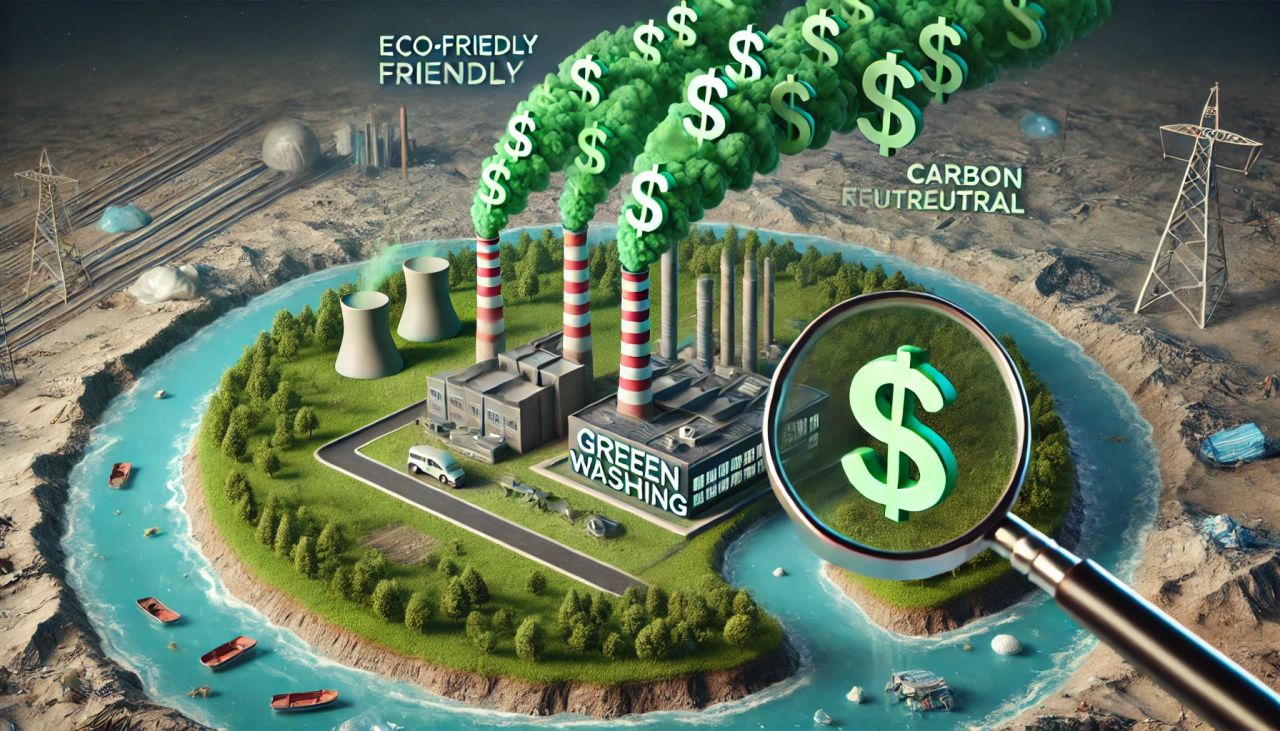
Exposing the Numbers: Top10 Greenwashing Scandals That Misled Millions
As sustainability becomes a priority, some corporations have capitalized on it with Greenwashing—making false or exaggerated environmental claims. Here’s a statistics-driven expose of the top 10 cases that misled consumers on a massive scale:
🌍 1. Volkswagen’s “Dieselgate” Scandal
Fines: Over $30 billion globally
Vehicles Impacted: 11 million with emissions-cheating software
Carbon Deception: Real emissions were up to 40x higher than reported.
🌿 2. Procter&Gamble’s Charmin Toilet Paper
Forests Logged: Over 1 million hectares annually in Canada’s boreal region
Carbon Release: Logging contributes to over 26% of global forest-related emissions annually.
♻️ 3. Keurig’s Recyclable K-Cups
Consumers Misled: 7.5 million households in Canada
Recycling Reality: Only 30% of cities accepted the pods, making claims infeasible.
⛽ 4. Shell’s Carbon Neutral Fuel Claims
Carbon Offsets: Over 80% deemed ineffective
Advertising Reach: Misleading campaigns impacted 40 million Europeans.
✈️ 5. Delta’s Carbon Neutral Airline Claim
Investment in Offsets: $1 billion
Global Aviation Emissions: Aviation accounts for 2.1% of global CO2 emissions annually.
👟 6. Allbirds’ Sustainability Metrics
Wool Production Footprint: Emits 50% more CO2 than advertised
Consumer Reach: Misled 2.5 million buyers annually with incomplete data.
💸 7. Mercer Superannuation’s “Eco-Investments
Fined: $11.3 million in 2024
Green Fund Reality: Included companies linked to fossil fuels—contradicting eco-claims.
🍾 8. CocaCola’s Plastic Recycling Initiatives
Plastic Production: Over 3 million tonnes annually, the largest globally
Recycling Reality: Less than 10% of plastic waste is effectively recycled.
👗 9. H&M’s Conscious Collection
Collection Size: 250+ products marketed as sustainable
False Claims: Over 96% of materials were found to have minimal environmental benefit.
⛽ 10. Applegreen’s Carbon Neutral Fuel
Customer Deception: Affected 1.8 million buyers in the UK and Ireland
Offset Schemes: Criticized for taking up to 50 years to achieve results.
💡 Key Takeaways:
💰 Cost of Greenwashing Fines (Last 5 Years): Over #$45 billion globally
👥 Consumers Impacted: Over 500 million annually exposed to false eco-claims
These cases prove the importance of transparency, regulation, and consumerawareness. Let’s demand RealSustainability, not just empty promises.
SustainabilityMatters ESG CorporateAccountability StayInformed

Originally published on LinkedIn on 2025-01-23 13:37:00: https://www.linkedin.com/feed/update/urn%3Ali%3AgroupPost%3A82951-7288187970291920897
🌟 India’s Chemical Industry: The Catalyst for Global Leadership (2025–2030) 🌟
The #$4 trillion global chemical industry is evolving rapidly, with trends like green chemistry, digital transformation, and supply chain diversification shaping its future. By 2030, the market is set to grow to #$5.5 trillion, and India has a golden opportunity to lead the charge. 🚀
Why India’s Chemical Industry is a Game-Changer
✅ Economic Engine: Contributes 7% to GDP; projected to hit 9% by 2030.
✅ Export Potential: Current exports at #$30 billion, with a target of #$60 billion.
✅ Job Creation: Can generate 2 million new jobs in specialty and green chemicals.
✅ Sustainability Leadership: Opportunity to capture 10%-15% of the #$150 billion green chemical market.
Global Trends: Challenges & Opportunities
🌍 China’s Dominance:
Controls 35% of the global chemical market.
Investing #$300 billion in green hydrogen and renewable feedstocks.
Pivoting to high-value specialty chemicals.
💡 Opportunity for India:
Reduce 33% import dependency (primarily on China).
Leverage PLI schemes for specialty and bio-based chemicals.
Build world-class chemical hubs and integrated logistics infrastructure.
📊 Global Sustainability Push:
Bio-based materials growing at a CAGR of 12%.
Over 50% of global chemical firms adopting digital supply chains by 2030.
India’s Roadmap for 2030
🔹 Market Expansion: Grow the domestic market to #$400 billion at an 8% CAGR.
🔹 R&D Investments: Increase spending to 1% of industry revenue (vs. current 0.3%-0.5%).
🔹 Skill Development: Train 500,000 professionals in green and digital technologies.
🔹 Sustainability Incentives: Develop bio-refineries and scale carbon-neutral production
The Numbers That Matter
💬 The Takeaway: India’s chemical industry is more than just a sector—it’s the foundation for sustainable growth, global competitiveness, and economic resilience. With the right policies, investments, and innovation, India can lead the global stage by 2030. 🌱
Let’s build a greener, stronger, and more self-reliant future. 💼💡
ChemicalIndustry IndiaGrowth Sustainability MakeInIndia 2030Vision
Source / shared link: https://m.economictimes.com/industry/indl-goods/svs/chem-/-fertilisers/budget-2025-chemical-industry-seeks-tweaking-in-customs-duties-to-boost-manufacturing/articleshow/117429274.cms
Originally published on LinkedIn on 2025-01-22 11:41:38: https://www.linkedin.com/feed/update/urn%3Ali%3AgroupPost%3A3880479-7287796548950745088
NamasteGreenIndia’s Ethanol Revolution: Achieving 20% Blending with a Sustainable Edge
India is on the brink of achieving a 20% ethanol blending target, a transformative step towards energy independence, environmental sustainability, and agricultural empowerment. Here’s how this revolution is shaping up:
📈 The Progress So Far
🟢 2014: Ethanol blending in petrol was just 1.53%.
🟢 2024: Achieved 15%, with 4.62 million metric tonnes (MMT) of ethanol produced.
🟢 2025 Target: Projected to produce 10.2 MMT annually to meet blending and industrial needs.
🌍 Economic & Environmental Wins
💰 USD 4 Billion Saved: Annual savings on crude oil imports.
🌎 10 MMT CO₂ Reduced: Emissions cut significantly with 20% ethanol blending.
👷 500,000 Jobs Created: Boosting rural employment through distilleries and supply chains.
🚢 USD 300 Million Export Potential: Surplus ethanol positioned for international markets.
🚗 Automotive Industry’s Ethanol Push
🔧 Flex-Fuel Vehicles: Tata Motors, Mahindra, Maruti Suzuki, and Hyundai to launch 100% bio-ethanol vehicles within six months.
🛢️ Fossil Fuel Demand Cut: Flex-fuel vehicles to reduce reliance on fossil fuels by 5.5 MMT annually.
🏭 Toyota’s Commitment: Investing ₹20,000 crore (USD 2.4 billion) in ethanol-compatible vehicle production.
🌾 Agricultural Boost
🌱 8-9 MMT of Sugar: Diverted annually for ethanol production, stabilizing prices and supporting farmers.
🌾 1.5 MMT of Surplus Grains: Utilized for ethanol, ensuring sustainable revenue for agriculture.
⚡ Challenges & Opportunities
📊 Feedstock Demand: India needs an additional 2 MMT of sugarcane and 1.5 MMT of surplus grains for sustainable production.
🏗️ Infrastructure Gaps: Only 30% of fuel pumps are ready for E20 blending.
🌍 Global Leadership: Scaling production and refining distribution could position India as a leader in ethanol exports.
💡 Why This Matters
India’s ethanol revolution is more than a blending target—it’s about energy self-reliance, cutting carbon footprints, and empowering rural economies. This initiative showcases India as a global benchmark for sustainable energy transitions.
💬 Let’s discuss how India’sEthanolJourney is driving SustainableEnergy, AutomotiveInnovation, and RuralEmpowerment! 🚀
Originally published on LinkedIn on 2025-01-16 09:51:29: https://www.linkedin.com/feed/update/urn%3Ali%3AgroupPost%3A12538632-7285594503120347137
🌍 NamasteIndia’s Renewable Energy Revolution: 15.84% Growth in 2024 🌱
☀️ Special Mention: Solar Energy Shines Bright
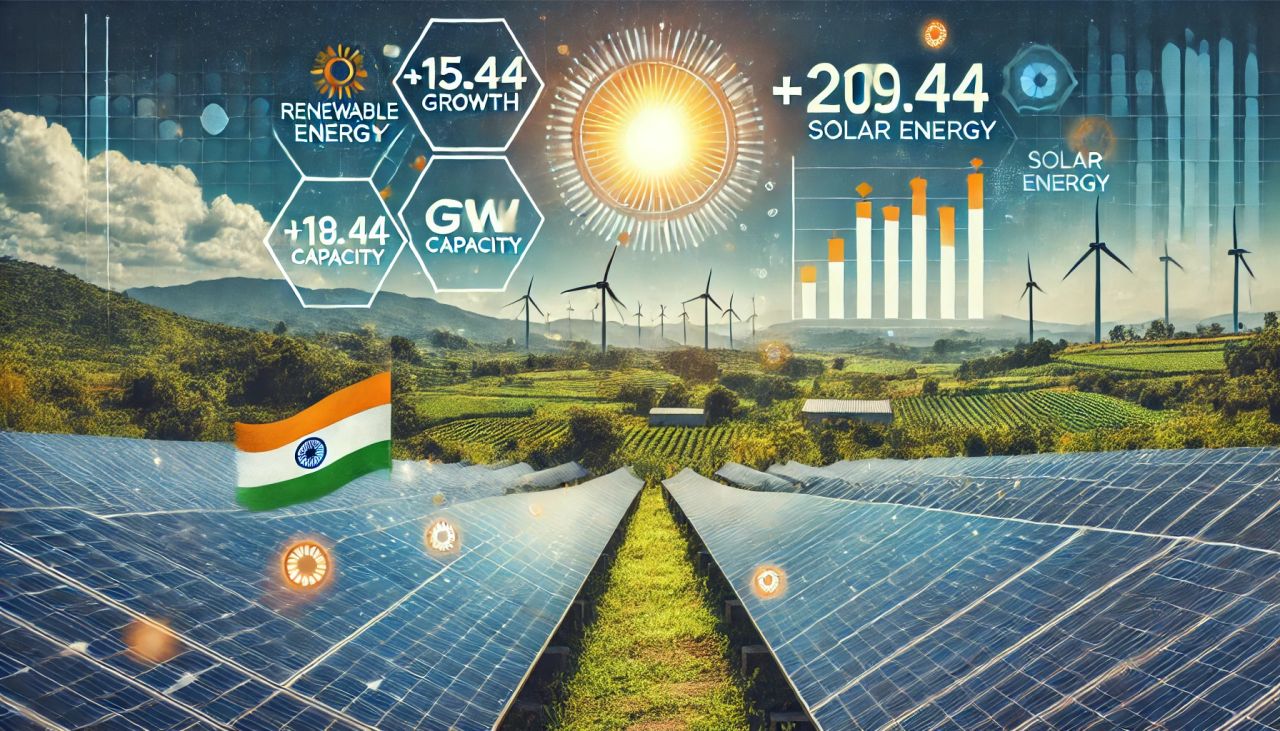
India’s solar energy output grew by 18.4% in 2024, solidifying its role as the driving force of the renewable energy sector and contributing significantly to the overall 28.64 GW capacity addition.
🚀 What a Year for Green Energy!
India’s renewable energy capacity soared to GW209.44, a 15.84% growth, demonstrating the nation’s commitment to sustainability.
💡 Key Highlights:
📈 Record Capacity Addition: 28.64 GW, a 119.46% jump from 2023.
🌞 Energy Mix Shifting: Renewables form 12.1% of India’s power, with coal at 74.4%.
🌏 The Big Picture:
Aligned with #‘Panchamrit’ goals, India aims to achieve 500 GW renewable capacity by 2030, requiring continued momentum and innovative solutions.
💭 Why This Matters:
India is paving the way for a sustainable future. Collaboration across industries and communities will be key to achieving these bold targets.

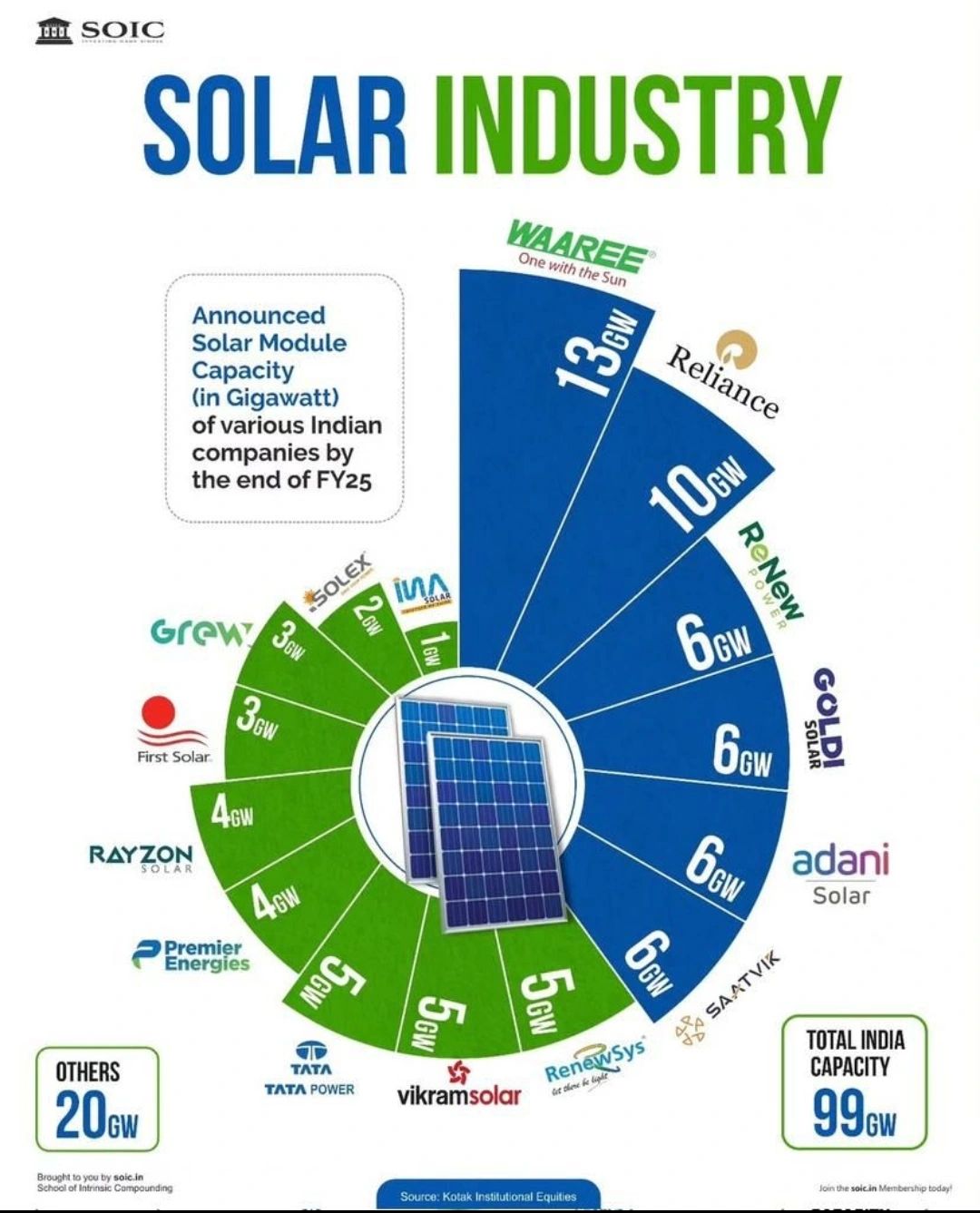
Originally published on LinkedIn on 2025-01-13 13:07:16: https://www.linkedin.com/feed/update/urn%3Ali%3AgroupPost%3A136624-7284556611363233792

