TheChemical_Industry generated ~USD57billion in net profits and invested ~USD73billion in CAPEX in YR2024, yet TSR remains structurally weak. WHY?
Dr. Anju Sharma
KtalystInsights™ MrsSustainability
KtalystKlues
This is not a DemandParadox; it is a ValueCapture problem.
1) The industry is still profitable
✓ Global Top-50 chemical companies reported #~USD57billion net profit in 2024
✓ Average sector EBITDA margins ~12–15% for large integrated players
✓ A majority of listed chemical companies remained cash-positive despite margin pressure
KtalystInsights:
Profitability exists; this is not a demand-led downturn.
2) Capital investment has not stopped
✓ Global chemical CAPEX in 2024: ~USD73billion (Top-50 companies)
✓ R&D spend grew ~2–4% YoY in 2024 despite earnings pressure
KtalystInsights:
Industries facing structural demand decline do not sustain this level of investment.
3) Volumes are growing faster than pricing
✓ Global chemical market size grew from #~USD6.18trillion (2024) to #~USD6.32trillion (2025E)
✓ Packaging, electronics, mobility & construction chemicals showed #~1.5–3% volume growth
✓ Real pricing power across bulk and semi-specialty chains remained flat to negative
KtalystInsights:
Demand growth exists, but value per unit has diluted.
4) TSR is weak because capital intensity has risen
✓ Chemical sector 5-year TSR ~2–3% p.a. vs #~8–9% for MSCI World
✓ Average CAPEX-to-sales ratio increased ~150–250 bps vs pre-2015 levels
✓ Energy transition and ESG CAPEX raised fixed costs without near-term pricing upside
KtalystInsights:
Returns compress when each dollar of profit requires more capital.
5) Overcapacity is real—but uneven
✓ China accounted for #~40%+ of global new petrochemical capacity additions (2019–2024)
✓ Utilisation in multiple commodity chains remains #~70–80%, below mid-cycle norms
✓ Specialty chemicals show #~40–50% lower EBITDA volatility vs commodity chemicals
KtalystInsights:
McKinsey’s conclusion fits commodity and aging specialty chains, not the entire sector.
6) Segment data shows divergence, not uniform decline
✓ Regulation-linked chemicals often sustain ROIC in the high-teens to low-20% range
✓ Application-embedded specialties outperform sector TSR by ~300–500 bps
✓ Commodity chemicals trend at or near cost of capital
KtalystInsights:
The issue is business-model selectivity, not sector weakness.
7) What McKinsey measures vs what boards must decide
✓ McKinsey evaluates relative investor returns (TSR)
✓ Boards must manage absolute cash generation and capital efficiency
✓ Demographics support demand; strategy decides economic rent
KtalystInsights:
Chemicals are essential—but not all are equally rewarded.
> This is not a low-demand cycle.
It is a high-capital, low-pricing-power environment.
Dr. Anju Sharma
KtalystInsights™ MrsSustainability Chemicals Strategy ValueCapture TSR BoardroomLens DataComa
Originally published on LinkedIn on 2025-12-28 10:35:57: https://www.linkedin.com/feed/update/urn%3Ali%3Ashare%3A7410991894211543040
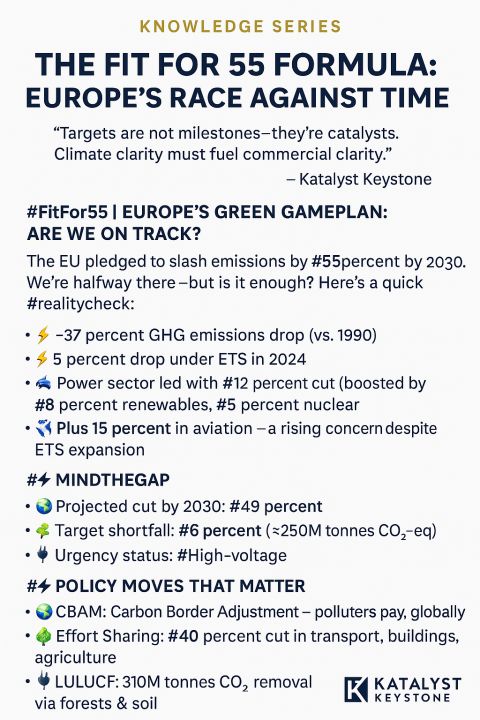
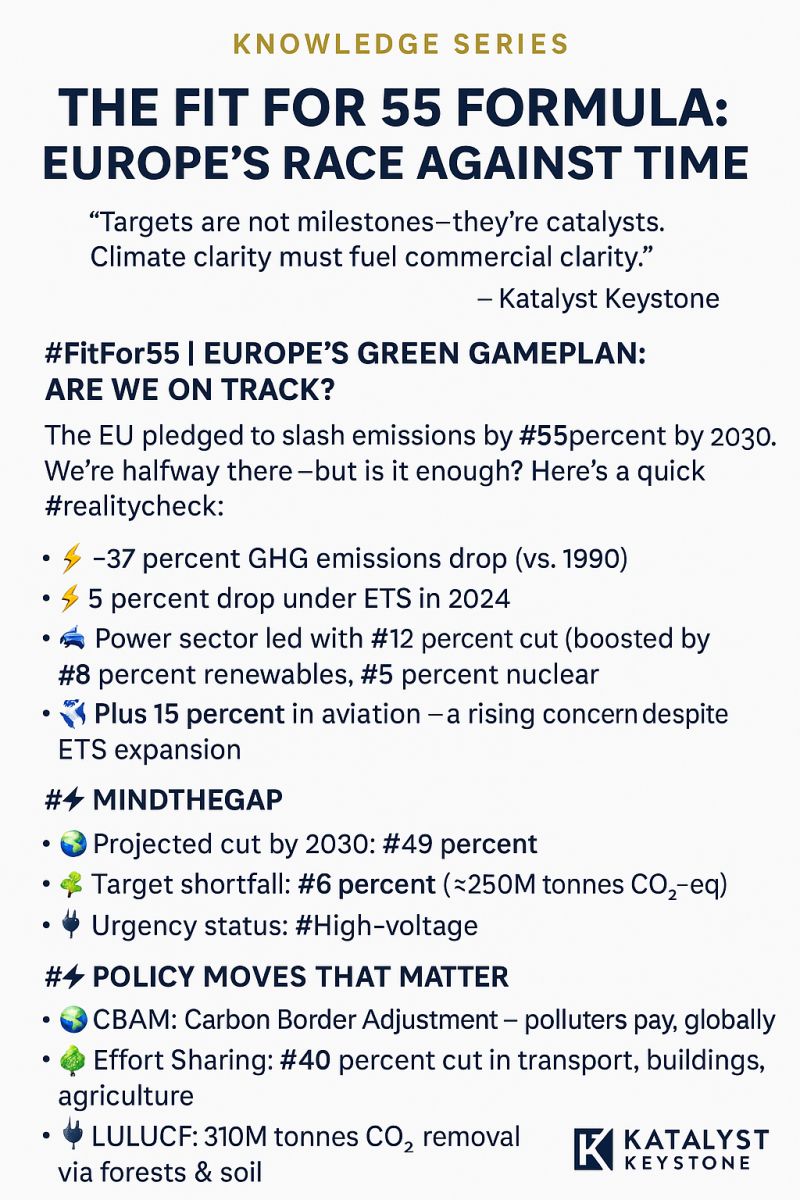
KatalystKnowledge | The FitFor55 Formula: Europe’s Race Against Time
Targets are not milestones—they’re catalysts. Climate clarity must fuel commercial clarity.
KtalystKeystone
FitFor55 | Europe’s Green Gameplan: Are We On Track?
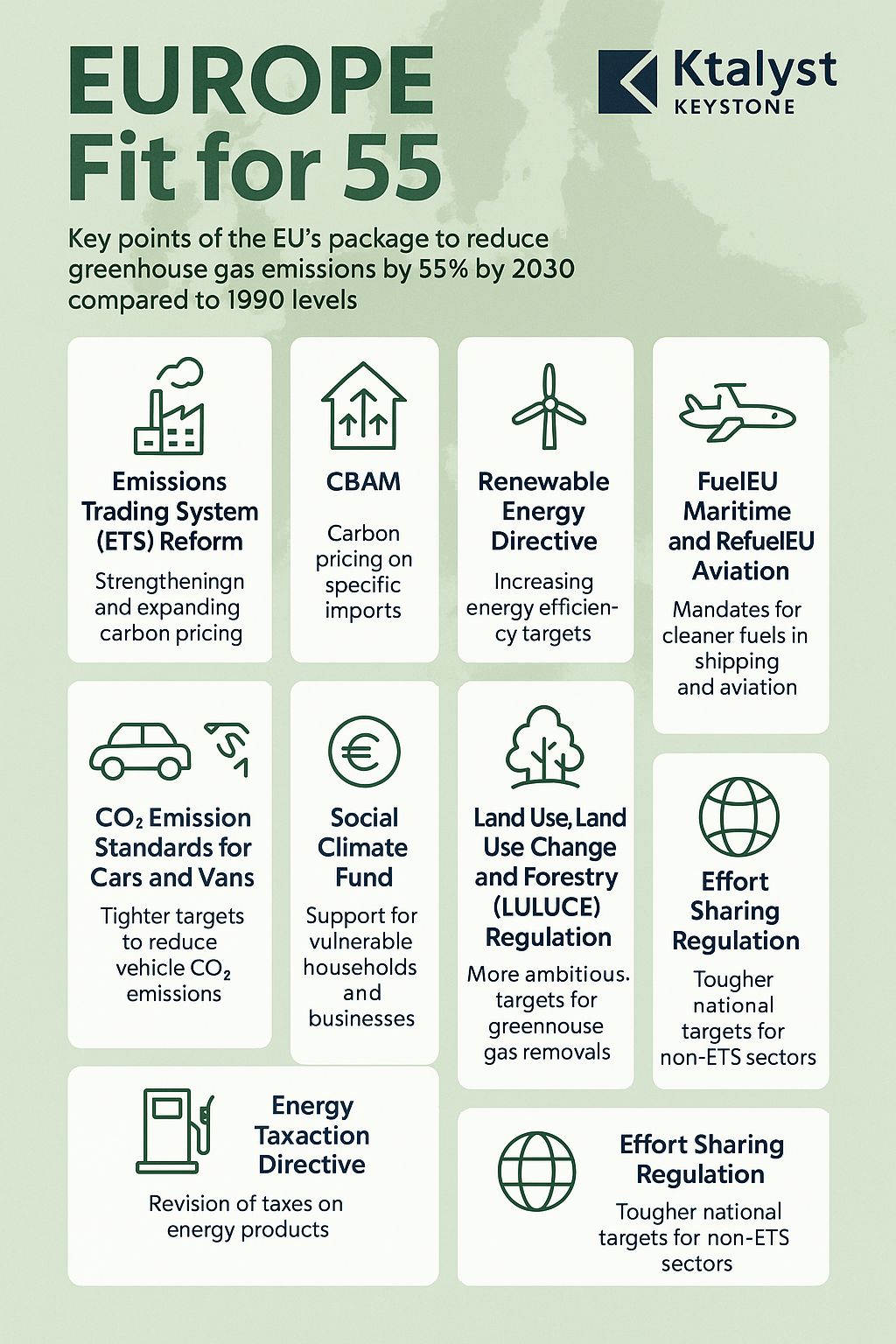
The EU pledged to slash emissions by 55percent by 2030. We’re halfway there—but is it enough? Here’s a quick realitycheck:
#️Progress So Far
⚡ Minus 37 percent GHG emissions drop (vs. 1990)
♻️ 5 percent drop under ETS in 2024
⚡ Power sector led with 12 percent cut (boosted by 8 percent renewables, 5 percent nuclear)
✈️ Plus 15 percent in aviation—a rising concern despite ETS expansion
🏭 Industry? Flat. Cement down, fertilizers up
MindTheGap
Projected cut by 2030: 49 percent
Target shortfall: 6 percent (≈250M tonnes CO₂-eq)
Urgency status: High-voltage
Policy Moves That Matter
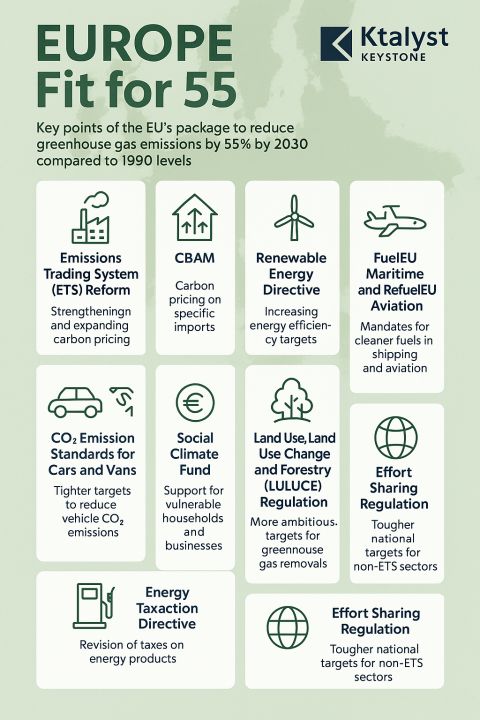
🌍 CBAM: Carbon Border Adjustment – polluters pay, globally
🛣️ Effort Sharing: 40 percent cut in transport, buildings, agriculture
🌳 LULUCF: 310M tonnes CO₂ removal via forests & soil
🔌 Renewables Goal: 42.5 percent by 2030 (plus 2.5 percent aspirational boost to 45 percent)
Takeaway
The EU is moving—but not fast enough.
To reach the finish line:
Scale green hydrogen & biofuels
Electrify transport
Cut industrial emissions deeper
LeadershipLens
Green goals aren’t just numbers.
They’re strategy. They’re urgency. They’re our business future.
KtalystKeystone Insight:
We help you align business with policy—because climate clarity = profit clarity.
Originally published on LinkedIn on 2025-04-09 05:45:15: https://www.linkedin.com/feed/update/urn%3Ali%3AugcPost%3A7315610730253238272
BluSmart: From Spark Plug to Short Circuit – A 5-Point Reboot
Rise, Ride & Reckoning
⚡ 2019–2021 | Launch
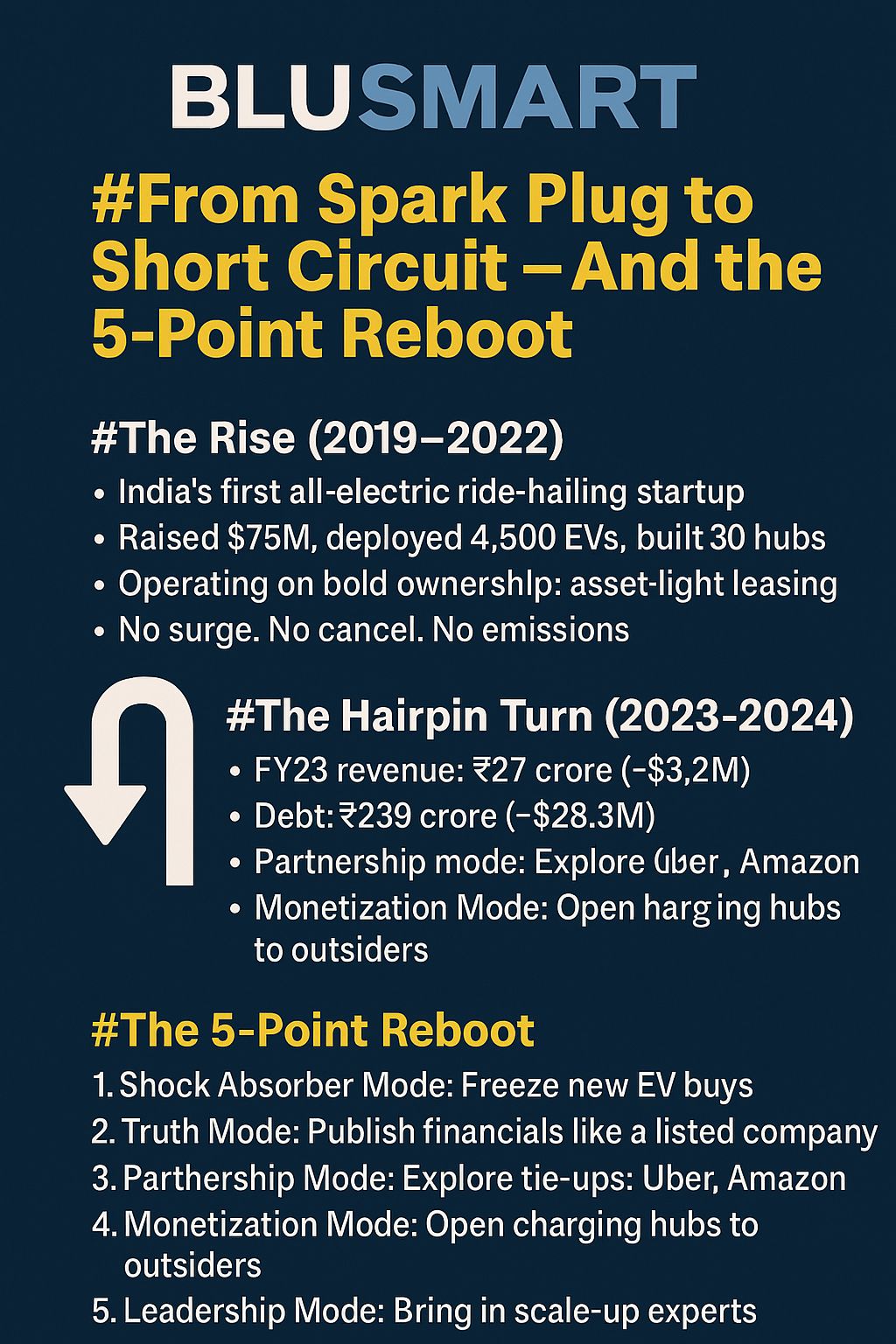
India’s first all-electric ride-hailing service. Raised #$75M. Deployed 4,500+ EVs. Built 30+ charging hubs. Bold move: ownership over leasing. Tagline: No surge. No cancel. No emissions.
🌿 2021–2022 | Momentum
Strong ESG branding, high urban trust, and premium experience.
⛔ 2023–2024 | Slump
Revenue: #₹27 crore (~USD 3.2M)
Liabilities: #₹239 crore (~USD 28.3M)
Failed EV asset sale (3,000 units)
Credit rating downgrade
Leadership exits
The 5-Point Comeback Compass
1. 🔧 Debt Restructure
Pause expansion, renegotiate terms, stabilize burn.
Ktalyst: Debt isn’t doom—bad structure is.
2. 🔍 Transparency
Publish quarterly financials and dashboards. Regain investor trust. Ktalyst: Honest numbers outpace hopeful noise.
3. 🤝 Strategic Partners
Explore tie-ups with Uber, Amazon, infra players. Enable co-branded EV ops.
Ktalyst: Survival is a shared drive.
4. 💰 Monetize Infra
Lease fleet, open charging hubs, sell FaaS and analytics.
Ktalyst: Idle assets = silent leaks. Make them earn.
5. 🧠 Leadership Reset
Bring turnaround talent. Form an ESG-savvy board.
Ktalyst: Founders start the fire. Fixers steer the flame.
12_Month Recovery Plan
0–2 Months: Restructure, pause new spends
3–5 Months: Lease EVs, monetize hubs
6–8 Months: Relaunch brand, share impact data
9–11 Months: Raise #$25–30M, secure JV
12 Months: Relaunch BluSmart 2.0 with 60% utilization
Case in Point: Netflix 2011
Lost 800K users after pricing split. Stock fell 77%.
Rebounded via honesty, streaming focus & brand reset.
Ktalyst Parallel: Design, not denial, drives turnarounds.
Final Word:
BluSmart isn’t broken. It’s paused. And ready to be Recharged.


Originally published on LinkedIn on 2025-04-01 19:33:06: https://www.linkedin.com/feed/update/urn%3Ali%3AgroupPost%3A82093-7312919961037934592
Greenwashing Exposed: 11_Companies That Got Caught!
🌍 Sustainability is a business imperative. Fake green claims aren’t just unethical—they’re costly.
⚽ 1 FIFA – The “Carbon-Neutral” World Cup Myth
📢 Claim: Qatar 2022 was 100% carbon-neutral.
📊 Reality: Actual emissions were 3X higher than FIFA reported. Carbon credits used were questionable.
💰 Backlash: Carbon Market Watch called it “climate deception.
🚗 2 Volkswagen – The $33B Diesel Lie
📢 Claim: “Clean diesel” cars with low emissions.
📊 Reality: Vehicles emitted 40X above legal NOx limits.
💰 Backlash: $33B in fines & lawsuits (Dieselgate).
☕ 3 Keurig – “Recyclable” Pods That Weren’t
📢 Claim: Pods are 100% recyclable.
📊 Reality: Most recycling centers rejected them.
💰 Backlash: $3M fine in Canada for misleading claims.
🍔 4 McDonald’s – A Green Logo, Not Green Actions
📢 Claim: New green-and-yellow logo reflected sustainability.
📊 Reality: No real operational changes to reduce waste or emissions.
💰 Backlash: Public dismissed it as cosmetic rebranding.
👗 5 H&M – The “Conscious” Collection That Wasn’t
📢 Claim: Ethical, sustainable fashion.
📊 Reality: Lack of transparency, over-reliance on fast fashion.
💰 Backlash: UK & Norway regulators investigated false claims.
🥤 6 Coca_Cola – The 70% Plastic “PlantBottle
📢 Claim: Eco-friendly bottle made from plant-based plastic.
📊 Reality: Only 30% plant-based, rest was petroleum plastic.
💰 Backlash: 1 global plastic polluter (Break Free from Plastic Report).
🛢 7 BP – “Beyond Petroleum” or Just PR?
📢 Claim: Heavy investments in renewables.
📊 Reality: Only 4% of BP’s budget went into green energy.
💰 Backlash: Media and activists called out the misdirection.
💄 8 L’Oréal – “Sustainable Beauty” with a Plastic Problem
📢 Claim: Ethical beauty products with lower carbon impact.
📊 Reality: Plastic-heavy packaging, unsustainable ingredients.
💰 Backlash: Exposed for greenwashing without meaningful changes.
✈ 9 Ryanair – The “Lowest Emissions” Airline Claim
📢 Claim: “Europe’s lowest emissions airline.
📊 Reality: UK regulators banned the ad for misleading data.
💰 Backlash: Campaign forced to be withdrawn.
👟 10 Adidas – “Ocean Plastic” Sneakers That Weren’t
📢 Claim: Shoes made of 100% recycled ocean plastic.
📊 Reality: Only a fraction was from ocean waste.
💰 Backlash: Sustainability claims faced scrutiny.
🚰 11 Nestlé – The “Sustainable” Water Extraction Scandal
📢 Claim: Bottled water is “sustainably sourced.
📊 Reality: Over-extracted from drought-prone areas.
💰 Backlash: Faced lawsuits, protests, and reputational damage.
🚨 Takeaways
✅ Fake green claims = regulatory & reputational risk.
✅ Consumers demand transparency & data-backed sustainability.
✅ Sustainability isn’t a PR stunt—it’s a long-term commitment.
Sustainability BusinessEthics GreenwashingFails BrandReputation


Originally published on LinkedIn on 2025-03-15 05:41:42: https://www.linkedin.com/feed/update/urn%3Ali%3AgroupPost%3A4385073-7306550139257577472
🚨 India’s EVRegulations 2025: What’s New & What It Means for the Industry? ⚡🚗
With EV sales in India growing 49% YoY, new regulatory shifts are shaping the future of the sector. The latest policies focus on local manufacturing, safety standards, & market expansion while setting new rules for charging infrastructure & import incentives. Here’s what’s changing:
📊 Key EV Policy Updates & Their Impact
🔹 Investment Caps on Charging Infrastructure
📌 The Indian Government now limits EV manufacturers to count only 5% of their total investment in charging networks toward the #$500M minimum investment required for lower import tariffs.
📌 Why It Matters? This ensures priority to local EV production, reducing reliance on imports. (Source)
🔹 Tesla’s Entry & Market Implications
📌 Tesla is setting up showrooms in Mumbai & New Delhi and exploring local production. However, high import duties (up to 100%) could push Tesla’s pricing into the luxury segment, making affordability a challenge.
📌 EV Market Reality: The average car price in India is #$10,000-$15,000, while a Tesla Model 3 would cost over #$50,000 without local assembly. (Source)
🔹 Stricter Safety & Battery Standards
📌 BIS (Bureau of Indian Standards) introduces new EV safety rules, requiring all EVs to meet upgraded performance & fire safety benchmarks.
📌 Battery Regulation: EV battery makers must obtain AIS 156 certification from ARAI (Automotive Research Association of India) to ensure safety compliance.
📌 Why It Matters? India aims to reduce EV fire risks, ensuring consumer safety and boosting market confidence. (Source)
🔹 Union Budget 2024-25: EV Industry Boost
📌 Customs duty exemptions on 25 critical minerals used in EV battery production will lower manufacturing costs.
📌 PLI (Production-Linked Incentive) expansion aims to reduce import dependency & boost domestic production.
📌 FAME III (Faster Adoption & Manufacturing of Electric Vehicles) is expected to focus on charging infrastructure expansion. (Source)
⚡ The Takeaway: What’s Next for India’s EV Industry?
🚀 EV penetration in India is at 2% but projected to hit 30% by 2030.
🚀 Government policies favor local EV manufacturing over imports.
🚀 Safety & compliance measures will shape consumer trust & adoption.
📢 Will these new regulations accelerate India’s EV transition or slow global players like Tesla? Let’s discuss! 👇
Source / shared link: https://m.economictimes.com/industry/renewables/govt-set-to-notify-new-ev-policy-with-new-investment-rules-as-tesla-prepares-for-india-entry/articleshow/118415610.cms
Originally published on LinkedIn on 2025-02-27 06:19:45: https://www.linkedin.com/feed/update/urn%3Ali%3AgroupPost%3A82093-7300761508139974656
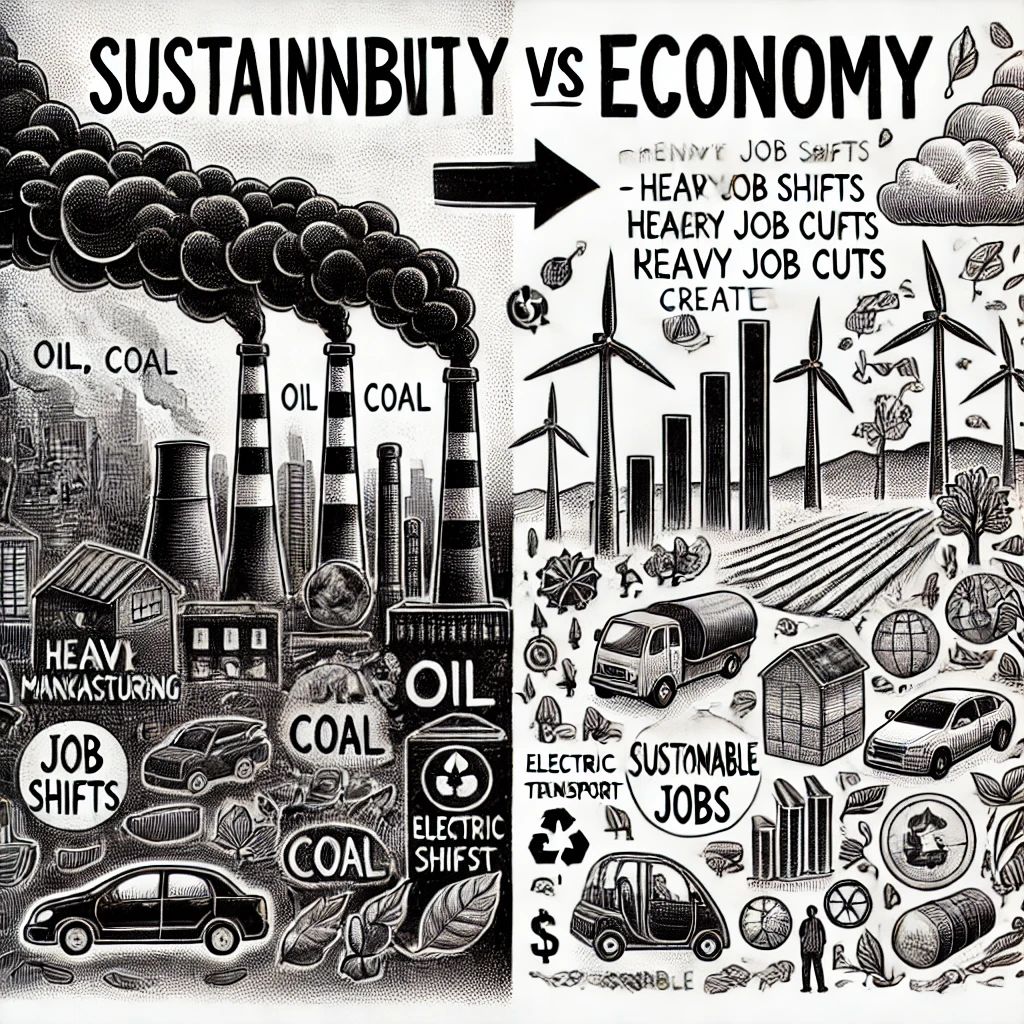
🚨 “TheGreenParadox: If the Top100 Polluters Go Green, Do Economies Go Red?” 🌍💸🔥
71% of global emissions come from just Just100 companies—but what happens if they actually go green?
📊 TheHardNumbers: Who’s Driving Emissions?
🔹 100Companies = 71% of Global Emissions (CDP Carbon Majors Report, 2025)
🔹 TotalMarketValue = $15.4 Trillion (Forbes, 2025)
🔹 Sectors Dominating Emissions:
✔️ Oil & Gas (ExxonMobil, Shell, Aramco, BP, Reliance) – 52% of global industrial CO₂.
✔️ Coal Giants (ChinaEnergy, Peabody, Glencore) – 14% of all emissions, powering entire nations.
✔️ Steel & Cement (ArcelorMittal, Holcim, TataSteel, JSW) – 8% of emissions, critical to infrastructure.
✔️ Shipping & Aviation (Maersk, Boeing, Delta, Emirates) – 5% of emissions, enabling global trade.
🚨 RealityCheck: Transitioning these industries overnight would shake economies to the core.
💰 TheEconomicCrashPotential
🔻 JobLosses in FossilFuel Sectors – 34M jobs globally depend on oil, coal, and heavy industries. (ILO, 2025)
🔻 GDPImpact on EmergingMarkets – India, China, and Indonesia rely on fossilfuels for 20-35% of GDP. (World Bank, 2025)
🔻 SupplyChain Disruptions – 42% of global logistics, steel, and chemicals are tied to high-emission industries. (McKinsey, 2025)
🔻 EnergyTransition Costs – Full decarbonization needs #$275T investment by 2050—but who’s paying? (IEA, 2025)
📌 TheDilemma: Accelerating sustainability risks a financialcrisis, while delaying it fuels climate disaster.
🔄 IsThereAMiddlePath?
🏆 IndustriesFindingBalance:
✅ SaudiAramco’s CarbonCapture Push – #$50B invested, but still expanding fossilfuel extraction.
✅ Tesla & BYD’s EVRevolution – EVs now 18% of global carsales, but lithiummining is a sustainability disaster.
✅ GreenSteel Investments (Hybrit, H2GreenSteel) – Promising tech, but adoption is too slow.
🚨 TheProblem: Green initiatives often don’t move fast enough—or they create new environmental costs.
🏆 KeyTakeaway: The TradeOff No One Wants to Talk About
📌 GoingGreen could be an economic revolution if planned strategically.
📌 ItShouldBe a shift that protects jobs, not eliminates them overnight.
📌 ItWouldBe an economicdisaster if industries collapse before sustainable alternatives scale.
👉 CanTheWorldAffordToDecarbonize without crashing economies? Drop your insights below! 👇
Originally published on LinkedIn on 2025-02-20 03:57:07: https://www.linkedin.com/feed/update/urn%3Ali%3AgroupPost%3A82951-7298188896939479040
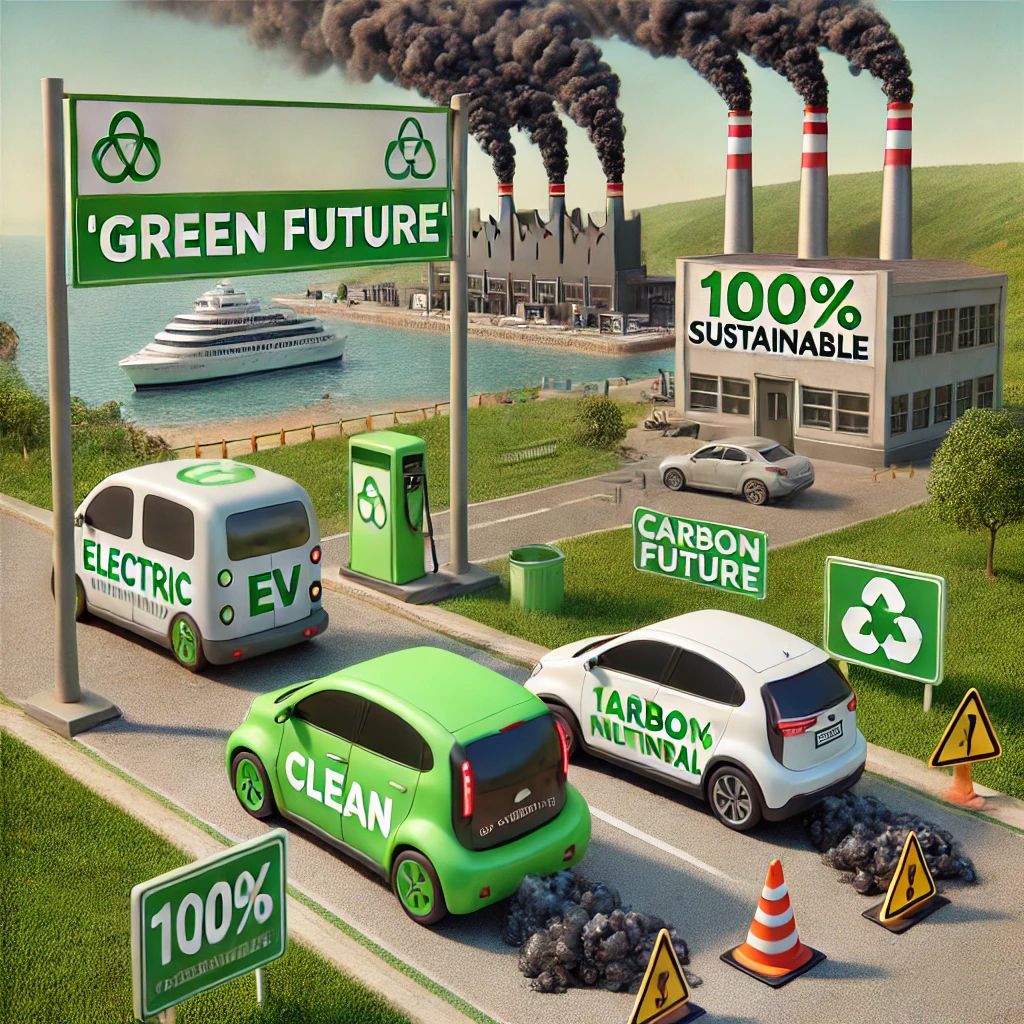
🚗⚡ YR2035’s Green_Auto_Mirage: Are EVs, Hydrogen Fuel Cells, and Synthetic Fuels Truly Sustainable or Just Greenwashing? 🌍💨
As we race toward 2035’s petrol-diesel ban, automakers push EVs, HFCVs, and SyntheticFuels as the future. But are these real solutions or clever marketing?
🔋 EVs: Cleaner or Just Elsewhere Emissions?
📌 Battery Production: An 80 kWh battery emits 2.4 – 16 metric tons of CO₂—equal to driving a gasoline car for 5-7 years. (MIT, 2024)
📌 Resource Impact: Each EV battery needs 63kg lithium, cobalt, & nickel, causing deforestation & water pollution. (GreenCars, 2024)
📌 Power Grid Dependence: An EV running on coal-based electricity emits more CO₂ per mile than hybrids. (EPA, 2024)
📌 Reality Check: EVs help only if powered by clean energy.
💧 Hydrogen: Clean Hype or Fossil Fuel Disguise?
📌 Production Problem: 96% of global hydrogen is made from natural gas & coal, emitting 830M metric tons of CO₂. (IEA, 2024)
📌 Efficiency Loss: HFCVs require 3x more renewable electricity than EVs. (US DOE, 2024)
📌 Reality Check: Unless made from renewables, hydrogen is just another fossil fuel.
⛽ Synthetic Fuels: Carbon-Neutral or Clever Greenwashing?
📌 Energy Guzzler: Producing 1L of synthetic fuel takes 6x more energy than refining petrol. (Fraunhofer, 2024)
📌 Still Polluting: Burns CO₂ and emits more NOx than conventional fuels. (MDPI, 2024)
📌 Reality Check: Synthetic fuels aren’t zero-emission—they just relocate pollution.
🚨 Greenwashing in the Auto Industry
🔻 BMW, Toyota, Honda exaggerated EV carbon savings by omitting battery emissions. (Greenpeace, 2024)
🔻 Porsche’s synthetic fuel plant claims zero emissions but runs on coal-powered electricity. (The Guardian, 2024)
🔻 India & U.S. promised 1M EV chargers by 2025, yet less than 20% installed. (BloombergNEF, 2024)
📌 Reality Check: Many automakers sell ‘green’ promises, but not real sustainability.
🏆 Key Takeaway: Hype or Hope?
🚘 EVs, HFCVs, & Synthetic Fuels could be clean if the supply chain is green.
♻️ They should be backed by strict sustainability policies.
⚠️ But they would be just another greenwashing scandal if industries don’t walk the talk.
👉 Are we truly heading toward sustainable mobility, or just another green illusion? 👇
Originally published on LinkedIn on 2025-02-18 11:22:14: https://www.linkedin.com/feed/update/urn%3Ali%3AgroupPost%3A82093-7297576141614190592
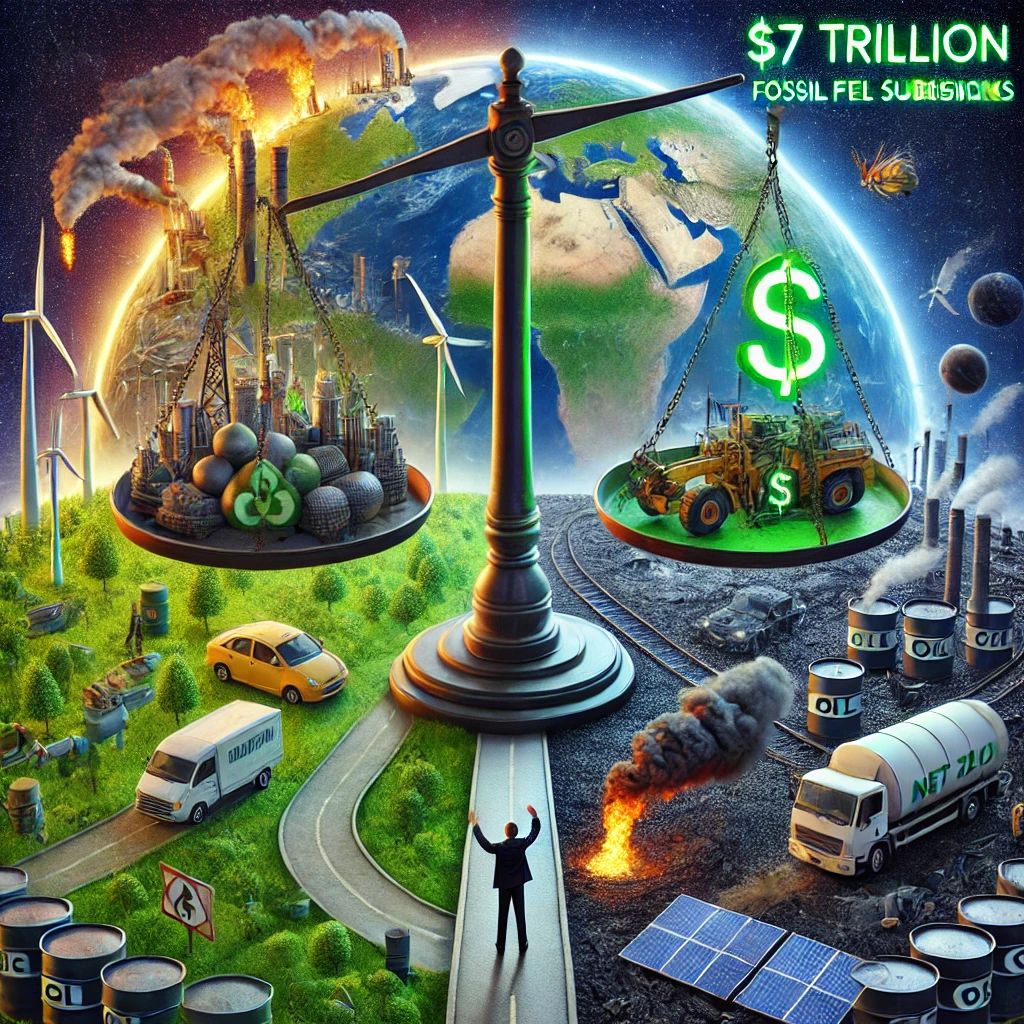
🚨 “The USD_7 Trillion Green Paradox: Saving the Planet or Fueling the Crisis?” 🌍♻️💰
📊 1. The Green Investment Paradox: More Money, More Emissions
✅ #$1.7 trillion invested in clean energy in 2023 (IEA, 2024)
❌ #$7 trillion in fossil fuel subsidies were paid out in 2023 (IMF, 2024)
✅ 120+ countries pledged net-zero targets
❌ Only 20% have actual policies & execution plans (Net Zero Tracker, 2024)
❌ CO₂ emissions hit a record high of 37.5 billion tons in 2023 (Global Carbon Budget, 2024)
🚨 Reality Check: For every $1 spent on green energy, $4 still funds fossil fuels.
🇩🇰 Denmark: 75% renewables, carbon-neutral by 2045 (EPI, 2024)
🇸🇪 Sweden: 98% recycling rate, world leader in circular economy (WEF, 2024)
🇳🇴 Norway: 80% of new car sales are EVs, hydro-powered energy (IEA, 2024)
🇪🇺 EU: #€1 trillion Green Deal investment, strict carbon pricing (EU Commission, 2024)
🚨 Reality Check: Even the greenest nations rely on imported fossil fuels & high energy consumption.
🟡 3. The Green Economy Paradox: Investing While Polluting
🇨🇳 China: World’s largest renewable energy investor, but 55% of power still comes from coal.
🇮🇳 India: Fastest-growing solar market, but remains the third-largest CO₂ emitter. (MNRE, 2024)
🇺🇸 USA: #$369B Inflation Reduction Act to fund green tech, but oil production reached a record 13.1M barrels/day in 2023. (DOE, 2024)
🚨 Reality Check: Countries are investing in renewables but not cutting fossil fuel use fast enough.
🔴 4. The Worst Green Offenders: Promises Without Action
❌ 🇦🇺 Australia: The world’s second-largest coal exporter, despite ‘green economy’ branding. (Climate Council, 2024)
❌ 🇷🇺 Russia: No net-zero plan, fossil fuel revenue = 40% of its economy. (UNEP, 2024)
❌ 🇸🇦 Saudi Arabia: Announced $260B for renewables but still earns 90% of its GDP from oil. (IEA, 2024)
🚨 Reality Check: Without emission cuts, green projects don’t fix the problem.
📉 5. The Harsh Truth: Emissions Are Still Rising
❌ 2023 was the hottest year ever recorded, with global temperatures 1.48°C above pre-industrial levels. (NASA, 2024)
❌ Carbon capture tech only offsets 0.1% of annual global emissions. (IPCC, 2024)
❌ At current transition rates, the world will miss its 1.5°C climate target by 2040. (UNEP, 2024)
🚨 Reality Check: We must cut global emissions 43% by 2030 to stay on track—but we’re nowhere close.
🏆 KeyTakeaway
The Green Economy paradox is real—we invest in sustainability while financing fossil fuels even more. Until green investments outpace fossil fuel spending, and emissions actually drop, we’re not in a real transition.
Originally published on LinkedIn on 2025-02-03 04:11:43: https://www.linkedin.com/feed/update/urn%3Ali%3AgroupPost%3A82951-7292031979921797120
♻️ “The_War_on_Waste: Who’s Leading & Who’s Losing?” 🌍🚨
Governments ban plastics, promote recycling, and push circular economies, but is waste truly being reduced or just shifting elsewhere? Here’s the country-wise reality based on hard data.
🌎 Plastic_Waste: The Biggest Polluters
✅ Top Plastic Waste Generators (Million Tons Annually):
🇺🇸 USA – 42M tons (World Bank, 2023)
🇨🇳 China – 21M tons (Statista, 2024)
🇮🇳 India – 10M tons (CPCB, 2024)
🚨 Reality Check: 94 countries banned plastics, but only 9% is actually recycled. (UNEP, 2024)
🏆 Winners: 🇪🇺 EU Nations (strict bans & recycling laws)
❌ Losers: 🇺🇸 🇮🇳 🇨🇳 (high waste, low recycling rates)
👗 Fast_Fashion & E_Waste: The Hidden Trash Crisis
✅ Top Fast Fashion Waste Producers:
🇨🇳 China – 26M tons annually (Greenpeace, 2024)
🇺🇸 USA – 11.3M tons landfilled yearly (EPA, 2023)
🇪🇺 EU – 5.8M tons discarded (EU Commission, 2024)
🚨 Reality Check: Only 17% of global e-waste is properly recycled.
🏆 Winners: 🇯🇵 🇩🇪 🇰🇷 (advanced e-waste policies)
❌ Losers: 🇺🇸 🇮🇳 🇨🇳 (high waste, poor recycling infrastructure)
♻️ Recycling: Who’s Actually Doing It?
✅ Top Recycling Countries (% Recycled Waste):
🇩🇪 Germany – 67% (Highest global rate, Statista, 2024)
🇰🇷 South Korea – 59% (Strict sorting laws)
🇸🇪 Sweden – *50% recycling + 50% waste-to-energy
🚨 Worst Recycling Rates:
🇮🇳 India – 30% recycling rate (CPCB, 2024)
🇺🇸 USA – 32%, most plastic exported (EPA, 2023)
🇨🇳 China – 28% (Statista, 2024)
🏆 Winners: 🇩🇪 🇰🇷 🇸🇪 (high recycling & circular economy initiatives)
❌ Losers: 🇺🇸 🇮🇳 🇨🇳 (high waste, low recycling rates)
🌍 Circular Economy: Real Shift or Just Talk?
✅ EU Circular Economy Package: 65% recycling target by 2035 (EU Commission, 2024)
✅ China’s ‘Zero Waste Cities’: Pilot in 16 cities to cut landfill waste (China’s Environment Ministry, 2024)
✅ India’s EPR Policy: Firms must recover plastic waste they produce (CPCB, 2024)
🚨 Reality Check: Less than 10% of companies comply with waste responsibility laws. (Greenpeace, 2023)
🏆 Winners: 🇪🇺 EU Nations, 🇨🇳 China (pushing policy enforcement)
❌ Losers: 🇺🇸 USA (low producer responsibility laws)
🏆 KeyTakeaway
The War on Waste isn’t just about bans—it’s about holding corporations accountable, enforcing policies, and cutting overproduction.
🌍 Some nations lead, others drown in trash. Where does your country stand?
👉 Are we winning or just moving waste elsewhere?
WasteCrisis CircularEconomy PlasticPollution RecyclingMyths Sustainability NetZero


Originally published on LinkedIn on 2025-01-31 03:03:19: https://www.linkedin.com/feed/update/urn%3Ali%3AgroupPost%3A131340-7290927601190100992
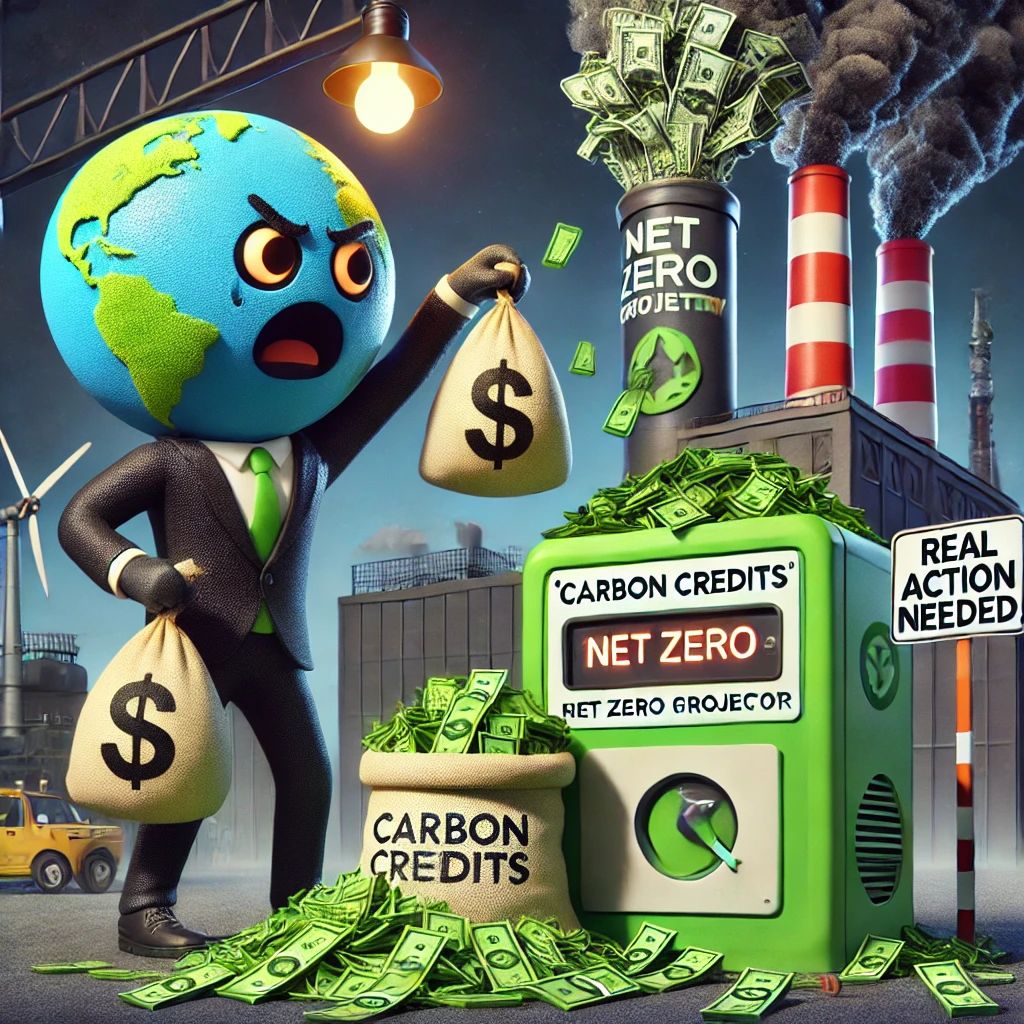
Carbon Hustling: Loopholes or Lies in the Green Revolution?” 🌍💨
Carbon hustling—the deliberate exploitation of carbon reduction schemes—undermines global climate goals. Recent cases reveal systemic exploitation, not mistakes, in corporate carbon management.
🔍 4 Examples of Carbon Hustling
1️⃣ Shell’s Carbon Credit Controversy
Issue: Claimed neutrality using offsets tied to forests at minimal risk of deforestation.
Data: 80% of credits failed to reduce emissions. (Source: ProPublica, 2023)
Why It’s Hustling: Chose unverifiable offsets over real reductions.
2️⃣ Volkswagen’s Double Counting
Issue: Overstated Brazil emissions reductions by 35% with double-counted credits.
Data: Fined #€30 million for systemic misreporting. (Source: Reuters, 2024)
Why It’s Hustling: Exploited weak oversight in carbon markets.
3️⃣ Chevron’s Flawed Net Zero Claims
Issue: Used reforestation offsets; 60% failed verification standards.
Data: Stock dropped 5% after audits exposed discrepancies. (Source: Financial Times, 2023)
Why It’s Hustling: Relied on low-impact projects to mask emissions.
4️⃣ India’s Coal Offsetting Scheme
Issue: An Indian power company financed “green energy” while expanding coal.
Data: Emissions rose 40%, offset benefits negated. (Source: CSE, 2023)
Why It’s Hustling: Used minor green initiatives to greenwash high-pollution activities.
Why It’s Not a Mistake
1️⃣ Systemic Exploitation: Lack of audit standards costs #$2 billion annually in fraud. (Source: UNEP)
2️⃣ Profit over Integrity: Cheap offsets prioritized over genuine reductions.
3️⃣ Strategic Greenwashing: 83% of consumers now demand transparency. (Source: Edelman Trust Barometer, 2024)
KeyTakeaway
Carbon hustling is a systemic issue, delaying real progress. Stricter audits and credible carbon markets are essential to end the hustle.
👉 Are your carbon claims authentic or just optics?
CarbonHustling Greenwashing Sustainability ESGCompliance ClimateAction Transparency

Originally published on LinkedIn on 2025-01-28 03:06:32: https://www.linkedin.com/feed/update/urn%3Ali%3AgroupPost%3A2474261-7289841246922014720

