GreenwashedAndGutted | The Cost of ESG Without Checkpoints NoReadyToUse, each company NeedsToGet KtalystPatternFunnels Designed for their OwnSystems.
CutCopyPaste = Fail
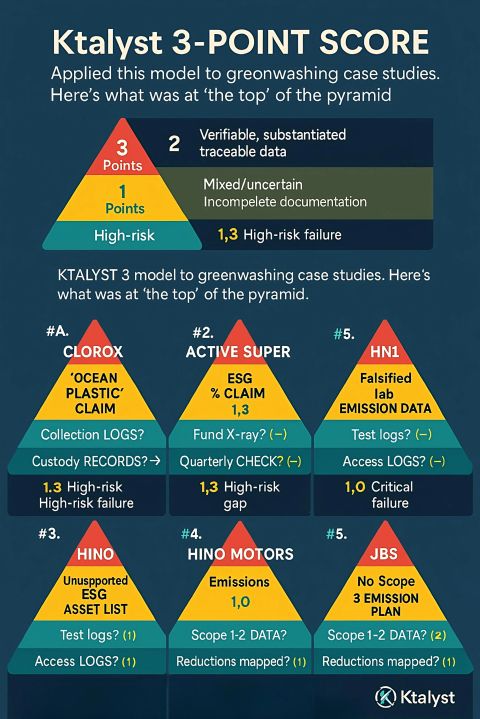
I studied 5global greenwashing disasters.
The pattern# was loud and clear:
✅ Intent was strong
❌ Systems were weak
They didn’t lie. They just didn’t verify.
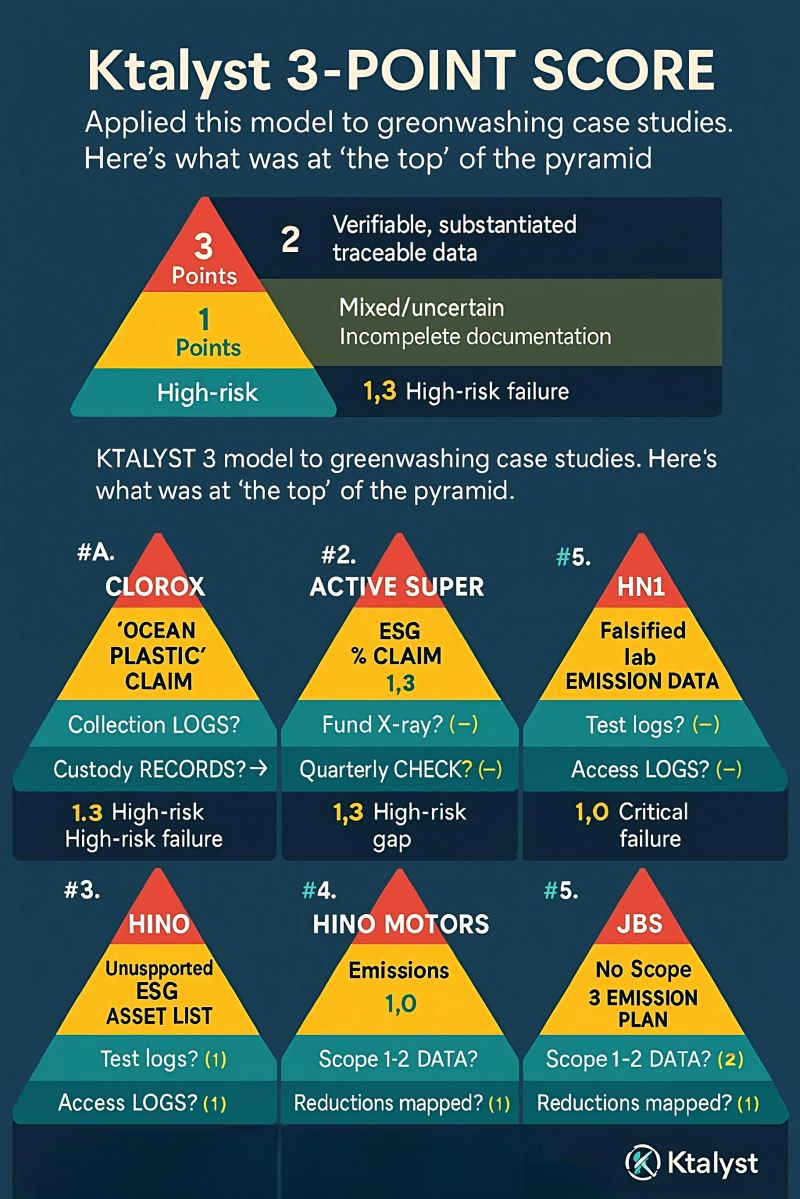
Clorox Australia – “Ocean Plastic” That Never Saw the Sea
Claim: GLAD bags made from 50% ocean plastic
Truth: Plastic came from inland villages, nowhere near the coast
I 🧭 Geo-tagged collection logs to confirm coastal origin
🔗 Chain-of-custody tracking from pickup to processing
📦 Batch linkage system to connect source with product
Active Super – Ethical Fund, Ethical Gaps
Claim: No investments in coal, tobacco, or gambling
Truth: Audit revealed exposure to all three
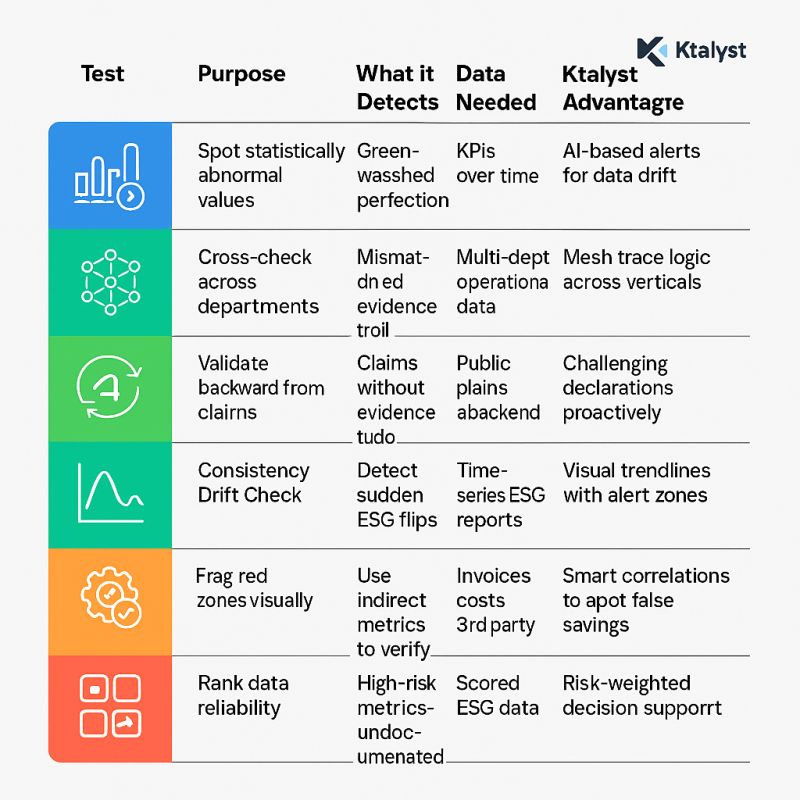
🗺️ Live ESG mapping between fund positions and exclusion list
⏰ Quarterly auto-checkpoints for compliance assurance
🚨 Real-time breach alerts to flag policy violations
II DWS Group – 50% ESG. But Verified by Whom?
Claim: Half the portfolio was ESG-compliant
Truth: Many assets lacked certified ratings
📝 Third-party score integration with time-stamped logs
⛔ Expiry flags for outdated or unverifiable claims
🌡️ Portfolio heatmap to track low-certainty zones
III Hino Motors – When the Lab Fakes Clean Air
Claim: Vehicles passed emissions testing
Truth: Over 100,000 units involved in data manipulation
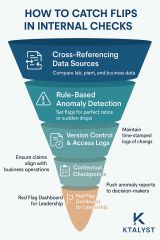
📊 Time-stamped lab audit trails
🔁 Cross-verification with actual plant output
🔐 Anomaly triggers and access control logs
IV JBS – Net Zero, But Where’s the Map?
Claim: Net Zero by 2040
Truth: No Scope 3 data, no implementation roadmap
🌍 Emission mapping tools across operations & vendors
🔗 Syncing declarations to backend data
📉 Red flag dashboards for leadership visibililty.
KtalystKeystone Takeaway:
They weren’t caught greenwashing.
They were caught assuming—without systems to validate their ESG story.
> “Sustainability isn’t a slogan. It’s a supply chain of truths.
Ktalyst Keystone
CleanClaimsOnly | PoweredByKtalyst


Originally published on LinkedIn on 2025-04-15 05:23:10: https://www.linkedin.com/feed/update/urn%3Ali%3AgroupPost%3A82951-7317779497859096578
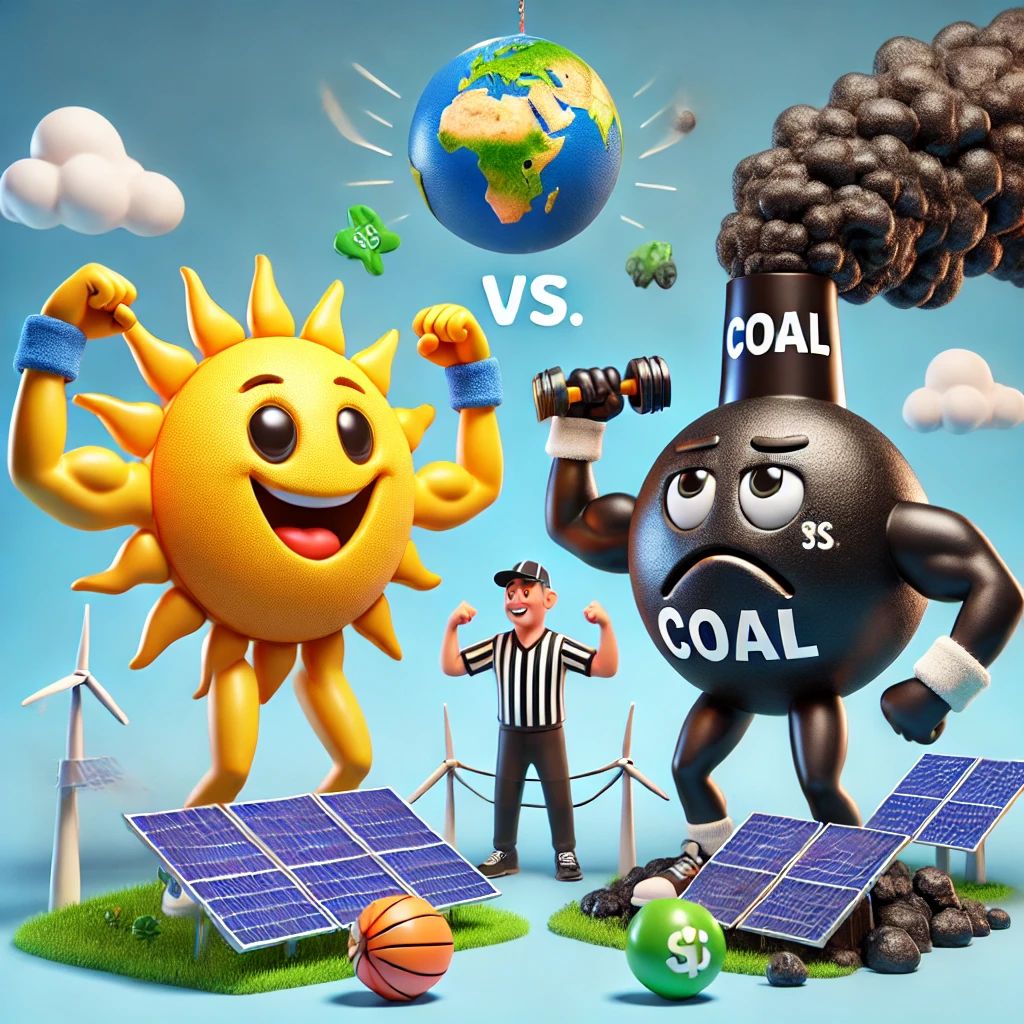
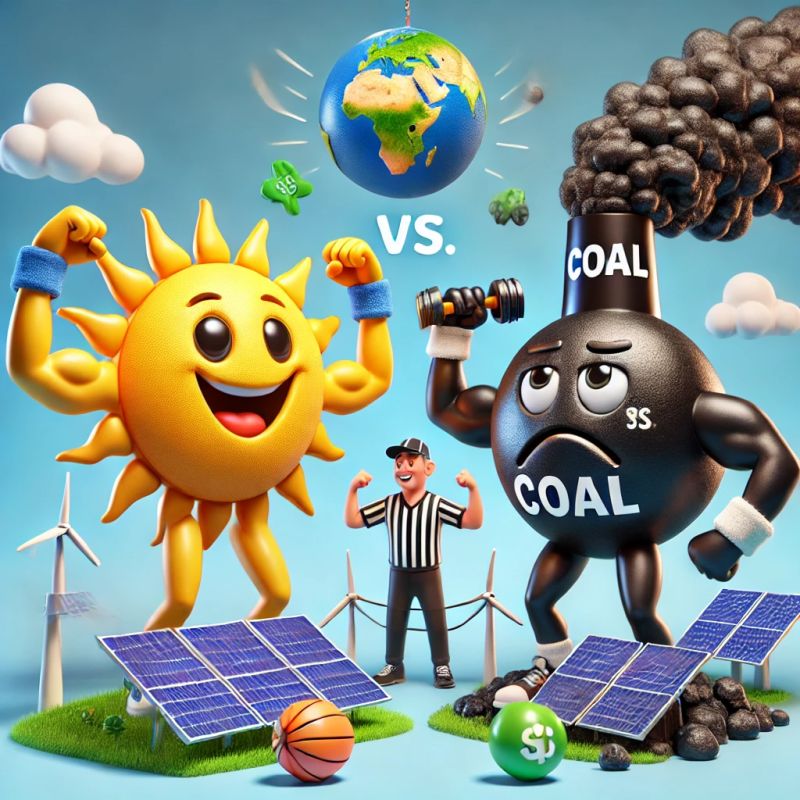
Solar vs. Coal: The USD10_Trillion Energy Disruption We Can’t Ignore” ☀️⚡🔥
Solar is cheaper, cleaner, and scaling fast, but can it fully replace coal? Here’s a data-driven breakdown of efficiency, cost, impact, and future trends.
🔍 Efficiency & Reliability
☀️ Solar – 15-22% efficiency, drops 80-90% at night. (Source: NREL, 2023)
🔥 Coal – 35-45% efficiency, generates 24/7 power. (Source: IEA, 2023)
🏆 Winner: Coal (for base-load power), Solar (for clean production).
💰 Cost & Scalability
☀️ Solar – #$25-$50 per MWh, 89% price drop since 2010. (Source: Lazard, 2023)
🔥 Coal – #$65-$150 per MWh, rising due to fuel costs & carbon taxes. (Source: IEA, 2023)
🏆 Winner: Solar (cheaper & getting cheaper).
🌍 Environmental Impact
☀️ Solar – Zero emissions, but 78M tons of solar waste by 2050. (Source: IRENA, 2023)
🔥 Coal – 820g CO₂ per kWh, highest among energy sources. (Source: IPCC, 2023)
🏆 Winner: Solar (cleaner, but needs better recycling).
🔋 Future Trends
✅ Solar Prices Falling – Expected 50% cheaper than coal by 2030. (Source: BloombergNEF, 2024)
✅ Coal Declining – 40% of coal plants to shut by 2040. (Source: IEA, 2023)
✅ Battery Breakthroughs – Solving solar’s intermittency problem.
🏆 Final Verdict: Solar ✅ (Cleaner, scalable, and cost-effective, but storage & recycling must improve).
KeyTakeaway
Solar is already outcompeting coal, but its future depends on energy storage & recycling innovations. The transition is happening—the only question is how fast.
👉 Will solar dominate, or does coal still have a future?
SolarVsCoal CleanEnergy Sustainability EnergyEfficiency FutureOfEnergy
Originally published on LinkedIn on 2025-01-28 11:16:10: https://www.linkedin.com/feed/update/urn%3Ali%3AgroupPost%3A10334500-7289964467918983170

