🌱 GreenIsTheNewLean
KtalystInsights | SmartSustainability | NetZeroBusiness | GreenMargins
> “It’s not just the Earth we’re saving. It’s the balance sheet.
Sustainability has left the CSR desk — and entered the C-suite.
Here’s the data AND proof that going green is the leanest business strategy today.
📊 5Data-Backed Reasons + Case Studies Why Green = Growth
1️⃣ 💡 Energy Efficiency = 30% OPEX Savings
💬 Case Study: Infosys (India)
Reduced per capita energy consumption by 55% since 2008
Achieved carbon neutrality in 2020 — saving #₹500 crore (~$60M) in energy and offset costs
👉 [Source: Infosys ESG Report]
2️⃣ 📦 Packaging Optimization = 20% Cost Reduction
💬 Case Study: Unilever India
Switched to lightweight, recyclable sachets & cartons
Saved #₹300 crore (~$36M) over 3 years by reducing material and logistics costs
👉 [Source: Unilever Sustainability Dashboard]
3️⃣ 👩💼 Talent Preference = 67% GenZ Alignment
💬 Case Study: Schneider Electric
Ranked consistently in Top10 Sustainable Employers
Improved retention by 15% among early-career hires
Launched global Green Employee Training Program
👉 [Source: Forbes, Schneider CSR Report]
4️⃣ 📈 ESG-Driven Outperformance = +12.4% ROI Boost
💬 Case Study: Tata Group (TCS & Tata Steel)
Tata Steel’s decarbonization roadmap boosted investor confidence
TCS integrated AI for energy efficiency — saving #$25M/year
Tata Group’s ESG stocks have outperformed Nifty by 10% in the last 3 years
👉 [Source: BSE, Moneycontrol]
5️⃣ ♻️ Circular Economy = New Revenue Streams
💬 Case Study: Dalmia Cement
Recycled industrial waste as alternative fuel
Reduced thermal energy cost by 15–20%
Declared goal to become carbon-negative by 2040
👉 [Source: CII, Dalmia Reports]
🔍 KtalystTakeaway:
✅ Reduce energy and packaging costs
✅ Attract and retain top talent
✅ Increase investor trust and returns
✅ Open new circular revenue pathways
✅ Meet Net Zero goals — with margin uplift
> 💡 “Sustainability is not a sacrifice. It’s a strategic upgrade.
💬 Are you still treating green as a cost center?
Let’s decode your GreenMargins together.
Originally published on LinkedIn on 2025-07-03 17:53:26: https://www.linkedin.com/feed/update/urn%3Ali%3AgroupPost%3A82951-7346596949829062656
CoalVsSolar | Coal’s Quiet CashSurge Outshines Solar’s Spotlight
Solar wins headlines. Coal wins hedge funds.
Energy transition isn’t linear—it’s layered with hedges, geopolitics, and capacity math.
2023 Global Investment Snapshot:
Coal: #$200B invested, #+20% vs. 2019 (IEA)
Solar: #$380B invested (BloombergNEF)
Lifetime ROI Showdown:
Coal: ~40 years, 50–70% capacity factor
Solar: ~20–25 years, 15–25% capacity factor
Market Mapping – Who’s Buying Coal & Why:
China: 106 GW new coal approved, driven by industrial demand and energy self-sufficiency (CREA)
India: 80+ coal projects revived, citing peak-hour reliability (Global Energy Monitor)
Africa: Coal finance up 45%, often backed by foreign utilities for mining + grid stability (IEEFA)
EU: 17+ plants restarted or extended, post-Ukraine war crisis, showing energy realism (EU Commission)
US: #$35B+ still active in coal, via private equity and grid fallback plans (IEEFA, Sierra Club)
KtalystKeystone Insights –
5Markers of MarketReality:
1. ESG mandates aren’t muting fossil flows—they’re redirecting them.
2. Base-load capacity is still funded when renewables falter under intermittency.
3. Policy ambition ≠ Capital flow alignment. Markets hedge for stability, not sustainability.
4. Emerging economies see coal as insurance, not indulgence.
5. The ROI on resilience is outweighing optics—for now.
KtalystKeystone Insight:
Green is the goal—but grey still guards the grid.
Until storage, grids, and critical minerals scale up, coal isn’t being replaced—it’s being re-priced.
Originally published on LinkedIn on 2025-05-10 12:21:09: https://www.linkedin.com/feed/update/urn%3Ali%3AgroupPost%3A82951-7326944383285571585
BoardroomMandate: Sustainability is No Longer Optional—It’s an IndustryImperative
#📌 The Industry Wake-Up Call: Sustainability as a Business Mandate
#📉 $4 Trillion at Risk – Non-compliant companies risk market value erosion, fines, and investor exits.
#📈 68% of Institutional Investors – ESG performance now directly influences capital allocation.
#🔎 Regulatory Overhaul – EU CSRD, SEC Climate Disclosures, India’s BRSR mandate sustainability reporting.
#🌍 Sustainability Metrics by Industry
#🌾 Agriculture
✅ AI-backed precision farming → 15% fuel savings | 30% lower pesticide & water use | 20% higher yield #
#👗 Fashion & Textiles
✅ India targets $350B industry by 2030 while cutting emissions by 50% #
✅ Biomass & renewable energy adoption reducing carbon footprint #
#📢 Advertising & Marketing
✅ 25% rise in consumer trust for brands with authentic sustainability efforts #
❌ Greenwashing crackdown – Firms face legal & reputational damage #
#🛍 Retail & Consumer Goods
✅ 65% of consumers prefer brands with strong sustainability credentials #
✅ Sustainable businesses see higher long-term revenue growth #
#🧪 Biotech & Materials Science
✅ Seaweed-based biomaterials emerging as a sustainable alternative to plastics #
#📊 ESG Data & Risk Analytics
✅ 70% of Fortune 500 firms use ESG risk monitoring tools to ensure compliance & risk mitigation #
#💼 Corporate Sustainability Rankings
✅ Top 10% sustainable companies outperform market peers by 7% TSR #
#📌 What Boards Need to Do—Now
✅ Embed ESG in Growth Plans – Not a side initiative, but a core strategy #
✅ Ensure Regulatory Compliance – Align with global ESG mandates #
✅ Set Industry-Specific KPIs – Track & measure sustainability performance #
✅ Invest in Low-Carbon Innovation – AI, renewables, & circular economy #
✅ Demand Transparent ESG Reporting – Investor & regulatory trust is at stake #
📢 Board Directors: Is your company’s ESG strategy future-ready? Let’s discuss. 👇 #


Originally published on LinkedIn on 2025-03-11 16:22:38: https://www.linkedin.com/feed/update/urn%3Ali%3AgroupPost%3A4385073-7305261883983355904
🚨 Moody’s & Sustainability: ESG is Now a Credit Rating Factor! 📊💚
With #$40T in ESG assets under management, Moody’s is reshaping how financial markets assess creditworthiness. No longer just about profits & losses, a company’s sustainability risks now directly impact credit ratings, borrowing costs, & investment potential.
🔍 How Moody’s Integrates Sustainability into Credit Ratings
🟢 ESG factors impact the credit ratings of 18% of companies & governments rated by Moody’s. (Source)
📊 Issuer Profile Scores (IPS): Measures 15 ESG subfactors (climate risk, governance strength, social responsibility).
📊 Credit Impact Scores (CIS): Rates how ESG performance affects a company’s credit rating & risk profile.
📊 Second Party Opinions (SPOs): Validates Green Bonds & Sustainability-Linked Loans, ensuring funds are climate-aligned.
🔹 Moody’s now assesses over 3,000 entities based on ESG factors.
💰 ESG & Financial Impact: Why Credit Ratings Depend on Sustainability
🏦 Banks & Investors Are Watching
📌 Companies with poor ESG ratings face higher borrowing costs, as investors demand sustainability-linked loans & bonds.
📉 Carbon-Intensive Companies Are High-Risk
📌 Firms with high Scope 3 emissions face 15-20% valuation risks due to carbon pricing & regulatory changes. (Source)
🚀 Sustainability-Linked Bonds & Loans Are Surging
📌 #$1.6T in sustainability-linked bonds & loans have been issued, with Moody’s validating green claims to prevent greenwashing. (Source)
🌍 Moody’s ESG Leadership: Recognitions & Market Influence
🏆 FTSE4Good Index Inclusion (6 Years Running) → Recognizing top ESG performers.
🏆 EcoVadis Bronze Medal → Top 35% of global companies for sustainability.
🏆 CDP Supplier Engagement Leader → Among the top 4% of companies driving supply chain decarbonization. (Source)
🔥 The Takeaway: Sustainability is No Longer Optional
🟢 18% of Moody’s rated companies now have ESG-driven credit adjustments.
🟢 Investors demand transparent sustainability metrics before lending.
🟢 Greenwashing is no longer profitable—credit ratings now hold companies accountable.
📢 Should ESG be an even bigger factor in credit ratings? Let’s discuss below! 👇

Originally published on LinkedIn on 2025-02-27 04:39:26: https://www.linkedin.com/feed/update/urn%3Ali%3AgroupPost%3A82951-7300736262829711360
Solar vs. Coal: The USD10_Trillion Energy Disruption We Can’t Ignore” ☀️⚡🔥
Solar is cheaper, cleaner, and scaling fast, but can it fully replace coal? Here’s a data-driven breakdown of efficiency, cost, impact, and future trends.
🔍 Efficiency & Reliability
☀️ Solar – 15-22% efficiency, drops 80-90% at night. (Source: NREL, 2023)
🔥 Coal – 35-45% efficiency, generates 24/7 power. (Source: IEA, 2023)
🏆 Winner: Coal (for base-load power), Solar (for clean production).
💰 Cost & Scalability
☀️ Solar – #$25-$50 per MWh, 89% price drop since 2010. (Source: Lazard, 2023)
🔥 Coal – #$65-$150 per MWh, rising due to fuel costs & carbon taxes. (Source: IEA, 2023)
🏆 Winner: Solar (cheaper & getting cheaper).
🌍 Environmental Impact
☀️ Solar – Zero emissions, but 78M tons of solar waste by 2050. (Source: IRENA, 2023)
🔥 Coal – 820g CO₂ per kWh, highest among energy sources. (Source: IPCC, 2023)
🏆 Winner: Solar (cleaner, but needs better recycling).
🔋 Future Trends
✅ Solar Prices Falling – Expected 50% cheaper than coal by 2030. (Source: BloombergNEF, 2024)
✅ Coal Declining – 40% of coal plants to shut by 2040. (Source: IEA, 2023)
✅ Battery Breakthroughs – Solving solar’s intermittency problem.
🏆 Final Verdict: Solar ✅ (Cleaner, scalable, and cost-effective, but storage & recycling must improve).
KeyTakeaway
Solar is already outcompeting coal, but its future depends on energy storage & recycling innovations. The transition is happening—the only question is how fast.
👉 Will solar dominate, or does coal still have a future?
SolarVsCoal CleanEnergy Sustainability EnergyEfficiency FutureOfEnergy



Originally published on LinkedIn on 2025-01-28 11:16:10: https://www.linkedin.com/feed/update/urn%3Ali%3AgroupPost%3A10334500-7289964467918983170
When_AI_loses_your_Customer DataVsMind: The Detergent Dilemma
✨ WhatHappensWhen Machines Crunch Numbers but Humans Add Context?
Here’s a fun tale with a twist:
🌟 TheProblem
Sales of MarketCorp’s flagship product, WonderWash Detergent, dropped by 25% in just 3Months.
Enter TeamMachine, armed with their AI wizard, “DataDroid.
🤖 WhatTheAISaw
Region X has poor feedback scores. Solution? Launch a loyalty program!
Sounds logical, right? But after 3MoreMonths of loyalty perks, sales were still flat.
💡 EnterTeamHuman
Led by analyst Maya, TeamHuman went beyond the numbers. Maya hit the ground running—visiting Region X, talking to customers, and studying competitors.
🔍 WhatTheyFound
The real culprit? A Competitor Offering a Combo Deal: detergent + free stain remover.
Why didn’t AI catch this? It wasn’t captured in the data!
📊 TheBigInsight
When Maya combined her findings with AI’s numbers:
Competitor’s ComboDeal increased trials by 40%.
82% of Customers preferred “extra value” over loyalty perks.
MarketCorp lost #$500,000 in Revenue in one quarter.
🎯 TheFix
MarketCorp launched their own combo—WonderWash + stain remover—and added a handwritten thank-you note for a personal touch.
Result? SalesRebounded by 15% in Just 6Weeks.
💬 TheMoralOfTheStory
🤖 AI can crunch data, but only humans can see the HeartBehindTheNumbers. Combine Data + Intuition to create solutions that truly work.
When_data_pulls_strings, intuition_ties_the_knot!
✨ DataWithHeart | HumanPlusMachine | Collaboration | BusinessStrategy

Originally published on LinkedIn on 2025-01-24 10:33:20: https://www.linkedin.com/feed/update/urn%3Ali%3AgroupPost%3A9500072-7288504136218636288
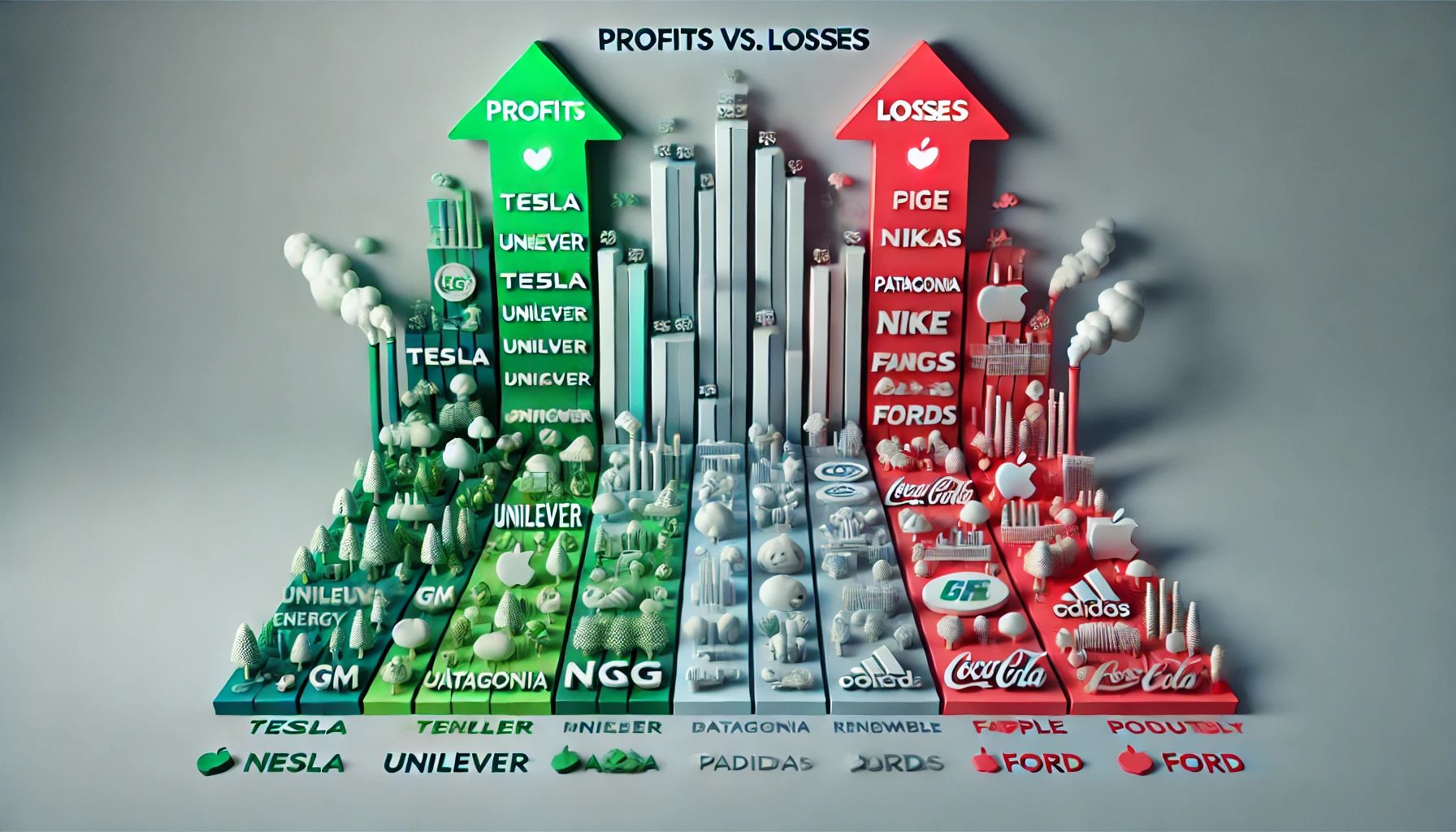
Sustainability Wars: Profits of the Bold, Losses of the Blind
Sustainability isn’t just a buzzword—it’s the defining strategy for profitability in modern business. These 10 examples showcase how companies that embraced sustainability secured financial success, while competitors who hesitated faced staggering losses and shrinking market share.
📊 1. Unilever vs. Procter & Gamble (P&G)
Unilever: Sustainable brands grew 69% faster, saving #€1 billion by 2020.
P&G: Lost #$8 billion in 2023, struggling to appeal to eco-conscious consumers in Europe.
📊 2. Tesla vs. General Motors (GM)
Tesla: EV dominance earned #$12.6 billion net income (2022) and an 800% valuation increase in 5 years.
GM: EVs accounted for just 2% of revenue (2022), causing a 25% market share drop in China.
📊 3. IKEA vs. Wayfair
IKEA: Renewable energy and circular practices saved #€2 billion and grew customer loyalty by 25%.
Wayfair: Suffered #$1.5 billion losses (2022) due to unsustainable operations.
📊 4. Patagonia vs. Columbia Sportswear
Patagonia: Eco-friendly initiatives helped achieve #$1 billion annual revenue and build brand trust.
Columbia: Lost 15% market share between 2020-2023 to Patagonia due to lack of sustainability focus.
📊 5. Walmart vs. Target
Walmart: Energy efficiency saved #$1 billion annually, cutting operational costs significantly.
Target: Reported a #$2 billion profit dip (2022) due to slower sustainability adoption.
📊 6. Nike vs. Adidas
Nike: Flyknit technology saved 60% material costs, generating #$3.5 billion in savings.
Adidas: Faced a #€500 million revenue loss (2023) from delayed sustainable innovations.
📊 7. Apple vs. Samsung
Apple: 100% renewable energy adoption fueled record #$394 billion revenue (2022) and 40% brand equity growth.
Samsung: Lost 15% EU market share, criticized for lagging in renewable energy initiatives.
📊 8. Microsoft vs. Oracle
Microsoft: Sustainability efforts drove 27% Azure growth (2023), securing eco-conscious enterprise clients.
Oracle: Missed #$1.2 billion in contracts, trailing in cloud services for sustainability-focused industries.
📊 9. PepsiCo vs. Coca-Cola
PepsiCo: Water-saving initiatives saved #$80 million annually, stabilizing global supply chains.
Coca-Cola: Lost #$2 billion (2022) due to water mismanagement protests and plant shutdowns in India.
📊 10. Toyota vs. Ford
Toyota: Sold 16 million hybrid vehicles, generating #$70 billion in cumulative profits.
Ford: Lost 10% market share (2020-2023) due to delayed EV and hybrid innovations.
The Bottom Line
Companies that lead with sustainability strategies not only maximize profits but also future-proof their business. Those that delay or ignore the shift face crippling losses in revenue, market share, and reputation.
SustainabilityWins GreenGrowth ProfitWithPurpose CorporateLeadership
Originally published on LinkedIn on 2025-01-24 05:11:11: https://www.linkedin.com/feed/update/urn%3Ali%3AgroupPost%3A82951-7288423065552609280
NamasteGreenIndia’s Ethanol Revolution: Achieving 20% Blending with a Sustainable Edge
India is on the brink of achieving a 20% ethanol blending target, a transformative step towards energy independence, environmental sustainability, and agricultural empowerment. Here’s how this revolution is shaping up:
📈 The Progress So Far
🟢 2014: Ethanol blending in petrol was just 1.53%.
🟢 2024: Achieved 15%, with 4.62 million metric tonnes (MMT) of ethanol produced.
🟢 2025 Target: Projected to produce 10.2 MMT annually to meet blending and industrial needs.
🌍 Economic & Environmental Wins
💰 USD 4 Billion Saved: Annual savings on crude oil imports.
🌎 10 MMT CO₂ Reduced: Emissions cut significantly with 20% ethanol blending.
👷 500,000 Jobs Created: Boosting rural employment through distilleries and supply chains.
🚢 USD 300 Million Export Potential: Surplus ethanol positioned for international markets.
🚗 Automotive Industry’s Ethanol Push
🔧 Flex-Fuel Vehicles: Tata Motors, Mahindra, Maruti Suzuki, and Hyundai to launch 100% bio-ethanol vehicles within six months.
🛢️ Fossil Fuel Demand Cut: Flex-fuel vehicles to reduce reliance on fossil fuels by 5.5 MMT annually.
🏭 Toyota’s Commitment: Investing ₹20,000 crore (USD 2.4 billion) in ethanol-compatible vehicle production.
🌾 Agricultural Boost
🌱 8-9 MMT of Sugar: Diverted annually for ethanol production, stabilizing prices and supporting farmers.
🌾 1.5 MMT of Surplus Grains: Utilized for ethanol, ensuring sustainable revenue for agriculture.
⚡ Challenges & Opportunities
📊 Feedstock Demand: India needs an additional 2 MMT of sugarcane and 1.5 MMT of surplus grains for sustainable production.
🏗️ Infrastructure Gaps: Only 30% of fuel pumps are ready for E20 blending.
🌍 Global Leadership: Scaling production and refining distribution could position India as a leader in ethanol exports.
💡 Why This Matters
India’s ethanol revolution is more than a blending target—it’s about energy self-reliance, cutting carbon footprints, and empowering rural economies. This initiative showcases India as a global benchmark for sustainable energy transitions.
💬 Let’s discuss how India’sEthanolJourney is driving SustainableEnergy, AutomotiveInnovation, and RuralEmpowerment! 🚀
Originally published on LinkedIn on 2025-01-16 09:51:29: https://www.linkedin.com/feed/update/urn%3Ali%3AgroupPost%3A12538632-7285594503120347137
🌍 NamasteIndia’s Renewable Energy Revolution: 15.84% Growth in 2024 🌱
☀️ Special Mention: Solar Energy Shines Bright
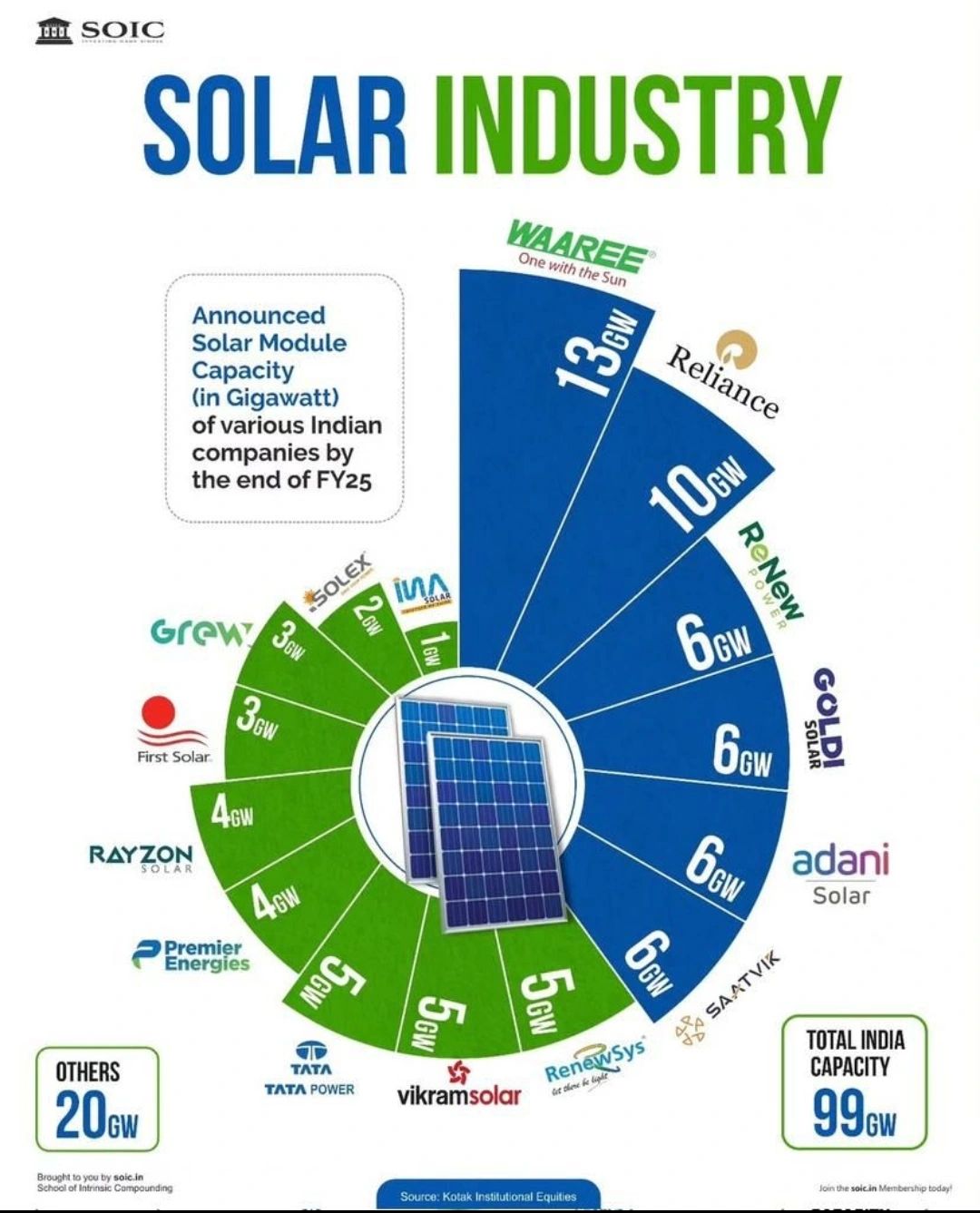
India’s solar energy output grew by 18.4% in 2024, solidifying its role as the driving force of the renewable energy sector and contributing significantly to the overall 28.64 GW capacity addition.
🚀 What a Year for Green Energy!
India’s renewable energy capacity soared to GW209.44, a 15.84% growth, demonstrating the nation’s commitment to sustainability.
💡 Key Highlights:
📈 Record Capacity Addition: 28.64 GW, a 119.46% jump from 2023.
🌞 Energy Mix Shifting: Renewables form 12.1% of India’s power, with coal at 74.4%.
🌏 The Big Picture:
Aligned with #‘Panchamrit’ goals, India aims to achieve 500 GW renewable capacity by 2030, requiring continued momentum and innovative solutions.
💭 Why This Matters:
India is paving the way for a sustainable future. Collaboration across industries and communities will be key to achieving these bold targets.


Originally published on LinkedIn on 2025-01-13 13:07:16: https://www.linkedin.com/feed/update/urn%3Ali%3AgroupPost%3A136624-7284556611363233792

